

Thailand is one of the rare destinations where you can find good beach weather and major cultural festivals in almost every month of the year. The key is knowing which coast to choose and how to time your trip around the country’s complex monsoon patterns and calendar of temple fairs, lantern celebrations and water festivals. This guide focuses on when to visit Thailand specifically for beaches and festivals, helping you match your ideal sea conditions and cultural experiences to the right month and region.
Understanding Thailand’s Seasons for Beach Travel
Thailand has three broad seasons in most regions: a cool and relatively dry period from roughly November to February, a hot season from March to May and a rainy or monsoon season that usually runs from June to October. Along the southern coasts, where the country’s best-known beaches sit, that pattern is complicated by two different monsoon systems affecting the Andaman Sea to the west and the Gulf of Thailand to the east. This means one coast can be sunny and calm while the other is battling heavy surf and frequent storms.
The Andaman coast, home to Phuket, Krabi, the Phi Phi Islands and Koh Lanta, is typically driest and sunniest from about December to March, with sea conditions that are usually calm enough for island-hopping, snorkeling and diving. From May to October, this side of the country is affected by the southwest monsoon, which brings rougher seas and frequent downpours. Some marine national parks and offshore islands operate limited seasons aligned with this dry window for safety and conservation reasons.
On the opposite side, the Gulf of Thailand islands have a different rhythm. Koh Samui, Koh Phangan and Koh Tao tend to be driest from January to April, with another generally stable spell from June through August, while their main rainy period peaks from about October to early December during the northeast monsoon. For travelers, this means there is nearly always a Thai beach with a reasonable chance of sunshine if you are flexible about where you go.
Because of these regional contrasts, the best time to visit Thailand for beaches is less about one perfect month and more about choosing the right coast for the time of year. If your dates are fixed, you can still optimize your experience by matching your chosen islands and festivals to the prevailing weather pattern.
Andaman Coast: Phuket, Krabi and the Phi Phi Islands
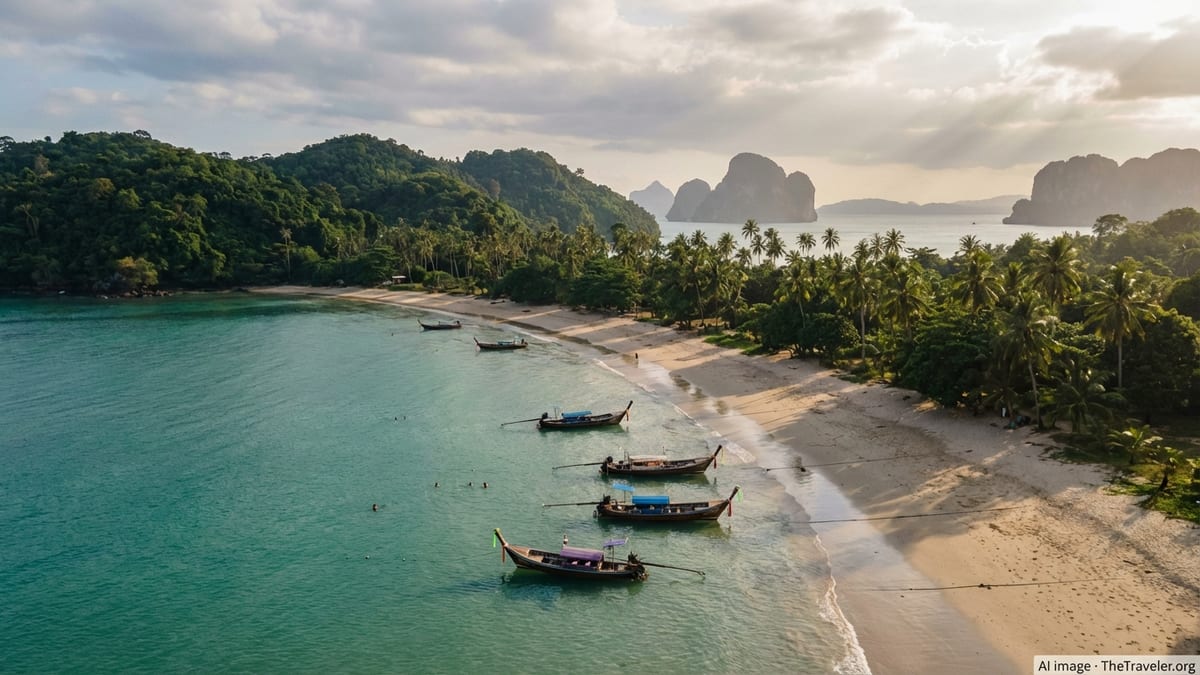
The Andaman coast delivers the archetypal Thai beach scene: limestone cliffs rising from turquoise water, longtail boats anchored in jade bays and offshore islands surrounded by coral reefs. Peak season here usually runs from December through March. During these months you can expect hot but manageable temperatures, the least rainfall of the year and sea conditions that are generally gentle enough for day trips to spots such as Phang Nga Bay, the Similan Islands, Phi Phi Leh and Hong Island.
January and February are especially popular for visitors combining Phuket or Krabi with northern cities like Chiang Mai, since both regions tend to be dry at that time. The trade-off is price and crowding. Hotel rates, flight prices and occupancy surge around Christmas, New Year and the Chinese New Year period. If you seek a quieter stay with similar weather, consider late November or early March, when the monsoon has retreated but peak holiday crowds have thinned.
From May to October the southwest monsoon brings a sharp increase in rain and stronger waves along much of the Andaman coast. It often does not rain all day, and many days still see bright sunshine in the morning followed by short, intense afternoon showers. However, strong surf can make swimming unsafe on exposed west-facing beaches, red flags are common and some offshore marine parks restrict access. This period does bring lower prices, fewer visitors and very lush scenery, so budget travelers willing to accept some weather risk may still find good value.
Shoulder months such as late October and early April can be attractive compromises. You may see a mix of sunny and rainy days, but sea conditions are often still workable for island-hopping. For serious snorkeling and diving, many operators highlight roughly December to April as the most reliable period for places such as the Similan Islands, when underwater visibility tends to be best and boat transfers are more predictable.
Gulf of Thailand: Koh Samui, Koh Phangan and Koh Tao
The Gulf of Thailand offers an effective plan B, or in many cases a better plan A, for travelers whose holidays fall in the middle of the Andaman monsoon. Koh Samui, Koh Phangan and Koh Tao sit in the path of the northeast monsoon, so they follow a somewhat different seasonal script. The driest stretch usually runs from January through April, when skies are often clear, seas are calm and humidity, while high, is manageable for lazy beach days and evenings in waterfront restaurants.
Unlike Phuket and Krabi, the Gulf islands often remain relatively pleasant through much of the northern summer. From about June to August, they tend to have more settled conditions than the Andaman side, with a pattern of mixed sunshine and brief showers. This makes them a popular choice for July and August trips, especially for visitors coming from Europe or North America who are tied to school holidays but still want to enjoy Thai beaches with a reasonable chance of swimmable seas.
The wettest period on Samui, Phangan and Tao typically falls from roughly October to early December, when the northeast monsoon can bring heavy rain and stormy seas. Ferries may be delayed, smaller boats cancel services and beach erosion can be more noticeable on exposed shores. While travel is still possible and many resorts remain open, this is not the ideal time if your top priority is long, sunny beach days.
For water sports, these islands remain appealing outside of the main rainy window. Divers often favor Koh Tao from around May to September, when sea conditions can combine warm water with good underwater visibility. Sunseekers willing to accept some heat frequently target February and March on Samui as a sweet spot, when rainfall is relatively low but resort rates may be slightly less intense than the late December and early January peak.
Month-by-Month: Matching Beaches and Festivals
Timing a trip around both beaches and festivals requires a month-by-month look at the calendar. From November to February, weather across much of Thailand is cool by local standards and relatively dry. This is prime season on the Andaman coast and also coincides with some of the country’s most celebrated events, including Loy Krathong and Yi Peng lantern festivals, which usually fall in November, followed by New Year celebrations and a busy Chinese New Year period sometime in January or February depending on the lunar calendar.
March and April are the hottest months in many parts of Thailand, particularly in central and northern regions where daytime temperatures can climb significantly. While that can make city sightseeing more draining, it is an excellent time for beach-focused trips. Sea temperatures are warm, and the skies around Phuket, Krabi and the Gulf islands are often clear. Songkran, the Thai New Year water festival, is celebrated nationwide in mid April and is one of the most energetic times to be in the country. Coastal hubs such as Phuket, Pattaya and Koh Samui combine water fights with beach parties, although accommodation books out early.
The period from May to October is more complicated. As the southwest monsoon builds, the Andaman side becomes wetter, especially from about June through September. However, this is when many travelers pivot to the Gulf of Thailand islands, aiming for the comparatively stable conditions that Samui and nearby spots can offer in mid year. Prices on both coasts are generally lower than in peak season, and flexible travelers may enjoy quieter beaches despite having to dodge showers or adjust plans if seas become choppy.
By late October and into November, the weather pattern begins to shift again. Rains taper on the Andaman side while the northeast monsoon intensifies over the Gulf, often leading to very favorable conditions around Phuket and Krabi at the same time that Samui and Tao see heavier rain. This late year period is also when many of the most photogenic festivals occur, including Loy Krathong, which takes place nationwide on the full moon of the 12th Thai lunar month, usually in November. For visitors, this can be a superb time to combine a week of Andaman beach weather with a trip to Chiang Mai, Sukhothai or Bangkok to witness candlelit river processions and floating baskets.
Festival Highlights: Songkran, Loy Krathong and Yi Peng
Among Thailand’s many cultural events, three stand out for international visitors planning around beaches and festivals: Songkran, Loy Krathong and Yi Peng. Songkran marks the traditional Thai New Year and is held annually in mid April, with the official holiday period typically centered on 13 to 15 April. While the festival has deep Buddhist and family traditions, it is best known to tourists for the exuberant public water fights that erupt in Bangkok, Chiang Mai, Phuket, Pattaya and many other cities and towns.
If you plan to visit for Songkran and also want time on the beach, it is sensible to base yourself in a coastal destination that embraces the festival atmosphere. Phuket’s resort towns host street parties and processions, while Pattaya and Hua Hin see lively scenes that spill onto the beachfront. The weather is reliably hot, so the constant dousing with water is often welcome, but you should be prepared for crowded public transport, busy roads and reservations that must be made well in advance.
Loy Krathong is one of the country’s most visually striking celebrations. It takes place on the full moon of the 12th lunar month, which usually falls in November. Locals and visitors gather along rivers, canals and lakes to release krathong: small floating baskets traditionally made from banana leaves and decorated with flowers, candles and incense. In cities such as Bangkok, Sukhothai and Chiang Mai, temple grounds and riverbanks glow with candlelight and fireworks. Weather at this time is often pleasant for beach travel on the Andaman coast, so a popular itinerary combines a few days in Chiang Mai or Sukhothai for Loy Krathong with a follow up week in Phuket or Krabi.
In northern Thailand, Loy Krathong coincides with Yi Peng, a regional festival of lanterns traditionally observed in and around Chiang Mai. Yi Peng involves the release of thousands of paper lanterns into the night sky, along with the lighting of earthen lamps and elaborate temple decorations. Its dates follow the Lanna lunar calendar but also usually fall in November. Environmental regulations and changing local rules have, in recent years, limited some of the largest mass lantern releases, so visitors should check closer to travel for current formats and any restrictions. Even so, the combination of river lanterns, temple ceremonies and street parades make this one of Thailand’s most memorable cultural experiences.
Balancing Weather, Crowds and Costs
Planning around both beaches and festivals means juggling three main factors: weather, crowd levels and cost. Peak season in Thailand typically stretches from about November through February, when much of the country is drier and cooler and the Andaman coast is at its most appealing. This coincides with major holidays including Christmas, New Year, some national holidays and often Chinese New Year, pushing demand and prices to their highest. If your dream trip includes Loy Krathong, New Year celebrations or a mid winter escape from colder climates, you should expect to pay premium rates and benefit from booking flights and hotels many months in advance.
In shoulder seasons, particularly March, early April, late October and early November, you can often find a more balanced equation. Beach weather can still be good on at least one coast, but hotels may be more affordable and popular islands less crowded. Songkran in mid April is a partial exception because it dramatically increases domestic and regional travel around that week. Outside the immediate festival period, however, late April and May can offer reasonable deals, especially for travelers comfortable with heat and the occasional storm.
The rainy season months from June to October should not automatically be ruled out, especially for longer trips. Rain in Thailand often comes in short, intense bursts, and many days retain long sunny windows. Prices are generally lower, and beach towns take on a slower pace, which some visitors prefer. During this period, it makes sense to keep itineraries flexible, allow buffer days for ferry transfers and avoid tightly timed connections to flights in case of weather disruptions.
When choosing whether to prioritize a festival or optimal beach conditions, consider your personal tolerance for crowds and your core reason for traveling. A visitor fascinated by Buddhist traditions and local rituals may happily accept higher prices and a busier atmosphere in exchange for experiencing Loy Krathong in Chiang Mai or Songkran in Bangkok. By contrast, someone primarily interested in diving and quiet beach time may decide to travel just after the main festivals, when conditions are similar but demand has eased.
Practical Tips for Timing a Thailand Beach and Festival Trip
Because Thailand’s most important festivals generally follow lunar calendars, exact dates shift slightly from year to year. Once you have a rough month in mind, it is wise to confirm the specific dates of Songkran, Loy Krathong, Yi Peng and any regional temple fairs or cultural events that interest you. Tourism authorities and local media typically publish annual festival calendars several months in advance, which can help you anchor your flights and initial reservations.
For beach planning, think coast first, then island. If you are traveling between November and March and want classic west coast scenery, focus on Andaman destinations such as Phuket, Krabi, Koh Phi Phi and Khao Lak. If your trip falls between roughly June and September, begin by looking at the Gulf side, especially Koh Samui, Koh Phangan and Koh Tao, which often have friendlier mid year weather. For April and May, either coast can work depending on your heat tolerance and the particular year’s monsoon onset.
It is also sensible to include at least one mainland hub in your itinerary, such as Bangkok, Chiang Mai or Phuket Town, around festival dates. These cities have more robust infrastructure, alternative activities for rainy days and easier transport options if sea conditions temporarily affect ferry schedules. Building in a buffer night before any international flight departure can reduce stress if weather delays an island transfer.
Finally, remember that Thailand is a large country with considerable regional variation. While online forecasts can give a general picture, microclimates, local storms and year to year variability mean that no month can guarantee perfect conditions. Packing with flexibility in mind, choosing accommodations that you will enjoy in both sunshine and rain and allowing space in your schedule to follow the best local weather advice will all help you make the most of your time, whether you are floating a krathong on a quiet river or watching the sun set over a calm Andaman bay.
The Takeaway
There is no single best month to visit Thailand for beaches and festivals. Instead there is a series of overlapping sweet spots, each with its own character. From December to March, the Andaman coast shines with dry skies and gentle seas, pairing perfectly with early season festivals and cool evenings in northern cities. March and April bring intense heat but wonderful conditions for sea swimming and the exuberant spectacle of Songkran. Mid year tilts things in favor of the Gulf of Thailand, where islands like Koh Samui and Koh Tao often deliver plenty of sunshine even as monsoon clouds gather elsewhere.
By understanding how the two coasts respond differently to the monsoons and how Thailand’s major festivals move through the lunar calendar, you can design a trip that aligns closely with your priorities, whether that is lantern lit rivers, peaceful white sand beaches, lively water fights or quiet coastal towns in their greenest season. With thoughtful planning and some flexibility, Thailand rewards visitors almost any month of the year with warm seas, rich traditions and the kind of coastal landscapes that have made it one of the world’s favorite beach destinations.
FAQ
Q1. What is the best month overall to visit Thailand for beaches and festivals?
The best overall window for combining beaches and festivals is usually November to February, when much of the country is dry, the Andaman coast has calm seas and major events like Loy Krathong and New Year celebrations typically fall. Within that period, exact timing depends on whether you prioritize specific festivals, crowd levels or lower prices.
Q2. When is the best time to visit Phuket and the Andaman coast?
The most reliable time for good beach weather on the Andaman coast, including Phuket, Krabi and nearby islands, is from about December to March. These months usually offer the least rain and gentler seas, making them ideal for swimming, island hopping and diving, although Christmas and New Year are especially crowded and expensive.
Q3. When should I go to Koh Samui, Koh Phangan or Koh Tao?
Koh Samui and the neighboring Gulf islands typically have their driest stretch from January to April, with another often stable period from June to August. Their main rainy spell usually peaks from around October to early December. If your holiday falls in mid year when the Andaman side is wetter, these Gulf islands are often the better choice for beach time.
Q4. Which month is best for Songkran and beach weather together?
Songkran is celebrated in mid April each year, and that month is usually hot and mostly dry in many coastal areas. If you want both the festival and beach time, plan to be in a major city or beach town such as Bangkok, Chiang Mai, Phuket or Pattaya for the core festival days, then spend the rest of April unwinding by the sea, accepting that temperatures will be high.
Q5. Is it worth visiting Thai beaches in the rainy season?
Visiting Thai beaches in the rainy season can still be worthwhile if you are flexible. Rain often comes in short, intense bursts rather than all day, prices are lower and crowds thinner. However, seas can be rough on the Andaman coast between roughly May and October, some marine parks operate shorter seasons and ferry services can be disrupted, so it is wise to keep plans adaptable.
Q6. When do Loy Krathong and Yi Peng usually take place?
Loy Krathong and Yi Peng follow lunar calendars, but they generally fall in November. Loy Krathong is held nationwide on the full moon of the 12th Thai lunar month, while Yi Peng is celebrated around the same time in northern Thailand, particularly Chiang Mai. Exact dates change every year, so travelers should check the current calendar when planning.
Q7. Which coast should I choose if I am traveling in July or August?
In July and August, many travelers favor the Gulf of Thailand, especially Koh Samui, Koh Phangan and Koh Tao, because they often have more settled weather than the Andaman side during those months. The Andaman coast tends to see more frequent rain and rougher seas in mid year, although there can still be sunny days.
Q8. Are Thai beaches very crowded during festivals?
Beach destinations can be noticeably busier during major festivals and public holidays, especially around New Year, Chinese New Year and Songkran. Popular islands and resort towns may see higher prices, fuller hotels and more traffic. If you want a quieter experience around these times, consider staying slightly away from the busiest centers or traveling just before or after the main holiday period.
Q9. How far in advance should I book if I want to visit during peak season?
For peak season visits between roughly December and February, and for trips that include major festivals like Loy Krathong, New Year or Songkran, it is sensible to book international flights and core accommodations several months in advance. This is especially true for small islands, popular beach towns and boutique hotels with limited rooms.
Q10. Can I combine northern festivals with a beach holiday in one trip?
It is very feasible to combine northern festivals with a beach holiday. A common pattern is to fly into Bangkok, connect to Chiang Mai for events like Yi Peng and Loy Krathong in November, then travel onward to Phuket, Krabi or Koh Samui for a week of beach time. Domestic flights between major cities and beach hubs are frequent, so the main planning consideration is aligning the festival dates with your preferred coastal season.