

I spent several nights in Victoria, British Columbia, splitting my stay between a short-term rental near the Inner Harbour and a more traditional hotel downtown.
I arrived with high expectations fed by glossy photos and breathless blog posts, and left with a more grounded, mixed impression.
Victoria is beautiful, absolutely, but where you stay and how you book matters more here than in many other small cities. This is my account of what worked, what did not, and what I would do differently next time.
First Impressions: Arrival Logistics and Location Reality
My trip started at Victoria International Airport, which is smaller and calmer than I expected for a provincial capital. That part was pleasant. What surprised me, though, was how much effort it took to get into the city without a car. There is no consistently direct express bus from the airport to downtown; I had to take an airport bus to a transit exchange and then transfer to another route toward the Legislature area. It worked, but with luggage and a light drizzle, the whole journey felt more tedious and piecemeal than the tourism brochures imply. Taxis and rideshares were easy enough to find, but the fares to downtown were high enough that I felt compelled to make transit work, even if it cost me an extra 45 minutes.
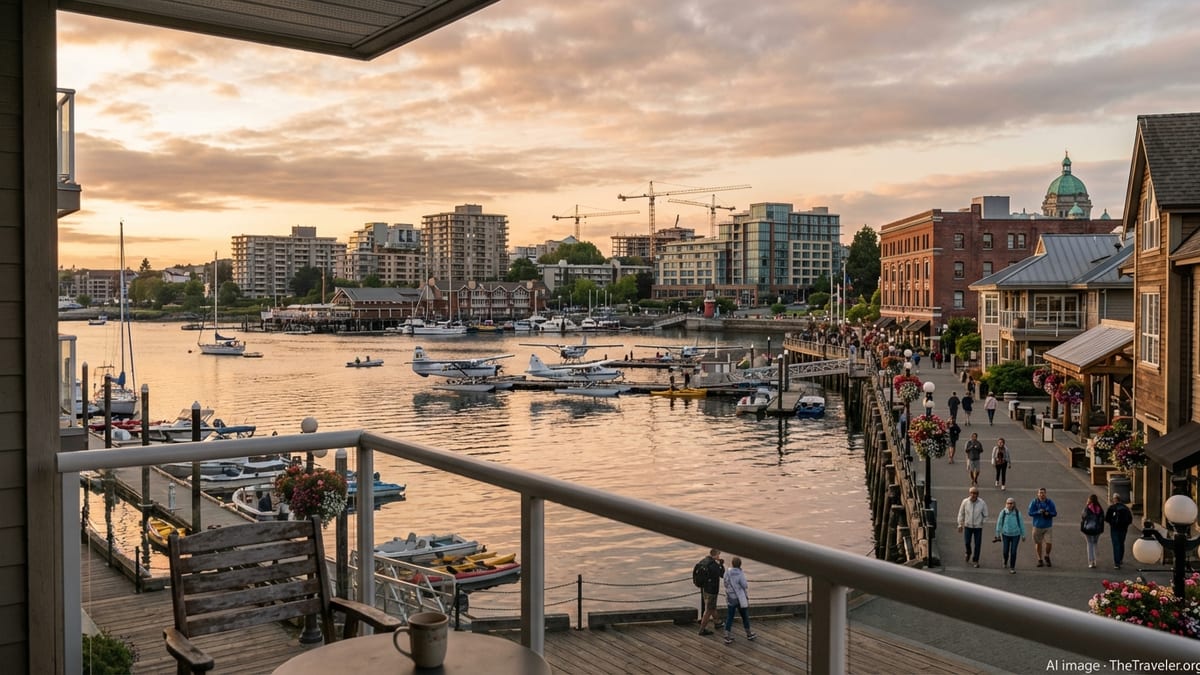
By the time I arrived near the Inner Harbour, my enthusiasm was slightly dulled. The cityscape is undeniably pretty, with heritage-style buildings, floatplanes splashing down in the harbour, and flower baskets lining the streets. But right away I noticed a detail that would shape the rest of my stay: Victoria’s core is compact, and most of the popular places to stay cluster tightly around a few busy streets. That is great for walking, less great if you are sensitive to noise or crowds. I had deliberately chosen a short-term rental in what I thought was a quieter pocket, just outside the main tourist drag. It turned out “quieter” was relative.
My first reaction, standing on the sidewalk with my bag, was that I had underestimated how urban the downtown area has become. Blogs had sold me on old-world charm and slow pace. What I actually encountered was a small city going through growing pains, with construction cranes, delivery trucks, and a steady background hum of traffic that did not match the tranquil imagery I had carried in my head.
The Short-Term Rental: Charming on Screen, Compromised in Person
My first base was a short-term rental apartment near the Inner Harbour, booked through a major platform. On paper, it ticked everything I wanted: a compact studio with a small balcony, a partial harbour view, a walkable location, and a price slightly lower than the nearby hotels. The listing leaned heavily on soft lighting and selective framing, the kind that makes every surface look immaculate and every room wider than it is. When I opened the door, the disconnect between the listing and reality was not dramatic, but it was noticeable.
The good parts first: the apartment was clean, the bed was genuinely comfortable, and the kitchen area was better equipped than I expected. I could easily make breakfast and simple dinners, which helped keep costs down. The host had left a clear self-check-in guide and was responsive to messages. From the balcony, if I leaned at the right angle, I could see a sliver of water and watch the floatplanes come and go. That small glimpse of the harbour felt like a reward at the end of the day.
But the compromises showed up quickly. The building itself was more worn than the photos suggested: scuffed hallways, a slow elevator, and a slightly stale smell in the lobby. At night, the downside of being central became obvious. Road noise carried up from a nearby intersection, and because the building faced a busier street than I realized, I heard buses and revving engines until well past midnight on the weekend. The windows were not very soundproof, so I slept with earplugs and still woke up a few times. It was not unbearable, but it was far from the quiet, romantic harbour hideaway I had imagined.
There was also a mild sense of uncertainty around the rental itself. British Columbia has tightened short-term rental rules, requiring hosts to register and generally limiting rentals to principal residences, plus one secondary unit on the same property. The listing mentioned a business license number, but I could not easily confirm whether everything complied with the newest provincial rules. Nothing went wrong during my stay, but the knowledge that non-compliant listings are now supposed to be removed and that regulations are evolving made me wonder what would happen if a booking got suddenly canceled close to my travel date. That is not a worry I really want on my mind when planning a simple city break.
Location Trade-offs: Inner Harbour vs Just Outside the Core
Staying a few blocks from the Inner Harbour had obvious upsides. I could walk to the waterfront in under five minutes, and within ten minutes I was standing in front of the Legislature building or watching street performers on the causeway. For a first-time visitor, that convenience is hard to beat. I did not need a car, and I only used public transit for the airport and one side trip. Groceries, coffee shops, and casual restaurants were all an easy stroll away. In that sense, my location worked exactly as hoped.
Where I miscalculated was in not thinking through the micro-neighbourhood differences within central Victoria. Areas like James Bay and parts of Fairfield, which are still walkable to the harbour, seemed much quieter when I wandered through them later. They had more of a residential feel, with tree-lined streets and fewer late-night noises, yet they were not significantly farther from the main attractions. Had I based myself there, I suspect I would have slept better and felt less like I was living directly above a thoroughfare.
Another trade-off was the proximity to the cruise ship crowds. On busy days, the city core swells with day trippers. The harbour walkway can become clogged, and cafes that felt relaxed on my first evening turned crowded and loud by mid-morning. Because my apartment was so close to everything, I was constantly passing through dense pockets of visitors. Some people enjoy that energy; I found it tiring after a couple of days. If I were returning in high season, I would accept a slightly longer walk in exchange for staying in a quieter corner with a more local rhythm.
Overall, I do not regret being central for my first visit, but I underestimated how much I would crave small pockets of calm. That was entirely on me and reflected my travel style more than any fault of the city. Next time, I would choose a neighbourhood with fewer tour buses rolling past the front door, even if that meant one extra block to reach the main sights.
Switching to a Downtown Hotel: Comfort vs Character
For the last nights of my trip, I moved to a mid-range hotel in the heart of downtown, a short walk from the Legislature. I made the switch mainly because the short-term rental was only available for part of my dates, but also because I wanted to compare experiences. The hotel was one of the established properties that cater to both tourists and business travelers, with the usual check-in desk, on-site restaurant, and underground parking.
The change was immediate. While my room did not have harbour views or any particular charm, it had consistent hot water, solid soundproofing, blackout curtains, and a bed that felt almost too soft after the firmer mattress in the rental. I slept significantly better. The building was modern, climate control actually worked, and I did not have to wrestle with a quirky lockbox to collect keys. For someone arriving late, tired, and carrying luggage, that predictability would be worth a lot.
However, the hotel came with its own frustrations. The nightly rate was noticeably higher than what I paid for the rental, and that was before taxes and the extra tourism and accommodation fees. Breakfast was not included and felt overpriced for what it was. The in-room decor was generic enough that I could have been in almost any mid-sized North American city. After the home-like feel of the apartment, this felt sterile. I missed having a kitchen and a small living area, and I spent more money eating out because my only “kitchen” was a small coffee maker balanced on a narrow counter.
Service was competent but impersonal. Staff were polite, but I never felt particularly welcomed or remembered. No one gave local tips beyond a laminated map and a standard suggestion to visit the waterfront. That is not a deal-breaker, but it did reinforce that hotels, especially in busy tourist cities, are often optimized for efficiency rather than connection. If you value a sense of being known, a small inn or a well-run bed and breakfast might strike a better balance than either a big hotel or an anonymous city apartment.
Noise, Crowds, and the Gap Between Imagery and Experience
One of the recurring themes of my stay was noise. Victoria markets itself as a peaceful, walkable, seaside destination, and visually that is often true. In the early morning, when the streets were still quiet and the water lay flat, the city felt exactly like the pictures. But by mid-day, the reality was more mixed. Tour groups gathered near the harbour, tour buses idled on nearby streets, and delivery trucks came and went. In my rental, those sounds filtered directly up to my windows. In the hotel, I heard less from outside but more from the hallway and neighboring rooms.
I do not consider myself especially sensitive to urban noise, but the contrast between the gentle, almost sleepy image of Victoria and the actual soundscape caught me off guard. Part of this is seasonal and timing: I visited during a busier period, when festivals and cruise schedules bring in surges of people. Still, I wish more of the accommodation listings had been upfront about noise levels, including what to expect from nearby streets and businesses. Instead, nearly every description leaned into words like “quiet” and “serene,” which were not always accurate.
Crowds also changed how I experienced the city. Certain cafes that had great reputations online were so packed at peak times that I ended up settling for second-choice spots or leaving altogether. The Inner Harbour walkway, which is picturesque in the evening light, became a slow-moving hallway of people during some afternoons. Staying right in the center meant I had a front-row seat to all of it. On one hand, that gave me energy and easy access. On the other, it sometimes made me feel like I could not step outside my door without entering a tourist zone.
None of this is unique to Victoria; any popular small city faces the same tension. But because Victoria is frequently described in almost postcard-like terms, the gap between marketing and lived experience feels sharper. If I had gone in expecting a lively small city with real traffic, active construction, and cruise tourism, I might have been less surprised and more accepting of the ambient bustle outside my accommodation windows.
Short-Term Rentals in Victoria: Regulatory Tensions and Practical Risks
Staying in a short-term rental in Victoria right now means stepping into a complex and evolving regulatory environment. British Columbia has introduced strict provincial rules that limit most short-term rentals in larger communities to a host’s main home and one additional suite on the same property, and hosts must register with the province. The City of Victoria also maintains its own licensing requirements and has been tightening enforcement in response to housing pressures and community concerns. On paper, these rules protect residents and create a more even playing field between rentals and traditional accommodation providers.
As a visitor, I felt the downstream effects in subtle ways. There were fewer full-apartment listings available than I had seen in other destinations, and many of the ones left seemed to be operated at the edges of what the rules permit. Listings emphasized license numbers and compliance, but it was difficult to verify which claims were up to date. I also had a small worry that, if a platform suddenly removed non-compliant listings, a future booking could disappear with little warning. That is not a theoretical risk anymore; provincial rules now expect platforms to take down illegal listings, which adds a layer of uncertainty for guests.
I do not blame the city or the province for trying to balance housing needs with tourism. In fact, as I walked through residential areas and saw the strain on the rental market discussed in local coverage, I understood why these measures exist. But from the traveler’s perspective, it makes short-term rentals in Victoria feel less stable than in the past. I would be more cautious now about booking far in advance, and I would lean toward hosts who clearly spell out their compliance and respond quickly and transparently to questions. The days of casually grabbing a cheap entire condo downtown at the last minute seem to be fading.
Given all of this, my personal conclusion is that while short-term rentals can still be a good option in Victoria, they are no longer the obvious, risk-free choice they might once have appeared to be. For longer stays or trips with flexible dates, they still make sense. For short, tightly scheduled breaks or special occasions, I would think hard about whether I am willing to absorb the extra uncertainty.
What I Would Do Differently Next Time
Looking back, I would change several key aspects of how I arranged my stay. The first change would be location. Instead of being right on the edge of the busiest downtown streets, I would choose a quieter neighborhood within walking distance, such as parts of James Bay or Fairfield. Both still offer easy access to the harbour and downtown, but they felt more residential and calmer when I explored them on foot. Even an extra ten to fifteen minutes of walking would be worth the trade-off in reduced noise and a more relaxed atmosphere around my accommodation.
The second change would be my choice of lodging type. If I were staying three nights or fewer, I would likely skip short-term rentals entirely and book either a well-reviewed hotel or a small inn that clearly positions itself as part of the tourism infrastructure. The cost difference, once I factor in cleaning fees, taxes, and the convenience of on-site staff, is not as big as the nightly rate might suggest. For a longer visit, I could still see the appeal of a licensed short-term rental or a traditional bed and breakfast, but I would vet it more carefully, prioritizing transparent communication about licensing, noise, and building quality over stylish interior photos.
I would also handle the airport transfer differently. After trying to save money with a patchwork of buses, I realized that the stress and time cost were not worth the savings on a short trip. Next time, I would either budget for a taxi or rideshare on arrival, especially if I land in the evening, or I would schedule my flight to better align with transit hours and connections. There is nothing inherently wrong with the existing transit setup; it just requires more planning and tolerance for transfers than I had on this trip.
Finally, I would adjust my expectations. Victoria is attractive and often scenic, but it is also a living, working city with all the associated noise, construction, and occasional rough edges. Rather than expecting a polished seaside resort, I would approach it as a compact urban hub surrounded by natural beauty. That mindset shift alone would have softened some of my initial disappointments and helped me appreciate more of what the city does well.
The Takeaway
My stay in Victoria was neither a dream escape nor a disappointment. It was a mixed, very human experience shaped heavily by where I slept and how I moved through the city. The short-term rental offered space, a kitchen, and a sense of living locally, but it came with noise, building fatigue, and a background layer of regulatory uncertainty. The hotel provided better sleep and reliability, at the cost of character, higher nightly rates, and a more generic feel. Neither option was perfect; both had clear trade-offs.
Would I return to Victoria? Yes, but with a more intentional plan. I would aim for a slightly quieter area still within walking distance of the harbour, lean toward established accommodation with clear licensing and solid noise insulation, and budget realistically for transport and food. I would accept that crowds and buses are part of the deal in high season and prioritize early morning and evening walks to enjoy the city at its most peaceful.
Victoria is still worth visiting if you value walkability, a blend of historic and modern architecture, and easy day trips to nature. It is especially worthwhile for travelers who are comfortable navigating a small but busy downtown and who do not expect every corner to match the romantic images in brochures. If you go in with eyes open, choose your neighborhood carefully, and are honest about your own tolerance for noise and crowds, you can have a rewarding stay. My advice is simply this: let your accommodation and location choices reflect the Victoria that actually exists, not the one filtered through carefully edited photos and overly glowing reviews.
FAQ
Q1. Is it better to stay in a short-term rental or a hotel in Victoria?
It depends on your priorities. For short visits and tighter schedules, I found hotels more reliable and better insulated from noise. For longer stays with flexible plans, a compliant short-term rental or bed and breakfast can offer more space and a kitchen, but it comes with more uncertainty and requires careful vetting.
Q2. Which neighborhood would I choose next time for a quieter stay?
Next time I would look closely at James Bay or parts of Fairfield. Both felt more residential and calmer while still being walkable to the Inner Harbour and central attractions, unlike the busier streets right in the downtown core.
Q3. How noisy is it staying near the Inner Harbour?
Staying a few blocks from the Inner Harbour was noisier than I expected. Traffic, buses, and crowds, especially on cruise days and weekends, created a steady background hum well into the evening, even several floors up.
Q4. Are short-term rentals in Victoria safe to book with the new regulations?
My experience was safe, but the new provincial and city rules mean listings can be removed if they are not compliant. I would only book rentals that clearly display license information, respond transparently to questions, and have recent, detailed reviews mentioning a smooth stay.
Q5. Do I need a car if I stay downtown in Victoria?
For my stay near the Inner Harbour and downtown, I did not need a car. Most central sights, restaurants, and the waterfront were easily walkable. A car is more useful if you plan multiple day trips beyond the city or are staying farther from the core.
Q6. How should I get from Victoria International Airport to downtown?
I tried public transit with a transfer at a local exchange, which was cheap but slow and a bit awkward with luggage. Next time, especially after a flight, I would budget for a taxi or rideshare on arrival, then use walking and local buses once in the city.
Q7. When is Victoria most crowded, and does that affect where to stay?
The city felt busiest on summer weekends and cruise ship days. During those times, staying right at the center meant dealing with heavier crowds and more noise. If you are visiting in peak season and dislike crowds, I would prioritize a slightly calmer neighborhood over a doorstep location.
Q8. How did the costs of the rental and hotel compare in reality?
The short-term rental had a lower nightly rate, but cleaning fees and taxes narrowed the gap. The hotel was more expensive per night but included better soundproofing, daily housekeeping, and on-site staff. Overall, the saving from the rental was smaller than it first appeared.
Q9. Would I stay in the same short-term rental building again?
Probably not. While the unit itself was clean and functional, the building’s worn common areas, street noise, and my uncertainty about long-term regulatory stability would push me to look for either a quieter licensed rental or a well-reviewed hotel next time.
Q10. Who is Victoria a good destination for, based on my experience?
Based on my stay, Victoria suits travelers who enjoy walkable cities, a mix of heritage and modernity, and easy access to nature, and who are comfortable with some urban noise and crowds. It is less ideal if you are expecting a completely tranquil seaside retreat right in the center of town.