

Japan is one of the world’s most fascinating travel destinations, and it is also one of the most overwhelming to plan. High speed trains stitch together megacities, temple towns, ski resorts and coral-fringed islands, and every region confidently claims to be the country’s must-see stop. With tourism booming again through 2025, popular spots are busier, reservations are tighter, and it pays to be strategic about where you go. This guide ranks Japan’s top destinations for international visitors and explains what each place does best, so you can match your itinerary to the Japan you most want to experience.
How This Ranking Works
Ask ten Japan experts to name the country’s top destination and you will hear ten different answers. Instead of pretending there is one “best” place, this ranking weighs a blend of factors: overall visitor satisfaction, ease of access for first timers, diversity of experiences, seasonal appeal and how each destination complements the others on a typical one to three week trip. It focuses on places that consistently appear on 2024 and 2025 shortlists compiled by tourism boards and major travel publishers, along with feedback from recent international visitors.
Equally important is the travel reality on the ground. Japan’s most popular cities are busier than ever, particularly during cherry blossom and autumn foliage seasons, and some rural hotspots now require advance reservations for hikes, temples and even driving routes. Destinations that balance strong appeal with slightly lighter crowds or easier logistics earn a higher position than they might have a decade ago, when overtourism was less of a concern.
The list starts with the “big three” urban giants, then moves into nature, culture and beach escapes that round out a classic Japan journey. Think of it less as a strict hierarchy and more as a tool: the higher a place appears, the more likely it deserves a spot on a first or second trip, while lower-ranked destinations shine for repeat visitors or travelers with specific interests such as contemporary art or alpine trekking.
1. Tokyo: Japan’s Essential First Stop
Tokyo sits at the top of almost every list for good reason. As the country’s capital and primary international gateway, it is usually the first city you arrive in and, for many travelers, the one that lingers longest in memory. Tokyo is where Japan’s love of innovation, pop culture and meticulous detail hits you all at once, from neon corridors of anime shops and gaming arcades to tranquil neighborhood shrines hidden between glass towers. Recent visitor surveys show that most first-time travelers now devote at least four nights to the city, often bookending their trip with time here.
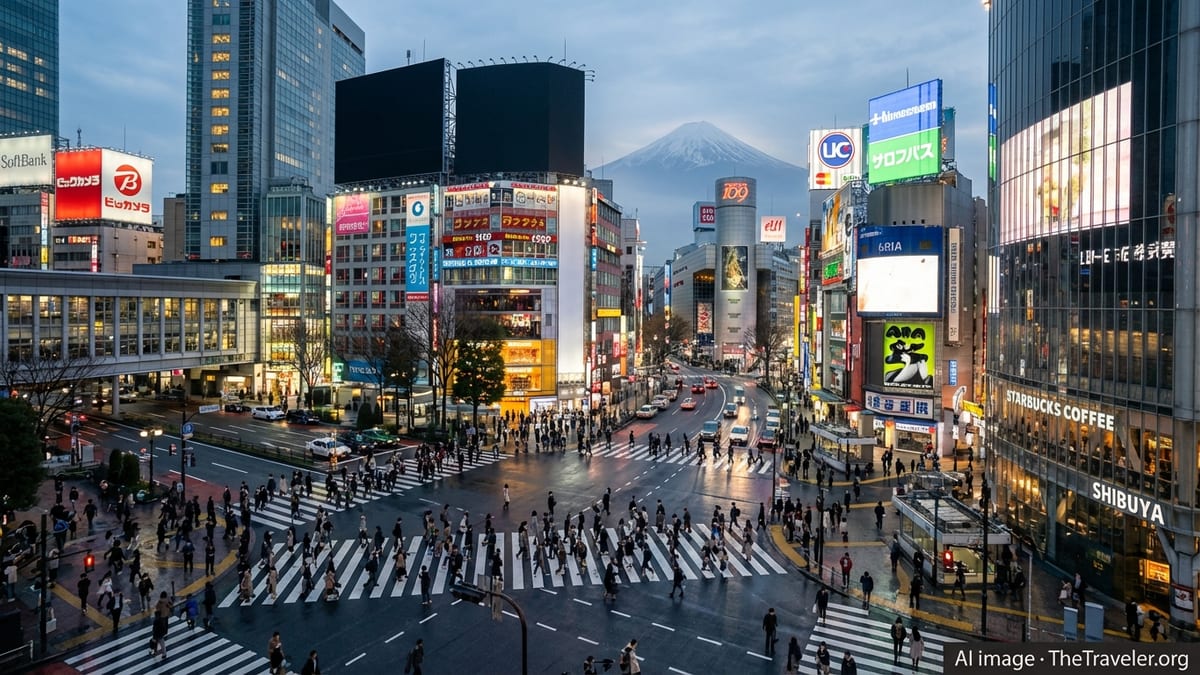
What makes Tokyo so compelling is its sheer variety. Within a single day you can browse century-old kitchenware stalls in Asakusa, people-watch at Shibuya Crossing, explore design-forward museums in Roppongi and end the night with skewers in an alleyway yakitori bar. Major districts, from fashionable Shinjuku and Shibuya to electronics hub Akihabara, have all continued to evolve post-pandemic, with new shopping complexes, observation decks and hotel openings reshaping familiar skylines. Food alone could justify a visit: Tokyo continues to lead the world for Michelin-starred restaurants, while also offering inexpensive ramen counters, conveyor belt sushi and basement food halls that make high-quality dining accessible.
Logistically, Tokyo functions as Japan’s rail and air hub, which helps explain its top ranking. The city connects by bullet train to Kyoto, Osaka, Kanazawa, Hiroshima and northern Honshu, and onward by air to Hokkaido and Okinawa. Neighborhoods are linked by an efficient metro system that, while dense, is well signposted in English and increasingly equipped with contactless fare options. Although crowds can be intense in peak seasons, Tokyo’s size allows you to escape easily into quieter pockets: riverside paths in Nakameguro, residential streets in Yanaka and little-known gardens scattered across the city.
2. Kyoto: Cultural Heart and Temple Capital
If Tokyo is the face of modern Japan, Kyoto remains its cultural heart. The city served as imperial capital for more than a thousand years and still shelters hundreds of temples, shrines and gardens in its surrounding hills. It consistently appears at or near the top of global “must visit” lists for travelers in search of traditional architecture, tea culture and geisha districts, and in 2025 its popularity shows no sign of fading. Many visitors now split their time between Tokyo and Kyoto almost evenly, using the high speed train that links the cities in roughly two and a half hours.
Kyoto’s appeal lies in its layers of history and ritual. You wander narrow lanes of wooden townhouses in the Gion and Higashiyama districts, catch glimpses of kimono-clad geiko and maiko on their way to evening appointments, and climb through tunnels of vermilion torii gates at Fushimi Inari Shrine. Famous temples such as Kiyomizudera, Kinkakuji and Ryoanji provide classic postcard scenes, while lesser-known subtemples in Arashiyama and the city’s north offer quieter gardens for travelers willing to look beyond the busiest spots.
High demand has reshaped how you visit. Popular viewpoints and temple districts can be extremely crowded during cherry blossom and autumn foliage seasons, and the city has introduced measures such as discouraging photography in certain alleys and asking visitors to respect privacy in residential geisha quarters. Booking accommodation early, visiting major sights at opening time or late in the day and building in time for lesser-known neighborhoods can make a big difference. Even with these challenges, Kyoto earns its high ranking because very few destinations in Japan offer such a concentrated dose of classical architecture, refined cuisine and artisan crafts, from ceramics to textile dyeing.
3. Osaka: Food Capital and Nightlife Powerhouse
Just fifteen minutes by train from Kyoto, Osaka feels like a different country. Often described as Japan’s kitchen, it has a long-standing reputation for hearty, indulgent street food and a warm, informal character that contrasts with the more reserved image of Tokyo and Kyoto. For many travelers, Osaka has become a non-negotiable stop, particularly on shorter itineraries that prioritize urban energy and cuisine. International rankings frequently place it alongside Tokyo and Kyoto as a top three destination.
Central Osaka pulses around the Dotonbori canal, where giant neon signs reflect in the water and steam rises from endless rows of takoyaki and okonomiyaki stalls. Neighborhoods like Shinsekai and Namba preserve a slightly retro, showa-era atmosphere, while Umeda and the bay area showcase modern high-rises, observation decks and large entertainment complexes. Beyond the bright lights, Osaka Castle Park and riverside promenades offer a break from the bustle, and day trips reach temple town Nara or seaside Kobe with ease.
Osaka ranks so highly for two key reasons: food and convenience. Prices for casual meals are generally lower than in Tokyo, with excellent value to be found at standing bars, local izakaya and covered market streets. At the same time, the city is a major railway node that links Kyoto, Hiroshima and the western regions, making it an efficient base for exploring Kansai. Many travelers now choose to stay in Osaka instead of Kyoto and visit the former capital as a series of day trips, a strategy that can help with both budget and availability during busy seasons.
4. Hokkaido: Nature, Snow and Wide Open Space
Japan’s northernmost main island ranks as the top choice for travelers seeking space, scenery and four-season outdoor activities. Hokkaido is best known internationally for its winter sports scene, particularly the powder snow of Niseko and other ski resorts that draw enthusiasts from across the globe. Yet recent visitor trends show rising interest in its summer and autumn landscapes as well, from flower fields in Furano and Biei to hiking in Daisetsuzan National Park and wildlife watching on remote peninsulas.
The regional capital Sapporo balances city comforts with easy access to nature, hosting one of the country’s most high-profile winter festivals featuring large snow and ice sculptures. Coastal towns such as Otaru add historical canals and seafood markets to the mix, while hot spring resorts scattered across the island provide a restorative counterpoint to days spent skiing or hiking. Compared with heavily populated central Japan, Hokkaido’s road networks feel more spacious and its national parks less crowded outside major holidays.
Reaching Hokkaido is easier than ever, with frequent flights from Tokyo and direct international services from select Asian and Pacific cities. A high speed rail link already connects the southern tip of the island with northern Honshu, with gradual extensions planned. The destination ranks just below the big three cities because it typically requires more travel time and works best as an add-on for longer trips or for travelers focused on outdoor adventures. For those willing to make the journey, though, Hokkaido offers a very different, more expansive vision of Japan.
5. Okinawa: Tropical Islands and Slow Island Time
At the opposite end of the country, Okinawa and the southwest islands deliver a tropical side of Japan that still surprises many first-time visitors. This island chain, stretching between the main islands of Japan and Taiwan, is known for its coral reefs, turquoise waters and unique Ryukyuan culture, which developed independently before the islands were incorporated into modern Japan. As international travelers look for more varied experiences beyond the classic Tokyo–Kyoto route, Okinawa’s beaches and relaxed pace have moved steadily up the wish list.
The main island of Okinawa offers family-friendly resorts, historical sites that document its distinct heritage and one of the country’s best-known aquariums, while the outer islands such as Ishigaki, Miyako and Zamami appeal to divers, snorkelers and travelers in search of quiet stretches of sand. Cuisine here blends Japanese and local influences, featuring ingredients such as bitter melon, seaweed and Okinawan pork, and the subtropical climate allows for a long beach season, particularly from late spring through autumn.
Okinawa ranks in the middle of this list because it is slightly more complex to integrate into a short itinerary. You will almost certainly need to fly from Tokyo or Osaka, and island-hopping is easiest with a rental car and flexible schedule. Typhoon season can also disrupt travel plans in late summer. For those who build in enough time, however, the reward is the chance to pair Japan’s cultural heavyweights with days snorkeling over reefs, watching sunsets from capes and learning about a regional identity that adds depth to any understanding of the country.
6. Kanazawa and the Hokuriku Coast: Tradition Without the Crowds
On the Sea of Japan side of central Honshu, Kanazawa has quietly transformed from “hidden gem” to established favorite. Often nicknamed a smaller Kyoto, it preserves samurai districts, geisha quarters and a famous landscape garden, yet its streets feel calmer than those of the former capital. The opening and continued expansion of the Hokuriku Shinkansen high speed rail line from Tokyo has made Kanazawa far more accessible than in the past, cutting the journey to around two and a half to three hours and encouraging more travelers to include it on their first or second trip.
The city’s star attraction is Kenrokuen, widely regarded as one of Japan’s most beautiful gardens, where ponds, teahouses and carefully shaped pines reveal a different character in each season. Nearby, restored samurai residences in the Nagamachi district and wooden teahouses in the Higashi Chaya quarter keep Edo-period architecture alive, while contemporary museums add a modern counterpoint. Local cuisine draws on abundant seafood from the Sea of Japan and a strong tradition of lacquerware, ceramics and gold leaf craftsmanship.
Beyond Kanazawa itself, the Hokuriku region offers coastal villages, onsen towns and agricultural landscapes that remain relatively lightly touristed compared with the Pacific side of the country. Day trips or overnight excursions to the Noto Peninsula or neighboring prefectures allow visitors to slow down between busier city days. Kanazawa ranks just below the big-name islands because it shines most when combined with a broader itinerary, but for travelers interested in traditional streetscapes without intense crowds, it is steadily becoming a highlight.
7. Hiroshima and the Setouchi Islands: Memory, Modernity and Inland Sea Scenery
Hiroshima holds a singular place in world history and remains an essential stop for many visitors who want to reflect on the events of 1945 and their legacy. The Peace Memorial Park and museum are sensitively designed spaces that encourage contemplation rather than spectacle, and the modern city that has since grown around them showcases a forward-looking attitude, with wide boulevards, streetcar lines and a growing food and arts scene. For travelers, Hiroshima combines this powerful historical experience with easy access to one of Japan’s most scenic coastal zones.
Just offshore lies Miyajima, an island famous for its shrine gate standing in the water and forested hiking trails that climb Mount Misen. Farther across the Seto Inland Sea, ferries link to less-visited islands where citrus groves, fishing ports and cycling routes unfold at a slower tempo. In recent years the broader Setouchi area has gained international attention for its contemporary art islands, particularly Naoshima, where museums and site-specific installations sit amid quiet villages and bays. Art festivals and rotating exhibitions have helped draw a new generation of culturally minded travelers to this part of Japan.
Hiroshima and the Setouchi region rank highly because they deliver emotional depth and visual beauty in the same journey. The area is straightforward to reach by bullet train from Osaka or Fukuoka, and a growing range of boutique hotels and guesthouses cater to foreign visitors. While it may fall just outside the core first-timer loop for those with very limited time, anyone with ten days or more in Japan should seriously consider including Hiroshima and at least one island stay to experience a different rhythm of life.
8. Alps, Onsen Towns and Off-the-Beaten-Path Escapes
Beneath Japan’s marquee names lies a second tier of destinations that can easily become the personal favorite of a particular traveler. Mountain valleys such as Kamikochi in Nagano, temple complexes on Mount Koya in Wakayama and hot spring regions like Hakone and Kusatsu all appear regularly in domestic and international rankings. They share a common thread: an emphasis on nature, spiritual sites and traditional inns rather than urban buzz. These places are ideal for breaking up a city-heavy itinerary and for returning visitors eager to explore beyond familiar routes.
For example, Hakone, close to Tokyo, blends lake views, open-air sculpture parks and a long onsen tradition, making it one of the classic weekend escapes for residents of the capital. Kamikochi appeals to hikers with its alpine valley setting, wooden suspension bridges and trail network that ranges from gentle riverside walks to more serious climbs in the surrounding peaks. Mount Koya offers the chance to stay in temple lodgings, join morning prayers and stroll through a vast forest cemetery dotted with centuries-old stone markers.
These destinations sit lower in the ranking not because they are less impressive, but because they generally make more sense once you have already committed to the main city and island hubs. They may require bus transfers, advance bookings for mountain lodges or a bit more comfort with reading local schedules. For travelers willing to embrace that complexity, the reward is time spent in cedar forests, steaming outdoor baths and small-town streets that see far fewer tour groups than Japan’s top-tier sights.
The Takeaway
Japan has no single “best” destination, only the best destination for your particular trip. Tokyo sets the tone with its kinetic energy and endless neighborhoods. Kyoto and Osaka define the cultural and culinary heart of the Kansai region. Hokkaido and Okinawa stretch the country north and south into entirely different climates and landscapes, while Kanazawa, Hiroshima, the Setouchi islands and the mountain and onsen regions round out a remarkably varied portfolio for a country of Japan’s size.
When deciding where to go, start with time and interests. A week might sensibly focus on Tokyo, Kyoto and Osaka, with perhaps a mountain day trip. Ten days to two weeks makes space for Hiroshima or Kanazawa and an overnight in a hot spring town. Longer stays open up Hokkaido’s national parks or Okinawa’s islands. In every case, building your route around a mix of cities and quieter places, and being realistic about travel distances, will help you appreciate the contrasts that make Japan so compelling.
Finally, remember that rankings are a guide, not a rulebook. Some travelers leave talking most enthusiastically about an unplanned afternoon in a Kanazawa side street or a sunrise soak at a countryside inn. The goal is not to tick off every name on a list, but to structure your time so you can slow down enough to notice the details: the way a garden path turns, the sound of evening cicadas, the precision of a railway timetable. Do that, and whichever destinations you choose will feel like the right ones.
FAQ
Q1. How many days do I need for a first trip to Japan?
Most international visitors find that 10 to 14 days is a comfortable first trip, allowing time for Tokyo, Kyoto, Osaka and at least one additional region without constant rushing.
Q2. If I only have one week, which destinations should I prioritize?
With seven days, focus on the core triangle of Tokyo, Kyoto and Osaka, using Osaka or Kyoto as a base for a short day trip to Nara or a nearby onsen town if time allows.
Q3. Is it better to stay in Kyoto or Osaka when visiting the Kansai region?
Stay in Kyoto if your priority is temples, gardens and traditional streetscapes, and choose Osaka if you value nightlife, casual food and slightly easier access to regional trains.
Q4. When is the best time to visit Japan for good weather and fewer crowds?
Late autumn and late spring often balance pleasant temperatures with slightly lighter crowds, but exact conditions vary by region and popular holidays remain busy nationwide.
Q5. Do I need a Japan Rail Pass for these top destinations?
A Japan Rail Pass can be cost effective if you plan multiple long bullet train journeys in a short period, but for shorter trips or regional travel, individual tickets often work better.
Q6. Are language barriers a major issue outside Tokyo?
English signage is widespread at stations and major sights in leading destinations, and while rural areas may have fewer English speakers, simple phrases and translation apps go a long way.
Q7. How far in advance should I book hotels in popular places like Kyoto or Hokkaido?
For peak seasons such as cherry blossom, autumn foliage and major winter festivals, booking several months ahead gives you more choice, especially for small inns and ski resorts.
Q8. Can I visit both Hokkaido and Okinawa on the same trip?
It is possible on a longer itinerary of two weeks or more, but you will need to factor in flight times and build in rest days to avoid spending too much of your trip in transit.
Q9. Are Japan’s top destinations suitable for families with children?
Yes, most major destinations are very family friendly, with safe public transport, stroller-accessible attractions and plenty of parks, aquariums and interactive museums.
Q10. How should I handle cash and cards while traveling around Japan?
Credit and debit cards are increasingly accepted in cities, but it is still wise to carry some cash for smaller shops, local buses and rural areas where card terminals may be limited.