

Lake Superior encircles more than 1,300 miles of shoreline, touching Minnesota, Wisconsin, Michigan and Ontario. Deciding where to stay along such an enormous inland sea is less about one perfect town and more about choosing the right base for the trip you want. From walkable harbor villages and resort clusters to wilderness lodges and island gateways, each stretch of shoreline has its own mood, landscape and style of lodging. Here is a guide to the most compelling places to stay around Lake Superior, and what each area offers as a home base for your time on the big lake.
Duluth: Gateway City and Urban Lakefront Base
Duluth, at the western tip of Lake Superior, is the most urban base on the lake and a natural starting point for many trips. Its hillside neighborhoods step down toward a working harbor where ore boats and lakers slide under the Aerial Lift Bridge. Along the waterfront, hotels overlook the shipping canal, Canal Park’s converted warehouses, and the Lakewalk that follows the rocky shore. Visitors who want walkable dining, breweries, museums and lake views from their room often start here, especially for shorter getaways that mix city comforts with time outdoors.
Lodging in and around Canal Park ranges from straightforward chain hotels to boutique properties in restored brick buildings, many with rooms facing the lake. A bit farther up the shore, just beyond city limits, lakefront resorts and condo-style lodgings offer quieter stays while remaining within a short drive of Duluth’s restaurants and attractions. The city’s popularity in all seasons means availability can tighten on summer weekends and during fall color, so booking ahead is wise.
Duluth works best as a base for travelers who enjoy a balance of culture and scenery. From the harborfront you can be on the North Shore Scenic Drive within minutes, exploring pebbled beaches, lighthouses and state park trails on day trips before returning to a wide choice of places to eat and an easy stroll back to the hotel. For visitors new to Lake Superior or traveling with varied interests, it is a flexible and practical home base.
Minnesota’s North Shore: Waterfalls, State Parks and Classic Lodges
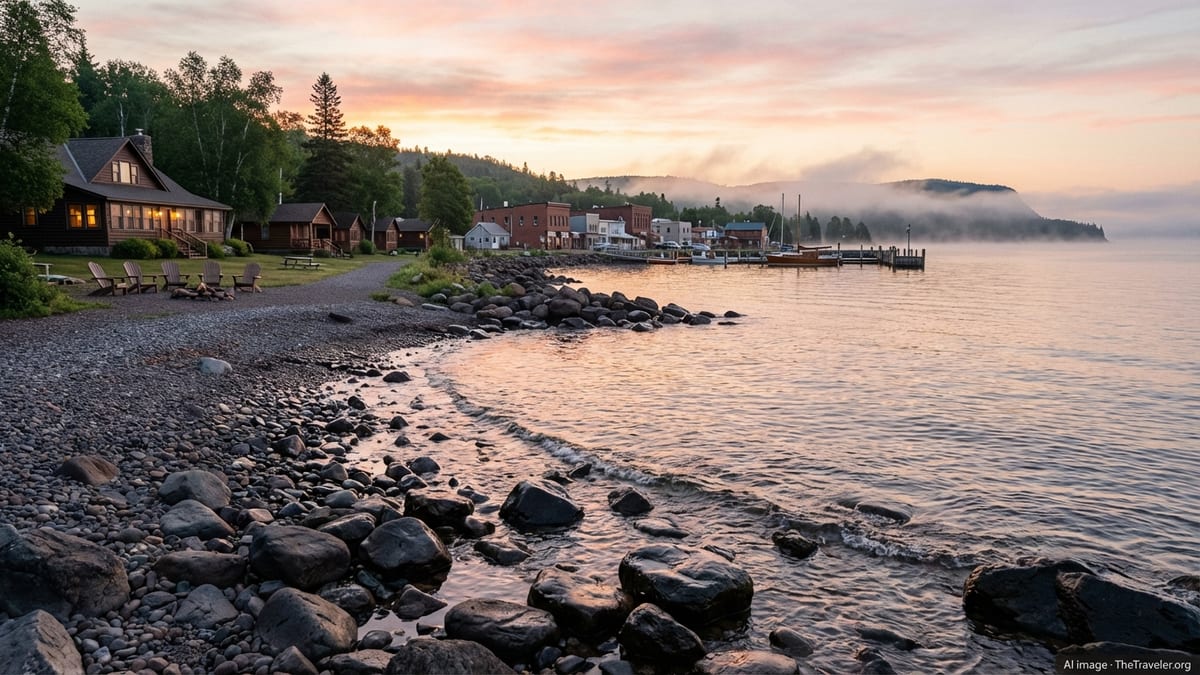
Northeast of Duluth, Minnesota’s North Shore unfurls for roughly 150 miles to the Canadian border, passing lava cliffs, cobble coves and river gorges. The region between Two Harbors and Grand Marais is one of the most lodging-rich corridors on the lake, with classic lakeside resorts, historic lodges and contemporary condo developments tucked between state parks. Many properties front the water, with fire pits and Adirondack chairs set along basalt ledges or cobbled beaches where you can watch freighters ghost by on the horizon.
Near Two Harbors and along the shoreline toward Silver Bay, larger resorts include multi-story main lodges and condo-style units with kitchenettes, fireplaces and balconies facing the lake. Some combine hotel-style amenities with a cabin feel, offering pools, on-site dining and easy access to hiking trails and pebble beaches. This stretch suits travelers who want a resort base with day trips to Gooseberry Falls, Split Rock Lighthouse, Palisade Head and other signature stops without spending hours in the car.
Farther up the shore, between Lutsen and Grand Marais, lodging shifts toward a mix of historic properties and independent lakeside cabins. Some resorts date to the early twentieth century, with main lodges built in rustic stone and timber. Others offer modern townhomes and small-scale hotels clustered near ski hills, golf courses and trail networks. Many of these properties appeal to travelers who plan to hike, ski or bike by day and return to a fireplace and lakeside sauna at night.
Because the North Shore is heavily visited, the feel of your stay depends a great deal on exact location. Resorts close to major waterfalls and scenic overlooks can be busy, while smaller cabin clusters tucked along side roads feel surprisingly quiet, especially midweek and outside of peak summer. When choosing a base here, think about how much you want on-site versus how much you are willing to drive, and whether lakefront access or proximity to specific parks matters most.
Grand Marais and the Gunflint: Harbor Charm and Wilderness Lodges
Grand Marais, near the northeastern tip of Minnesota, is one of the most atmospheric harbor towns on Lake Superior. Its compact waterfront curls around a protected bay, with an arts center, galleries, a small harborfront park and a short breakwater walk to a historic lighthouse. Lodging within and just outside town includes small motels, harbor-view inns and rental cabins, many within walking distance of restaurants and coffee shops. For travelers who want a low-key village with creative energy and easy lake access, Grand Marais is a standout choice.
Accommodations in town often emphasize simple comfort and location over formality. Many properties are family-run, with modest rooms, small suites or multi-bedroom cabins that suit couples and families alike. Staying within walking distance of the harborfront makes it easy to enjoy evening strolls, watch the light shift over the water and head out early to photograph the sunrise over the breakwater. While Grand Marais is not a resort destination in the traditional sense, it offers a memorable blend of harbor-town character and access to wild landscapes.
Inland from Grand Marais, the Gunflint Trail rises away from the lake into a chain of boreal lakes and forests bordering the Boundary Waters Canoe Area Wilderness. Here, classic wilderness resorts line clearwater lakes, with log cabins under tall pines, central lodges serving meals, and docks lined with canoes and fishing boats. Properties range from historic, family-run lodges to more contemporary cabin clusters, almost all emphasizing quiet, dark skies and immersion in the north woods more than polished resort amenities.
Using the Gunflint region as a base makes sense for travelers seeking paddling, fishing, wildlife watching and winter skiing, while still allowing a day trip down to Grand Marais for a harbor-town interlude. It is one of the best ways to combine the feel of Lake Superior country with the deeper wilderness experience that northeastern Minnesota is known for. Many guests split their time between a Grand Marais harbor stay and several nights at a Gunflint lake lodge for two distinct experiences in one trip.
Bayfield and the Apostle Islands: Wisconsin’s Maritime Hub
On Lake Superior’s south shore, Bayfield, Wisconsin, serves as the most prominent harbor base and the gateway to the Apostle Islands. The town climbs a low hill above its marina, where sailboats and excursion vessels bob below a shoreline of historic storefronts and clapboard homes. Lodging in and around Bayfield is varied, from small harborfront inns and classic motels to lakeview cottages and condo-style suites. Many properties are oriented toward guests catching a boat tour, island ferry or kayak trip, and they make it easy to walk from your room down to the pier.
Several long-established inns and motels sit within a short stroll of Bayfield’s main street, with balconies or shared decks overlooking the islands and open lake. Others stand slightly uphill or just outside town, trading absolute waterfront for broader views and a quieter residential setting. Throughout the area, the emphasis is on comfortable, relaxed stays rather than formality. Rooms and suites commonly offer lake views, simple kitchen facilities and outdoor seating where you can watch changing light and weather move across the water.
For travelers seeking more space or a multi-day base, Bayfield-area cabins and cottages dot the wooded shoreline and nearby countryside. Some are simple, seasonal retreats with screened porches and basic kitchens, while others are more fully outfitted vacation homes that accommodate larger groups. As with many Lake Superior communities, early reservations are important during the height of summer, apple harvest season and major events, when demand surges and small properties can fill quickly.
Bayfield works especially well for visitors whose main goals include time on the water and exploring the Apostle Islands National Lakeshore. Kayak outfitters, sailing charters and tour boats are based right in town, and after a day on the lake it is an easy walk back to a harborfront inn or uphill cottage. The town’s compact scale enhances its appeal as a base, allowing you to park once and spend most of your stay on foot.
Michigan’s Upper Peninsula: Marquette, Munising and the Keweenaw
The south and southeast shores of Lake Superior in Michigan offer a different mix of harbor towns, university energy and rugged peninsulas. Marquette is the largest city directly on the lake in this region, with a walkable downtown, a working ore dock and an extensive lakeshore trail. Lodging options span chain hotels, historic inns and modern boutique properties, many close to the water or within easy reach of the city’s bike paths and beaches. Marquette makes an efficient base for travelers who want both lakefront recreation and the conveniences of a small city.
Farther east, Munising serves as the gateway to Pictured Rocks National Lakeshore, with motels, cabins and small inns oriented toward visitors headed out on boat cruises, hikes and paddling trips. Many lodgings cluster along the bay and roadside bluffs, trading some of the broad open-lake feel for protected harbor views and quick access to trailheads. This area is particularly popular in summer and early fall, so planning ahead is important if you want waterfront or higher-end accommodations.
To the northwest, the Keweenaw Peninsula juts into Lake Superior in a series of forested ridges, small towns and historic mining sites. Houghton and Hancock, straddling a canal that cuts through the base of the peninsula, offer a mix of university-town hotels and smaller independent motels. Farther up, Copper Harbor and nearby communities serve as small, remote-feeling bases for exploring rocky shorelines, lighthouses and mountain bike trails. Lodging here is more limited, often in the form of modest motels, mom-and-pop cabins and a few small lodges, but the reward is proximity to some of the least crowded scenery on the lake.
When choosing a base in Michigan’s Upper Peninsula, think about how much driving you are comfortable with and what kind of shoreline you are seeking. Marquette offers broad city beaches and a vibrant food scene, while Munising focuses on dramatic sandstone cliffs and boat-based sightseeing. The Keweenaw is best suited to travelers who value remoteness and do not mind longer drives between services. Many visitors combine two or three bases in this region to experience both the iconic Pictured Rocks shoreline and the quieter, rockier reaches of the peninsula.
Thunder Bay and Ontario’s North Shore: Canadian Perspective on the Big Lake
On the north side of Lake Superior, Thunder Bay is the primary Canadian city and a practical hub for exploring Ontario’s wild shoreline. Its harbor looks out toward the Sleeping Giant, a long peninsula that forms a striking profile when seen from the city. Lodging in Thunder Bay includes standard hotels, small inns and newer waterfront properties, giving travelers a wide choice of price points and styles. While the city itself is more of a service and cultural center than a pure resort town, it works well as a base for road trips along the Trans-Canada Highway.
East of Thunder Bay, the highway clings to a coastline of headlands, cobble beaches and deep river valleys. Small communities and provincial parks punctuate the drive, with motels, cabins and lakeside lodges offering overnights between longer stretches of wilderness. Lodging here is generally simpler and more widely spaced than on the American shore, but the payoff is a sense of remoteness and dark skies that are hard to find elsewhere around the lake. For travelers who enjoy scenic drives, day hikes and quiet evenings by the water, this part of Ontario is particularly memorable.
Because distances are greater and services sparser, planning is essential when using Ontario’s North Shore as a base. It is wise to check seasonal opening dates for lodges and motels, as some operate primarily in summer and early autumn. Travelers should also consider whether they want a single multi-night base, such as a lakeside lodge near a provincial park, or a series of one-night stops that trace the curvature of the lake. Either approach can work, but the character of the trip will feel quite different from a stay centered on a single harbor town.
For many visitors, combining a few nights in Thunder Bay with stays at smaller lakeside resorts east of the city offers a balanced experience. You can enjoy restaurants, galleries and urban amenities at the start or end of the journey, then retreat to quieter stretches of coastline where your nearest neighbors might be loons and passing freighters offshore. This Canadian arc of Lake Superior remains less visited than some American sections, making it appealing for travelers who prioritize solitude.
How to Choose the Right Lake Superior Base for Your Trip
Because Lake Superior is so large, your choice of base has a direct effect on how much time you will spend driving versus exploring. Before you settle on a town or lodge, consider your main priorities. If you want to pair shoreline hikes with breweries and restaurants, Duluth or Marquette are logical choices. If your goal is to kayak sea caves or visit islands, Bayfield or Munising will cut down on daily travel time. Travelers seeking a sense of deep wilderness will gravitate toward the Gunflint Trail, Ontario’s headlands, or the upper reaches of the Keweenaw.
Season also matters. Summer brings the most options and the warmest conditions, but also the strongest demand, especially around holidays and school breaks. Shoulder seasons in late spring and fall can be ideal if you value lower crowds and are prepared for cooler temperatures and variable weather. Winter transforms many of these bases into snow destinations, with North Shore lodges, the Keweenaw and the Gunflint Trail catering to skiers, snowshoers and snowmobilers. Not every property operates year-round, so confirming seasonal openings is an important step.
Budget and travel style play their part as well. Lake Superior offers everything from simple roadside motels and basic cabins to destination-style resorts with on-site dining and pools. Think about whether you want to cook some of your own meals, how comfortable you are with rustic accommodations, and how important extras like saunas, hot tubs or organized activities are to you. Reading recent guest reviews can provide useful context about maintenance, service and noise levels without relying solely on marketing photos.
Finally, consider combining two contrasting bases into a single loop. A few nights in a harbor town followed by a stay at a quiet lakeside lodge can make the lake’s scale and variety more tangible. Distances around Lake Superior are significant, but by choosing bases that align with your priorities and accepting the slower pace of its two-lane roads, you can experience several distinct facets of the big lake in a single journey.
The Takeaway
There is no single best place to stay on Lake Superior, only bases that fit different travelers and trip styles. Duluth and Marquette offer urban comforts at the water’s edge. The Minnesota North Shore, Bayfield and Munising focus on scenic corridors rich with parks, waterfalls and boat access. Grand Marais, the Gunflint Trail, the Keweenaw and Ontario’s North Shore lean into remoteness, wilderness and dark skies. Each presents a different relationship with the lake, from watching ships pass under city lights to listening to waves crash outside a forest cabin.
When you look at a map of Lake Superior, it can be tempting to try to see everything in one sweeping loop. In practice, your experience will be richer if you slow down and let one or two places become temporary homes. Choosing a base that matches your interests, season and tolerance for driving will shape not only what you see, but how you remember the lake itself. Whether you prefer the hum of a harborfront or the hush of a pine-fringed cove, you will find a corner of Superior that feels exactly right for the kind of journey you want to have.
FAQ
Q1. What is the best month to visit Lake Superior for a first-time stay?
For most first-time visitors, July through early September offer the widest range of open lodgings, tour options and relatively mild weather, though conditions can still be cool and changeable.
Q2. How many nights should I plan in one Lake Superior base?
Three to four nights in a single base lets you explore nearby parks and harbor areas without feeling rushed. If you are driving long distances to reach the lake, adding a second base extends your range without daily packing.
Q3. Do I need a car once I am in a harbor town like Bayfield or Grand Marais?
Within compact towns you can often walk to restaurants, docks and shoreline paths, but a car remains useful for reaching trailheads, scenic overlooks and smaller state or provincial parks outside town.
Q4. Are lakefront rooms worth the premium cost?
For many travelers, waking to the sound of waves and watching sunrise or storms over the water is a highlight of a Superior trip, so paying extra for a true lake-facing room can feel worthwhile, especially on shorter stays.
Q5. How far in advance should I book lodging around Lake Superior?
For peak summer weekends, fall color periods and major events, booking several months ahead is sensible, especially in smaller towns with limited room counts. Midweek or shoulder-season visits often offer more flexibility.
Q6. Is it realistic to drive the entire Lake Superior Circle Tour in one vacation?
It is possible on a longer trip, but many travelers underestimate the distances and road conditions. Focusing on one or two shores often provides a deeper experience than rushing around the full loop.
Q7. What types of accommodations are most common along the lake?
Expect a mix of independent motels, small inns, classic lake resorts with main lodges, rental cabins and a limited number of larger hotels in or near the bigger cities.
Q8. Are there family-friendly places to stay around Lake Superior?
Yes, many resorts and motels cater to families with multi-bed rooms, kitchenettes, campfire areas and easy beach or trail access. Cabin clusters can also work well for multi-generational groups.
Q9. Can I find quiet, less crowded bases even in summer?
Staying slightly outside major harbor towns, choosing weekdays over weekends and looking at inland lake lodges or smaller Ontario communities can help you avoid the busiest spots.
Q10. Do Lake Superior lodgings operate year-round?
Some hotels and larger resorts stay open in all seasons, particularly in bigger towns and winter-sports areas, while many cabins and smaller properties operate mainly from late spring through fall. Checking seasonal schedules is important when planning.