

Arizona offers four very different home bases that regularly top travelers’ shortlists: Phoenix, Sedona, Scottsdale and Flagstaff. All sit within a half day’s drive of one another, yet each delivers a distinct mix of landscapes, climate, culture and cost. Choosing the right one will shape everything from your daily views and wardrobe to how much time you spend in the car. This guide breaks down how each city feels on the ground and helps you match the right Arizona stay to your style of trip.
How to Choose Between Phoenix, Sedona, Scottsdale and Flagstaff
Picking where to stay in Arizona is less about finding a single "best" city and more about matching a base to your priorities. Phoenix, Sedona, Scottsdale and Flagstaff form a loose rectangle across central and northern Arizona, but the experience in each is dramatically different. Distances are manageable by United States standards, yet driving times and elevation changes can be greater than first-time visitors expect, especially in summer heat or winter snow.
Phoenix is the state capital and main air hub, a sprawling desert metropolis with big-city amenities, major sports venues and reliable winter warmth. Scottsdale adjoins Phoenix to the east and feels like its resort-focused, polished sibling, known for golf, spas and Old Town nightlife. Sedona, about two hours north of Phoenix by car, trades downtown skylines for red-rock buttes and hiking trails. Flagstaff, another 45 minutes beyond Sedona at over 6,800 feet in elevation, delivers a cool, pine-scented mountain town that serves as a gateway to the Grand Canyon.
When deciding where to stay, think first about season, then about your must-do experiences. In midsummer, Phoenix and Scottsdale can be extremely hot, while Sedona and especially Flagstaff remain more comfortable. In midwinter, Flagstaff often has snow and icy roads, Sedona can be chilly but usually manageable, and the Phoenix area is at its most pleasant. From there, consider whether you want walkable neighborhoods, easy day trips, dark skies, restaurant variety, or resort downtime.
Many visitors split their time between at least two of these bases, for example combining Phoenix or Scottsdale with Sedona, or pairing Flagstaff with the Grand Canyon. If your schedule or budget allows only one hub, the following sections walk through what it actually feels like to stay in each and who each one suits best, from first-time visitors and families to hikers, golfers and road-trippers.
Phoenix: Urban Hub and Desert Basecamp
Phoenix works best if you want a big-city base with easy air access, wide accommodation choice and straightforward driving. Phoenix Sky Harbor International Airport sits between downtown and Tempe, reducing transfer times on arrival and departure. Downtown and Midtown offer high-rise hotels near arenas, convention centers and light rail, while neighborhoods such as Biltmore, Uptown and Arcadia mix low-rise hotels with restaurants, shopping centers and leafy residential streets.
Staying in or near downtown Phoenix appeals to travelers who value transit access and cultural attractions. The light rail line links the airport, downtown, the sports stadiums and several museum districts, making it one of the few places in Arizona where you can explore a bit without a car. Areas around Heritage and Science Park include preserved Victorian homes, the Arizona Science Center and a handful of restaurants in walkable blocks, while nearby arts districts offer galleries and venues in converted warehouses.
If you prefer a more relaxed urban feel, areas such as Midtown and Uptown cluster hotels and mid-century apartment buildings along Central Avenue with a growing roster of cafes and cocktail bars. To the east, the Biltmore corridor centers on a landmark luxury resort and open-air shopping and dining complexes. This pocket suits travelers who want resort-style pools and palm-fringed grounds but still plan to explore the broader city or drive out to Scottsdale and Tempe.
From Phoenix, day-trip options include short drives to desert parks, minor-league baseball stadiums during spring training and larger loops north toward Prescott or the Superstition Mountains. The trade-off is that Phoenix itself is very spread out. You will almost certainly rely on a car or ride-hailing for most outings, and walking distances between sights can be longer than they appear on a map. Summer stays also require respect for the heat, with afternoon highs often pushing outdoor activities to early morning or evening.
Scottsdale: Resorts, Golf and Old Town Energy
Immediately east of Phoenix, Scottsdale feels more compact from a visitor’s perspective, especially if you anchor yourself around Old Town. This historic core has become a dense, walkable district where you can step between Southwestern art galleries, tasting rooms, independent boutiques and a broad range of restaurants and bars. Evenings are lively, with a busy dining scene and a social nightlife that draws both visitors and locals.
Old Town Scottsdale is the best base if you want to park the car and explore on foot for much of your stay. Hotels here include both contemporary properties and older motor courts that have been refreshed with a boutique sensibility. You can walk to public art installations, small museums, and desert-inspired shops that make it easy to fill a half-day without ever leaving the neighborhood grid. Streets are generally flat, and winter weather is particularly comfortable for strolling.
North Scottsdale spreads out along the foothills of the McDowell Mountains and the broader Sonoran Desert. This is where many of the area’s destination golf resorts and spa properties sit among saguaro-covered hills and rocky outcrops. Courses in and around Scottsdale have become a major draw for dedicated golfers, and the resort inventory runs from spacious family-friendly properties to adults-focused retreats with elaborate pools and wellness programs. Staying in North Scottsdale is ideal if you plan to split time between tee times, poolside relaxation and desert trailheads.
Scottsdale tends to command higher room rates than most parts of Phoenix, particularly during peak events and the temperate months of late fall through spring. In exchange, it offers a self-contained vacation bubble: you can arrive, settle into a resort or Old Town hotel, and find most of what you need within a short drive or walk. Travelers who prioritize design-forward hotels, culinary variety and nightlife often favor Scottsdale as their Arizona base, using day trips to visit Phoenix’s cultural districts or to reach hiking areas and regional parks.
Sedona: Red Rock Views and Trailhead Access
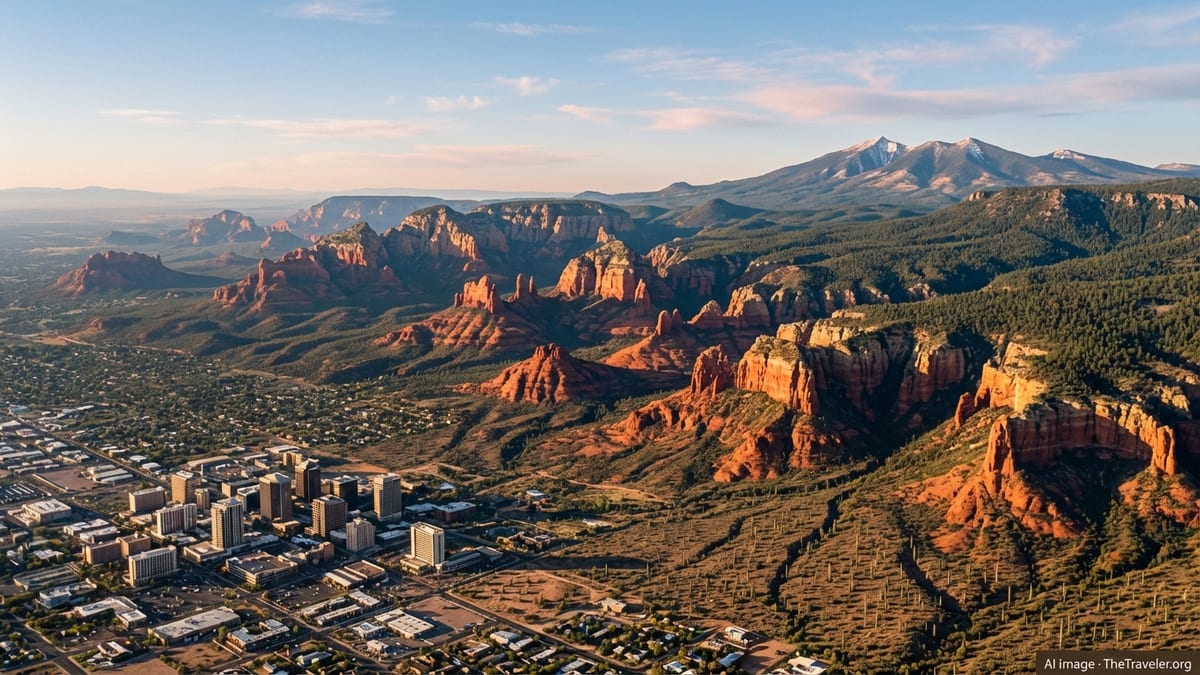
Sedona, about a two-hour drive north of Phoenix, is synonymous with towering red-rock formations, canyon trails and sunsets that turn the cliffs from rust to deep crimson. It feels far smaller and more intimate than the Phoenix metro, yet it welcomes visitors from all over the world who come for hiking, spiritual retreats, photography and boutique stays. Where you stay within Sedona matters, because traffic on the main roads can be heavy at popular times, and neighborhoods differ in walkability and atmosphere.
Uptown Sedona forms the busy core along the main strip of shops, galleries and tour offices perched above Oak Creek. This is the best base for first-time visitors who want a classic postcard view and the ability to walk out the door to browse stores or grab a meal without moving the car. Many hotel rooms here face directly onto the red rocks, and you can join Jeep tours, shuttle excursions and photo sessions a few minutes from your lobby. The trade-off is higher prices, limited parking and a more touristy feel with steady foot traffic, especially on weekends and holidays.
West Sedona stretches along Highway 89A with a more residential character, a wider mix of budget to midrange lodging and easier access to several trailheads and scenic overlooks. Travelers who have visited before, or who prioritize early-morning hikes and quieter evenings, often choose this side of town. You still have cafes, grocery stores and restaurants along the main strip, but at night the atmosphere is calmer than Uptown. Because West Sedona spreads out, you will rely more on a car, yet you may spend less time stuck in central congestion.
Just south of Sedona proper, the Village of Oak Creek offers an even more laid-back base near landmarks such as Bell Rock and Cathedral Rock. Lodging here ranges from small hotels to vacation rentals, generally at lower rates than in central Sedona. This suits travelers who do not mind driving into Uptown for occasional meals or shopping in exchange for quieter nights and wide-open views. Wherever you stay in the Sedona area, expect comparatively high nightly rates relative to some Arizona cities, driven by limited supply and strong demand for red-rock scenery.
Flagstaff: Cool Mountain Town and Grand Canyon Gateway
Flagstaff sits high on the Colorado Plateau at more than a mile in elevation, surrounded by ponderosa pine forests and the volcanic peaks of northern Arizona. The climate here is dramatically cooler than in Phoenix or Scottsdale, with snowy winters and mild summers that draw both Arizona residents and travelers seeking a break from desert heat. Staying in Flagstaff makes sense if you value a classic college-town main street, easy access to national parks and a relaxed, outdoorsy culture.
Downtown Flagstaff, centered around the historic railroad corridor and older brick buildings, is compact and walkable. Streets near the train station and the historic Weatherford Hotel cluster coffeehouses, pubs, gear shops and independent restaurants in a few tightly packed blocks. Choosing a hotel or inn in or near this area lets you leave the car parked while you explore breweries, local shops and seasonal events on foot. The atmosphere is casual and youthful, influenced by the nearby Northern Arizona University campus.
Along Milton Road and Route 66, motels and chain hotels provide practical options for road-trippers and families, often with easier highway access and parking than the historic core. These corridors suit travelers who plan early departures for places like Grand Canyon National Park or Sunset Crater Volcano National Monument and who primarily need a clean, convenient place to sleep. Neighborhoods slightly uphill from downtown hold bed-and-breakfasts and vacation rentals under tall pines, giving more of a cabin-like feel while remaining a short drive from restaurants and services.
From Flagstaff, the South Rim of the Grand Canyon is roughly a 90-minute drive, making it feasible for long day trips or as a staging point for a night inside the park. Winter visitors should be prepared for snow and occasional storm-related road restrictions, both around Flagstaff and en route to the canyon. In exchange, you get starry skies, crisp air and a completely different feel from the desert environments farther south. For travelers combining national park visits with Route 66 nostalgia and craft beer, Flagstaff often becomes the preferred northern Arizona base.
Comparing Costs, Seasons and Trip Styles
Across these four cities, nightly costs fluctuate significantly by season and local events, so it is helpful to think in broad ranges rather than fixed figures. Phoenix and Scottsdale see some of their highest rates from late fall through early spring, when desert weather is most appealing and when spring training baseball and golf tournaments draw visitors. Sedona commands premium pricing most of the year, especially during mild spring and fall months, while Flagstaff’s peak demand often concentrates in summer and winter holiday periods due to its cooler temperatures and snow.
Summer brings very high daytime heat to Phoenix and Scottsdale, which lowers hotel prices but restricts comfortable outdoor activity to early mornings and evenings. Sedona can still be hot in midsummer, yet it is usually somewhat cooler than the low desert and offers shaded canyon hikes and creekside spots as relief. Flagstaff remains the most comfortable in high summer, with many days topping out in the 70s or low 80s Fahrenheit, making it attractive for hiking, mountain biking and simply lingering outdoors.
Trip style should guide your choice as much as budget and weather. Travelers focused on dining, nightlife, shopping and day spas might gravitate toward Scottsdale or central Phoenix. Those who care most about trail access, scenic drives and quiet stargazing lean toward Sedona or Flagstaff. Golfers may base in Scottsdale or North Phoenix for course density, while families mixing a bit of everything often split their stay: a few nights near Phoenix or Scottsdale on arrival, then several days in Sedona or Flagstaff.
If you prefer not to change hotels, choose one hub and build day trips around it with realistic drive times. From Phoenix or Scottsdale, Sedona is comfortable as a long day trip, though it makes for a very full day. From Sedona, you can reach Flagstaff and the South Rim of the Grand Canyon on separate outings. Each combination adds variety while keeping your luggage moves to a minimum.
Which City Fits Your Itinerary Best
For a long weekend focused on sunshine, pool time and dining, Scottsdale or Phoenix are logical choices. Stay in Old Town Scottsdale if you want to walk between galleries and restaurants, or choose a larger Scottsdale or Phoenix resort if you want on-site golf, spa services and sprawling pool complexes. A car allows side trips to desert preserves, architectural landmarks and regional parks, but you can also be content remaining mostly within one neighborhood.
For a weeklong stay centered on hiking and scenery, Sedona offers the strongest combination of trail density and comfortable lodging. Base in Uptown if you want a classic tourist hub with walkable restaurants and sunset views from your balcony, understanding that it will be busy at peak times. Pick West Sedona or the Village of Oak Creek if you prioritize easier parking, a calmer pace and quick access to trailheads in multiple directions.
If your primary goal is visiting the Grand Canyon and other northern Arizona attractions, Flagstaff provides the most practical base. A night or two inside Grand Canyon National Park can be paired with several nights in Flagstaff for more dining options and flexibility in case of changing weather. This combination lets you experience sunrise and sunset on the canyon rim and still enjoy the amenities of a small city before or after your park stay.
Travelers with ten days or more can experience all four cities on a loop that begins and ends in Phoenix. One common pattern is to start with a night in Phoenix or Scottsdale to recover from flights, continue to Sedona for three or four nights of hiking and relaxation, move on to Flagstaff for a couple of nights with a day trip to the Grand Canyon, then return south to the Phoenix area for a final city-focused evening before departure. This structure reduces backtracking and lets you experience both desert and high-country landscapes in a single trip.
The Takeaway
Phoenix, Sedona, Scottsdale and Flagstaff each deliver a sharply different slice of Arizona, and all four can make sense as a home base depending on your plans. Phoenix is ideal for big-city energy, direct flight access and a wide spread of neighborhood options. Scottsdale excels at pairing stylish resorts with walkable Old Town streets and access to golf and spas. Sedona offers dramatic red-rock scenery right outside your door, with choices between lively Uptown and quieter outlying areas.
Flagstaff rounds out the set with a cooler climate, historic downtown and easy access to the Grand Canyon and other high-country attractions. You can treat it as a primary base or as a key stop in a longer loop. Once you are clear about season, budget and preferred pace, the decision between these cities becomes much easier, and in many cases the best answer is not either-or but a thoughtful combination.
Whichever base or mix you choose, remember that distances in Arizona feel different than on a small coastal city break. Build in time for scenic drives, consider how the elevation and temperatures will feel during your travel dates and give yourself at least one unscheduled day simply to sit by a pool, linger in a coffee shop or watch the light change on distant cliffs. That slower rhythm is part of what makes an Arizona stay in any of these cities memorable.
FAQ
Q1. Is Phoenix, Sedona, Scottsdale or Flagstaff best for a first trip to Arizona?
For a first visit, many travelers choose Scottsdale or Sedona. Scottsdale combines easy access, resorts and nightlife, while Sedona offers dramatic scenery and hiking with a smaller-town feel.
Q2. Can I visit Sedona, Flagstaff and the Grand Canyon as day trips from Phoenix?
You can technically reach each as a day trip from Phoenix, but it makes for very long days. For a more relaxed pace, plan at least one overnight in Sedona or Flagstaff when visiting the Grand Canyon.
Q3. Which city is most budget friendly?
In broad terms, Phoenix tends to offer the widest range of budget-friendly accommodation, followed by parts of Flagstaff. Sedona and central Scottsdale usually have higher average room rates.
Q4. Where should I stay in summer when Arizona is very hot?
Flagstaff is the most comfortable base in midsummer thanks to its higher elevation, with Sedona as a somewhat cooler alternative to Phoenix and Scottsdale. Low-desert cities can be extremely hot at that time.
Q5. Is Sedona or Flagstaff better for visiting the Grand Canyon?
Flagstaff is closer to the South Rim and works better purely as a Grand Canyon gateway. Sedona is better if you want to combine canyon time with red-rock hikes and resort-style relaxation.
Q6. Do I need a car in Phoenix or Scottsdale?
A car is very helpful in both, as distances are long and heat can make walking uncomfortable. In Old Town Scottsdale or downtown Phoenix you can walk locally, but you will still want transport for most outings.
Q7. Is Sedona walkable without a car?
Uptown Sedona is walkable for shops and restaurants, but most trailheads and scenic points require a short drive or shuttle. A car provides more flexibility for exploring the wider area.
Q8. Will I need winter gear if I stay in Flagstaff?
From roughly late fall through early spring, you should be prepared for cold temperatures in Flagstaff and possible snow, especially if you plan to be outdoors in the evenings or visit nearby high-elevation areas.
Q9. Which city is best for nightlife?
Scottsdale, especially Old Town, has the most concentrated nightlife with cocktail bars, lounges and late-opening restaurants. Phoenix’s central districts and Flagstaff’s downtown also offer bars but on a smaller scale.
Q10. Is it worth splitting my stay between more than one Arizona city?
Yes. Many travelers find that combining, for example, Scottsdale with Sedona or Sedona with Flagstaff provides a richer mix of desert city life, red-rock scenery and mountain air without adding too much driving.