

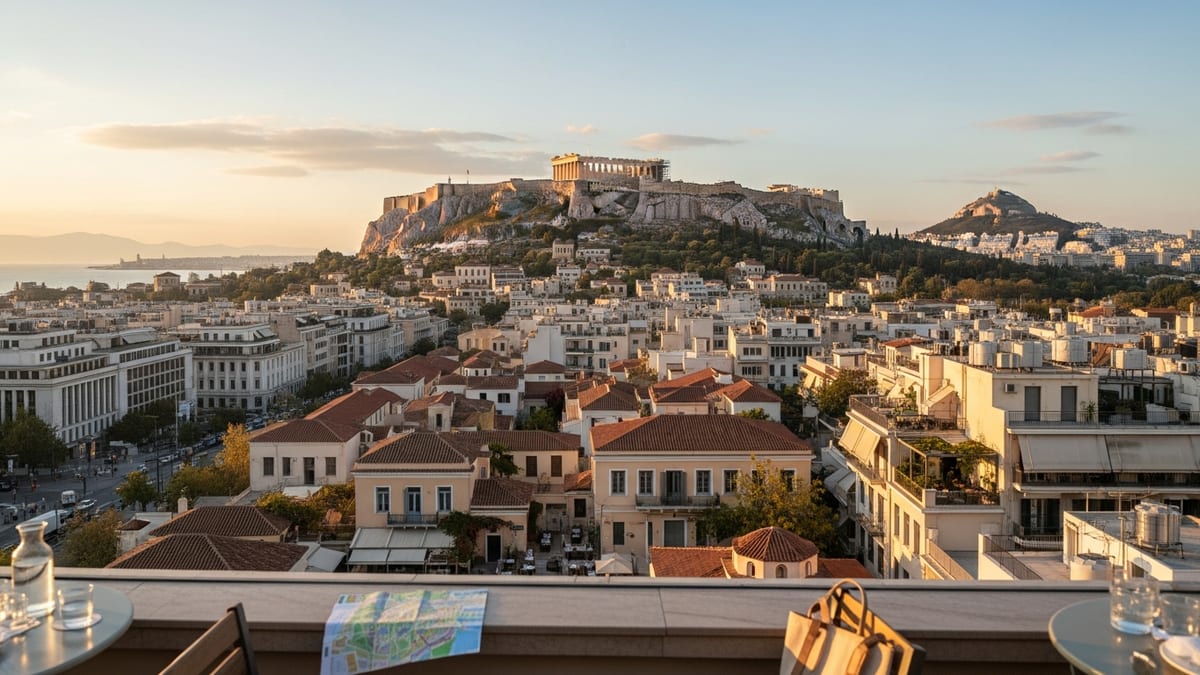
Athens is a city where ancient history and modern Mediterranean life collide, and your base can shape how you experience it. For first-time visitors, choosing the right neighborhood is less about chasing the cheapest bed and more about balancing walkability, safety, nightlife, and easy access to the Acropolis and other landmarks. From the cobbled lanes of Plaka to the café terraces of Kolonaki and the sea breezes of the Athenian Riviera, each area offers a distinct take on the Greek capital.
Understanding Athens Layout and Getting Around
Central Athens is compact and surprisingly walkable for a capital city. The main visitor-friendly neighborhoods cluster around the Acropolis and Syntagma Square, with most first-time visitors rarely needing to travel more than a couple of metro stops to reach major sights. The historic triangle formed by Syntagma, Monastiraki, and the Acropolis contains many of the city’s headline attractions, including the Acropolis Museum, Roman Agora, and atmospheric old streets lined with neoclassical houses.
The metro system is efficient and straightforward, with Line 3 linking Athens International Airport directly to Syntagma and Monastiraki in about 40 minutes. Trains generally run every 30 minutes from the airport, and the connection makes it easy for new arrivals to reach the city center without navigating complex transfers. Taxis and app-based rides are widely available as a back-up, especially late at night when metro frequencies drop.
For first-time visitors, the most convenient bases are neighborhoods close to stations such as Syntagma, Monastiraki, Acropoli, and Thissio. Staying within a 10 to 15 minute walk of these hubs means you can combine walking tours with quick metro hops to the National Archaeological Museum, Piraeus port, or the up-and-coming districts that ring the center. The closer you are to the Acropolis slopes or Syntagma, the less time you will spend in transit and the more time you can devote to street cafés and sunset viewpoints.
Safety is a frequent concern for newcomers, but central Athens is broadly safe, particularly in the main tourist neighborhoods of Plaka, Koukaki, Kolonaki, Syntagma, Monastiraki, and Pangrati. As in any major European city, pickpocketing is the main risk, especially on crowded metro services and in busy squares. Certain central areas such as Omonia and parts of Exarchia feel rougher at night, so many visitors prefer to stay elsewhere and pass through by day only if needed. Choosing a well-lit, lively neighborhood with a strong local presence is the simplest way to feel comfortable after dark.
Plaka: Classic Athens for First-Time Visitors
Plaka is often the first name that comes up when travelers ask where to stay in Athens, and with good reason. Set directly below the Acropolis, this historic district is a maze of cobbled alleys, vine-draped balconies, and pastel neoclassical façades. It is the closest thing central Athens has to an old town, and you can sense layers of history in its Byzantine churches, Ottoman fountains, and hidden courtyards. For first-timers who want to be immersed in the postcard version of Athens, this is an ideal base.
The biggest advantage of Plaka is proximity. From most streets here you can walk to the Acropolis ticket gates in around 10 to 15 minutes, reach Syntagma Square in about the same time, and drop down into Monastiraki for its flea market and metro connections within a short stroll. The compact layout lets you easily return to your hotel for a midday break or a rooftop drink before venturing out again for dinner. Many small and mid-range hotels in Plaka make the most of their location with rooftop terraces that frame the Parthenon, especially dramatic at night when it is illuminated.
On the ground, the neighborhood is unabashedly touristy, but it wears this side of its personality with charm. Souvenir shops sell everything from ceramics to olive wood, while tavernas line pedestrian lanes with tables spilling into the street, often accompanied by live bouzouki music in the evening. If you wander just a few blocks away from the busiest arteries, you will uncover quieter residential corners and small local cafés that give a sense of everyday life. Early mornings and late evenings are particularly atmospheric, when the crowds thin and the Acropolis looms above largely in silence.
The trade-offs in Plaka are cost and crowds. Room rates run higher here than in more residential areas, especially in peak season from May to October, and streets can feel congested at midday when cruise ship excursions and tour groups arrive. Noise from restaurants and bars can carry late into the night on some lanes. For many first-time visitors, however, the romance of staying in the shadow of the Acropolis more than compensates. If you prioritize charm, walkability, and Acropolis views over late-night quiet and local anonymity, Plaka is the most quintessentially “Athens” neighborhood to call home.
Syntagma & Surroundings: Best for Convenience and Short Stays
Syntagma Square is the practical heart of Athens, a major transport hub and political landmark dominated by the Greek Parliament and the daily changing of the Presidential Guard at the Tomb of the Unknown Soldier. For first-time visitors who have limited time in the city or who value easy logistics above all, staying near Syntagma is hard to beat. The square sits on the blue metro line that runs directly to and from the airport, and airport buses also terminate here, which can be a useful back-up when the metro is crowded or if there are service disruptions.
The neighborhood around Syntagma blends grand hotels, government buildings, and busy shopping streets such as Ermou, which leads down toward Monastiraki. A number of Athens’s most established hotels are concentrated here, including long-standing luxury properties that appeal to travelers looking for classic service, spas, and refined rooftop bars with Acropolis views. At the same time, newer boutique and mid-range hotels have opened along side streets, offering contemporary design and good value within a short walk of the square.
From a sightseeing perspective, Syntagma is centrally placed. You can walk to Plaka in under 10 minutes, reach the National Garden in just a few steps, and connect quickly by metro or tram to the southern coastal districts. For travelers planning onward ferries to the islands, the direct metro connection to Monastiraki and then on to Piraeus makes early-morning departures more manageable. This area also works well for business travelers who need reliable transport and proximity to institutions, yet still want to fit in an Acropolis visit before or after meetings.
The main downside of Syntagma as a base is its urban intensity. Traffic is constant along the major arteries, demonstrations occasionally gather near Parliament, and the square can feel hectic at peak times. While the immediate surroundings are safe and heavily policed, streets have a more “big city” ambiance than the romantic lanes of Plaka or the residential calm of Koukaki. If you prefer a quieter retreat, look just beyond the square toward the edges of Plaka and Kolonaki, where the pace slows slightly while convenience remains.
Koukaki & Makrygianni: For the Acropolis and Local Flavor
Just south of the Acropolis, the neighborhoods of Koukaki and Makrygianni are often recommended by locals as some of the best places to stay for a blend of proximity and authentic atmosphere. Anchored by Acropoli metro station and the Acropolis Museum, Makrygianni is the more overtly visitor-oriented of the two, with a mix of hotels, souvenir shops, and restaurants catering to museum-goers and Acropolis tours. Step a few blocks further south into Koukaki, however, and the feel quickly shifts to a lived-in residential district with tree-lined streets and a dense scattering of neighborhood cafés and bakeries.
For first-time visitors who want to wake up within sight of the Acropolis but do not necessarily need to be in the thick of souvenir stands, Koukaki offers a compelling alternative to Plaka. You are still within easy walking distance of the Acropolis entrance and the pedestrianized promenade that circles its base, yet your immediate surroundings feel more local. Popular streets such as Drakou and Georgaki Olympiou buzz in the evenings with Athenians meeting for wine, meze, and dessert rather than primarily tour groups, giving you a taste of contemporary city life.
Accommodation in Koukaki spans small family-run hotels, stylish guesthouses, and an increasing number of serviced apartments. This range makes it attractive for families and longer stays, as you can find options with kitchenettes and multiple bedrooms alongside traditional double rooms. The neighborhood has a reputation for being safe and welcoming, and its largely residential character means noise levels often drop earlier than in nightlife-heavy districts. At the same time, the short walk to Fix or Syngrou-Fix metro stations puts the rest of Athens within easy reach.
The main compromise in Koukaki and Makrygianni is that you are a little farther from Syntagma and Monastiraki on foot than from Plaka or Psiri, although the difference is measured in minutes rather than miles. Some streets can be steep, especially as you climb toward Filopappou Hill, but the reward is access to some of the city’s most scenic walking routes and sunset viewpoints. For many first-time visitors, this balance of local flavor, safety, and closeness to ancient sites makes Koukaki one of the most satisfying areas to stay.
Monastiraki, Psiri & Thissio: Nightlife, Markets and Street Life
Northwest of the Acropolis, the trio of Monastiraki, Psiri, and Thissio appeals to travelers who want their Athens base infused with nightlife and street energy. Monastiraki Square itself is one of the city’s main crossroads, with a metro station that connects directly to both the airport line and the green line from Piraeus. Above ground, the area is known for its flea market, vintage shops, street food stalls, and rooftop bars that look straight across to the Parthenon.
Psiri, just behind Monastiraki, has transformed over the past two decades from a traditional working neighborhood into one of Athens’s liveliest going-out districts. By day, you will see street art, small workshops, and laid-back cafés; by night, tables spill across squares while cocktail bars, meze joints, and live music venues fill up with a mix of locals and visitors. Thissio, slightly farther west along the pedestrian promenade, feels a touch quieter but still boasts a strong lineup of open-air cafés and restaurants, many of them enjoying direct views of the illuminated Acropolis above.
Staying in this cluster of neighborhoods is particularly convenient if you value access to nightlife and do not mind a bit of noise. Many small hotels and guesthouses sit on or just off the busy squares, so soundproofing and room orientation become important. On the plus side, you can walk to most central sights, including the Acropolis, Ancient Agora, and Roman Agora, without relying heavily on transport. The area appeals to budget and mid-range travelers thanks to a wide range of simple hotels, hostels, and apartments.
Like most busy city-center districts, Monastiraki and Psiri require a little extra street awareness. The crowds that make the area lively also attract pickpockets, particularly in and around the metro station and packed pedestrian lanes. Some blocks can feel slightly edgy late at night, although the main restaurant and bar streets remain well lit and full of people. If your priority is quiet nights and a purely residential atmosphere, other neighborhoods may suit you better. If you want to be in the thick of things and are comfortable with urban energy, this area is an excellent introduction to modern Athens after dark.
Kolonaki & Pangrati: Style, Cafés and Museums
On the slopes of Mount Lycabettus, northeast of Syntagma, Kolonaki offers a sophisticated, upscale vision of Athens. Known for its designer boutiques, art galleries, and polished cafés, it is a favorite with fashion-conscious locals and visitors who appreciate a touch of luxury. Streets such as Skoufa, Patriarchou Ioakim, and Milioni are lined with stylish bars and restaurants that stay busy well into the evening, while small squares provide space for leisurely coffee breaks under the trees.
Kolonaki’s location is particularly appealing for culture lovers. Several of Athens’s best museums, including the Benaki Museum and the Museum of Cycladic Art, sit just beyond its borders, and the neighborhood offers easy access on foot to the National Garden and Syntagma. The funicular that climbs Lycabettus Hill departs from its upper reaches, taking you to one of the city’s best panoramic viewpoints. Accommodation skews toward boutique and high-end hotels, along with serviced apartments that cater to longer stays and returning visitors.
Immediately south of Kolonaki, Pangrati offers a slightly more relaxed, residential alternative that is rapidly gaining attention. Long a favorite of students and young professionals, it blends traditional corner cafés with contemporary wine bars and inventive bistros. New boutique hotels and guesthouses have opened along quiet streets, and the area feels firmly local without being intimidating for visitors. From Pangrati you can reach the Panathenaic Stadium and the National Garden on foot, and Syntagma is a short walk or bus ride away.
For first-time visitors, Kolonaki and Pangrati work best for those who want to experience Athens beyond the immediate orbit of the Acropolis, while still remaining well connected. You will not have the Parthenon outside your window, but you will have a deeper sense of the modern city: its café culture, design shops, and neighborhood restaurants frequented by Athenians themselves. Both areas are considered safe and pleasant to walk at night, and they make excellent bases for repeat visitors who have already stayed closer to the sights and now seek a more cosmopolitan day-to-day feel.
Athenian Riviera: Beach Vibes within Reach of the Center
For visitors arriving in warmer months, the idea of combining city sightseeing with time by the sea is understandably tempting. The stretch of coastline known as the Athenian Riviera runs south from the city toward Glyfada, Vouliagmeni, and beyond, offering organized beaches, marinas, seaside promenades, and resort-style hotels. While it is not as convenient for the Acropolis as the central neighborhoods, staying here can make sense for travelers who plan to spend several days in Athens and want a holiday atmosphere without flying on to the islands.
Glyfada and Vouliagmeni are two of the most popular bases along this strip. Glyfada has a youthful, energetic feel, with shopping streets, cafés, and cocktail bars clustered near the tram line that runs back toward central Athens. Vouliagmeni leans more toward relaxed luxury, with upscale hotels, beach clubs, and thermal lake swimming. High-end international brands have invested in this coastline in recent years, bringing resort-level amenities such as spas, fine-dining restaurants, and private coves that attract both locals and international travelers.
The trade-off when basing on the Riviera is commuting time. A tram or taxi into central Athens for sightseeing typically takes around 30 to 45 minutes, longer at peak traffic times. For a first-time visitor with only two or three days in the city, this can feel like a distraction from the core historical experience. However, if your trip spans a week or more, or you are combining business in Athens with downtime by the sea, staying here can provide a welcome contrast to the stone and bustle of the city center.
Many travelers choose a hybrid approach: two or three nights in a central neighborhood like Plaka or Koukaki for intensive sightseeing, followed by a few nights on the Athenian Riviera to unwind. If your priorities lean more toward swimming, sunsets, and spa time than late-night museum openings and neighborhood wandering, this coastal region can serve as your primary base, with day trips into the center as needed.
Practical Tips for Choosing Your Athens Base
When deciding where to stay in Athens for a first visit, start by clarifying your priorities. If your main goal is to see the Acropolis, Acropolis Museum, and the core ancient sites within a limited timeframe, choose a neighborhood that puts you within walking distance: Plaka, Koukaki, Makrygianni, Monastiraki, Psiri, and Thissio all qualify. This lets you visit early in the morning or later in the afternoon to avoid the worst heat and crowds without worrying about long journeys across town.
Think next about your comfort level with city noise and nightlife. If you enjoy being surrounded by nightlife and do not mind some late-night sound from bars and cafés, Monastiraki, Psiri, and parts of Plaka deliver that energy in abundance. If you prefer quieter evenings and a more residential feel, Koukaki, Pangrati, and parts of Kolonaki typically offer calmer streets while still providing plenty of places to eat and drink. Checking recent guest reviews that mention noise and street activity is helpful when comparing specific properties.
Budget is another key consideration. Central Athens offers options at almost every price point, but general patterns hold. Plaka and Kolonaki often command the highest rates, particularly for boutique and luxury hotels with Acropolis or Lycabettus views. Koukaki, Pangrati, and parts of Monastiraki and Psiri tend to offer better value, especially in mid-range and apartment-style accommodation. Booking well in advance for high season, and being flexible about exact streets within your chosen neighborhood, can unlock better deals without sacrificing location.
Finally, factor in arrival and departure logistics. If you have a very late arrival or early departure from Athens International Airport, staying close to Syntagma or Monastiraki makes it easier to rely on the airport metro or bus. Travelers connecting to island ferries from Piraeus might also value quick access to the green metro line. Those planning a mix of city and coastal time may prefer to start in the center and then move to the Athenian Riviera, or vice versa, depending on flight times and energy levels at different stages of their trip.
The Takeaway
Athens offers more than one “right” place to stay for first-time visitors. Plaka delivers the classic picture-postcard experience beneath the Acropolis, Koukaki blends ancient proximity with neighborhood authenticity, and Syntagma excels for sheer convenience and transport. Monastiraki, Psiri, and Thissio add nightlife and street life, while Kolonaki and Pangrati provide a more polished, café-driven take on the city. For those with extra time and a desire for the sea, the Athenian Riviera rounds out the options with resort-style relaxation just beyond the urban core.
Choosing the best area ultimately comes down to how you like to explore. If walking between landmarks matters most, stay near the Acropolis slopes. If you want a stronger emphasis on contemporary dining, shopping, and gallery-hopping, Kolonaki and Pangrati may resonate more. Budget-conscious travelers can find good value just a few blocks beyond the busiest tourist streets, while luxury seekers will not be short on rooftop pools and refined service. With clear priorities and a basic grasp of the city’s layout, you can select a neighborhood that turns Athens from a set of famous ruins into a lived, walkable, memorable city.
FAQ
Q1: What is the best neighborhood to stay in Athens for a first-time visitor?
For most first-time visitors, Plaka is the top choice thanks to its central location beneath the Acropolis, walkability to major sights, and atmospheric old streets. Koukaki is a close second for those who want to be near the Acropolis but in a more residential, local-feeling area.
Q2: Is it better to stay near the Acropolis or near Syntagma Square?
Staying near the Acropolis (Plaka, Koukaki, Makrygianni) puts you closest to the main ancient sites and is ideal if sightseeing is your main goal. Staying near Syntagma Square is more convenient for airport and bus connections and works well for shorter stays or business trips that require easy transport.
Q3: Is Athens city center safe at night?
Central neighborhoods such as Plaka, Koukaki, Kolonaki, Syntagma, Monastiraki, and Pangrati are generally safe, lively, and well lit at night. As in any major city, you should keep an eye on your belongings, avoid unlit side streets, and be especially careful on crowded metro platforms where pickpockets may operate.
Q4: Which area is best if I want nightlife?
If nightlife is a priority, look to Monastiraki, Psiri, and Thissio, where you will find a high concentration of bars, tavernas, and late-opening cafés, many with Acropolis views. Parts of Kolonaki also offer a sophisticated bar and restaurant scene that stays busy well into the evening.
Q5: Where should families stay in Athens?
Families often do well in Koukaki and Makrygianni, which combine proximity to the Acropolis and its museum with a safe, residential feel and plenty of casual eateries. Plaka also appeals to families, especially if you choose a quieter side street away from the busiest tavernas.
Q6: Is the Athenian Riviera a good base for a first visit?
The Athenian Riviera is best for visitors who have several days in Athens and want to mix sightseeing with beach time. For short first visits focused on the Acropolis and museums, a city-center base is more practical. Many travelers split their stay between a central neighborhood and a few nights on the coast.
Q7: How important is being close to a metro station?
While central Athens is walkable, being near a metro station such as Syntagma, Monastiraki, Acropoli, or Thissio makes it much easier to reach the airport, Piraeus port, and outlying museums. For first-time visitors, choosing accommodation within a 5 to 10 minute walk of a station offers a good balance of flexibility and comfort.
Q8: Which neighborhoods offer the best views of the Acropolis?
Plaka, Monastiraki, Thissio, and Makrygianni have many hotels and rooftop terraces with direct Acropolis views. Koukaki and parts of Syntagma also offer views from certain properties, especially those with rooftop bars or upper-floor rooms facing north toward the hill.
Q9: Are there budget-friendly areas close to the main sights?
Yes. Psiri, parts of Monastiraki, and sections of Koukaki and Pangrati often have more budget-friendly hotels and apartments than Plaka or Kolonaki, while still placing you within reasonable walking distance of key attractions. Booking early and avoiding peak dates helps secure lower rates in these central districts.
Q10: How many nights should I stay in Athens, and should I change neighborhoods?
For a first visit focused on the main sights, two or three nights in a central neighborhood such as Plaka, Koukaki, or Syntagma is usually enough. If you plan a longer stay of five or more nights, consider splitting your time between a central base and the Athenian Riviera, or between a classic area like Plaka and a more contemporary district such as Kolonaki or Pangrati.