

Bangkok can feel overwhelming on a first visit, but where you stay shapes how the city feels more than almost anything else. Choosing the right neighborhood means saving time in traffic, being close to the experiences you care about most, and finding a hotel that matches your budget and travel style.
From skytrain‑linked business districts to riverside hideaways and backpacker enclaves, the Thai capital offers a dense mosaic of areas, each with its own character and signature hotels.
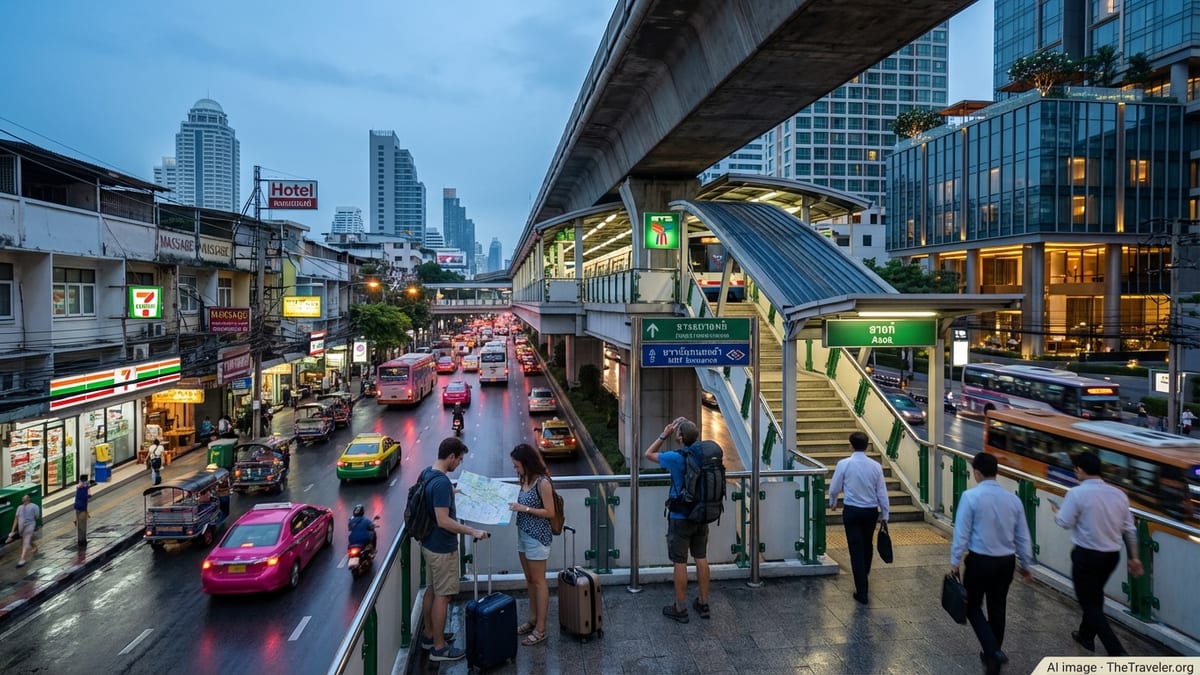
How to Choose the Best Area to Stay in Bangkok
Before focusing on specific neighborhoods, it helps to think about how you plan to use Bangkok: as a quick city break, a base for wider Thailand travel, a shopping and dining hub, or a cultural deep dive. The city is spread out, and traffic can be intense, so proximity to the BTS Skytrain, MRT subway, or Chao Phraya River boats will often matter more than exact distance on a map.
Most visitors narrow their search to a handful of central districts. Sukhumvit is the cosmopolitan backbone of modern Bangkok with endless food, nightlife, and hotel choices. Silom and Sathorn form the business heart, particularly good on weekdays. The Riverside offers iconic views and resort‑style stays close to the Old Town. Siam and nearby Ratchaprasong are the epicenter of shopping and family‑friendly entertainment. For backpackers and night owls, Khao San Road and surrounding Banglamphu remain the classic choice.
Budget also plays a clear role. Old Town and Khao San deliver outstanding value at the lower end, while riverside and central luxury properties command some of the city’s highest rates. Across almost all districts you will find a spectrum, from new design hostels and mid‑range chains to the latest ultra‑luxury openings. The following sections break down the most useful areas for visitors in 2026, with standout hotel suggestions in each.
Sukhumvit: Modern, Lively and Exceptionally Connected
Sukhumvit is often the first recommendation for visitors who want a central, well‑connected base with a huge choice of restaurants, bars, malls, and hotels at every budget. Running east from the city center, Sukhumvit Road is lined with BTS Skytrain stations and intersects with the MRT subway at key hubs like Asok, making it easy to move around without relying on taxis. Specific stretches have different personalities: Asok for convenience, Nana for nightlife, Thong Lo and Ekkamai for trendy dining, and Phrom Phong for upscale shopping and new luxury hotels.
Grande Centre Point Terminal 21 (Asok)
For many travelers, convenience tops the list, and this hotel embodies that. Grande Centre Point Terminal 21 sits directly above the Terminal 21 mall at the Asok intersection, one of Bangkok’s prime transit nodes where BTS Asok and MRT Sukhumvit meet. Guests can step from their room into shops, food courts, and trains without ever crossing a street, which is particularly appealing in the rainy season or with children in tow.
Rooms are contemporary, bright, and designed to take advantage of skyline views. Facilities include a large outdoor pool with city vistas, a well‑equipped gym, and generous public spaces that feel more resort‑like than urban. It is a strong mid‑upper tier choice for first‑timers who want stress‑free access to the entire city, from the Old Town to the malls of Siam and the riverside piers.
Carlton Hotel Bangkok Sukhumvit
Positioned between Asok and Phrom Phong, Carlton Hotel Bangkok Sukhumvit strikes a balance between business efficiency and leisure comfort. A short walk from the BTS, it is well placed for the high‑end EmQuartier and Emporium malls while still close to nightlife on Soi 11 and Soi Cowboy for those who want it.
Rooms are spacious and understated in style, with thoughtful soundproofing that buffers Sukhumvit’s noise. An elevated pool deck, contemporary Asian and international dining, and an attentive concierge team make this a reliable choice for couples and business travelers who want modern services without five‑star pricing. It is especially attractive during shoulder seasons when rates can drop significantly while standards remain high.
Hyatt Place Bangkok Sukhumvit 1 (Nana area)
Opened in late 2024 near Nana BTS, this property brings the brand’s casual, functional style to a lively part of Sukhumvit that blends nightlife with excellent international dining. The location works well for travelers who want to be in the thick of things while still benefiting from easy rail access to Siam, the riverside, and the airport rail link connections.
Rooms feature clean lines, comfortable beds, and smart layouts suited to both work and relaxation. The hotel’s all‑day dining outlet and rooftop bar give guests local options if they prefer to stay in. It is particularly appealing for younger travelers and digital workers who value brand consistency and walkable nightlife over resort trimmings.
Upcoming: Fairmont Bangkok Sukhumvit
Set to join the Sukhumvit skyline in 2025, Fairmont Bangkok Sukhumvit will add another heavyweight luxury name to the area. With more than 400 rooms and a prime position near the BTS, it is expected to combine the brand’s polished service with generous event space and multiple restaurants and bars.
While booking is still in the future, travelers planning ahead for late‑2025 or 2026 should keep an eye on opening rates, which can be competitive as new hotels build occupancy. For visitors who like staying in fresh properties with top‑tier amenities, this is one to watch.
Silom & Sathorn: Business Core with Nightlife and Green Space
Silom and Sathorn form Bangkok’s central business district, a dense grid of office towers, embassies, rooftop bars, and established hotels. By day these streets are busy with office workers and quick‑service eateries; by night, they transform into a patchwork of markets, late‑opening restaurants, and nightlife areas. The BTS Skytrain runs along Silom Road while the MRT line cuts under Sathorn, making this one of the easiest parts of the city for cross‑town connections.
These districts suit travelers who value efficient transit and relative calm by night while remaining a short ride from both Sukhumvit and the Riverside. The northern edge also abuts Lumphini Park, giving early risers and runners a rare taste of greenery in the city center.
Dusit Thani Bangkok at Dusit Central Park
The return of the Dusit Thani brand to its historic corner beside Lumphini Park is one of Bangkok’s most notable recent hotel stories. Reopened in late 2024 as part of the Dusit Central Park development, the hotel blends the nostalgia of the original property with a new, contemporary tower and integrated retail and dining spaces.
Guests benefit from sweeping views across Lumphini’s treetops and down Sathorn Road, along with quick access to both BTS and MRT networks. The interiors reinterpret Thai motifs in a modern idiom, and the property emphasizes local hospitality traditions while adding updated spa and wellness facilities. It is particularly well suited for travelers who appreciate a strong sense of place in their hotels.
Grand Nikko Bangkok Sathorn (Upcoming)
Due in 2025, Grand Nikko Bangkok Sathorn will bring a Japanese luxury sensibility to the business district. Its location on Sathorn Road should offer straightforward access to the BTS and MRT, making it a practical choice for corporate travelers attending meetings across the city.
While details continue to emerge, prospective guests can expect high‑touch service, refined dining, and a strong focus on comfort and efficiency, with generous room sizes compared with many older business hotels in the area.
Mid‑Range and Boutique Options
Beyond the headline openings, Silom and Sathorn host a dense network of mid‑scale international brands and design‑driven boutiques. Many offer rooftop pools with city views, compact but well‑planned rooms, and breakfast‑inclusive rates that become especially competitive on weekends when business demand dips.
Travelers who want quick transit, walkable access to Lumphini Park, and calmer streets than those in Sukhumvit often find this area the best compromise. It is also a good launchpad for day trips, thanks to its central location and plentiful taxi and rideshare availability.
Riverside & Old Town: Views, Heritage and Temple Access
For many visitors, the image of Bangkok is tied to the Chao Phraya River and the spires of the Grand Palace and Wat Arun. Staying along the riverside or in the adjacent Old Town (Rattanakosin) gives direct access to this historic core. Ferries and tourist boats connect hotels with temples, markets, and new cultural venues, and several properties operate private shuttles to the nearest pier or rail links.
The riverside is where you find some of Bangkok’s most storied luxury hotels, while the Old Town offers a growing crop of stylish mid‑range and boutique options tucked into heritage shop houses. For travelers focused on sightseeing over nightlife and shopping, this area can be ideal.
Mandarin Oriental, Bangkok
One of Asia’s most famous hotels, the Mandarin Oriental sits on the river’s east bank and remains the benchmark for classic riverside luxury. Its history stretches back to the 19th century, and the property continues to balance old‑world charm with updated rooms, an exceptional riverside pool, and a collection of fine dining venues.
Service is meticulous, and the hotel’s private boat shuttles guests across to its spa and to nearby piers for onward river boat journeys. While nightly rates are among the highest in the city, for special occasions and luxury‑focused itineraries it offers a deeply atmospheric experience that connects contemporary Bangkok with its past.
The Peninsula Bangkok
On the opposite bank, The Peninsula Bangkok stands out for its distinctive wave‑shaped design and panoramic river vistas from most rooms. The hotel’s stepped architecture ensures that even lower floors enjoy impressive views, and riverside terraces host a large pool, restaurants, and afternoon tea overlooking the passing boats.
Boat shuttles ferry guests across to the BTS and central piers. The calm positioning on the Thonburi side gives the property a resort‑like feel while remaining only minutes from the city center. It is an excellent choice for travelers who want classic luxury with a slightly quieter ambiance than some central options.
New and Upcoming Heritage Luxury on the River
Bangkok’s riverfront is in the midst of a heritage renaissance, with several landmark buildings being transformed into high‑end hotels. The old Customs House, a 19th‑century architectural icon, is being reborn as a Langham hotel with around 78 rooms, blending restored teak floors and grand staircases with contemporary comforts. Elsewhere on the river, a Plaza Athénée Nobu Hotel & Spa is planned within the historic East Asiatic Building, preserving its neo‑Palladian facade while adding Japanese‑influenced luxury hospitality.
These openings, expected by 2026, will diversify riverside options beyond the established giants, giving design‑minded guests a chance to sleep inside pieces of Bangkok’s mercantile history while enjoying state‑of‑the‑art facilities.
Old Town Boutique Hotels and Design Hostels
Within walking distance of the Grand Palace and major temples, Old Town and neighboring Banglamphu offer a mix of traditional guesthouses, renovated townhouses, and new‑wave hostels. Many are on quiet streets a few blocks from the river, allowing guests to step between temple visits, street food alleys, and sunset viewpoints with ease.
Properties in this area tend to be smaller and character‑driven, with local art, inner courtyards, and rooftop terraces overlooking temple roofs. They work well for travelers who prioritize atmosphere and heritage over pools and large‑scale amenities, and for those who want to minimize commuting time to key cultural sites.
Siam & Ratchaprasong: Shopping, Entertainment and Family‑Friendly Stays
Siam and the adjacent Ratchaprasong intersection form Bangkok’s commercial heart, packed with mega‑malls, cinemas, arcades, and air‑conditioned walkways that link directly to the BTS Skytrain. This is an ideal base for travelers who come primarily to shop, families needing easy indoor entertainment, and visitors who want to reduce time in traffic by being able to walk to many attractions.
Ratchaprasong in particular is known for its density of hotels and shopping centers around the Chit Lom BTS station. From here, elevated pedestrian paths connect to CentralWorld, Central Chidlom, Gaysorn Village, and several other malls, letting guests move between properties and shops entirely above street level.
Pathumwan and Ratchaprasong Luxury Hotels
Several long‑established five‑star hotels dominate this district, offering direct access to malls and the BTS. These properties typically feature large pools, multiple restaurants, and extensive spa and fitness facilities, making them good options for families who plan to spend downtime at the hotel as well as out exploring.
Rooms often have floor‑to‑ceiling windows with sweeping city views, and club‑level floors cater to business guests with meeting spaces and lounges. The overall feel is urban resort, with all the conveniences of a city address and the ability to retreat to quiet, well‑insulated rooms when the bustle becomes too much.
Aman Nai Lert Bangkok
Opened in 2025 just off the main shopping corridors, Aman Nai Lert Bangkok represents the ultra‑luxury end of the spectrum. Set beside the lush Nai Lert Park in the Pathumwan district, it offers a rare combination of central location and garden seclusion. With only 52 suites, each large and minimally styled, the hotel targets guests who prioritize privacy, design, and highly personalized service.
Facilities include a shaded infinity pool, discreet high‑end dining with Japanese and Italian influences, and a wellness program oriented toward jet lag recovery and urban retreat. Rates are among the city’s highest, but for travelers for whom budget is secondary to exclusivity and tranquility, this property is one of Bangkok’s most compelling new addresses.
Mid‑Range and Family‑Oriented Choices
Mid‑scale hotels and serviced apartments are scattered throughout Siam and Ratchaprasong, often attached to or directly opposite major malls. Many offer family rooms, kids’ clubs, and easy access to attractions like aquariums, interactive museums, and cinemas within the neighboring shopping complexes.
Because of the concentration of retail and dining, families can comfortably structure full days without navigating the city’s busiest roads. For short stays focused on shopping and centrally located sightseeing, this area can minimize logistics and maximize time spent doing rather than commuting.
Khao San Road & Banglamphu: Backpacker Energy and Budget Stays
Khao San Road and the surrounding Banglamphu neighborhood remain synonymous with backpacker Bangkok. The main strip is a dense, neon‑lit corridor of hostels, bars, tattoo studios, and travel agencies, while nearby streets offer quieter guesthouses and small hotels. This is one of the most affordable parts of the city to stay, and it sits close to the Old Town’s major temples and the Chao Phraya River piers.
The area is not connected to the BTS or MRT, so guests rely on taxis, rideshares, buses, and boats, but for those who prioritize atmosphere, social hostels, and late‑night street life, it can be the most memorable base in the city.
Khao San Road Hostels and Party Hotels
On Khao San itself, accommodation ranges from basic dormitories to mid‑range hotels with pools and rooftop bars. Prices can be extremely low compared with central districts, especially in older hostels and simple guesthouses. Noise is a constant factor on the main strip, often continuing until 2 or 3 in the morning, so these options suit heavy sleepers and travelers who plan to participate in the nightlife rather than avoid it.
Facilities often emphasize social spaces, from common rooms and bar areas to group tours and cooking classes organized by the hostel. This is an excellent area for solo travelers looking to meet others, or for budget travelers who value location and atmosphere over amenities.
Banglamphu’s Quieter Lanes
Just a few blocks away from Khao San, side streets and canal‑side lanes host quieter guesthouses and boutique hotels housed in renovated townhouses. Here, travelers can sleep in relative peace while remaining close enough to walk to Khao San’s bars, local markets, and the river piers.
Typical properties feature simple but comfortable rooms, leafy courtyards, or small pools, and often include breakfast in the rate. They are particularly suitable for couples and travelers who want a budget‑friendly but calmer base near the Old Town’s cultural attractions.
The StandardX Phra Arthit
Opened in late 2024 in the Phra Nakhon area, The StandardX Phra Arthit signals the arrival of more design‑driven brands in this part of the city. Positioned near the river and not far from Khao San, it focuses on compact but stylish rooms, creative public spaces, and a rooftop bar that appeals to both guests and locals.
For travelers who like the energy of the Old Town but prefer staying in a contemporary, curated environment rather than a classic backpacker hostel, this new opening provides an intriguing middle ground.
Emerging Creative Districts and Future Openings
Beyond the established tourist districts, several parts of Bangkok are rapidly evolving into cultural and creative hubs, with new hotels following in their wake. Along the river in Khlong San and downriver toward the old port, warehouses and shophouses are being converted into galleries, cafes, and boutique stays. Inland, former industrial zones are gaining new cultural institutions and, with them, fresh accommodation choices.
For repeat visitors and those looking for a less conventional base, these areas offer a chance to experience a different side of Bangkok, closer to where young locals live, work, and experiment.
New Cultural Anchors: Bangkok Kunsthalle and Dib Bangkok
The opening of Bangkok Kunsthalle in 2024, in a repurposed printing house complex, and the launch of Dib Bangkok, an international contemporary art museum in Khlong Toei in late 2025, underscore the city’s growing cultural credentials. These venues, located away from the traditional tourist core, are already attracting visitors interested in contemporary art and design.
As these institutions gain prominence, nearby districts can be expected to see more boutique hotels, serviced apartments, and creative hostels. Travelers who prioritize access to galleries, performance spaces, and emerging food scenes may wish to monitor these neighborhoods for new openings in 2025 and 2026.
Hotel Pipelines and What They Mean for Travelers
Bangkok’s hotel pipeline through 2026 is robust, with international brands opening across Sukhumvit, Sathorn, the riverside, and historic buildings in the old commercial districts. For visitors, this creates several advantages: sharper competition on rates, especially in shoulder seasons; more choice in specific micro‑locations near transit; and new opportunities to stay in architecturally significant buildings.
When planning a trip for late 2025 or 2026, it is worth checking whether a new property has recently opened in your preferred area. Introductory promotions can offer excellent value in luxury segments, while early guest reviews provide realistic insight into whether a hotel is delivering on its design ambitions.
The Takeaway
There is no single “best” place to stay in Bangkok, only the best area for the trip you have in mind. Sukhumvit suits travelers who want modern convenience, abundant dining, and strong transit links. Silom and Sathorn favor business visitors and those who like being near Lumphini Park and efficient transport. The Riverside and Old Town cater to culture seekers craving views and easy temple access. Siam and Ratchaprasong appeal to shoppers and families who value direct mall access. Khao San and Banglamphu welcome budget travelers and night owls in search of backpacker energy. Emerging creative districts and new luxury conversions add further layers of choice for repeat visitors.
By matching your priorities to the character of each neighborhood and then selecting a hotel that fits your budget within that area, you turn Bangkok from an intimidating sprawl into a series of walkable, navigable villages. In a city growing as fast as this one, staying informed about the latest openings and area developments ensures that your chosen base becomes one of the highlights of your time in Thailand’s capital.
FAQ
Q1. What is the best area to stay in Bangkok for first‑time visitors?
For most first‑time visitors, Sukhumvit or the Riverside work best. Sukhumvit offers excellent BTS and MRT connections, endless food and nightlife, and a wide range of hotels. The Riverside provides a more atmospheric, scenic experience near the Old Town, ideal if you plan to focus on temples and river cruises.
Q2. Which neighborhood is best for nightlife in Bangkok?
Sukhumvit, particularly around Nana, Asok, Thong Lo, and Ekkamai, has the broadest mix of bars, clubs, and late‑night eateries. Khao San Road is another nightlife hub, especially for backpackers and younger travelers who enjoy street parties and casual bars.
Q3. Where should families with children stay in Bangkok?
Families often find Siam and Ratchaprasong ideal, thanks to direct access to malls with aquariums, cinemas, and kid‑friendly restaurants. Large pools and family rooms are common in hotels here, and covered walkways make it easy to move around with strollers. Some riverside resorts also work well for families who prefer a resort feel.
Q4. What is the best area for budget travelers?
Khao San Road and the wider Banglamphu area remain the top choice for tight budgets, with dorm beds and simple guesthouses at very low prices. For those who want rail access as well, parts of lower Sukhumvit around Sukhumvit Soi 11 offer budget hostels and hotels near the BTS.
Q5. Is it better to stay near the BTS or the MRT?
Ideally, choose a hotel close to at least one of them. The BTS is particularly useful for reaching shopping areas and many central districts, while the MRT connects efficiently to the business districts and some parts of the Old Town. Areas like Asok, where BTS and MRT intersect, are especially convenient for getting around without traffic.
Q6. How many days should I stay in Bangkok and should I split areas?
For a first visit, three to five nights is a good starting point. Many travelers stay in one area for simplicity, but if you have a week or more, splitting between two districts, such as a few nights in Sukhumvit followed by a riverside or Old Town stay, lets you experience different sides of the city without long daily commutes.
Q7. Are new hotels in Bangkok worth choosing over established ones?
New hotels often offer fresher design, modern technology, and attractive opening promotions, making them excellent value. Established properties, especially high‑end ones, typically have very polished service and proven consistency. If you enjoy trying the latest openings and are comfortable with the possibility of a few teething issues, new properties can be rewarding choices.
Q8. Which area is best for business travelers?
Silom and Sathorn are usually the top picks for business travelers, as they host many corporate offices, embassies, and meeting venues, and they are well served by both BTS and MRT. Sukhumvit is a close second, especially near Asok and Phrom Phong, where modern business‑oriented hotels are plentiful.
Q9. Is staying in Khao San Road practical for sightseeing beyond the Old Town?
Khao San is perfect for exploring the nearby temples and historic sites, but it lacks direct BTS or MRT access. For attractions in Siam, Sukhumvit, or the new art districts, you will rely on taxis, rideshares, or buses, which can be slower in heavy traffic. If you plan to spend many days across the city, a more transit‑connected area might be more efficient.
Q10. How far in advance should I book my Bangkok hotel?
Outside major holidays and peak season, one to two months’ notice is usually enough for most hotels, especially mid‑range and business properties. For popular luxury riverside hotels or brand‑new openings, booking earlier is wise, particularly for stays from November through February when the weather is cooler and demand is highest.