

Churchill, Manitoba is one of the world’s great wildlife destinations, drawing travellers to see polar bears padding across the tundra, beluga whales gathering in Hudson Bay and the aurora borealis dancing overhead. Choosing the right place to stay is one of the most important decisions you will make when planning a trip here. Your base will shape how you experience the landscape, how easily you reach wildlife viewing sites and how comfortable you feel in a subarctic town that still operates very much on nature’s terms.
Understanding Churchill’s Main Accommodation Areas
Most visitors to Churchill stay in one of three broad types of accommodation: hotels and guesthouses in town, wilderness ecolodges along Hudson Bay and unique mobile or semi-remote setups on the tundra. Each style offers a different balance of comfort, immersion in nature and logistical complexity, and many travellers combine at least two during a single trip.
Town-based hotels and inns line Churchill’s small grid of streets, keeping you close to restaurants, tour operators, basic shops and the railway station or airport. These properties work well for travellers joining package tours, independent visitors booking day trips for belugas or northern lights and anyone who wants a bit of flexibility in how they plan each day. Rooms are functional rather than flashy, with heating and hot showers a bigger priority than luxury finishes.
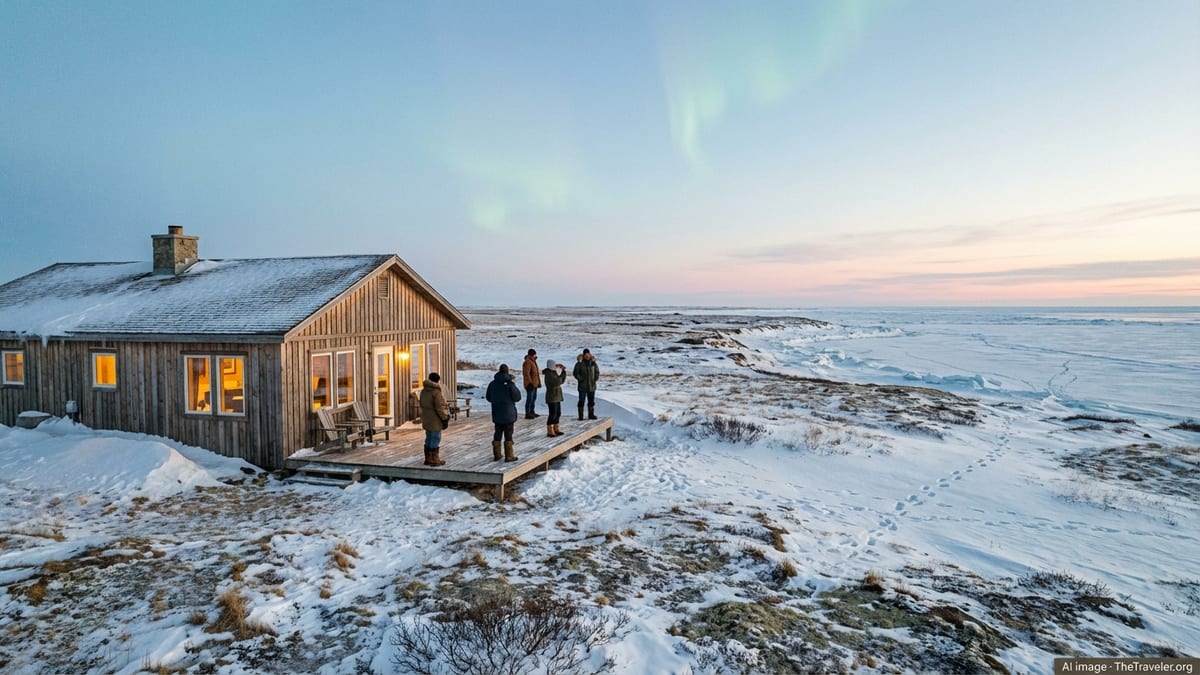
By contrast, remote wilderness lodges hug the coastline or sit out on the open tundra, far from streetlights and traffic. Here, you step straight from your lodge into prime wildlife habitat, often with guided walks or vehicle excursions departing from the front door. Stays are usually part of fully guided packages that include flights from Winnipeg, meals, activities and specialist guides focused on polar bears, belugas or northern lights.
Between these two ends of the spectrum are more unusual options such as mobile tundra lodges or research-style centres. These put you in the heart of the action with a trade-off in space and amenities. Understanding which mix of access, comfort and independence suits your travel style will help you narrow down the best place to stay in Churchill for your wildlife-focused trip.
Staying in Town: Hotels, Inns and Guesthouses
Churchill’s town accommodations provide the most straightforward base, especially for first-time visitors. Rooms commonly feature simple decor, private bathrooms, thick duvets and effective heating. Wi-Fi is typically available but slower and less reliable than in major cities, and cell coverage can be patchy once you leave the town limits. It is wise to download maps, confirmations and reading material before you arrive.
Because Churchill’s tourism calendar swings between busy polar bear season in October and November and beluga season in July and August, configuration and pricing can change by season. During peak periods, hotels and inns often work closely with local tour companies to offer multi-day packages that bundle accommodation with tundra vehicle excursions, boat trips or aurora outings. Independent travellers can sometimes book rooms only, but availability for short stays is limited when large groups are in town.
Key advantages of staying in town include easy access to different operators for day tours, the chance to try local cafes and restaurants and flexibility to join last-minute activities if space permits. You are also close to museums and interpretive centres that explain Churchill’s natural and cultural history, which can be especially appealing on days of poor weather or low wildlife activity.
The main drawback of a town base is distance from the wildest landscapes. To view polar bears in the classic snowy setting, you typically join a full-day excursion in a tundra vehicle that departs the outskirts of town and trundles toward the coast. For northern lights, many operators drive you away from the streetlights to domes, cabins or heated viewing lounges. You return to a comfortable bed each night, but you will spend more time commuting to and from wildlife hotspots than guests at remote lodges.
Classic Churchill Lodges for Wildlife-Focused Stays
Several locally established lodges and inns in and around Churchill have built reputations on multi-day wildlife experiences, combining cozy accommodations with tightly organized programs. These properties are popular with travellers who want a single provider to handle logistics from arrival in Churchill through departure, while still sleeping in or near town.
Some lodges focus on bundled “expeditions” that address the town’s signature seasons. In summer, packages might emphasize beluga whale viewing on the Churchill River, tundra hikes with chances of spotting foxes and other wildlife, and evening departures to watch the northern lights if skies are clear. In autumn, polar bear viewing often takes centre stage, with guests joining tundra vehicle tours, guided walks in safe areas and cultural visits when conditions permit.
What sets these operations apart is the depth of local expertise and the way accommodation is integrated with guiding. Many are owner-operated or led by teams who have spent decades in the region, refining trip timing and safety practices for encounters with polar bears and other wildlife. Rather than piecing together separate hotel nights and day tours, you book a single package that includes a room, most meals and a series of scheduled outings.
Comfort levels are generally high, though not extravagant. Expect warm communal lounges, simple but hearty meals and a sociable atmosphere where guests swap wildlife stories in the evenings. For travellers with limited time, these town-based lodges can deliver a concentrated Churchill experience without the higher costs and tighter capacities of remote fly-in ecolodges.
Remote Ecolodges on the Hudson Bay Coast
For a deeper immersion in Churchill’s wild landscapes, remote ecolodges along the Hudson Bay coast are hard to beat. These fly-in properties are typically accessible only by small aircraft or overland journey and sit directly in polar bear and other wildlife habitat. You wake up to views of sea ice, tidal flats or wildflower-covered tundra, and daily excursions begin at your doorstep.
Lodges in this category position themselves as multi-day safaris rather than simple accommodations. Stays often range from a week to 10 days, with set departures timed around specific natural events. In summer, that might mean combining guided walks on the tundra with boat or Zodiac outings to watch beluga whales. In fall, when ice begins to form, polar bears are more frequently seen traveling the shoreline, and northern lights are a frequent bonus on clear nights.
Facilities at these ecolodges emphasize comfort and environmental sensitivity. Guestrooms are usually private or semi-private with shared common spaces like lounges, libraries and dining rooms. Heating is strong, windows are well insulated and chefs often feature local or regional ingredients in menus that are far more inventive than visitors expect at such remote outposts. Electricity and water resources can be limited compared with city hotels, so you are encouraged to conserve.
The trade-off for this level of immersion is cost and structure. Packages tend to be expensive, often including charter flights from Winnipeg, gear loans, guiding and all meals. Daily schedules are more regimented than in town, with fixed times for activities depending on tides, ice and wildlife movements. For travellers who prioritize wildlife first and foremost and want the highest probability of close, respectful encounters with polar bears in their natural habitat, these ecolodges are often the preferred option.
Specialty Stays: Tundra Lodges and Research-Style Centres
One of Churchill’s most distinctive accommodation options is the tundra lodge concept. Here, a series of linked cars or modules sits out on the open tundra during polar bear season, functioning as a mobile hotel that can be repositioned into prime viewing areas. Guests sleep in compact but warm cabins, dine in a shared car and step out onto observation decks that look over the surrounding landscape.
These tundra lodges prioritize proximity to polar bears over space and amenities. Cabins are small, bathrooms may be shared and there is usually no Wi-Fi or cell service. The atmosphere feels more like being aboard a ship anchored in a remote bay than a traditional hotel stay. You are often surrounded by wide horizons, with polar bears occasionally wandering past at safe distances while you watch from windows or outdoor platforms under staff supervision.
Another option for some visitors is a stay at science- or education-focused centres outside town. These facilities are typically designed to support researchers and students but may host carefully structured aurora or learning programs for the public at certain times of year. Accommodation is functional, sometimes dormitory-style, with an emphasis on lectures, guided observing sessions and hands-on learning about northern ecosystems and atmospheric phenomena.
Both tundra lodges and research-style centres suit travellers who are comfortable sacrificing some privacy and polish in return for location and depth of experience. They also appeal to photographers, keen naturalists and repeat visitors who have already experienced a more conventional hotel or lodge stay and now want to be as close as possible to the landscapes that make Churchill special.
Best Places to Stay for Polar Bears, Belugas and Northern Lights
Because Churchill has distinct wildlife seasons, the best place to stay depends heavily on what you most want to see. For polar bears in the classic snowy setting, October and November are prime, when specialized tundra vehicles fan out toward the coast. In this period, mobile tundra lodges and remote coastal ecolodges offer some of the most immersive bear viewing, while town hotels combined with full-day tundra excursions can work well for travellers who prefer more conventional rooms.
If you are visiting in summer for beluga whales, a town base is generally ideal. Tour operators run boat trips, kayaking excursions and even snorkelling experiences on the Churchill River, and you return to a warm bed after time on the water. Some remote lodges also integrate beluga viewing into their programs, spotting whales from shore or organizing small-boat outings as part of longer safaris that combine bears, birds and other wildlife.
Northern lights, or aurora borealis, can appear in Churchill across many months, but the clearest, darkest skies are often found in late winter and early spring, especially February and March. During these periods, town accommodations partner with aurora operators who transport guests to domes, glass-fronted lounges or remote cabins away from town lights. Remote ecolodges and tundra lodges offer outstanding aurora viewing on clear nights simply because of their isolation and lack of light pollution.
For travellers hoping to see multiple headline species in one journey, integrated packages that combine different locations are increasingly popular. A typical itinerary might include a few nights in a remote lodge for up-close polar bear viewing, followed by a night or two in Churchill to join a beluga excursion or cultural tour. Choosing providers that operate both town-based and remote properties can simplify these combinations and ensure a coherent experience from start to finish.
What to Expect: Comfort, Connectivity and Practicalities
Regardless of where you stay, it is important to arrive in Churchill with realistic expectations about comfort and connectivity. Even the most polished ecolodge or lodge-style hotel remains subject to the constraints of a subarctic supply chain, harsh weather and limited infrastructure. Rooms are clean and cozy, but high-end glamour is rare, and minor quirks such as fluctuating water pressure or occasional power interruptions are part of life in the North.
Heating is consistently a priority, with most accommodations offering plentiful warmth and thick bedding. Pack comfortable indoor clothing and warm socks or slippers so that you feel at home in lounges and dining areas. In some remote lodges or tundra setups, you might walk between separate buildings for meals or activities, so easy-to-slip-on boots and outer layers are particularly helpful.
Internet access varies sharply by location. In Churchill town, most hotels and lodges offer Wi-Fi, though speeds are often slow and bandwidth may be limited in the evenings when many guests are online. Mobile service is usually available in town but can weaken on the outskirts. In remote ecolodges and tundra lodges, there may be no guest Wi-Fi at all, with satellite communications reserved for operational or emergency use. Travellers who embrace a partial digital detox often find the experience more relaxing and immersive.
Booking well ahead is essential, especially for polar bear season and peak beluga dates. With limited beds in both town and remote locations, prime departures can sell out many months, and sometimes more than a year, in advance. Working with a specialist operator or travel advisor familiar with Churchill can help you match your expectations to the right property, understand what is included in each package and avoid surprises about shared facilities, activity levels or cancellation policies.
The Takeaway
Deciding where to stay in Churchill is fundamentally about choosing how you want to experience this remarkable corner of the Arctic. Town-based hotels and lodges offer simplicity, flexibility and lower costs, making them a strong choice for first-time visitors, independent travellers and those focused on beluga whales or aurora-viewing nights out of a central base.
Remote coastal ecolodges add a powerful layer of immersion, placing you within walking distance of polar bear trails, tidal flats and the vast expanse of Hudson Bay. These properties often deliver the most memorable bear encounters and some of the darkest, clearest skies for northern lights, but they come with higher prices, fixed itineraries and a deeper level of commitment to the rhythm of the wild.
Specialty options like tundra lodges and research-style centres appeal to travellers who want to push deeper still, trading some personal space and conventional amenities for the privilege of living out on the tundra or among scientists and educators. For many, the ideal Churchill trip blends these experiences, for example by pairing a stay in town with several nights at a remote lodge during peak polar bear or beluga seasons.
Whichever style of stay you choose, early planning, honest assessment of your comfort levels and a willingness to adapt to weather and wildlife will go a long way. Churchill is a destination where nature calls the shots, and your lodge or hotel is not just a place to sleep but a crucial part of how you witness the bears, whales and skies that define this extraordinary place.
FAQ
Q1. When should I book my Churchill hotel or lodge for polar bear season?
For October and November polar bear trips, it is wise to secure your accommodation many months in advance, and popular remote lodges often fill a year ahead.
Q2. Is it better to stay in town or at a remote lodge for seeing polar bears?
Remote lodges and tundra stays typically offer more frequent bear sightings right outside your door, while town hotels rely on full-day tundra vehicle tours to reach prime viewing areas.
Q3. What is the best place to stay in Churchill for beluga whale viewing?
A town base is usually best for belugas, as most boat and kayaking tours depart from Churchill, allowing you to head out by day and return to a warm room at night.
Q4. Are Churchill hotels and lodges suitable for children?
Many town hotels welcome families, but some remote ecolodges and tundra setups have minimum age limits, so always check policies and activity levels before booking with children.
Q5. Will I have Wi-Fi at my Churchill accommodation?
Most town properties offer basic Wi-Fi, though it can be slow, while many remote lodges and tundra stays do not provide guest internet access to preserve bandwidth and atmosphere.
Q6. Can I see the northern lights directly from my hotel or lodge?
Yes, it is often possible, especially from locations outside town, but aurora sightings depend on clear skies and solar activity, so operators never guarantee displays.
Q7. How many nights should I plan to stay in Churchill for wildlife viewing?
Allow at least three to four nights in town for a basic experience, and five to ten nights if you are combining a remote lodge safari with time in Churchill itself.
Q8. Do I need to book a package tour, or can I organize everything myself?
Independent travel is possible using town hotels and day tours, but package safaris that bundle accommodation, guiding and transfers can simplify logistics, especially at remote lodges.
Q9. What level of fitness is required for stays at Churchill lodges?
Town-based trips with vehicle tours suit most fitness levels, while remote lodges may include uneven walking on tundra or shorelines, so discuss mobility needs with operators in advance.
Q10. Are Churchill lodges and hotels open year-round?
Some town accommodations operate most of the year, but many lodges and specialty stays open only for specific seasons linked to polar bears, belugas or northern lights.