

Hong Kong is a dense, vertical city where choosing the right neighborhood can shape almost every part of your trip. Distances look small on the map, but crowds, hills, and harbor crossings mean your choice of base matters. The good news is that Central, Tsim Sha Tsui, and a handful of nearby districts all offer excellent transport connections, distinct personalities, and accommodation options for a wide range of budgets. This guide breaks down what each key area feels like on the ground, who it suits best, and how to decide where to stay for your own style of visit.
Understanding Hong Kong’s Layout Before You Book
First-time visitors often fixate on the question of whether to stay on Hong Kong Island or in Kowloon. In practice, the decision is less about which side of Victoria Harbour is “better” and more about which neighborhood rhythm fits you best. The Star Ferry and multiple cross-harbour MTR lines make it quick and inexpensive to move between the two, so you are rarely more than 20 to 30 minutes from the main sights if you stay near a station.
Hong Kong Island is the traditional business and finance hub. Central and its neighbouring districts rise steeply from the waterfront into the Mid-Levels, with glass towers, restored tong lau shophouses, and the city’s best-known bar and restaurant clusters. The feel here is polished and international, with pockets of historic character and ready access to hiking trails, tram rides, and ferries to the outlying islands.
Kowloon, anchored by Tsim Sha Tsui at its southern tip, feels denser and more lived-in. Streets are narrower, neon signs hang low, and markets spill out of side alleys. You will find a wider range of mid-range and budget hotels here than on the Island, along with some of the city’s most famous harbour-view luxury properties. If you picture classic Hong Kong skyline views and bustling street life, this side of the harbour often matches that mental image.
Because hotel rooms across the city are compact by international standards, your daily experience will depend more on what is at street level around you. Think about what you want to walk to in five or ten minutes: an MTR station, a harbour promenade, late-night dining, or quiet side streets. With that in mind, the sections that follow focus on Central, Tsim Sha Tsui, and other popular bases, outlining the trade-offs that matter most to travellers right now.
Central: Financial Hub With Food, Nightlife and Easy Connections
Central is Hong Kong’s historic and contemporary core on the Island side, a dense mix of skyscrapers, colonial-era buildings, and steep lanes that lead up to the Mid-Levels. As the main business district, it is packed on weekdays, but evenings and weekends feel calmer than some of Kowloon’s busiest areas. The Central and Hong Kong MTR stations connect multiple lines, and the Airport Express terminus sits here, making this one of the most convenient bases if you value quick transfers and straightforward navigation.
The neighborhood is ideal for travellers who want to combine sightseeing with serious eating and nightlife. Within a short walk of Central’s core office towers, you reach the Mid-Levels escalator, which lifts you into the restaurant and bar districts of SoHo and Lan Kwai Fong. Nearby Sheung Wan, often treated as an extension of Central, softens into older shophouses, dried-seafood streets, and a more local feel, while still being just one or two MTR stops from major attractions across the city.
From Central’s piers, frequent ferries cross to Tsim Sha Tsui, Lamma Island, and other outlying islands, while trams trundle east toward Wan Chai and Causeway Bay. The Peak Tram lower terminus sits above Central, putting one of Hong Kong’s signature skyline viewpoints close at hand. For many visitors, this combination of walkable attractions, efficient transport, and safe, well-lit streets justifies Central’s typically higher room rates.
The trade-off is cost and atmosphere. Hotel prices in Central generally skew higher than equivalent categories in Kowloon, and street life is more about business lunches and after-work drinks than night markets and bargain shopping. If you want a quieter base that still gives you quick access to almost everywhere, Central and neighbouring Sheung Wan are strong choices. If your budget is tight and you dream of neon canyons and markets, Tsim Sha Tsui or Mong Kok may suit you better.
Tsim Sha Tsui: Classic Views, Shopping and a Dense Urban Buzz
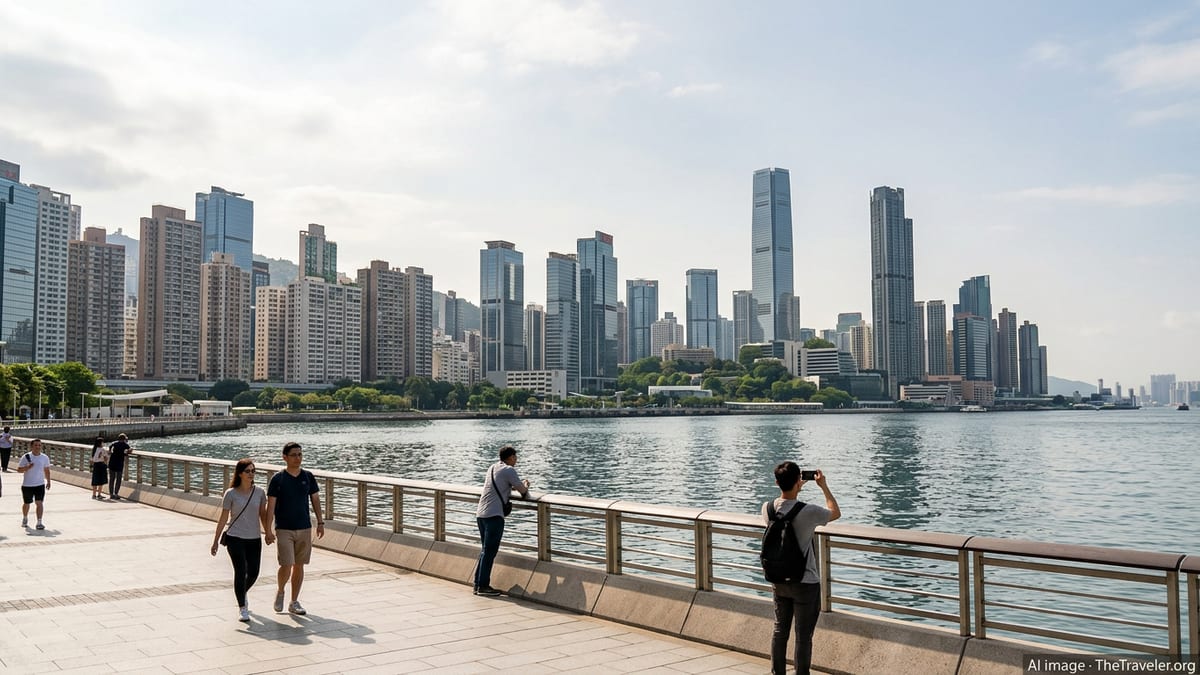
Tsim Sha Tsui, often shortened to TST, sits at the southern tip of the Kowloon Peninsula and is one of Hong Kong’s most recognisable districts. Its waterfront promenade faces the Central skyline across Victoria Harbour, creating the classic postcard view many visitors associate with the city. The area combines large shopping malls, high-end hotels, boutique properties, and older mid-range buildings clustered along and behind Nathan Road.
TST works well for visitors who want easy access to iconic sights without giving up urban energy at street level. The Tsim Sha Tsui and East Tsim Sha Tsui MTR stations connect you to multiple lines, while the Star Ferry terminal offers a scenic crossing to Central that many locals still use daily. Along the water, the Avenue of Stars and nearby cultural complexes offer harbourfront walks, public art, museums, and nightly skyline light shows that draw crowds year-round.
On the inland side of the district, you will find a dense grid of streets filled with small shops, tailors, currency exchanges, and eateries ranging from long-running Cantonese restaurants to international chains. The area around Chungking Mansions is known for its maze of guesthouses and inexpensive eateries, particularly South Asian and African, attracting both budget-conscious travellers and a diverse local community. A few blocks away, hotels around Austin Road and Canton Road feel a little calmer while staying within walking distance of the waterfront and main transport hubs.
The intensity that makes TST exciting can also feel overwhelming, especially during weekends and holidays when both visitors and local shoppers crowd into the neighbourhood. Pavements can be narrow, and traffic is heavy along the main arteries. If you value a lively, central base with abundant food choices, harbour views, and straightforward links to both Hong Kong Island and the rest of Kowloon, Tsim Sha Tsui remains one of the most practical choices in the city.
Causeway Bay and Wan Chai: Shopping, Nightlife and Mid-Range Choices
East of Central along Hong Kong Island’s north shore, the twin districts of Wan Chai and Causeway Bay offer a strong mix of shopping, dining, and mid-range accommodation. Both are on the MTR Island Line and the historic tram route, putting you within a short ride of Central, Admiralty, and the rest of the urban corridor. They are particularly popular with travellers who want a more local, less overtly business-focused base while staying close to the Island’s core.
Wan Chai mixes modern office towers and convention facilities near the waterfront with older, narrower streets further inland. Around the Wan Chai and Exhibition Centre stations you will find hotels aimed at both business and leisure travellers, along with bars, casual eateries, and the harbourfront promenade that connects toward Admiralty and Central. The area has a reputation for nightlife in certain pockets, but a few blocks can make a big difference in noise levels, so it is worth checking a map to see exactly where a hotel sits.
Causeway Bay, just to the east, is one of Hong Kong’s busiest shopping districts, with department stores, malls, and smaller side-street boutiques packed into a relatively compact area. Victoria Park at its eastern edge offers a rare stretch of open green space, popular for morning exercise, evening strolls, and occasional events. Accommodation here ranges from international-brand hotels to compact local properties squeezed into high-rises above shops and restaurants.
Both districts appeal to travellers who do not mind crowds and want to be immersed in a modern, youthful city atmosphere. Compared with Central, rooms can be slightly more affordable like-for-like, and you will often find more options that balance price and convenience. The main drawbacks are the sheer density of people at peak times and the relatively limited traditional sightseeing within the neighborhoods themselves, though excellent transport makes it easy to reach temples, markets, and heritage sites elsewhere.
Mong Kok and Yau Ma Tei: Markets, Street Life and Budget Options
Further north along the Kowloon side, the area around Mong Kok and Yau Ma Tei delivers some of Hong Kong’s most intense street scenes. Here, markets, signage, and traffic collide in a way that feels quintessentially urban. This corridor tends to attract travellers who enjoy local neighbourhoods, night markets, and street photography, and who do not mind trading harbour views for a more grounded everyday atmosphere.
Mong Kok is known for specific themed streets and markets, including sections focused on sneakers, electronics, and clothing, as well as the Ladies Market that draws both locals and visitors. The district’s MTR station is one of the city’s busiest, with lines that make it easy to move south to Tsim Sha Tsui or onward to the New Territories. Accommodation ranges from modern high-rise hotels to older buildings with compact rooms and often lower price points than comparable properties closer to the harbourfront.
Yau Ma Tei, just south of Mong Kok, offers a slightly calmer feel while still being very central by Hong Kong standards. Temple Street Night Market, with its mix of food stalls and vendors, has long been a fixture here, though the exact character of the market evolves over time. The streets around Yau Ma Tei Station and Jordan Station provide quick links to both Tsim Sha Tsui and the rest of Kowloon, making this a practical base for travellers focused on value and easy transit.
These neighbourhoods are well suited to repeat visitors, budget-conscious travellers, and anyone who prioritises markets and food over glamour. Side streets can feel more lived-in and gritty than in parts of Hong Kong Island, and building quality varies widely from one block to the next. If you are comfortable with a denser, more local environment and check recent reviews for any property you are considering, Mong Kok and Yau Ma Tei can offer strong value without sacrificing access to the sights.
Sheung Wan and Western District: Character, Cafes and a Quieter Feel
Immediately west of Central, Sheung Wan and the broader Western District have evolved into some of Hong Kong’s most appealing bases for travellers who prefer independent cafes, walkable side streets, and a slightly slower pace. Historically, Sheung Wan’s waterfront and lower streets were lined with dried seafood shops and traditional businesses, many of which still operate alongside galleries, coffee shops, and small hotels.
The area is tightly connected to Central by both MTR and the Mid-Levels escalator system, so journey times between the two are often just a few minutes. This allows travellers to enjoy Central’s dining and transport advantages while returning at night to a neighbourhood that feels more residential and less dominated by office towers. Narrow lanes and stepped streets give the area a layered, vertical feel, with small parks and historic temples tucked between high-rises.
Further west, neighbourhoods such as Sai Ying Pun and Kennedy Town have seen new restaurants, bars, and boutique properties open in recent years. The MTR extension has linked these once-sleepier districts directly to the Island Line, cutting down travel times to Central and beyond. A growing number of travellers choose to stay here for a more local experience, often at room rates that undercut similar properties deeper in Central.
If you prefer morning walks along the harbourfront, independent eateries, and a sense of staying in a real neighbourhood rather than a purely commercial district, Sheung Wan and the Western District are worth close consideration. The main trade-offs include steeper streets, the need to rely on the MTR or trams rather than walking everywhere, and a slightly longer ride to cross-harbour connections compared with Central and Tsim Sha Tsui.
Outlying and Family-Friendly Bases: Lantau and Beyond
For some travellers, particularly families or those planning a longer stay, basing themselves slightly outside the urban core can be appealing. On Lantau Island, residential and resort-style areas place you closer to Hong Kong Disneyland, Ngong Ping’s Big Buddha and cable car, and hiking trails with sea views. These bases trade instant access to Central and Tsim Sha Tsui for more space, quieter evenings, and, in some cases, larger resort facilities.
Staying near the airport or in planned communities on Lantau can be practical if you have very early or late flights, or if your itinerary leans heavily toward Disneyland and nearby attractions. MTR and bus links connect these areas back to the city, but travel times will be longer than from the central urban districts, so it is worth planning your days to minimise back-and-forth across the harbour and islands.
Elsewhere, some travellers choose new-town districts or more residential parts of the New Territories to stretch their budget or stay near friends and family. These areas can offer a very different perspective on Hong Kong, with more open space and a distinctly local rhythm. However, for most short leisure trips, especially first visits, they are less convenient as primary bases compared with Central, Tsim Sha Tsui, and the other districts described above.
If you are considering a resort or airport-area hotel, pay particular attention to transport details when you book. Check how long it takes to reach central Hong Kong by MTR or bus at the times of day you are likely to travel, and factor those journey times into your daily plans. The added comfort and calm can be worthwhile, but only if you are comfortable spending more time on transport.
How to Choose the Right Hong Kong Neighborhood for You
When you compare Central, Tsim Sha Tsui, and the other neighbourhoods outlined above, the differences come down to atmosphere, budget, and daily convenience rather than a simple “best” choice. Central appeals to travellers who want fast airport access, efficient connections, and an easy walk to some of the city’s most talked-about bars and restaurants. Tsim Sha Tsui suits visitors who prioritise skyline views, dense shopping streets, and a sense of being in the middle of the city’s buzz day and night.
Causeway Bay and Wan Chai offer strong mid-range options for travellers who enjoy department stores, big-city shopping, and nightlife, while Mong Kok and Yau Ma Tei tilt toward markets, local eateries, and lower average room prices. Sheung Wan and the Western District are attractive if you prefer a slightly quieter base with characterful streets, good coffee, and quick links into Central. Outlying areas and Lantau Island can make sense for families focused on Disneyland or for those who value resort facilities over instant urban immersion.
Regardless of where you stay, one principle holds across Hong Kong: try to be within a five to ten minute walk of an MTR station or major tram or bus corridor. The city’s public transport network is efficient and comparatively affordable, and being close to a station reduces the need for taxis and long walks in hot, humid weather. When you evaluate hotel options, look closely at recent reviews to understand noise levels, room size, and elevator capacity, all of which can affect your comfort in a city as vertical as Hong Kong.
If your stay includes major holidays, large trade shows, or popular events, consider booking earlier than you might in other destinations, as demand can spike in specific districts. Ultimately, it is hard to make a “wrong” choice among the main central neighborhoods, but thinking carefully about how you like to spend mornings, evenings, and transit time will help you find the base that makes Hong Kong feel both exciting and manageable.
The Takeaway
Hong Kong’s compact size and strong public transport mean that almost any centrally located neighborhood can work as a base, but each area offers a distinct version of the city. Central provides polished convenience and swift connections to the airport and key sights. Tsim Sha Tsui delivers classic skyline views, thick with neon and shopping. Causeway Bay, Wan Chai, Mong Kok, and Yau Ma Tei add options at different price points and energy levels, from upscale malls to late-night markets.
Rather than hunting for a single “best” district, focus on which corner of Hong Kong matches your pace and priorities. Do you want to walk out of your hotel into a lively promenade of harbour views, browse markets late into the night, linger in neighbourhood cafes, or simply hop on the MTR with minimal fuss each morning. Once you have answered those questions, narrowing down to the right side of the harbour and the right cluster of streets becomes much easier.
With realistic expectations about room size, a willingness to use public transport, and a clear sense of the atmosphere you prefer, you can turn this dense, layered city into an easy place to navigate. Whether you settle in Central, Tsim Sha Tsui, or one of the surrounding districts, choosing your base thoughtfully will help Hong Kong feel not just impressive, but surprisingly approachable.
FAQ
Q1. Is it better to stay in Central or Tsim Sha Tsui for a first visit?
Both work well for first-time visitors. Central offers slightly easier airport access and a polished feel, while Tsim Sha Tsui delivers classic skyline views and busier street life.
Q2. How long does it take to travel between Central and Tsim Sha Tsui?
The MTR ride between Central and Tsim Sha Tsui usually takes around 10 to 15 minutes including transfers, while the Star Ferry crossing itself is only a few minutes.
Q3. Which Hong Kong neighborhood is best for nightlife?
Central and nearby SoHo and Lan Kwai Fong have the highest concentration of bars and late-night venues, with Wan Chai and parts of Tsim Sha Tsui offering additional options.
Q4. Where should budget travellers stay in Hong Kong?
Budget travellers often look at Mong Kok, Yau Ma Tei, parts of Tsim Sha Tsui, and some older properties in Wan Chai or Causeway Bay, always checking recent reviews for current conditions.
Q5. Is Hong Kong Island safer than Kowloon at night?
Both sides of the harbour are generally considered safe by big-city standards, especially in the main hotel districts, though normal urban precautions are always advisable.
Q6. Which area is best for families with children?
Families often choose Tsim Sha Tsui for easy sightseeing, Central or Sheung Wan for convenience and calmer evenings, or Lantau Island if Disneyland and outdoor space are top priorities.
Q7. How important is it to stay near an MTR station?
Being within a short walk of an MTR station makes a big difference in comfort and time, particularly in hot or wet weather, so it is worth prioritising when choosing a hotel.
Q8. Are hotel rooms really small in Hong Kong?
Room sizes are often smaller than in many other cities, especially in mid-range and budget categories, so reading descriptions and recent photos carefully can help set expectations.
Q9. Is it noisy to stay near the main shopping streets?
Areas like Causeway Bay, Mong Kok, and parts of Tsim Sha Tsui can be noisy late into the evening, so light sleepers may prefer higher floors or side-street locations.
Q10. How far in advance should I book a hotel in Hong Kong?
For peak travel periods, large trade fairs, or major holidays, booking a few months ahead gives you more choice, while quieter periods may allow more flexibility.