

Illinois rewards travelers who look beyond a single city stay. From Chicago’s skyline-framed neighborhoods to the 19th-century streets of Galena and the pine-scented quiet of state park cabins, where you sleep can shape your entire trip. This guide breaks down the best areas and accommodation styles across the state so you can match your base to the kind of Illinois experience you want, whether that is museum hopping, antiquing on Main Street, or listening to owls from a front porch rocker.
Understanding Illinois Stays: City, Small Town, and Nature
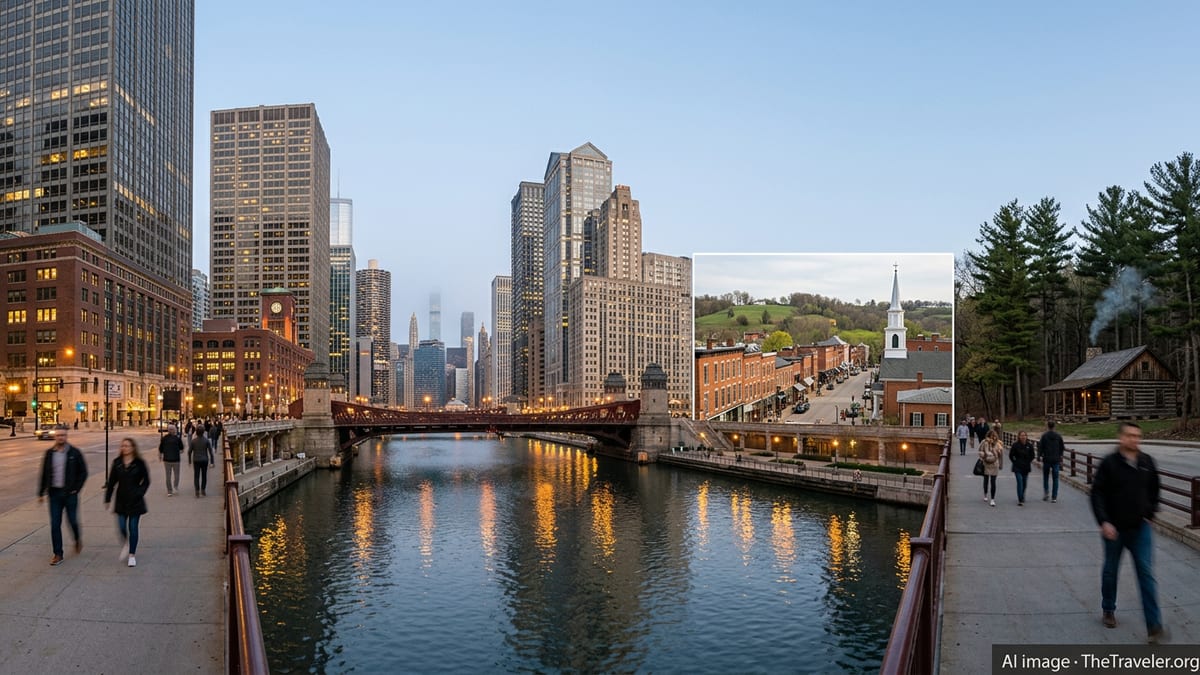
Planning a trip to Illinois usually starts with Chicago, but the state offers three very different ways to stay. Chicago’s neighborhoods deliver big-city energy in bite-size pieces, with hotels clustered near train lines, lakefront parks, and restaurant streets that feel distinct from one another. A few hours northwest, Galena trades skyscrapers for church steeples and 19th-century storefronts in one of the Midwest’s most atmospheric historic districts. Farther afield, cabin country near major state parks and forest preserves offers quiet nights, campfires, and dark skies.
Thinking about these three settings as pillars can help you structure an itinerary. A long weekend might focus entirely on Chicago, moving between neighborhoods by train and rideshare. A week could pair two or three Chicago bases with two nights in Galena. Add an extra few days and you can layer in a cabin stay, perhaps en route between city and countryside or as a final decompression stop.
Season matters. Chicago hotel prices often rise with summer festivals and large conventions, but shoulder seasons such as late April, May, September, and October usually offer more value. Galena comes alive on fall weekends as hillsides change color, while state park cabins can book up quickly for autumn foliage and spring wildflower seasons. Winter is quieter and often better for rates across the board, especially for travelers comfortable with cold-weather sightseeing and snow-dusted landscapes.
Finally, think about how you plan to move around. Chicago rewards visitors who rely on its extensive train and bus network, plus taxis and rideshares, so staying near a train line or central bus routes is a real convenience. In Galena and at cabin retreats, a car is either highly helpful or essential. Building transportation into your lodging decision can save you both time and money once you arrive.
Where to Stay in Chicago: Matching Neighborhoods to Your Style
Chicago is a city of neighborhoods, and where you stay will define what you see on foot once you step outside your hotel. The downtown Loop and neighboring River North form the traditional core for first-time visitors, with dense clusters of hotels close to major sights, the business district, and the Chicago River. Beyond downtown, areas such as Lincoln Park, Wicker Park, Logan Square, and the West Loop draw travelers looking for a more local, residential feel without sacrificing access to transit.
The Loop is the practical heart of the city, lined with office towers, historic theaters, and landmarks like Millennium Park and the Art Institute. It is ideal if you want to walk to museums, the riverwalk, and many riverboat departure points. Trains on several lines converge here, which makes it easy to fan out to other neighborhoods. The trade-off is that, outside theater nights and festival weekends, the Loop can feel businesslike and relatively quiet in the late evening compared with districts known for nightlife.
Just across the river, River North blends a downtown address with more restaurants and bars at street level. Known for its gallery roots and now one of the city’s best-known nightlife hubs, it places you within walking distance of the Magnificent Mile shopping corridor and the riverwalk while feeling a bit more like a neighborhood than the Loop’s office blocks. It can be especially convenient if you plan to dine out late or are drawn to rooftop bars and cocktail lounges.
For a more residential stay, neighborhoods such as Lincoln Park, Wicker Park, Logan Square, the West Loop, and newer hotspots like Avondale have become reliable choices. Lincoln Park offers tree-lined streets, lakefront access, and proximity to the free Lincoln Park Zoo. Wicker Park and Logan Square have strong reputations for independent shops, bars, and creative dining. The West Loop and surrounding Fulton Market district, once largely warehouses, now attract visitors for some of the city’s most talked-about restaurants. Avondale, on the Northwest Side, drew national attention in 2025 when a major international magazine ranked it among the world’s “coolest” neighborhoods, and it continues to evolve with new cafes, bars, and venues.
Downtown & River North: Best for First-Time and Short Stays
For a first visit or a quick overnight, staying in or near downtown solves a lot of logistical questions before they arise. The Loop, River North, and the Near North Side neighborhood around the Magnificent Mile are dense with hotels at a range of price points, from high-end brands with river views to smaller boutique properties tucked onto side streets. Being able to walk to the riverwalk, Millennium Park, Navy Pier shuttles, and major museums reduces the time you spend in transit, which matters when you only have a couple of days.
River North in particular balances access and atmosphere. It sits just north of the Chicago River and has become one of the city’s liveliest areas after dark, with clusters of restaurants and bars on and around streets like Hubbard. This makes it easy to go from a museum afternoon in the Loop to dinner just across the river without dealing with long rides. The area is also well-served by the Red Line and several bus routes, plus it is walkable to the Magnificent Mile, where many visitors head for flagship stores and city views.
Travelers who prioritize shopping and lakefront strolls may gravitate to the Near North Side and Magnificent Mile area. Hotels here typically offer quick access to Michigan Avenue, Oak Street Beach, and the Lakefront Trail, as well as upscale dining. It is a good choice for those comfortable paying a bit more for a polished environment and a base that naturally pulls you toward the lake.
One consideration for downtown and River North stays is that the area hosts conventions, large events, and major festivals that can dramatically affect rates and availability. Checking your travel dates against the calendars for big music festivals, sporting events, or major trade shows can help you understand why certain weekends are more expensive. Booking early and being flexible by a day or two can unlock better prices without changing neighborhoods.
Chicago’s Neighborhood Stays: Lincoln Park, Wicker Park, Logan Square & Beyond
Visitors who already know the skyline view and want to experience everyday Chicago life often look beyond downtown hotels. Lincoln Park, stretching along the lake north of the core, offers a mix of classic low-rise apartment streets and small hotels or guesthouses. Staying here puts you close to the expansive park of the same name, with its walking paths, beaches, and the popular free zoo. It works particularly well for families or anyone who appreciates a quieter base within easy reach of central attractions via the Brown and Red Line trains or buses on main thoroughfares.
To the northwest, Wicker Park and neighboring Bucktown have built reputations around creative dining, nightlife, and independent shopping. Centered on the intersection of Milwaukee, Damen, and North, the area is well-connected by the Blue Line, giving you a fairly quick ride to downtown. Many visitors appreciate how easy it is to spend a day here without leaving the neighborhood, browsing boutiques, relaxing in cafes, and trying a different restaurant or bar each night. Small hotels and short-term rentals are common, although city regulations on vacation rentals can shift, so it is worth verifying current rules and licensing when you book.
Logan Square, a bit farther along the Blue Line, offers a slightly more low-key and residential feel while still boasting an active food and bar scene. Its namesake boulevard, historic greystone homes, and growing roster of coffee shops and cocktail bars attract visitors looking for a less tourist-oriented experience. Craft breweries, independent cinemas, and local music venues further add to its appeal. From here, you can ride the train straight downtown or connect to buses that fan out across the Northwest Side.
Other neighborhoods such as Andersonville, Lakeview, Hyde Park, Pilsen, and Avondale have each built a following among repeat visitors. Andersonville and Lakeview, both on the North Side, combine local shops and dining with easy access to the lake. Hyde Park on the South Side offers proximity to the Museum of Science and Industry and the University of Chicago’s leafy campus. Pilsen is known for vibrant street art and Mexican food, while Avondale’s national recognition as a “cool” neighborhood has highlighted its diverse restaurants and evolving cultural scene. These areas generally require a bit more confidence in navigating transit but reward travelers with a more intimate sense of Chicago’s everyday rhythms.
Historic Galena: Illinois’s Classic Small-Town Escape
Roughly three hours by car from Chicago, Galena feels a world away from the state’s urban core. Once a major 19th-century river port and mining center, the town is now best known for its impeccably preserved historic district, where brick storefronts and period homes climb the hills above a winding main street. Much of central Galena is listed as a historic district, one of the largest of its kind in the United States, and its architecture reflects the prosperity of the mid-1800s.
Galena’s lodging scene leans heavily into this heritage. Historic hotels, bed-and-breakfasts, and guesthouses occupy buildings that in some cases have hosted travelers for more than a century. The DeSoto House Hotel on Main Street, for example, opened in the 1850s and is often cited as the oldest continuously operating hotel in Illinois. Many B&Bs and small inns are set in Victorian or Italianate homes, with parlors and porches that give you a sense of stepping into another era while still offering modern amenities like Wi-Fi and air conditioning.
Staying within or near the walkable historic core is central to Galena’s appeal. When you can stroll out your front door to browse boutiques, antique shops, and galleries along Main Street, you spend far less time driving and parking on the narrow hill streets. Evenings are particularly atmospheric, with brick facades lit by warm streetlamps, restaurants buzzing at a relaxed pace, and occasional live music drifting from bars or hotel lounges.
Beyond the town center, the countryside of Jo Daviess County opens up into rolling hills, farms, and river views. Some travelers choose lodges, cabins, or small resorts outside Galena itself, trading walkability for wider views, on-site trails, or amenities such as spas and golf courses. This can work well if you plan to balance time in town with drives along scenic byways or visits to nearby wineries and state parks.
Where to Stay in Galena: Historic Hotels, B&Bs, and Country Inns
Choosing a base in Galena starts with deciding how close you want to be to Main Street. Historic hotels and many B&Bs within the downtown district put you within a short walk of shops, restaurants, and the Galena River. Properties housed in 19th-century buildings often emphasize period furnishings, creaking floorboards, and original architectural details, sometimes pairing them with amenities like on-site dining, lounges, or rooftop terraces. Rooms can be smaller than in modern highway hotels, but for many travelers the trade-off in character is worthwhile.
Bed-and-breakfasts are central to Galena’s identity. Many operate out of stately homes built in the decades after the Civil War, and some have been welcoming overnight guests for generations. Stays typically include a cooked breakfast, and hosts often provide local tips on hiking routes, scenic drives, and quieter tasting rooms. Because many of these properties have only a handful of rooms, they can fill quickly on peak autumn weekends and holiday periods, so advance bookings are advisable if your dates are fixed.
Just outside the historic core, you will find country inns, cottages, and small resorts that offer more seclusion. Some occupy farmsteads or hilltop sites with long views over fields and wooded ridges. Others are part of planned resort communities with amenities like pools, small lakes, or access to golf courses. These stays suit travelers looking for a balance between time in town and time truly in the countryside, perhaps splitting days between Main Street exploring and late afternoons on porches or trails.
As with other popular destinations, Galena’s busiest periods include fall foliage season, summer weekends, and certain event dates. Rates and minimum stays often reflect that demand. Visiting midweek, especially in spring or late fall, can mean more flexible booking policies and quieter streets without losing the town’s essential charm.
Illinois Cabin Retreats: From State Parks to Forest Preserves
For many travelers, Illinois becomes most memorable away from city lights, where cabins sit among oaks and pines, and mornings start with birdsong instead of traffic. Cabin stays range from simple state park lodges with rustic units to private rentals near major forests, rivers, and lakes. They are popular as weekend getaways from Chicago and other cities, particularly in regions with dramatic landscapes by Midwestern standards, such as sandstone canyons, bluffs, or rolling wooded hills.
Starved Rock State Park and neighboring reserves along the Illinois River are among the most talked-about cabin destinations in the state. Here, visitors come for canyon hikes, waterfalls in wet seasons, and wide river views, then retreat at night to cabins or lodge rooms near the trails. To the south, Shawnee National Forest and surrounding protected areas in southern Illinois offer a different topography, with rock formations, ridges, and dense forests that feel far from the flatland stereotype. Cabins in this region often sit on private land close to popular trailheads or scenic drives.
Closer to Chicago, travelers look to forest preserves, river valleys, and small lakes dotted across northern and central Illinois. Cabins and cottages may not be as concentrated as around the best-known state parks, but a growing number of private rentals now cater to visitors seeking a quiet base within two to three hours of the city. Many emphasize simple comforts such as fire pits, screened porches, and access to walking paths or small beaches.
When evaluating a cabin rental, pay attention to how remote it actually is. Some are within a few minutes’ drive of small towns and grocery stores, while others are set at the end of gravel roads, with limited phone service and more basic infrastructure. Neither is objectively better, but knowing your own comfort level with remoteness will help ensure your experience matches your expectations. In winter, it is also wise to check how roads are maintained in snow and whether four-wheel drive is recommended.
How to Choose Your Perfect Illinois Base
With so many options, narrowing down where to stay in Illinois works best when you start with your priorities. If this is your first trip to the state and especially to Chicago, anchoring your stay in or near downtown simplifies logistics and maximizes time at major sights. River North, the Loop, and the Magnificent Mile area are practical starting points. From there, you can add a night or two in a neighborhood like Lincoln Park or Wicker Park if you want to sample a more residential side of the city.
Travelers who are already familiar with Chicago’s core, or who are more interested in food and nightlife than landmark sightseeing, may prefer to skip a downtown hotel entirely. In that case, consider basing yourself in Wicker Park, Logan Square, the West Loop, or other well-connected neighborhoods and treating downtown as a place you visit rather than your home base. This approach can offer better value on certain dates and put you closer to the restaurants and bars you are most excited to try.
If your goal is to slow down, shop locally, and enjoy historic architecture, building Galena into your itinerary is highly rewarding. A three- or four-night stay in the historic district allows time to wander Main Street, tour historic homes, drive scenic backroads, and perhaps book a spa treatment or tasting at a winery. Pairing Galena with Chicago works particularly well for travelers flying into Chicago’s airports and renting a car for a wider regional trip.
For those craving quiet, dark skies, and the sound of wind in the trees, a cabin retreat can be either the centerpiece of your trip or its soft landing at the end. Consider combining a few nights in Chicago with two or three nights near a state park or forest region, giving yourself time to both explore and unwind. Booking windows, cancellation policies, and seasonal closures vary widely in the cabin market, so reading recent reviews and communicating clearly with hosts or park offices is especially important.
The Takeaway
Illinois invites you to move between different kinds of stays in a single trip. In Chicago, neighborhood hotels and guesthouses let you tailor your experience to museums, nightlife, family-friendly parks, or creative food scenes. In Galena, historic inns and B&Bs bring the 19th century into reach without sacrificing modern comforts, while the surrounding countryside offers broad horizons and winding backroads. In cabin country, days shrink to the scale of local trails, firewood stacks, and starry skies.
There is no single “best” place to stay, only the place that best fits the kind of Illinois you want to experience right now. A first-timer might pair a downtown Chicago tower with a night or two in Galena. A returning visitor could split time between a neighborhood hotel and a forest cabin. By mapping your interests against these options and paying attention to seasonality, transportation, and booking patterns, you can build an itinerary that feels coherent yet varied.
Whether you wake to the rumble of trains in the Loop, church bells over Galena’s hills, or silence in a wooded hollow, choosing the right base is what transforms a visit into a memory. In Illinois, the distance between skyline, steeple, and starfield is shorter than you might expect, and the journey between them is part of the pleasure.
FAQ
Q1. What is the best neighborhood to stay in Chicago for a first visit?
The Loop and River North are the most practical bases for first-time visitors, thanks to their central locations, strong transit links, and easy access to major attractions and the riverfront.
Q2. Is it better to stay downtown or in a Chicago neighborhood?
Downtown simplifies sightseeing and transportation, while neighborhood stays in places like Lincoln Park or Wicker Park offer a more local feel. Many travelers split stays between the two if time and budget allow.
Q3. Do I need a car if I stay in Chicago?
In most cases you do not. Chicago’s train and bus network, combined with taxis and rideshares, makes it easy to get around from central neighborhoods without the cost and hassle of parking a car.
Q4. How many nights should I spend in Galena?
Two nights is enough for a taste of Galena’s historic district, but three or four nights allow you to explore Main Street at a relaxed pace, add scenic drives, and enjoy nearby countryside activities.
Q5. When is the best time to visit Galena for a historic stay?
Fall is especially popular for foliage and crisp weather, but spring and early summer offer pleasant temperatures and fewer crowds, while winter brings quieter streets and often better rates.
Q6. Do Illinois cabin rentals book up far in advance?
Cabins near popular areas such as major state parks and southern Illinois forest regions can sell out months ahead for fall weekends, holidays, and peak summer dates, so early booking is smart.
Q7. Are cabins in Illinois very remote?
It varies widely. Some cabins are close to small towns and paved roads, while others are down gravel lanes with limited services. Reading recent reviews and checking maps will help you choose the level of seclusion you prefer.
Q8. Can I visit both Chicago and Galena without renting a car?
It is possible using a mix of intercity transport and local taxis or shuttles, but schedules can be limited. Renting a car offers far more flexibility, especially if you also plan to visit cabins or rural areas.
Q9. Is Chicago safe to explore if I stay outside downtown?
Many neighborhoods popular with visitors are accustomed to tourism and feel comfortable for typical city exploring. As in any large city, staying aware of your surroundings and following local advice is important wherever you stay.
Q10. How should I split a week between Chicago, Galena, and a cabin stay?
A balanced plan might be three nights in Chicago, two in Galena, and two in a cabin near a state park or forest area, adjusting by a night or so depending on whether you prioritize city time or quiet nature.