

Choosing where to stay in India shapes everything about your trip. The country is vast, varied, and evolving fast, with new boutique hotels, homestays, and eco-retreats opening from the Himalayas to the southern backwaters. This guide walks you through the best regions and cities to base yourself in, plus the main types of accommodation on offer, so you can match your stay to your travel style, comfort level, and budget.
Understanding India’s Regions and How They Shape Your Stay
India is not one destination but many. For trip planning, it helps to think in broad regions: the classic north with the Golden Triangle and Rajasthan, the tropical south with Kerala and Tamil Nadu, the beach belts of Goa and the Andaman and Nicobar Islands, the Himalayan foothills stretching through Himachal Pradesh and Uttarakhand, and the central and eastern states that are slowly opening to international tourism. Each zone has its own climate, culture, and accommodation style, which directly affects where it makes sense to base yourself.
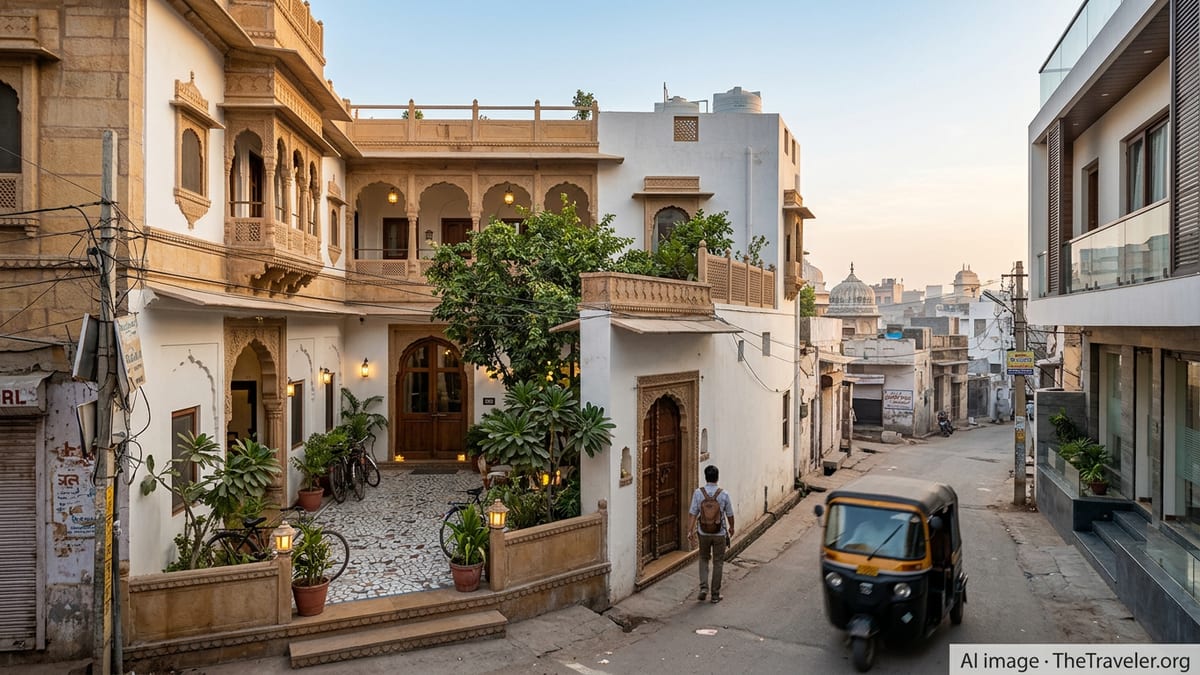
In the north, visitors gravitate toward Delhi, Agra, and Rajasthan’s cities such as Jaipur and Udaipur, where grand heritage hotels and converted havelis dominate the scene. These areas have some of India’s strongest tourism infrastructure, from five-star brands to well-reviewed guesthouses, and they work well for first-time visitors who want iconic sites but also straightforward logistics.
Southern India feels noticeably more relaxed. Cities such as Kochi and Mysuru, and the coastal stretches of Kerala and Karnataka, mix colonial-era bungalows, homestays, high-end resorts, and Ayurvedic wellness retreats. In the far south you will find more greenery, slightly slower travel, and many smaller family-run properties that appeal to independent travelers.
Beach destinations such as Goa and the Andaman Islands focus on sun-and-sea stays. Here, your choice might range from simple shacks on relatively undeveloped stretches of sand to polished boutique resorts with strong sustainability credentials. Meanwhile, hill states like Himachal Pradesh and Uttarakhand offer mountain lodges, homestays, and small hotels oriented toward hiking, nature, and cooler temperatures, especially welcome if you are visiting India during hotter months.
Key City Bases for First-Time Travelers
Most first-time visitors still land in one of India’s major cities, and deciding where you first sleep can set the tone for your journey. Delhi and Mumbai are the main international gateways and offer the broadest range of places to stay, from international chains and historic luxury hotels to minimalist hostels aimed at backpackers and digital nomads. If you are nervous about the intensity of Indian cities, choosing a quieter neighborhood and a hotel with good soundproofing and on-site dining can ease the transition.
Delhi is the logical base for the Taj Mahal and the Golden Triangle. Many visitors stay in central areas such as Connaught Place or in leafy South Delhi enclaves where there is a concentration of mid-range hotels and boutique guesthouses. Mumbai, by contrast, spreads along the Arabian Sea and is known for waterfront properties near Colaba, art deco-era stays around Marine Drive, and a growing crop of design-forward hotels in neighborhoods like Bandra. In both cities, staying near a metro line or main rail terminus can save hours in traffic.
Jaipur and Udaipur in Rajasthan have, over the past decade, built a reputation for atmospheric heritage properties, including palaces and mansions converted into hotels with courtyards, frescoes, and traditional music in the evenings. These cities make excellent bases because you can combine day trips to forts and countryside with the comfort of coming back to a characterful room. Their popularity means a wide range of standards and prices, so research and recent reviews are essential.
In the south, Kochi in Kerala has emerged as a favorite soft landing, with Fort Kochi’s lanes lined with homestays, boutique hotels, and art-filled guesthouses. Mysuru draws travelers for its palace, yoga schools, and slower pace, supported by clean, comfortable hotels that are often better value than in the biggest metros. If your primary interest is food, culture, and a slightly gentler introduction to India, starting in one of these southern cities rather than Delhi can be a smart choice.
Beach Stays: Goa, Kerala Coast, and the Andaman Islands
India’s beaches are as varied as its cities, and where you stay matters just as much as which stretch of coast you choose. Goa remains the country’s dominant beach destination, welcoming millions of visitors each year. The north tends to be busier, with lively nightlife around areas like Vagator and Calangute, while parts of South Goa such as Betalbatim and Palolem are more relaxed, with a mix of guesthouses, beach huts, yoga retreats, and a few luxury resorts set back from the sand.
Accommodation in Goa ranges from basic beach huts with fans and cold-water showers to sophisticated villas with private pools. Many repeat visitors now gravitate toward boutique hotels and eco-conscious stays in quieter villages, trading immediate beachfront for calmer surroundings. If you visit during peak season, typically November to February, book well ahead; prices rise sharply around Christmas and New Year, and the best smaller properties often sell out months in advance.
Further south, Kerala’s coastline combines beaches with the Arabian Sea and the famous backwaters. Around Varkala and Kovalam you will find cliffside guesthouses, mid-range hotels overlooking the sea, and wellness-oriented resorts offering Ayurvedic treatments. In the backwaters, including around Alleppey and Kumarakom, traditional-style houseboats double as overnight accommodation, gliding through lagoons and canals. These offer a distinctive experience, but it is important to choose reputable operators focused on safety, hygiene, and responsible waste management.
For a more remote island feel, the Andaman and Nicobar Islands offer white-sand beaches and clear water, with places such as Havelock Island known for their scenery and growing eco-resort scene. Infrastructure is more limited than on the mainland, so expect a smaller number of hotels, guesthouses, and dive-oriented lodges, and plan for longer booking lead times, especially if traveling in the drier months when seas are calmer. Power cuts and patchy internet are still possible, which many travelers see as part of the appeal.
Heritage, Boutique, and Homestay Experiences
One of India’s biggest draws is the chance to stay inside buildings with real history. Heritage hotels are common in Rajasthan and other northern states, where centuries-old palaces, forts, and merchant mansions have been converted into lodgings. Rooms may feature stone latticework, painted ceilings, and inner courtyards. Standards vary widely; some properties are polished luxury operations, while others retain quirks like uneven staircases or older plumbing. If you love atmosphere and do not mind a few idiosyncrasies, these stays can be unforgettable.
Boutique hotels are now firmly established in India’s major tourist centers. These are typically smaller than chain hotels, with 10 to 40 rooms, and emphasize local design, personalized service, and a sense of place. You will find them in neighborhoods of Delhi and Mumbai, in historic quarters of cities like Kochi, and in hill stations and wildlife regions. They tend to appeal to travelers who want more character than a standard business hotel, but with modern comforts such as strong air-conditioning and reliable hot water.
Homestays have expanded rapidly over the past several years, supported by domestic booking platforms and growing demand for authentic local experiences. In practice, a homestay in India can range from a spare room in a family home to a small guesthouse managed by the owners, often with home-cooked meals and the chance for conversation. They are particularly common in Kerala, the Himalayan states, and rural regions where big hotels are scarce. Standards vary, so look for properties with recent reviews mentioning cleanliness, helpful hosts, and consistent power and water.
These smaller, more personal stays can also distribute tourism income beyond established hotel districts, but travelers should be prepared for sometimes slower service and occasional language gaps. In return, you may gain practical help navigating local transport, insights into festivals and customs, or opportunities to join cooking sessions and village walks that are difficult to arrange from a large resort.
Wildlife Lodges, Mountain Retreats, and Spiritual Stays
Beyond cities and beaches, India offers stays that revolve around nature, wildlife, and spirituality. In and around national parks and tiger reserves, such as those in Madhya Pradesh, Rajasthan, or Uttarakhand, you will find safari lodges that organize guided game drives. These range from simple forest rest houses and tented camps to high-end eco-lodges with naturalist guides, pools, and careful environmental practices. Proximity to park gates matters, as many reserves regulate entry windows strictly.
In the Himalayas and other hill regions, accommodation often clusters in and around small towns such as Manali, Dharamshala, or Rishikesh, as well as in quieter valleys aimed at trekkers and those seeking cooler air. Expect a mix of guesthouses, yoga retreats, riverside camps, and modest hotels, with luxury options increasing in the most popular areas. At higher altitudes, heating and insulation become more important than air-conditioning, and simple backup systems for power and water can make a big difference to comfort.
India also attracts visitors to religious and spiritual centers, from Varanasi on the Ganges to the temple towns of Tamil Nadu and the ashrams along the Ganga in Rishikesh and Haridwar. Here, accommodation ranges from basic dharamshalas and ashram dormitories to businesslike hotels aimed at pilgrims. Facilities may be simpler than in resort destinations, with early curfews, vegetarian-only dining, or alcohol-free policies. For many travelers, accepting these house rules is part of the experience of staying in a living place of worship.
Whether you are visiting for wildlife, trekking, or meditation, it is wise to check seasonal conditions carefully. Monsoon rains, extreme heat, or winter snow can affect both accessibility and the range of accommodation that is open. Booking through reputable operators or directly with known lodges or retreats helps ensure that what you expect on arrival matches the reality on the ground.
Practical Considerations: Budget, Safety, and Booking Tips
India remains broadly good value compared with many long-haul destinations, but costs vary sharply between regions and seasons. In major cities and popular destinations such as Goa or parts of Rajasthan, you will find everything from basic hostels to ultra-luxury resorts. Outside peak festivals and holidays, comfortable mid-range hotels and guesthouses are accessible to many travelers, while homestays and simple lodges can be even more affordable. In remote areas and national parks, however, prices may be higher because supply is limited and logistics are more complex.
Booking in advance has become more important, especially since domestic tourism has grown rapidly. During high seasons, such as winter in the north and December beach holidays, last-minute options in the most sought-after neighborhoods can be limited or expensive. Using recognised booking platforms or contacting properties directly by email or phone allows you to confirm details such as airport transfers, late check-in, internet reliability, and whether contactless payments are accepted.
Safety standards vary, but the overall picture for mainstream tourist areas is that of a busy, sometimes chaotic environment rather than a high-risk one. Choosing accommodation in well-lit, centrally located neighborhoods and reading recent guest reviews about security, late-night access, and staff responsiveness is important, especially for solo travelers. Many hotels and reputable homestays have front desks staffed around the clock, CCTV at entrances, and policies for checking visitor identification.
Finally, consider how your accommodation fits into the wider logistics of your trip. Distances in India are long, and journeys can be slower than on paper. Staying near major train stations, metro stops, or domestic airports can reduce travel time. In older city centers and hill stations, narrow lanes or steep roads may mean you walk the last stretch to your hotel or homestay, so pack accordingly and ask in advance about vehicle access if mobility is a concern.
The Takeaway
Where you choose to stay in India will shape how you experience the country’s scale, diversity, and daily rhythms. City hotels offer convenience and connectivity, while heritage properties and homestays immerse you in local architecture and family life. Beach huts, houseboats, mountain lodges, and safari camps each open different windows onto India’s landscapes and cultures.
Begin by deciding what you most want from your trip: iconic monuments, food and culture, beaches, wildlife, spiritual exploration, or a blend of all of these. Then select regions and cities that match those priorities and look for accommodation that balances character with the level of comfort and structure you prefer. With thoughtful planning and realistic expectations, your stay in India can be not just a place to sleep, but one of the most memorable parts of your journey.
FAQ
Q1. Where is the best place to stay in India for a first-time visitor?
The classic introduction is the northern Golden Triangle, with stays in Delhi, Agra, and Jaipur or Udaipur, where tourism infrastructure is strong and travel routes are well established.
Q2. Is it better to stay in North or South India on a first trip?
North India offers famous monuments and desert cities, while South India feels slightly more relaxed and green. Many travelers start in one region, then add the other on a later visit.
Q3. Are homestays in India safe for solo travelers?
Reputable homestays in established tourist areas are generally safe. Choose well-reviewed properties, communicate clearly with hosts, and prioritize central, well-lit locations.
Q4. How far in advance should I book accommodation in India?
For peak seasons and popular destinations like Goa, Rajasthan, and Kerala’s backwaters, book several months ahead. In shoulder seasons, a few weeks is often enough for most areas.
Q5. What is the difference between a heritage hotel and a regular hotel?
A heritage hotel occupies a historic building, such as a palace or mansion, often with traditional decor and architecture. Regular hotels are purpose-built and usually feel more standardized.
Q6. Can I find reliable Wi-Fi in Indian hotels and guesthouses?
Most mid-range and higher-end hotels in cities and major tourist hubs offer decent Wi-Fi, though speeds can fluctuate. In remote areas and some islands, connections may be slower or intermittent.
Q7. Are beach huts in Goa and Kerala comfortable enough for longer stays?
Simple beach huts suit travelers who value location over amenities. For longer stays or if you need air-conditioning, private bathrooms, and strong Wi-Fi, look for better-equipped cabins or small resorts.
Q8. What type of accommodation is best for visiting Indian national parks?
Safari lodges and small resorts near park gates are usually the most practical, as they arrange guided drives and understand local regulations. Book early because quality options are limited.
Q9. Is it necessary to stay inside an ashram for a spiritual experience in India?
No. You can attend yoga classes, ceremonies, or temple visits while staying in nearby guesthouses or hotels, which often provide more privacy and comfort than basic ashram rooms.
Q10. How much should I budget per night for comfortable mid-range accommodation?
Costs vary by city and season, but many travelers find that a moderate budget can secure clean, comfortable rooms in guesthouses, homestays, or small hotels in most major destinations.