

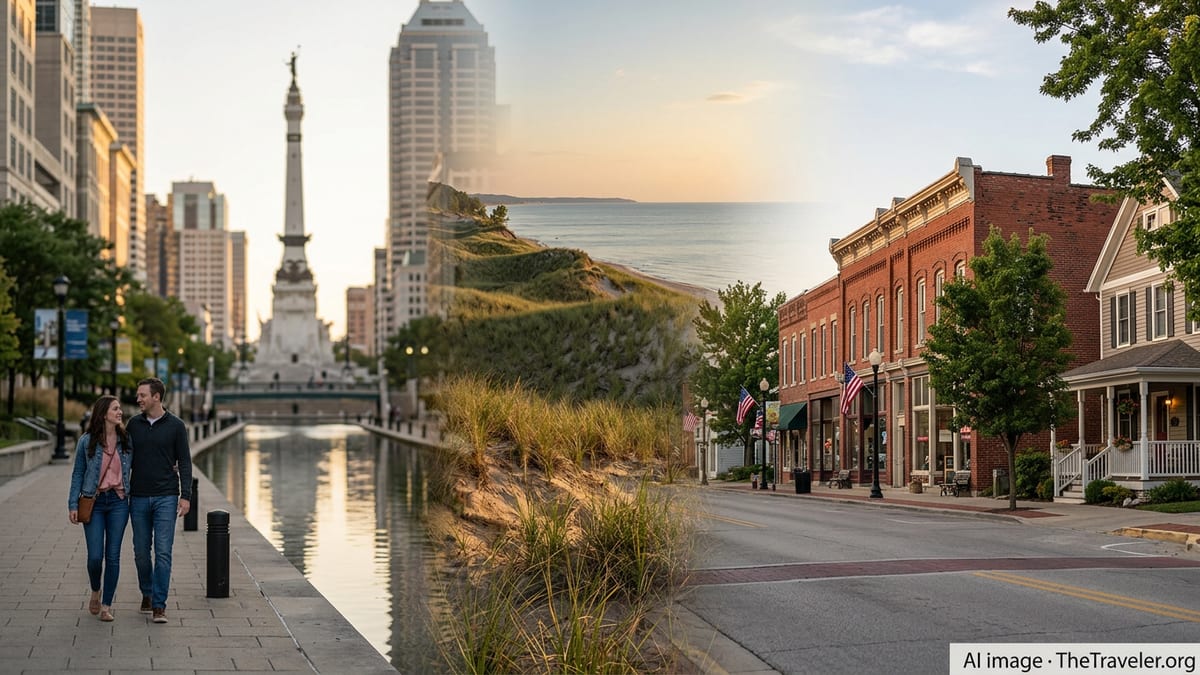
Indiana rewards curious travelers with a mix of big-city culture, freshwater beaches, and slow-paced small towns that still feel authentically Midwestern. Choosing the right home base can transform a short visit into a memorable escape, whether you want skyline views in Indianapolis, easy access to the sandy shoreline at Indiana Dunes, or a front porch in a storybook town where everyone still says hello.
How to Choose the Right Place to Stay in Indiana
Indiana is compact enough that you can easily combine city, lake, and countryside in a single trip, yet each region feels distinct. When deciding where to stay, start with your priorities: museums and food, outdoor time on Lake Michigan, or quiet streets and historic architecture. Driving times between hubs are usually measured in hours rather than minutes, so it pays to cluster your overnight stays around the experiences you care about most.
Accommodations across the state range from downtown high-rise hotels and boutique properties in restored factories to lake-view inns, cabins in the woods, and classic bed-and-breakfasts in 19th century homes. Instead of focusing on a single “best” hotel, it is more helpful to understand the neighborhoods and towns that consistently work well for visitors. That way you can match your lodging style and budget to a part of Indiana that feels like a good fit.
For first-time visitors, a practical approach is to spend at least one or two nights in Indianapolis for culture and dining, one or two nights near Indiana Dunes for the lakefront and trails, and then another night or two in a small town that gives you a taste of Indiana’s rural scenery and slower pace. Even a long weekend can comfortably accommodate two of these hubs if you do not mind a bit of driving.
What follows is an area-by-area guide that focuses less on specific hotels and more on where to base yourself: the streets you will walk, how easy it is to get around, and what kind of experience you can expect just outside your front door.
Best Areas to Stay in Indianapolis for First-Time Visitors
Indianapolis has evolved into a city of distinct, walkable districts that ring its compact downtown. For first-time visitors, staying in or just around the city center puts you close to major museums, sports venues, and the scenic Canal Walk. Downtown hotels cluster near the Indiana Convention Center and Monument Circle, with easy access to the Cultural Trail, a well-marked urban path that links many of the city’s most interesting neighborhoods.
The downtown core works especially well if you are in town for an event at Lucas Oil Stadium or Gainbridge Fieldhouse, or if you want a car-free stay. You can walk to the Indiana State Museum, Eiteljorg Museum, and White River State Park, and then continue along the Canal Walk for views of the water and skyline. High-rise chain hotels dominate this area, but recent additions include a new wave of more design-forward properties and rooftop spaces that look out over Monument Circle and Market Street.
Just northeast of downtown, Massachusetts Avenue, known locally as Mass Ave, is one of the city’s liveliest corridors for dining, theater, and nightlife. It is flanked by historic residential districts such as Chatham Arch and Lockerbie Square, and anchored at its northern end by the Bottleworks District, a redeveloped Art Deco bottling plant that now houses a boutique hotel, food hall, cinema, and creative offices. Staying on or near Mass Ave gives you a neighborhood feel while keeping you within a 15 to 20 minute walk of the core downtown museums and the Circle.
South and southeast of downtown, Fletcher Place and neighboring Fountain Square have become popular bases for travelers who prefer a slightly bohemian, arts-forward vibe. Here you will find coffee shops in old storefronts, restored brick houses on leafy side streets, and murals tucked between historic commercial buildings. Many short-term rentals are clustered on these streets, making the area appealing for groups and longer stays. The Cultural Trail connects these districts back to downtown, so you can easily bike or walk without navigating busy roads.
Indianapolis Neighborhoods for Food, Culture, and Local Character
If you have already seen downtown or you prefer to stay where locals live, several Indianapolis neighborhoods offer a good balance of access and character. Broad Ripple, north of downtown along the White River, is one of the city’s best-known entertainment districts, with a vintage main street feel, a concentration of bars and restaurants, and access to the Monon Trail, a popular multi-use path that runs through the metropolitan area. Lodging options here tend to include smaller hotels and a wide range of short-term rentals, and the area can be lively into the evening, especially on weekends.
Closer to downtown, historic neighborhoods on the near east side, such as Irvington and Cottage Home, showcase tree-lined streets and well-preserved homes, often from the late 19th and early 20th centuries. These areas are known locally for their strong sense of community, seasonal neighborhood events, and walkable commercial nodes with cafes, bakeries, and small restaurants. Visitors who value architecture and a quieter, residential feel often gravitate here, typically using a car or rideshare to reach downtown museums and stadiums within 10 to 20 minutes.
To the north of the city center, areas such as Meridian-Kessler and nearby SoBro (South Broad Ripple) blend stately older homes with an increasing number of independent eateries and boutiques. They are not tourism districts in the traditional sense, but they offer an experience that feels representative of everyday Indianapolis life: coffee shops with regulars who linger, leafy side streets, and neighborhood taverns that predate the craft-cocktail moment. These neighborhoods work best for visitors with a car, since public transportation is still limited compared with larger coastal cities.
On the west side, the independent town of Speedway, wrapped around the famed Indianapolis Motor Speedway, provides an alternative base, especially if you are in town for a race or event. Main Street has been reshaped over the past decade with new restaurants, taprooms, and small hotels. Compared with downtown, Speedway feels more suburban and spreads out quickly, but it places you near the track and within a straightforward drive of the city center, the zoo, and the museums along the river.
Where to Stay for Indiana Dunes and the Lake Michigan Shoreline
Indiana Dunes National Park and adjacent Indiana Dunes State Park protect a sweep of Lake Michigan shoreline that feels far removed from the flat farm fields often associated with the state. Where you stay will shape how you experience this landscape. The park itself is spread across a series of units along the coast, so convenience often means choosing a nearby town and driving a short distance to particular beaches and trailheads.
Chesterton is one of the most popular bases for exploring the dunes. Located just inland from the park, it offers a compact, walkable downtown with restaurants, coffee shops, and small locally owned inns and chain hotels. From here, you can reach the main state park entrance in roughly 10 to 15 minutes by car, making early morning or sunset visits to the beach realistic without a long commute. Chesterton’s atmosphere is family friendly and down-to-earth, which suits travelers who want a relaxed, practical base rather than a busy resort town.
Porter and Beverly Shores sit closer to the water and appeal to visitors who want to feel immersed in the dunes landscape. In Porter, you will find wooded settings and smaller lodgings that market themselves as quiet retreats within a short drive of the beach. Beverly Shores, strung along the lakefront, is more residential and low key, with a limited number of rental homes and cottages. The trade-off for this seclusion is that you will drive a bit farther for groceries and restaurants, often to Chesterton, Michigan City, or Valparaiso.
Michigan City, to the east, provides the widest range of lodging near the dunes, from larger hotels and casino resorts to small inns and vacation rentals in older residential neighborhoods. It is a working city as well as a tourism base, with a lakefront park, lighthouse views, and easy access to the eastern segments of the national park. For travelers who want nightlife, a broader food scene, and shopping in addition to beach time, Michigan City can make sense, although it feels busier and more spread out than the smaller towns immediately south of the dunes.
Planning Your Stay Around Indiana Dunes Activities
Because the dunes region is a patchwork of park units, industrial stretches, and small communities, it helps to think about how you will spend your time before you book. If your priority is swimming and long afternoons on a supervised beach, staying within a short drive of Indiana Dunes State Park’s main beach or West Beach in the national park can save time and parking stress. Families often favor these areas because of established facilities, clear signage, and relative ease of access.
Hikers and nature enthusiasts might prefer lodgings closer to trail-heavy sections like the state park’s 3 Dune Challenge route or the wooded inland areas near Cowles Bog and Mount Baldy. In that case, a base in Chesterton, Porter, or the outskirts of Michigan City works well, since you can reach a variety of trailheads in 20 to 30 minutes or less. Many inns and small hotels in these towns market to outdoor travelers and provide early breakfast options, trail maps, or guidance on where to find quieter stretches of sand.
If you want the dunes experience without giving up urban conveniences, consider pairing a night or two in the region with time in Chicago or South Bend. The South Shore commuter rail connects the dunes area with Chicago, and driving times to South Bend are manageable, which means you can enjoy a morning on the beach and an evening in a bigger city. For many visitors, though, the charm of the dunes lies in slowing down, and staying in a small lakeside or near-lakeside town fits that mood better than commuting back to a major city after sunset.
Whatever base you choose, be prepared for seasonal variation. Summer and early fall weekends are busy, especially during school holidays, and lodging prices near the water often rise accordingly. Shoulder seasons can be rewarding times to visit, with quieter trails, more moderate temperatures, and better opportunities to secure last-minute bookings in towns that otherwise fill quickly.
Small-Town Escapes: Southern Indiana’s River Towns
Southern Indiana, where the state meets the Ohio River, is home to some of its most atmospheric small towns. Here, rolling hills replace flat farmland, and streets lined with 19th century buildings run down to the river’s edge. Staying in these communities gives you easy access to scenic drives, state parks, and historic main streets that remain remarkably intact.
Madison is one of the best known and most celebrated of these river towns. Its downtown historic district, with brick sidewalks, ironwork balconies, and storefronts from the steamboat era, has drawn national attention for preservation and charm. Many of the town’s bed-and-breakfasts occupy renovated 19th century homes within walking distance of the main commercial streets and the riverfront park. Choosing a central address in Madison allows you to park your car and explore on foot, visiting locally owned restaurants, antique shops, and small galleries between strolls along the shore.
Farther west along the Ohio, Corydon offers a quieter, historically rich alternative. Once the state’s first capital, the town retains important civic buildings and a compact core that lends itself to wandering. Lodging in and around Corydon typically includes small inns, motels, and countryside cabins, some tucked along creeks or among hardwood forests. This makes it an appealing base for travelers who want to mix small-town history with forays into nearby caves, wineries, and scenic byways that meander through the surrounding hills.
Other southern communities, including New Harmony and towns scattered across the Hoosier National Forest region, offer variations on the same theme: brick and limestone architecture, shaded streets, and an unhurried pace. New Harmony is especially notable for its utopian history and well-kept historic sites, as well as for contemporary art and cultural programming that exceeds what you might expect in a town of its size. Staying here or in a similar town gives you evenings that are largely quiet, save for the occasional festival or outdoor concert, and nights that are dark enough for stargazing, a contrast to the glow of Indianapolis and the northern industrial corridor.
Small-Town Escapes: Northern Countryside, Amish Country, and Hill Country
North and northeast of Indianapolis, small towns surrounded by farmland and low rolling hills offer another type of Hoosier retreat. Here the landscape opens up, and the rhythm of the day is set by grain elevators, church spires, and morning coffee crowds in diners that have not changed much in decades. Many of these towns lie within a reasonable drive of Indianapolis or Fort Wayne, making them realistic weekend escapes even for travelers with limited time.
Shipshewana, in the heart of Indiana’s Amish country, stands out for its combination of rural scenery and cultural interest. Visitors come for its well-known flea market on select days, for buggy rides through the countryside, and for barn-style theaters that host musical performances. Lodging tends to be clustered around the town center and near event venues, with inns and small hotels that are accustomed to hosting multigenerational families and groups. Staying here offers a chance to slow down, observe the rhythms of Amish life, and explore back roads lined with farms and handmade roadside signs advertising baked goods and furniture.
In the south-central part of the state, Nashville, set amid the wooded hills of Brown County, has long attracted artists and weekenders. It sits close to Brown County State Park, one of Indiana’s most popular outdoor destinations, known for its hiking trails, fall foliage, and scenic overlooks. Visitors often divide their time between the park and the town’s shops and galleries, many of which highlight regional crafts and art. Lodging options range from cabins in the hills and park-adjacent lodges to small inns and rental homes near downtown, allowing you to choose between a forested retreat and a more walkable base.
Scattered across the northern half of the state are other small communities that have developed reputations as weekend getaways, sometimes thanks to nearby lakes or state parks. Towns near reservoirs and glacial lakes, for instance, often support a mix of rental cottages, houseboats, and small motels that cater to anglers and families seeking swimming and boating. The experience in these places tends to be seasonal, with summer bringing a burst of activity and winter returning a hushed, locals-only pace that appeals to travelers looking for solitude and low-key charm.
Practical Tips for Booking Stays Across Indiana
Because Indiana covers a relatively modest area, it is tempting to assume that you can base in one spot and day-trip everywhere. In practice, road time can add up, especially if your plans include both the northern lakeshore and the southern hills. When possible, structure your trip as a gentle arc: perhaps two nights in Indianapolis, two near the dunes, then two in a small town on the way back, rather than returning to the same hotel after long drives.
Seasonality is another key consideration. Summer weekends around Indiana Dunes and the most popular state parks are busy, and lodging in nearby towns can sell out months in advance. In contrast, Indianapolis and many small towns may offer more availability and more attractive rates outside major event weekends, college games, and festivals. Checking the local events calendar before you book can help you avoid surprise crowds or, conversely, can help you plan to be in town for a celebration you would enjoy.
For a smoother experience, think about how you prefer to get around. Public transportation is limited, so most travelers rely on cars, but some Indianapolis neighborhoods are increasingly bike and pedestrian friendly, thanks to trail networks like the Monon Trail and the Cultural Trail. Near Indiana Dunes, driving remains the most practical option to reach scattered trailheads and beaches, though some visitors combine train access with local taxis or rideshares. In small towns, walking is often the default, with most restaurants, shops, and historic sites clustered within a few compact blocks.
Finally, consider the style of lodging that suits your trip. Downtown Indianapolis favors full-service hotels and newer boutique properties. The dunes area is a patchwork of modest hotels, motels, small inns, and short-term rentals in both residential and resort-like settings. Small towns tend to lean into bed-and-breakfasts, historic inns, and cabins. None of these are inherently better, but each shapes your experience differently: a downtown high-rise delivers skyline views and convenience, while a restored Victorian inn on a quiet street may invite you to sit on the porch swing and watch the town wind down at dusk.
The Takeaway
Indiana’s appeal lies less in a single must-see landmark and more in the variety of experiences it offers within a few hours’ drive. Staying in Indianapolis puts you at the center of a growing food and cultural scene, with architectural character and walkable districts that are still evolving. Choosing a base near Indiana Dunes immerses you in a rare Midwestern combination of freshwater beaches, rolling dunes, and wooded trails, backed by towns that are practical and welcoming rather than overly polished.
In small towns across the state, from riverfront districts in the south to Amish communities and hill-country villages in the interior, the pace slows, the night skies grow darker, and the sounds of traffic give way to crickets, church bells, and trains in the distance. The right place to stay is the one that matches the version of Indiana you want to discover: the urban energy, the lakeshore light, or the quiet of a side street where neighbors still greet each other by name.
With thoughtful planning, you can experience all three in a single trip. Map your route, choose neighborhoods and towns that align with your interests, and give yourself time to wander beyond the main attractions. That is often where Indiana reveals its most enduring charms.
FAQ
Q1. What is the best area to stay in Indianapolis for first-time visitors?
The downtown core and nearby Massachusetts Avenue corridor work best for most first-time visitors, offering walkable access to museums, sports venues, dining, and nightlife.
Q2. Is it better to stay in Chesterton or Michigan City for visiting Indiana Dunes?
Chesterton offers a quieter, small-town base close to primary park entrances, while Michigan City provides more lodging variety, nightlife, and an urban lakefront atmosphere.
Q3. Do I need a car to enjoy Indianapolis and Indiana Dunes?
A car is very helpful, especially for the dunes, but you can enjoy central Indianapolis car-free if you stay downtown or near the Cultural Trail and use rideshares as needed.
Q4. When should I book lodging near Indiana Dunes?
For summer and early fall weekends, it is wise to book several months ahead, especially for lakeside or in-demand small-town properties that fill quickly.
Q5. Which Indiana small towns are best for a romantic weekend?
Madison, New Harmony, and Nashville in Brown County are especially good picks, thanks to walkable historic districts, atmospheric inns, and scenic surroundings.
Q6. Are there family-friendly areas to stay in Indianapolis?
Downtown near White River State Park and the Canal Walk, as well as Broad Ripple and Speedway, tend to work well for families seeking parks, attractions, and easy driving.
Q7. Can I combine Indianapolis and Indiana Dunes in one long weekend?
Yes, many travelers spend one or two nights in Indianapolis and one or two nights near the dunes, accepting a several-hour drive between the city and the lakeshore.
Q8. What kind of lodging can I expect in Indiana’s small towns?
Most small towns offer a mix of historic inns, bed-and-breakfasts, modest motels, cabins, and short-term rentals, often in renovated older homes near the main streets.
Q9. Are there quiet places to stay near Indiana Dunes?
Yes, areas in and around Porter, Beverly Shores, and some wooded properties outside Chesterton and Michigan City can feel especially peaceful, especially on weekdays.
Q10. How far in advance should I book for fall foliage in Brown County?
For peak autumn color around Nashville and Brown County State Park, booking lodging several months in advance is prudent, as weekends can sell out quickly.