

Iowa may be known for rolling fields and friendly small towns, but travelers who look closer will find an impressive variety of places to stay. From walkable downtown districts packed with adaptive reuse hotels to quiet cabins hidden in hardwood forests and classic Midwestern lake resorts, the Hawkeye State offers far more overnight character than many visitors expect. Choosing the right base can turn a simple road trip or family visit into a genuine getaway, with easy access to bike trails, wineries, college sports, and some of the Midwest’s most underrated lakes.
How to Choose Where to Stay in Iowa
Deciding where to stay in Iowa starts with the kind of trip you want. The state’s larger cities, especially Des Moines, Iowa City, and Cedar Rapids, are ideal for travelers who want walkable neighborhoods, restaurant choice, and lively arts scenes. These hubs concentrate most of the state’s boutique hotels and full-service properties, many of them created through careful conversions of historic office towers and civic buildings in recent years. That adaptive reuse trend has given visitors stylish places to stay without sacrificing the traditional brick-and-limestone look that defines many downtowns.
If you are coming for fresh air and quiet, Iowa’s cabin network is extensive. The state park system alone manages dozens of rental cabins, and county conservation boards now offer nearly 240 more across the state, ranging from simple camping cabins to modern, fully furnished lodges. These sit in wooded valleys, on small lakes, and along rivers, giving quick access to hiking, paddling, and wildlife watching without the need to tow a camper.
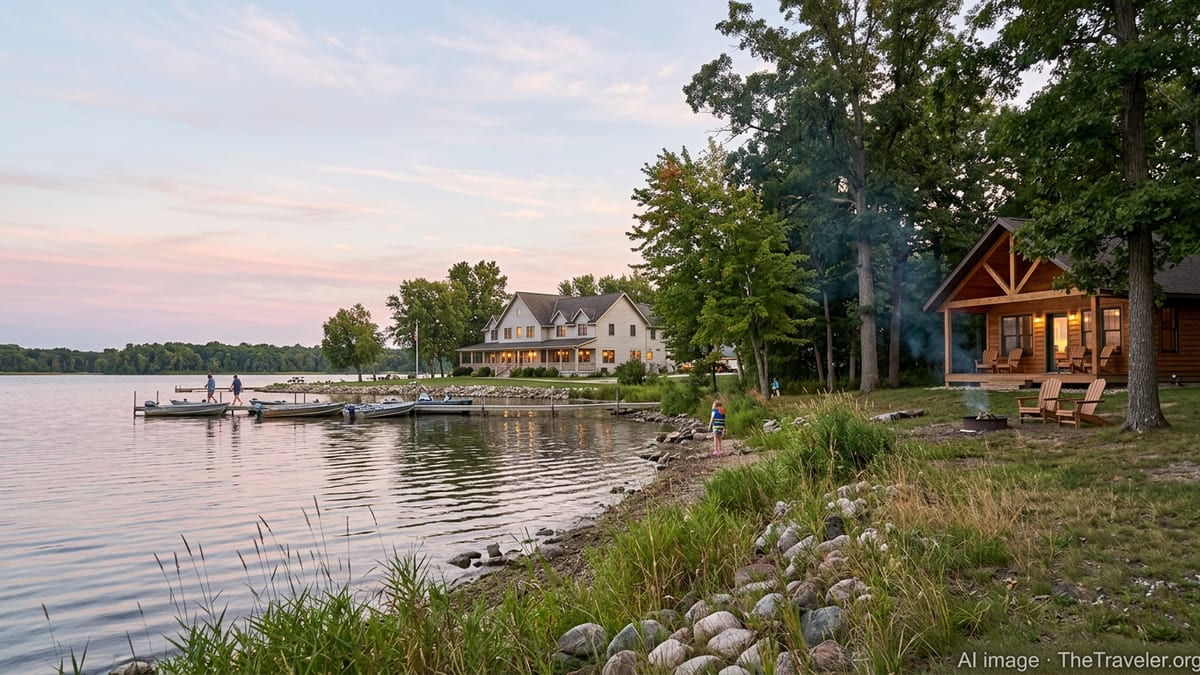
Lakeside resorts fill a third niche, especially in northern and central Iowa, where natural and reservoir lakes anchor summer tourism. Places like the Okoboji chain of lakes, Big Spirit Lake, Clear Lake, and Rathbun Lake pair classic cottage culture with marinas, sandy beaches, and small-town dining. You can choose between resort condominiums, basic motels, independent inns, and private vacation rentals, often with boat slips or beach access included. Many operate year round, with quieter off-season stays focused on ice fishing, birding, or simply relaxing with a fireplace view of the water.
Budget is another key factor. City hotels and resort condos typically carry the highest nightly rates, especially during major events and peak summer weekends. Cabins in state and county parks are often competitive with midrange hotel rooms, particularly for families or small groups, because one nightly fee covers several beds and a full kitchen. Rural motels and independent inns remain the best value for road trippers who mainly need a clean, safe base to sleep before driving on.
Des Moines: Best for First-Time Visitors and Urban Comfort
Greater Des Moines has become Iowa’s most reliable all-around base for travelers. Downtown and the adjacent East Village concentrate many of the state’s best hotels, several of them housed in historic high-rises that have been carefully renovated into contemporary lodging. Buildings such as the Liberty Building and the former Kirkwood hotel property reflect this wave of adaptive reuse, with polished lobbies, generous natural light, and views over the compact skyline. Recent rankings of Des Moines hotels highlight a mix of upscale chains and independent properties that now compete comfortably with those in larger Midwestern cities.
Staying downtown works well if you want to explore on foot. From most hotels you can reach the Pappajohn Sculpture Park, the Principal Riverwalk, and major venues like the Iowa Events Center without moving your car, often by way of the enclosed skywalk system during colder months. Business travelers appreciate the direct connections between certain hotels and the convention complex, while leisure guests benefit from having taprooms, coffee shops, and locally owned restaurants a short walk away. Parking is usually easier and more affordable than in bigger metros, which softens the cost of choosing a central address.
Travelers looking for character can focus on smaller boutique hotels and renovated properties sprinkled through downtown and the East Village. Many feature exposed brick, large windows, and design nods to Des Moines’ insurance and printing history. Rooms tend to be larger than those in comparable big-city properties, and amenities often include lobby lounges, small fitness rooms, and work-friendly common spaces. Families may prefer midscale chain hotels near the Jordan Creek area in West Des Moines or by Adventureland and the casino complex in Altoona, where highway access and free parking outweigh the lack of urban views.
As a practical note, rates in Des Moines can rise during the Iowa State Fair, large youth sports tournaments, and legislative sessions. Booking early during August and major winter event weekends helps secure lower prices and better room selection. For most of the year, though, travelers will find a comfortable range of options from budget-friendly roadside chains to polished downtown towers with river or skyline views.
College Town Vibes in Iowa City, Ames, and Decorah
Iowa’s college towns offer a different flavor of stay, with compact downtowns, walkable neighborhoods, and a constant churn of music, sports, and cultural events. Iowa City, home to the University of Iowa, is perhaps the best known. Hotels cluster along the pedestrian-friendly downtown and near the university’s medical campus, mixing national brands with a handful of more design-forward properties. It is an ideal base if your trip revolves around Hawkeye football games, literary events, or exploring the restaurants and bars around the Iowa City Pedestrian Mall.
Nearby lakes and parks make Iowa City a good compromise between urban and outdoor travel. To the north, Lake Macbride and the Coralville Reservoir support boating, paddling, and fishing, and there are modest cottage and cabin options within a short drive. This lets visitors pair an in-town hotel stay during part of their trip with a quieter night or two at the lake. Properties around North Liberty and Solon tend to be more low-key and vehicle oriented, with easy access to the interstate and trail networks.
Ames, home to Iowa State University, leans more toward classic Midwestern chain hotels, but its selection is broad and typically good value outside of major game days and graduation weekends. Staying near the university provides quick access to Reiman Gardens, Jack Trice Stadium, and the historic Campustown district. For travelers road tripping along Interstate 35, Ames also functions as a convenient overnight between Minneapolis and Kansas City, with plenty of straightforward options right off the highway.
In northeast Iowa, Decorah blends college-town energy with small-town scenery. Luther College anchors the community, and a mix of small inns, motels, and vacation rentals serve visitors. Cabins and lodges in the wooded hills around town give access to trout streams, bike trails, and the Upper Iowa River. Properties here tend to be independently owned and benefit from the region’s growing reputation for outdoor recreation and craft beer, making Decorah a strong choice for couples and friends’ trips.
Historic Small Towns and Boutique Stays
Beyond the major cities and college hubs, some of Iowa’s most memorable stays are in smaller towns that have embraced historic preservation. Brick main streets, restored theaters, and repurposed schools and courthouses now house inns, hotels, and bed-and-breakfasts. One of the most notable examples is Hotel Grinnell, a former junior high school in downtown Grinnell that was transformed into a boutique hotel. The project has been recognized by national historic hotel organizations for its adaptive reuse, blending preserved architectural details with modern amenities and playful schoolhouse touches.
Similar efforts can be seen across the state, where aging office buildings and civic structures now serve as lodging rather than being demolished. Many are in walkable downtown districts with independent shops and restaurants, which allows travelers to enjoy an authentic small-town atmosphere while still having comfortable rooms, reliable wifi, and updated bathrooms. These properties often feature exposed brick, tall windows, and reused gymnasiums or auditoriums repurposed as event spaces.
Small-town hotels tend to book up quickly around festivals, county fairs, and regional sports tournaments. In places without a large cluster of chain properties, one boutique inn or renovated historic hotel might be the only high-amenity option within miles. Planning ahead is especially important in communities along popular biking routes and scenic byways in spring and fall, when foliage drives and organized rides draw visitors from across the Midwest.
For travelers seeking a mix of affordability and charm, it is worth pairing a night or two in a headline destination with a night in a smaller community on the way. Towns with well-preserved historic districts, often centered on courthouses and grain elevators, offer an everyday Iowa backdrop that feels different from coastal resort communities while still delivering comfortable stays and friendly service.
Cabins in Iowa State and County Parks
Cabins are one of the most distinctive ways to stay in Iowa. The state’s Department of Natural Resources manages dozens of rental cabins in parks across the state, from the limestone bluffs of northeast Iowa to southern lake country. Recent reporting notes that Iowa’s state park system includes more than ninety rental cabins along with thousands of campsites and hundreds of miles of trails, reflecting significant investment in overnight infrastructure in recent years. Many parks offer both modern cabins with full kitchens and bathrooms and more rustic designs that prioritize simplicity and proximity to nature.
Cabin styles vary considerably. Some, such as the stone and timber cabins at Pine Lake State Park near Eldora, date back to Civilian Conservation Corps construction in the 1930s and combine historic character with modern updates like electricity, basic kitchens, and indoor plumbing. Others, like the modern cabins at Lake Wapello State Park or Palisades-Kepler, are more contemporary structures with heating and air conditioning, separate bedrooms, and decks overlooking water or woodland. State data for the 2025 season shows that these cabins see steady occupancy across weekdays and weekends, underlining their popularity with in-state and regional visitors.
Alongside the state system, Iowa’s ninety-nine county conservation boards collectively offer a wide network of cabins in county parks. A recent county conservation newsletter estimated that more than fifty counties together now manage nearly 240 cabins for rent, many of them fully furnished. These are often located on small lakes, riverfront parcels, or wooded hillsides and tend to be competitively priced with midrange hotels, especially considering that nightly rates usually cover multiple bedrooms and living spaces. Booking is commonly handled through centralized reservation platforms dedicated to Iowa’s county parks.
When choosing a park cabin, travelers should consider seasonality and amenities. Some cabins operate year round with furnaces and insulation suitable for snowy nights, while others are strictly warm-weather rentals. A few parks offer specialty lodging such as yurts or camping cabins that require guests to bring more of their own gear. Nearly all provide quick access to hiking trails, fishing piers, boat ramps, and beaches. For families, the appeal often lies in giving children freedom to roam in a semi-wild environment while adults relax on porches or around fire rings, with the comfort of a real bed and roof at the end of the day.
Private Cabins, Farm Stays, and Vacation Rentals
Beyond public park systems, private cabins and vacation rentals have become an important part of Iowa’s lodging mix. Many sit near lakes and rivers, while others are tucked into working farms or converted rural schoolhouses. National vacation rental platforms show cabins around Big Spirit Lake, the Okoboji chain, Clear Lake, Rathbun Lake, and Saylorville Lake, as well as in wooded corners of northeast Iowa and around state forests. These range from minimalist one-room cabins to large, multi-bedroom lake houses designed for extended families or small retreats.
Private rentals near major lakes often emphasize water access. At Clear Lake and West Okoboji, it is common to find properties with shared or private docks, space to tie up a fishing boat, and outdoor seating positioned to take advantage of sunset views. Around lakes near Iowa City and Des Moines, such as Lake Macbride and Saylorville, many rentals cater to weekend visitors from nearby cities, combining cabin-style atmospheres with relatively short drives back to urban amenities. Dog-friendly stays are widely available, particularly around Clear Lake and other recreation-heavy communities.
Farm stays are a quieter, more niche option. Some Iowa families have converted outbuildings or guesthouses on working farms into rentals, giving visitors the chance to wake up to open horizon views, watch crop and livestock operations from a respectful distance, and stargaze well away from city lights. These stays are often best suited to travelers who value privacy and self-sufficiency, as onsite staff may not be present in the way they are at traditional inns or hotels.
When booking private cabins and vacation rentals, pay close attention to cancellation policies, cleaning fees, and local regulations. Popular lake communities can command peak-season premiums, particularly on summer weekends and holiday weeks. In shoulder seasons and midweek periods, however, many properties offer more accessible rates, making it possible to enjoy prime lake or countryside locations for less than a high-end city hotel.
Iowa’s Classic Lake Towns and Resorts
For generations of Midwestern travelers, Iowa’s lake towns have provided easy-going summer escapes. The northwest corner of the state, anchored by the Iowa Great Lakes region, remains the closest thing Iowa has to a traditional resort area. Big Spirit Lake and the interconnected East and West Okoboji lakes draw visitors for boating, sailing, fishing, and lakeside dining. Around Arnolds Park and the town of Okoboji, lakeside resorts and condominium complexes overlook the water, putting guests within walking distance of amusement rides, live music venues, and busy marinas.
Resorts such as those at Arnolds Park typically offer condominium-style units with kitchens, decks, and shared amenities that can include indoor and outdoor pools, grills, and game rooms. Lakefront units are prized for their direct views of boat traffic and sunsets, while back-building condos often offer better value with only a short walk to the beach or dock. Summer weekends can feel festive, with concerts, events, and fireworks adding to the atmosphere. In winter, the same properties pivot to quieter stays centered on ice fishing, snowshoeing, and cozy indoor gatherings.
Elsewhere in the state, Clear Lake in north-central Iowa has developed its own strong identity as a year-round lake town. The community combines a traditional downtown with a waterfront park, marinas, and several lodging options. The Lakeside Inn occupies a particularly enviable position as the only hotel located directly along the shore, offering lakefront rooms and access to a private dock. Guests can watch storms roll across the water, stroll to restaurants and music venues, and take advantage of summer events that animate the lakefront. Additional motels, vacation rentals, and modest resorts around the shoreline provide options at various price points.
Southern Iowa has its own lake drawcards, including large reservoirs such as Rathbun Lake and Red Rock. Around these, travelers will find a mix of private cabins, small resorts, and campgrounds with cabin options. While the scene is generally quieter than in the Okoboji region, the lakes provide ample space for boating and fishing, and surrounding public lands support hiking, birding, and wildlife watching. For those who prefer less congestion and more open water, these reservoirs can make excellent bases.
Practical Tips for Booking Stays in Iowa
Timing and flexibility are key when booking accommodation in Iowa. Summer and early fall are the most popular times for lake resorts and cabins, with weekends in June, July, and October filling quickly. State park cabins often book months in advance for holiday weekends and peak foliage periods, especially in parks with a small number of units. Visitors who can travel midweek or in shoulder seasons, such as late April, May, and early November, will usually find more availability and lower nightly rates, yet still enjoy pleasant weather.
In cities and larger towns, room demand spikes around major events. Des Moines hotels get busier during the Iowa State Fair in August, large conferences, and legislative sessions. College towns see price and occupancy surges for home football games, graduation, and move-in weekends. Checking local event calendars before confirming travel dates can help you avoid the busiest times, or at least encourage you to book far in advance if you want to attend those events yourself.
Travelers should also consider transportation and weather. Iowa’s interstate network makes it easy to move between cities and major lake regions by car, but rural roads can be dark and icy in winter. Choosing lodging close to your primary activities reduces unnecessary driving after dark or in heavy rain or snow. During the hottest summer stretches, properties with air conditioning, shaded outdoor areas, and access to water or pools can significantly improve comfort. In winter, look for lodging with reliable heating, on-site snow removal, and, in the case of cabins, clear instructions for off-season check-in.
Finally, pay attention to what is included in your stay. Some lake resorts and cabins provide linens and towels, while others require guests to bring their own. Cleaning fees, pet policies, and parking charges vary widely between hotels, vacation rentals, and public park cabins. Reading recent reviews and the fine print on reservation pages can prevent surprises and ensure you arrive prepared, whether that means packing bed linens and firewood or simply bringing a swimsuit and a good book.
The Takeaway
Iowa’s lodging scene is far more varied than its modest, agricultural image suggests. Travelers can choose among polished city hotels in historic towers, creative boutique properties in repurposed schools, simple roadside motels, lakeside resorts that anchor generations of summer traditions, and an extensive network of public and private cabins. Each style of stay connects visitors to a different side of the state, from the arts and dining of Des Moines and Iowa City to the easygoing pace of Clear Lake and Okoboji or the quiet woods surrounding Pine Lake and Lake Wapello.
For many visitors, the most rewarding approach is to combine styles within a single trip. You might start with a night in downtown Des Moines for galleries and dining, continue with several days at a lake resort or cabin for swimming and sunsets, and finish with a stay in a college town or historic small city. With a bit of planning around seasonality and events, it is easy to find comfortable, character-filled places to stay at price points suited to most budgets.
Whatever your route, Iowa’s accommodations share certain common threads: a strong sense of place, unpretentious service, and easy access to the landscapes and communities that define the state. Choosing your base thoughtfully ensures that your time in Iowa is not just about where you go, but also about how and where you unwind at the end of each day.
FAQ
Q1. What is the best place to stay in Iowa for first-time visitors?
The Des Moines area is usually the best starting point, thanks to its concentrated selection of hotels, restaurants, museums, and easy highway and airport access.
Q2. When should I book cabins in Iowa state or county parks?
For peak summer weekends and fall foliage, it is smart to book several months ahead. Midweek stays and shoulder seasons generally offer more flexibility.
Q3. Are Iowa lake resorts open year round?
Many lake resorts and vacation rentals remain open all year, although services like marinas and on-site restaurants may scale back or close outside summer.
Q4. Can I find pet-friendly cabins and rentals in Iowa?
Yes. Numerous private rentals and some public park cabins allow pets, typically with an added fee and clear rules about leashes and cleaning.
Q5. Are Iowa’s cabins suitable for winter stays?
Several state and county park cabins are insulated and heated for year-round use, though you should confirm seasonal availability and road conditions before booking.
Q6. Which Iowa towns are best for a mix of nightlife and outdoor recreation?
Des Moines, Iowa City, and Clear Lake provide a strong blend of dining, live music, and access to trails, rivers, or lakes within a short drive.
Q7. How expensive are lake resorts in Iowa compared to city hotels?
In peak summer, popular lake resorts can match or exceed the rates of upscale city hotels. Outside holidays and high season, prices often moderate.
Q8. Do I need a car to enjoy a stay in Iowa?
In most cases, yes. While downtown Des Moines and some college towns are walkable, reaching lakes, cabins, and rural sites almost always requires a vehicle.
Q9. Are there truly remote, quiet places to stay in Iowa?
Yes. Many county park cabins, farm stays, and smaller lakeside rentals sit in very low-traffic areas, offering quiet nights and dark skies for stargazing.
Q10. How far in advance should I book for major events like the Iowa State Fair?
For events of that scale, booking several months to a full year in advance gives you the best chance at preferred hotels and more reasonable rates.