

Milwaukee’s compact downtown and scenic Lake Michigan shoreline make it an easy city to navigate, but where you stay will shape how you experience it. From warehouse lofts in the Historic Third Ward to lakefront high-rises and business-friendly hotels near major venues, the best areas to stay are clustered around the central city and shoreline. This guide breaks down the most convenient neighborhoods near the lakefront and downtown, helping you match your base to your style of trip, whether you are here for festivals, business, museums or a weekend of eating and exploring.
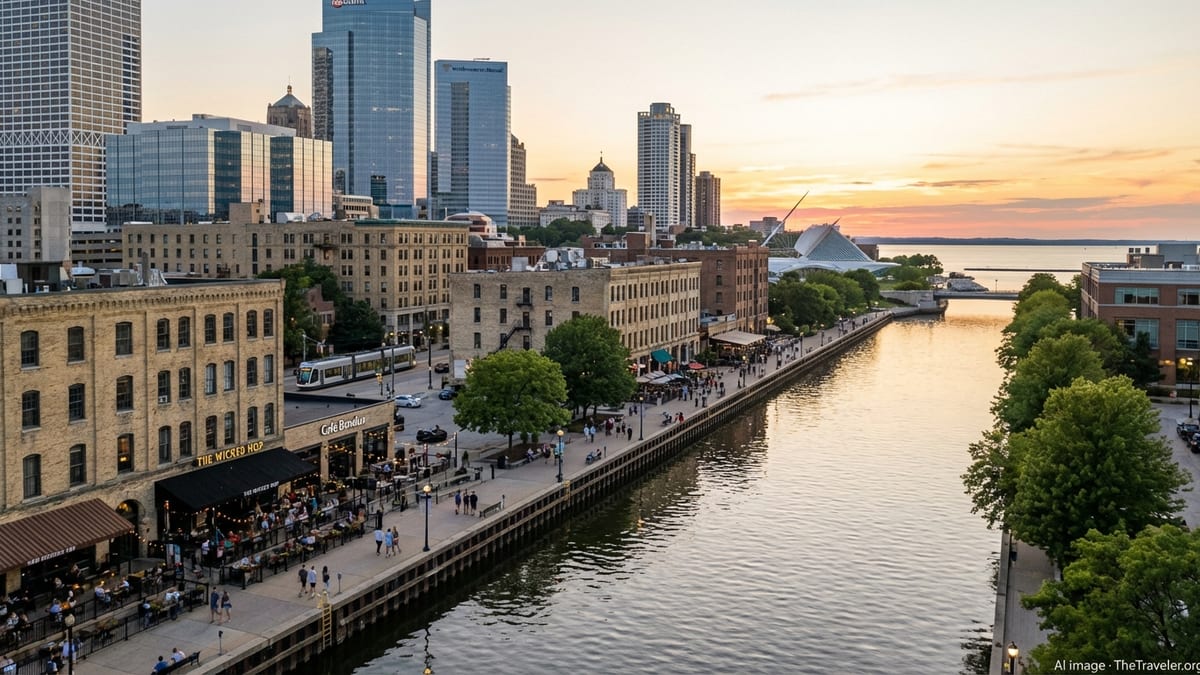
Understanding Milwaukee’s Downtown and Lakefront Layout
Milwaukee’s most visitor-friendly districts sit in a tight radius around the confluence of the Milwaukee River and Lake Michigan. Downtown spreads west from the lakefront, with East Town closest to the water and Westown extending toward the arena district and Marquette University. Just south of the central business district, the Historic Third Ward occupies a compact triangle between the Milwaukee River and the lake, while the Lower East Side runs north from downtown along tree-lined residential streets and bluff-top parks. Because these neighborhoods sit close together, it is realistic to treat the whole area as walkable or easily connected by the Hop streetcar and local buses.
The lakefront itself is a major attraction for visitors and a practical reference point when choosing accommodation. Bordered by parkland, museums and festival grounds, this strip is less about hotels and more about access. Staying one or two blocks inland still keeps you within a short walk of the shoreline paths and cultural institutions. The addition of the Hop’s L-Line extension has also made it easier to move between the central train and bus station, downtown hotels and the new transit concourse at the Couture residential tower near the lakefront, improving connections for visitors heading to the water’s edge for events or sightseeing.
Most travelers will find that a car is optional in this part of Milwaukee, especially in summer and early fall when the weather is pleasant for walking. The Hop streetcar is free to ride and loops through key parts of downtown, the Lower East Side and the Third Ward, while bike-share docks and riverside paths give cyclists straightforward options. For those driving in, however, parking tends to be more plentiful and often cheaper than in larger Midwestern cities, particularly at hotels a few blocks removed from the most in-demand downtown blocks.
When deciding where to stay, it helps to think in terms of priorities. Nightlife seekers and food-focused travelers gravitate toward the Historic Third Ward and nearby Walker’s Point. Business travelers and first-timers who want classic city views and quick access to major venues often choose East Town and Westown. Visitors who value a residential feel and green space close to the water may prefer the Lower East Side or lakefront-adjacent stretches north of downtown. With that framework in mind, the following sections look in more detail at the strengths of each area.
Historic Third Ward: Hip Warehouses and Market Culture
The Historic Third Ward is one of Milwaukee’s most distinctive neighborhoods and a favorite base for visitors who like to be in the middle of a lively, walkable district. Once a busy warehouse and wholesale district, it has been transformed into an arts and fashion hub filled with loft-style buildings, boutiques, design studios and restaurants. The Milwaukee Public Market anchors the neighborhood at the north end, serving as a casual dining hall, local pantry and social meeting point. Around it, cobblestone-style streets, converted brick warehouses and street-level patios create an atmospheric backdrop for exploring.
Staying in the Third Ward works especially well for travelers who prioritize dining, nightlife and local character over being directly on the lakefront. You are still only a short walk from the water, with riverside segments of the Milwaukee RiverWalk offering scenic views, outdoor seating and public art installations. From many lodging options in the neighborhood you can walk to Henry Maier Festival Park, the home of Summerfest and other major lakefront events, making this a practical base during the city’s peak festival season if you prefer to avoid late-night post-concert traffic.
The Third Ward is also well connected to the rest of downtown. The Hop streetcar has stops in and around the neighborhood, tying it to the Intermodal Station, East Town and the Lower East Side without the need for rideshares. For day-to-day needs, guests find that cafés, quick-service food counters and small groceries in and near the public market make it easy to assemble breakfasts or snacks without a full supermarket run. The trade-off is that this district can feel busy and noisy on weekend nights, and the historic building stock means some accommodations may lean into loft aesthetics rather than conventional hotel layouts.
For many visitors, that character is an asset rather than a drawback. Art galleries, performance spaces and public events keep the calendar full, particularly in warm-weather months. Even if you choose to stay elsewhere, spending an afternoon or evening in the Third Ward is essential to understanding modern Milwaukee. If you do base yourself here, you will likely spend much of your trip within a few compact blocks, moving between the market, riverside patios, shops and the short stroll to the lakefront paths and festival grounds.
East Town and the Lakefront: Classic Skyline and Cultural Access
East Town, the part of downtown directly west of the lakefront parks, is the most traditional urban hotel district in Milwaukee. This area blends office towers, historic low-rise buildings and newer residential high-rises, with accommodations ranging from business-class properties to smaller boutique hotels. The key advantage of East Town is its proximity to the lakefront cultural corridor: from many hotels you can walk to the Milwaukee Art Museum, Discovery World and lakeside walking and biking paths in well under fifteen minutes.
East Town suits travelers who want to balance business needs with leisure time by the water. Office complexes, banks and professional services line several of the main streets, making this a logical base for work trips. At the same time, dining options have expanded in recent years, with everything from casual cafés to craft cocktail bars within a few blocks. When the weather cooperates, guests can easily plan a morning jog along the shoreline, an afternoon museum visit and an evening concert or dinner downtown without needing a car.
One recent change that has improved lakefront connectivity is the opening of full daily service on the Hop’s L-Line extension, which runs to a transit concourse beneath the Couture high-rise near the shoreline. This has effectively tied the lakefront more tightly into the streetcar network that already serves central downtown and the Lower East Side. For visitors, that means staying in East Town now comes with even more convenient, car-free access to both the train and bus station and to the waterfront attractions, which is particularly valuable during major festivals and museum events when parking near the lakefront can be tight.
If there is a trade-off to staying in East Town, it is that the nightlife vibe is more subdued than in the Third Ward or parts of Walker’s Point. The streets can feel quieter after business hours, especially in the colder months. However, the combination of safety, daytime activity and immediate lakefront access appeals to many first-time visitors and families. For travelers focused on museums, lake views and walkability, East Town remains one of the most practical and scenic bases in the city.
Westown and the Arena District: Events, Sports and Transit
Westown covers the western half of downtown and is closely associated with Milwaukee’s sports and entertainment scene. This is where you find the major arena district hosting professional basketball and large concerts, as well as historic theaters and live performance venues. Hotel options in this area cater heavily to event-goers and business travelers, with properties situated within easy walking distance of the arena, convention spaces and key office towers.
While Westown sits slightly farther from the lakefront than East Town or the Third Ward, it remains walkable to the shoreline for travelers comfortable with a fifteen to twenty minute stroll. For many visitors, the primary draw here is convenience to events rather than proximity to the water. If your main reason for coming to Milwaukee is a game, a concert or a convention, staying in Westown can significantly cut down on pre- and post-event logistics. You can walk to your venue, stop at nearby bars and restaurants before or after, and avoid navigating traffic around start or end times.
Transit access is another advantage. The Milwaukee Intermodal Station, the city’s main rail and intercity bus hub, sits on the edge of this district, making it a practical base for travelers arriving by train or coach services from Chicago and other regional cities. From the station, The Hop connects to the rest of downtown without requiring a taxi, and local buses radiate out toward neighborhoods beyond the central core. Visitors who prioritize easy arrival and departure often appreciate being able to roll luggage a relatively short distance between station and hotel.
Westown has been undergoing ongoing redevelopment, with new residential buildings, restaurants and entertainment concepts filling in former gaps between office towers and venues. The atmosphere varies by block, from busy event nights to quieter stretches. This area tends to feel more downtown-focused and less residential or historic than the Third Ward or the Lower East Side, so it is a better match for travelers who enjoy an urban, venue-driven setting rather than those seeking neighborhood charm.
Lower East Side: Residential Charm Near the Water
The Lower East Side begins just north of downtown and offers a more residential, lived-in feel while still keeping visitors close to both the lakefront and central city. Tree-lined streets, historic houses and mid-rise apartment buildings help define the area, alongside a mix of corner cafés, neighborhood bars and independent restaurants. Although hotel inventory here is smaller than in East Town or Westown, staying in this district can be appealing for travelers who prefer to feel like temporary locals rather than downtown guests.
Geographically, the Lower East Side has strong advantages. It sits within comfortable walking distance of the lakefront bluff parks that overlook Lake Michigan, with stairways and paths connecting down to the shoreline. At the same time, the Hop’s M-Line offers an easy ride into core downtown and the Intermodal Station, while its northern stops serve parts of the neighborhood itself. This makes it possible to move between a quieter residential base and the busier downtown and Third Ward without relying on a car or frequent rideshares.
The nightlife profile here skews toward local rather than touristy, with long-standing pubs, music venues and late-night eateries mixed in with newer spots. Weekends can feel lively along the main commercial corridors, but side streets remain relatively calm. For visitors, that means you can seek out a nightlife scene when you want it while still retreating to quieter blocks in the evening. During the day, the proximity to parks and small shops makes the area pleasant for casual wandering, coffee breaks and neighborhood dining.
Because the Lower East Side is a popular place to live, parking can be more constrained on certain residential streets than in hotel-focused downtown blocks. Guests who drive should pay attention to lodging options that include on-site or arranged parking to avoid circling for a spot at the end of the day. That said, for travelers willing to rely primarily on walking, cycling and the streetcar, this neighborhood offers a good balance of lakefront access, urban amenities and a more relaxed residential ambiance.
Walker’s Point and the Near South Side: Food, Nightlife and River Views
Across the Milwaukee River from the Historic Third Ward, Walker’s Point has evolved into one of the city’s most dynamic dining and nightlife districts. Once a heavily industrial area, it now blends converted warehouses, brick factories and newer developments with a strong roster of restaurants, breweries, distilleries and cocktail bars. While it is slightly farther from the lakefront than some of the other neighborhoods discussed here, its position on the river and proximity to downtown still make it a practical base for many visitors.
Staying in Walker’s Point appeals most to travelers who prioritize food and evening entertainment. The neighborhood is known for a wide range of dining, from long-established Mexican restaurants to contemporary kitchens and tasting rooms. Several spots offer river views or outdoor seating in warmer months, and the area’s industrial architecture gives it a distinctive visual character. It is an especially good fit for couples’ getaways or group trips where evenings out are central to the plan.
In practical terms, Walker’s Point is walkable to downtown for many visitors, though some may prefer a short rideshare at night. The walk to the central business district or the Third Ward typically involves crossing one of several river bridges, offering skyline views along the way. During the day, the flat terrain and grid layout make walking or cycling straightforward. For drivers, freeway access is relatively close, which can be useful for those planning day trips beyond the city.
The main trade-off in choosing Walker’s Point is that you will be a bit removed from direct lakefront paths compared with staying in East Town, the Third Ward or the Lower East Side. However, the distance is still manageable, especially for those comfortable using a combination of walking, biking and short car rides to reach the water. For visitors who see the lakefront as one of several attractions rather than the central focus of their trip, the neighborhood’s food and nightlife scene can easily justify the slightly longer trek.
Choosing the Right Neighborhood for Your Trip
With several appealing districts clustered around downtown and the lakefront, the best place to stay in Milwaukee often comes down to matching neighborhood personality to your travel priorities. If you want a visually striking, walkable base with an emphasis on food, art and boutique shopping, the Historic Third Ward stands out. Its warehouse architecture, public market and proximity to festival grounds make it ideal for weekend visits and festival-focused trips. Travelers who see museums, lakefront walks and a classic downtown skyline as their top goals may be happiest in East Town, where lake access and cultural institutions are close at hand.
For event-driven itineraries, Westown’s proximity to arenas, major venues and the Intermodal Station can save time and effort, especially when schedules are tight. Business travelers often appreciate the mix of straightforward hotel offerings and easy connections to office towers and transit. On the other hand, visitors seeking a quieter, more local feel without giving up convenient access to the lake and downtown might lean toward the Lower East Side, where residential streets and neighborhood cafés offer a different slice of Milwaukee life.
Budget and trip length also play a role. In general, accommodations closest to key attractions and event venues may command higher rates during peak dates, such as major festivals, big sports games or convention weeks. Being flexible enough to stay a few blocks farther from the lakefront or slightly outside the most in-demand district can open up better-value options while still keeping you within an easy walk, bike ride or streetcar trip of the places you want to visit. For longer stays, having access to neighborhood grocery options, laundries and everyday services can make the Lower East Side, Third Ward or nearby residential pockets especially appealing.
Seasonality is another consideration. Milwaukee’s lakefront and outdoor patios come into their own from late spring through early fall, when festival season fills the calendar and the shoreline paths are busiest. In winter, staying in a part of downtown that minimizes outdoor walking between your hotel, meetings and dining plans tends to be more comfortable. Because the central districts are relatively compact, it is entirely possible to return to the city at different times of year and have distinct experiences simply by choosing different neighborhoods as your base each time.
The Takeaway
Milwaukee rewards visitors who choose their base with both geography and personality in mind. The Historic Third Ward delivers converted warehouses, an acclaimed public market and easy access to festival grounds, making it a favorite for food lovers and culture seekers. East Town aligns closely with the lakefront, putting museums, shoreline paths and classic skyline views within easy reach. Westown focuses on arenas, theaters and transit links, serving event-goers and business travelers who value convenience above all.
Just beyond the core, the Lower East Side offers a residential counterpoint with parks and bluff-top views, while Walker’s Point provides an industrial-chic backdrop to some of the city’s most talked-about dining and nightlife. Thanks to the free Hop streetcar, growing bike infrastructure and a relatively compact downtown, these districts feel more like interconnected neighborhoods than isolated pockets, allowing you to experience several in a single trip.
Ultimately, there is no single best place to stay near Milwaukee’s lakefront and downtown. Instead, there are several strong options, each with its own strengths. By clarifying whether your trip is centered on festivals, museums, business meetings, nightlife or simply exploring at a relaxed pace, you can choose the neighborhood that aligns most closely with your plans, then use the city’s walkable streets and lakefront paths to discover the rest.
FAQ
Q1. What is the best neighborhood to stay in Milwaukee for first-time visitors?
For most first-time visitors, East Town or the Historic Third Ward work best. Both are central, walkable and close to major sights, with East Town favoring lakefront and museums and the Third Ward emphasizing dining, shopping and nightlife.
Q2. Where should I stay in Milwaukee if I want to be closest to the lakefront?
Look for accommodation in East Town or at the southern edge of the Lower East Side, where you can walk to lakefront parks and paths in ten to fifteen minutes. Properties near the Hop’s L-Line stops also improve access to the shoreline.
Q3. Which area is best for nightlife and dining in Milwaukee?
The Historic Third Ward and Walker’s Point are top choices for nightlife and dining, thanks to their concentration of restaurants, bars and late-opening venues. The Lower East Side also has a strong local bar and music scene.
Q4. Is it necessary to rent a car when staying near downtown Milwaukee?
Not necessarily. Downtown, the Third Ward and nearby neighborhoods are compact and served by the free Hop streetcar and local buses. A car can be useful for day trips, but many visitors rely on walking, transit and occasional rideshares.
Q5. What is the most convenient area for events and sports games?
Westown is the most convenient for major events and sports games because it clusters hotels near the primary arena, theaters and the Intermodal Station. This minimizes travel time to and from games, concerts and conventions.
Q6. Where can families stay that is close to museums and kid-friendly attractions?
East Town is particularly good for families, with relatively easy walks to the Milwaukee Art Museum, Discovery World and lakefront parks. The Historic Third Ward, with its public market and riverwalk, is another family-friendly option.
Q7. Which neighborhoods offer the best views of Lake Michigan?
Hotels and short-term rentals along the bluff in the Lower East Side and the eastern edge of East Town tend to offer the best lake views, especially on higher floors. Even without direct views, these areas put you close to scenic overlooks.
Q8. Are there quieter areas to stay near downtown Milwaukee?
Parts of the Lower East Side and some pockets just west of the main downtown corridors are noticeably quieter, especially on side streets. These areas still provide easy access to central attractions while offering a more residential, low-key atmosphere.
Q9. How does festival season affect where I should stay?
During major lakefront festivals, accommodations in the Historic Third Ward, East Town and nearby areas book up quickly and rates can rise. If you want to walk to festival grounds, reserve early, or consider staying slightly farther out and using transit.
Q10. Is Milwaukee’s downtown area safe for walking at night?
Central Milwaukee neighborhoods popular with visitors are generally considered safe for typical city walking, especially along main streets and during event nights. As in any city, it is wise to stay aware of your surroundings, stick to well-lit routes and use rideshares if you are out very late or far from your hotel.