

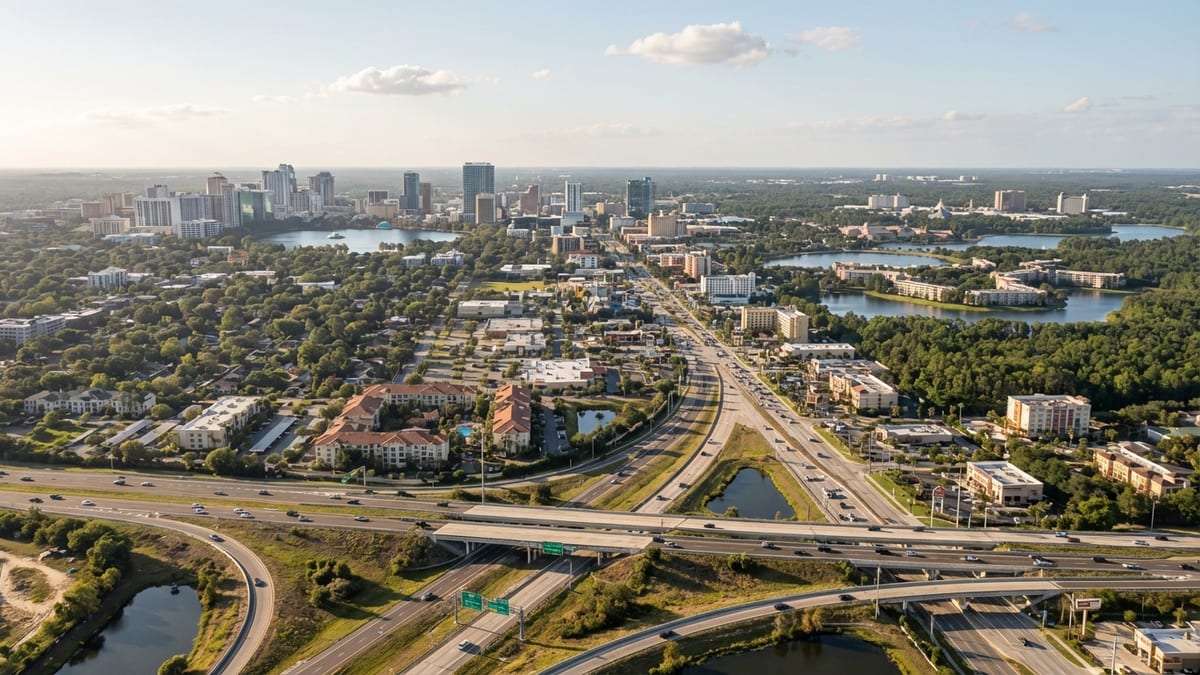
Orlando is one of those rare cities where choosing the right neighborhood can completely change your experience. With more than 75 million visitors a year and new attractions arriving regularly, the city has evolved into a patchwork of distinct areas, each catering to different kinds of travelers.
For a first-time visitor, the hardest part is not what to do, but where to base yourself. Whether you want to walk to a theme park gate at sunrise, sip cocktails by a lake at sunset or explore a more local, artsy side of Central Florida, understanding Orlando’s main districts will help you build a smoother, less stressful trip.
How to Choose the Right Area in Orlando
Before diving into specific neighborhoods, it is worth clarifying how spread out Orlando really is. The destinations you know by name Disney, Universal, International Drive, downtown are all connected by expressways rather than city blocks. Travel times can be longer than you expect, especially at peak hours or during school holidays. For a first-time visitor, where you stay will usually dictate what you do most, not the other way around. If you plan to focus on one major resort complex, staying nearby can save you an hour or more each day in transit.
Your style of travel also matters. Visitors without a car often gravitate to hotel clusters with reliable shuttle systems or walkable areas like Disney Springs and certain parts of International Drive close to the I-Ride Trolley route. Families with young children typically prioritize easy returns to the hotel for naps and pool breaks, making on-site or very-nearby resorts attractive. Travelers interested in Orlando’s cultural scene, local restaurants and nightlife may find more of what they are looking for in neighborhoods like Downtown Orlando or Winter Park, even if it means a slightly longer drive to the parks.
Budget is another major factor. Orlando has one of the largest collections of hotel rooms in the United States, from budget motels to five-star resorts with elaborate pools and golf courses. Prices fluctuate sharply based on season and proximity to the major parks. Staying a few miles farther away from the gates can cut nightly rates significantly, but you will need to weigh that against parking costs, rideshare fares and added travel time. A realistic look at your trip’s “home base” priorities convenience vs. character, resort amenities vs. local flavor will point you toward the area that fits best.
Lake Buena Vista & Walt Disney World Area
For many first-time visitors, Orlando means Walt Disney World, and the Lake Buena Vista area is the obvious choice if your trip is Disney-centric. This district encompasses both Disney-owned resorts inside the “bubble” and a dense ring of non-Disney hotels on the surrounding roads. The advantage is clear: minimal commuting. Depending on where you stay, you might reach a park by monorail, boat, gondola or a quick bus ride instead of a highway drive, which makes early-morning rope drops and late-night shows much easier, especially with kids.
On-site Disney resorts are designed as extensions of the parks themselves. They offer immersive theming, from African safari lodges to retro-modern midcentury hotels, along with perks such as early park entry, integrated transportation and package delivery to your room. For first-timers who want a fully contained, stress-light experience, these resorts can be worth the premium. Even if you never rent a car, you can rely on Disney’s buses, boats and skyliner system to move between parks, hotels and Disney Springs. The trade-off is that you will be slightly insulated from the rest of the city and may be tempted to spend most of your time and budget within the resort complex.
Just outside Disney property, Lake Buena Vista and the Hotel Plaza Boulevard area provide a middle ground. Many of these hotels are technically “off-site” but sit so close to Disney Springs or the resort entrances that travel times rival those of some on-site properties. They often run frequent shuttle buses, and some are within walking distance of shopping, dining and entertainment. For visitors keen to maximize park time without fully committing to Disney pricing, this zone can deliver strong value. It is also a practical base if you plan one or two days at Universal or SeaWorld and do not want to move hotels mid-trip.
International Drive & Convention Area
International Drive, usually shortened to I-Drive, is Orlando’s classic tourist corridor. Stretching roughly between Universal Orlando to the north and the SeaWorld area to the south, it is packed with hotels, attractions, restaurants and outlet shopping. For a first-time visitor who wants plenty to see and do even on non-park days, I-Drive is a compelling choice. You will find everything from high-rise resorts with sprawling pools to affordable motels, making it one of the most flexible areas in the city for mixed budgets or larger groups.
The northern stretch of International Drive, near Universal Boulevard, tends to feel more modern and polished. It is close to Universal Orlando, the upcoming Epic Universe park, and ICON Park with its observation wheel and entertainment venues. Many hotels here offer shuttle services to the major parks, and the area is relatively walkable by Orlando standards, especially if you use the I-Ride Trolley that runs along the corridor. For visitors without a car who still want easy access to both Universal and SeaWorld, this section of I-Drive offers a productive balance.
Farther south, near the Orange County Convention Center and the SeaWorld complex, the atmosphere shifts slightly toward business and conference travelers, but families still fill the hotels during holiday periods. The benefit here is access: you are close to SeaWorld and Aquatica, a reasonable drive or shuttle ride from both Disney and Universal, and surrounded by chain and independent dining options. If your itinerary spans multiple attractions across the metro area, staying around the convention center or mid-I-Drive can minimize backtracking. The main drawback is traffic, which can be heavy at peak dining times, so choosing a hotel with amenities you are happy to use on-property can soften the impact.
Universal Orlando, Epic Universe & Surrounding Area
With Universal Orlando Resort already a major draw and the new Epic Universe theme park opening, the area around Universal has quickly become a destination in its own right. For first-time visitors who prioritize thrill rides, the Wizarding World of Harry Potter and the newest park attractions, staying near Universal can dramatically shorten your days. Universal’s own hotels are clustered into several categories that span from value options to luxury properties, almost all offering complimentary transportation to the parks and early entry benefits on select attractions.
The primary advantage of an on-site Universal stay is logistical. You can move easily between Universal Studios Florida, Islands of Adventure, Volcano Bay and the new Epic Universe area by dedicated shuttles, walking paths or water taxis, depending on the specific hotel. Some higher-end Universal hotels include unlimited express ride access, which can save hours in queues during busy seasons. Even if you plan only two or three days at Universal, these perks can make a meaningful difference, particularly for families or groups trying to experience as much as possible in limited time.
Just outside Universal property along Kirkman Road, Major Boulevard and the northern reaches of International Drive, a ring of independent and chain hotels provides more budget-conscious options. These generally do not offer the same front-of-line or early entry privileges, but many still run park shuttles or sit just a short rideshare away from the entrances. For first-time visitors looking to split their time between Universal and other attractions across Orlando, this zone functions as a practical and often more affordable base than staying entirely within a resort bubble, while still keeping your primary destination close at hand.
Downtown Orlando & Thornton Park
For travelers who want a taste of the “real” city beyond the theme parks, Downtown Orlando offers a different perspective. Centered around Lake Eola and the surrounding business district, this area is home to theaters, concert venues, sports arenas, independent restaurants and a growing roster of high-rise hotels. Staying downtown will lengthen your drive time to the theme parks compared with areas like Lake Buena Vista or I-Drive, but it rewards you with walkable nightlife, lakeside strolls and a more urban feel.
Downtown hotels tend to draw business travelers during the week and event-goers on weekends, especially for concerts, NBA games or soccer matches. For first-time visitors who enjoy cities and plan only a day or two in the parks, downtown can work well as a central base. You are also better placed to explore Orlando’s neighborhoods, from the Ivanhoe Village antiques and vintage shops to Mills 50’s eclectic dining scene. Just know that you will likely rely on a rental car or rideshares for most of your park visits, and parking costs should be factored into your budget.
Adjacent neighborhoods such as Thornton Park add a more residential yet still lively character, with tree-lined streets, café patios and independent boutiques. While hotel options are more limited compared with the resort corridors, select boutique properties and smaller chains provide a quieter alternative to the high-energy zones around the parks. For travelers who prefer evenings in wine bars, gastropubs and local bistros rather than character dinners or mega-resorts, this part of Orlando can feel more aligned with their style.
Winter Park, Lake Nona & Other Local-Favorite Districts
Beyond the traditional tourist areas, Orlando’s broader metro region includes several districts that appeal to travelers seeking a slower pace and more local flavor. Winter Park, located just north of downtown, is a standout. Centered around Park Avenue with its brick streets and oak trees, the area is known for boutique shopping, charming cafés, fine dining and the scenic chain of lakes. A handful of upscale hotels and inns provide a sophisticated base, and the SunRail station makes it relatively easy to hop into downtown without driving.
Winter Park is not the most practical spot if your trip revolves around theme parks every day; commuting from here to Disney or Universal can take 30 to 45 minutes or more, especially during rush hours. However, for first-time visitors who balance one or two park days with museum visits, boat tours and leisurely meals, Winter Park delivers a distinctly different Orlando experience. It is particularly appealing to couples, food-focused travelers and repeat visitors who want to see more than roller coasters.
On the southeastern side of the metro, Lake Nona has emerged as a modern planned community anchored by health, sports and technology campuses. The area features newer hotels, contemporary restaurants and extensive walking and biking paths. Its proximity to Orlando International Airport makes it ideal for short stays, late arrivals or early departures. While Lake Nona is not a traditional tourist hub, it can suit travelers visiting friends or family nearby, attending events in the area or looking for a quiet base with easy airport access before or after a theme park-intensive stay elsewhere.
Kissimmee, US 192 Corridor & Budget-Friendly Options
For first-time visitors watching their budget closely, Kissimmee and the US 192 corridor south and east of Walt Disney World offer some of the most affordable rates in the region. This area is dotted with motels, midrange hotels, extended-stay properties and large vacation home communities. Many families choose to rent multi-bedroom houses with private pools here, especially for longer trips or multi-generational gatherings, as the cost per person can be significantly lower than booking multiple hotel rooms closer to the parks.
The benefits of staying along US 192 include price, space and abundant dining options, from familiar chains to local diners and buffets. Some properties advertise proximity to Disney, and the western portion of 192 near the main resort entrances is indeed reasonably convenient, particularly if you have a car. As you move farther east along the highway, however, the drive to the parks lengthens and the surroundings can feel more utilitarian and, in places, a bit worn. Careful research and recent guest reviews are important in this corridor, as quality varies widely between properties even on the same stretch of road.
Vacation rentals in the Kissimmee area are a good option for visitors who value kitchen facilities, laundry and private space over on-site resort amenities. They work especially well for families planning rest days between park visits, as you can stock up on groceries and relax by your own pool rather than competing for loungers at a shared hotel deck. The trade-off is logistical: you will almost certainly need a rental car, and you will be responsible for driving and parking at the parks each day. For travelers comfortable with that level of independence, this can be one of the best ways to stretch a budget while still enjoying the full Orlando experience.
The Takeaway
Choosing where to stay in Orlando as a first-time visitor comes down to being honest about what you want most from your trip. If your dream vacation centers on Disney fireworks and character breakfasts, then a resort in or near Lake Buena Vista will make every day smoother. If you are drawn to Universal’s rides and the excitement around the new Epic Universe park, staying on or beside that resort complex will maximize your time and energy. Travelers looking for variety and value often gravitate to International Drive, which puts multiple attractions, restaurants and entertainment options within easy reach.
On the other hand, if your ideal Orlando experience includes farmers markets, lakeside promenades and independent restaurants, districts like Downtown Orlando, Thornton Park, Winter Park or Lake Nona offer a rewarding alternative. They may require longer drives to the theme parks, but they show you a side of Central Florida many short-stay visitors never see. Meanwhile, Kissimmee and the US 192 corridor provide a pragmatic, budget-friendly base for families and groups prepared to trade a little extra drive time for more space and lower nightly rates.
In a destination as varied and fast-evolving as Orlando, there is no single “best” area to stay. Instead, think in terms of what you want to be close to, how much you value on-site perks versus local character, and how comfortable you are with driving or relying on shuttles. With that framework in mind, you can choose a neighborhood that fits your plans and travel style, turning Orlando from a busy sprawl into a destination that feels tailored to your first visit and maybe to many more after that.
FAQ
Q1. What is the best area to stay in Orlando for a first visit focused on Disney?
For a Disney-focused first trip, the Lake Buena Vista and Walt Disney World area is the most convenient. Staying either in a Disney-owned resort or in the cluster of hotels just outside the resort near Disney Springs minimizes commuting, makes it easy to return for mid-day breaks and allows you to rely on park transportation instead of driving every day.
Q2. Where should I stay if I want to visit both Disney and Universal on the same trip?
If your itinerary gives equal weight to Disney and Universal, look to the central corridor between them, especially the International Drive and convention center area. Hotels there usually offer shuttles to multiple parks, and driving times to each resort complex are more balanced than if you stayed at one end of the metro area.
Q3. Is it worth staying on-site at a Universal Orlando hotel for a first-time visitor?
Staying on-site at Universal is often worthwhile if you plan at least two full days there and are visiting during a busy season. On-site guests receive early entry to select attractions, and some higher-category hotels include express ride access, which can significantly cut wait times. The easy transport between hotels and parks also reduces daily stress.
Q4. Can I visit Orlando without renting a car, and if so, where should I stay?
Yes, you can visit Orlando without a car, but you should choose an area with strong shuttle options or walkability. On-site Disney and Universal resorts are designed for car-free stays, as are some hotel clusters around Disney Springs and the northern part of International Drive. Check that your hotel offers frequent shuttles to the parks and consider using rideshares for any gaps.
Q5. What area is best for nightlife and local restaurants rather than theme parks?
Downtown Orlando, Thornton Park and Winter Park are strong choices for travelers who prioritize nightlife, local dining and cultural venues. These neighborhoods offer walkable streets, independent bars and restaurants, and easy access to theaters and live music. You will still be able to reach the parks by car or rideshare, but the evenings will feel more like a traditional city break.
Q6. Where should budget-conscious families look for accommodation near Orlando’s attractions?
Budget-conscious families should consider Kissimmee and the US 192 corridor, especially the western sections closest to the Disney entrances. This area offers a wide range of moderately priced hotels and large vacation homes. International Drive also has value-focused properties, particularly farther from the convention center and major attractions, though you should factor in transportation costs.
Q7. How far is Downtown Orlando from the main theme parks, and is it practical to stay there?
Downtown Orlando is typically a 20 to 35 minute drive from most major parks under normal traffic, with longer times during rush hours or peak seasons. It is practical if you plan only a few park days and want to experience more of the city’s urban side, but less ideal for families planning multiple early starts and late finishes at the parks.
Q8. Are vacation rentals a good idea for a first-time visit to Orlando?
Vacation rentals, especially in areas like Kissimmee and Davenport, are a good option for larger groups or longer stays. They offer more space, kitchens and private pools at a lower cost per person than many hotels. The trade-off is that you will need a car, handle your own transport and give up on-site resort perks such as scheduled park shuttles and staffed front desks.
Q9. What area is best if I have an early flight or only a short stopover in Orlando?
For early flights or brief stopovers, the area around Orlando International Airport and nearby districts such as Lake Nona are practical choices. Hotels there are designed for quick transfers and often provide shuttle services. You can still reach some attractions or dining areas with a short ride, but you will avoid long drives on the morning of your departure.
Q10. When is it worth splitting my stay between two different areas in Orlando?
Splitting your stay makes sense if your trip is long enough, usually a week or more, and your interests are clearly divided. For example, you might spend several nights in a Disney or Universal resort for a concentrated theme park experience, then move to Downtown Orlando or Winter Park for a few nights focused on dining, culture and local exploration. This approach reduces daily commuting and lets you experience two distinct sides of the city.