

Siem Reap is far more than just a gateway to Angkor Wat. It is a compact but surprisingly varied city of old market alleys, leafy riverfront lanes, emerging creative quarters, and quiet residential pockets. Choosing where to stay can dramatically shape how you experience the temples, street food, nightlife, and everyday Cambodian life.
From buzzy streets near Pub Street to tranquil riverside enclaves, each area has its own rhythm, strengths, and potential drawbacks. Understanding what each neighborhood is really like helps you match your base to your travel style, whether you are seeking late nights, family friendly calm, or a stylish hideaway between temple runs.
Getting Oriented: How Siem Reap Is Laid Out
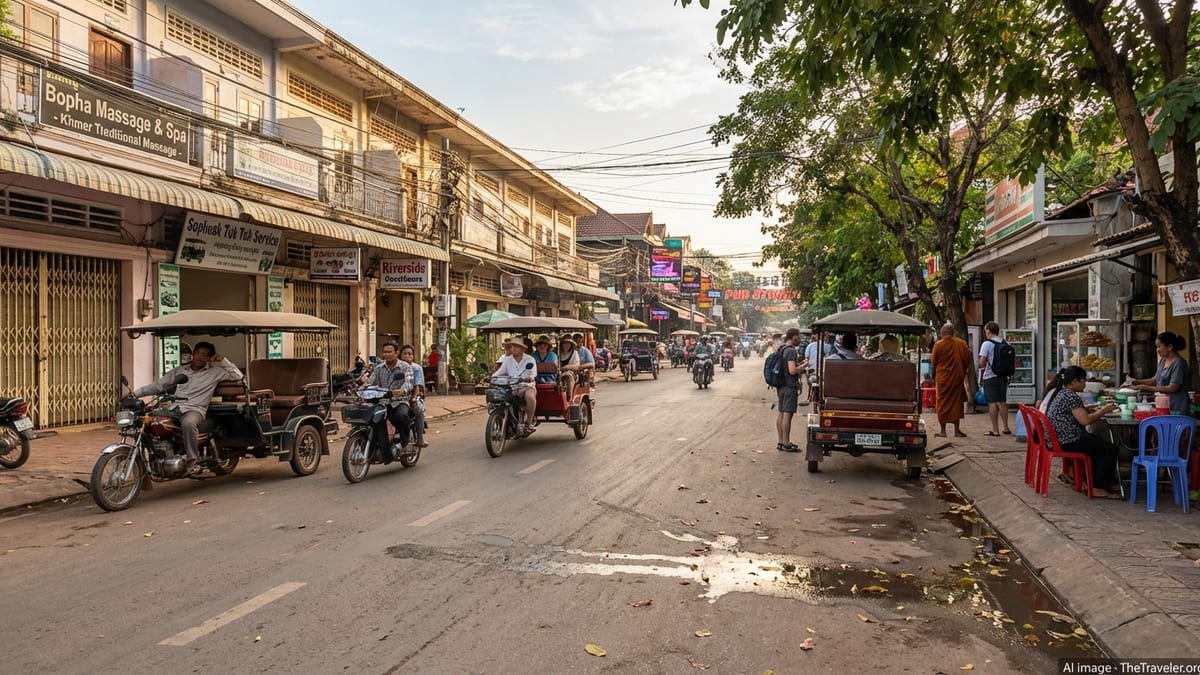
Siem Reap is relatively small and flat, stretched along the Siem Reap River and fanning out from the Old Market and Pub Street area. The city center on the west bank contains the Old Market district and the Old French Quarter, while the east bank is home to quieter enclaves like Wat Bo and Wat Damnak. To the north, Charles de Gaulle Boulevard runs straight towards the Angkor Archaeological Park and its main ticket checkpoint, while several residential and budget friendly districts fill in the grid west and south of the core.
Most visitors move around the city by tuk tuk, which keeps distances manageable. From almost any central neighborhood it is 15 to 25 minutes to the Angkor temples by road in light traffic. That means you can prioritize ambiance over sheer proximity to Angkor, since the time difference between neighborhoods for a sunrise at Angkor Wat is usually only a few minutes. What really changes from area to area is not temple access but the feel of the streets outside your hotel door, the kind of restaurants and bars you can walk to, and how noisy your nights are.
Broadly speaking, you can think of three types of areas. There is the entertainment core around Pub Street and the Old Market, where nightlife and crowds are concentrated. There are stylish but calmer central districts such as the Old French Quarter, Kandal Village and parts of Wat Bo, which appeal to design minded travelers and food lovers. Finally, there are residential and outlying strips such as Taphul Village or Charles de Gaulle Boulevard, which suit longer stays, tighter budgets or resort style downtime. Within each category, though, blocks can change quickly, so it helps to know what to expect on the ground.
Old Market & Pub Street: Lively Heart of the Action
The Old Market, or Phsar Chas, is the historic trading heart of Siem Reap and today remains the city’s most animated area. Its grid of streets west of the river is packed with souvenir stalls, street food carts, travel agencies, massage parlors, bars and mid range hotels. Pub Street, officially Street 08, runs right through this district as a neon spine of music bars, cocktail spots and happy hour deals. If you want to be in the middle of everything, this is the natural choice. You can walk in minutes to the Night Market, countless restaurants, and many tour pick up points, which is convenient if you are packing a lot into a short stay.
Staying here means you feel the energy of Siem Reap at all hours. Early mornings see vendors setting up around the Old Market and locals shopping for produce. By afternoon, tours return from Angkor and the cafes fill with dusty visitors reviewing their photos over iced coffee. After dark, the district flips into full party mode. Pub Street is loud with music and drink promotions, but the surrounding blocks also buzz, especially in high season. If you are planning to sample cocktail bars, meet other travelers or step out for a late dinner without bothering with a tuk tuk, it is hard to beat the area’s convenience and social atmosphere.
The trade off is noise and crowds. Light sleepers should avoid being directly on Pub Street or immediately adjacent side streets, as music can run until late at night. A hotel or guesthouse several blocks away, or tucked down a side lane, often strikes a better balance between access and quiet. Traffic, while not intense by big city standards, can also feel chaotic at peak times, and the density of touts, massage flyers and tuk tuk drivers can be tiring for some visitors. For many first timers, though, the Old Market area offers that instantly recognizable “Siem Reap” buzz and makes it easy to orient yourself without worrying about logistics.
Old French Quarter & Kandal Village: Stylish, Central and Walkable
Just a short stroll north and northwest of the Old Market sits the Old French Quarter, sometimes associated with the Kandal Village micro neighborhood. This area grew during the French colonial era and still features wide boulevards, tall trees and a number of grand historic and modern hotels. It feels more spacious and polished than the tight alleys around Pub Street, with a mix of air conditioned cafes, boutique shops, spas and mid to high end restaurants. It appeals to travelers who want to be central without feeling submerged in the backpacker party scene.
The streets around Sivatha Boulevard and into Kandal Village have become a small creative hub, with independent boutiques, galleries and specialty coffee bars. The overall pace is gentler than in the Old Market, especially by night, yet Pub Street and the riverside are still easily walkable. This makes the area a popular choice for couples, digital nomads and repeat visitors who are more interested in good food and design than the cheapest beers. Accommodation ranges from refurbished colonial era properties and large international style hotels to smaller boutique guesthouses on side streets.
Because of its central location, the Old French Quarter is just as practical a base for visiting Angkor as the Old Market. Many tour operators are based here or include hotel pick ups. Street noise is generally lower than around Pub Street, though certain main roads can still be busy at rush hours. One consideration is that prices tend to be a little higher than in more residential districts, both for rooms and for some restaurants. In exchange, you get reliable services, strong air conditioning and a neighborhood that feels safe and well lit even when walking back late in the evening.
Wat Bo & Wat Damnak: Leafy East Bank and Local Flavor
Cross the Siem Reap River to the east bank and you enter Wat Bo Village and Wat Damnak, a cluster of quieter neighborhoods that have evolved from local residential areas into some of the city’s most appealing districts. Wat Bo Road runs parallel to the river, with side streets leading to small hotels, guesthouses and apartments often set in gardens or around pools. The landmark Wat Bo temple is one of the oldest in the area, giving the district a long standing religious and cultural anchor. In recent years the streets around here have welcomed an increasing number of modern cafes, bistros and cocktail bars, turning it into a favorite among expats and style conscious visitors.
Wat Damnak sits slightly south, still on the east bank, and has a similar blend of guesthouses, boutique hotels and everyday Cambodian life. Because these neighborhoods remain mixed use, you are likely to see monks collecting alms in the morning, families heading to school and workers commuting by scooter, all alongside visiting travelers. The riverfront itself has been gradually upgraded with walking paths, trees and informal street food stands, making it a pleasant place for an evening stroll. From most streets in Wat Bo and Wat Damnak, it is a short walk or tuk tuk ride back over the bridges into the Old Market and Pub Street area.
These east bank districts have a more relaxed pace than the city center but are far from isolated. You can dine very well without crossing the river at all, thanks to a growing collection of Cambodian and international restaurants, bakeries and wine bars. Nightlife does exist, but it is more scattered and generally lower key, focused on a few cocktail bars and live music spots rather than wall to wall clubs. Street noise varies street by street; some lanes feel almost village quiet by 10 pm, while others near newer bars can be livelier. Overall, Wat Bo and Wat Damnak work well for travelers who value atmosphere and local color but want to avoid the thickest of the Pub Street crowds.
Charles de Gaulle Boulevard & Angkor Side Resorts: Temple Focused Retreats
For visitors who want to focus on Angkor itself and enjoy more of a resort style stay, the hotels and guesthouses strung along Charles de Gaulle Boulevard and its side streets are an attractive option. This main road runs north from the city center towards the Angkor Archaeological Park and the ticket office, and over the years it has filled with mid range and luxury properties set back from the traffic. Many resorts here offer spacious grounds, sizeable pools, spa facilities and in house restaurants, so you can spend your non temple time relaxing without needing to move around town much.
Staying in this corridor typically cuts a few minutes off your morning journey to Angkor compared with being in the Old Market or Wat Bo, which can be useful for sunrise visits or intensive multi day temple itineraries. However, the area is somewhat removed from the main clusters of independent restaurants and bars in central Siem Reap. You can still reach Pub Street, the Old Market and the French Quarter in 10 to 15 minutes by tuk tuk, but this will usually be a planned outing rather than a casual evening walk. For many guests, that separation is part of the appeal, as it keeps the immediate surroundings calmer and more insulated from late night noise.
Because Charles de Gaulle Boulevard is a busy road carrying tour buses and local traffic, the feel of the area changes depending on how far a hotel sits from the street and what sort of landscaping buffers it. Larger, full service resorts tend to create their own self contained atmosphere with gardens and pools, while smaller guesthouses on side lanes feel more like local neighborhoods. This strip suits travelers who prioritize comfort, on site facilities and quick access to Angkor, and who do not mind relying on tuk tuks for most trips into the city center.
Taphul Village, Sok San Road & Other Budget Friendly Districts
To the west and northwest of the Old French Quarter, districts such as Taphul Village, Svay Dangkum and parts of Sok San Road have grown into hubs for budget accommodation, long term stays and local services. These are primarily residential areas with a mix of Khmer townhouses, small apartment blocks, simple guesthouses and a scattering of low to mid range hotels. Room rates here are often lower than in the Old Market or along the riverside, making them popular with backpackers, digital nomads and travelers on extended trips who value space and affordability over immediate proximity to the main tourist streets.
Taphul Village, in particular, sits within walking or a very short tuk tuk ride of central Siem Reap but feels notably more local. You will find small markets, street food stands, simple cafes and convenience stores, alongside some guesthouses with pools and air conditioning. The streets can be busy in the early evening with scooters and families running errands, but life generally winds down earlier than in the entertainment core. Parts of Sok San Road closer to the Old Market historically had a reputation for louder bars and late night noise, while stretches further out are more residential and quiet. As with any fast changing city, exact dynamics can shift from block to block and season to season.
These districts make sense if you want more of a glimpse of everyday life and are willing to trade a few minutes of extra travel time for lower prices or larger rooms. They also appeal to families and groups who prefer a self contained guesthouse or apartment. The main consideration is to check recent reviews for comments on noise and construction, and to confirm how long it takes by tuk tuk to reach the places you expect to frequent in the evenings. For many travelers, though, staying just outside the tourist core offers a valuable balance between access and authenticity.
How to Choose the Right Area for Your Trip
Matching your base to your priorities is more important in Siem Reap than shaving a couple of minutes off the ride to Angkor Wat. If nightlife and socializing are high on your list, then staying close to the Old Market, Pub Street or the fringes of the French Quarter will keep you in the thick of the action. You will be able to walk between bars, markets and restaurants easily, and you will never be far from a tuk tuk for late night rides. The downside is more ambient noise and occasional crowds, which may not suit early risers or travelers with young children.
If, instead, you are looking for a calmer slice of city life with good food and design driven atmospheres, then Wat Bo, Wat Damnak and Kandal Village are attractive alternatives. You remain close to the center but can retreat to quieter lanes at the end of the day. Here the emphasis leans towards small boutique hotels, creative cafes and independent eateries, with nightlife that is more about a well made cocktail or a glass of wine than all night dancing. Couples, solo travelers interested in culture and food, and repeat visitors often gravitate to these pockets.
For those whose top priority is comfort between temple days, especially families with children or travelers looking to unwind by the pool, the larger resorts on Charles de Gaulle Boulevard or in nearby side streets can be ideal. You get more facilities on site and a bit of insulation from the busier parts of town. Finally, travelers on longer stays or tighter budgets might find the best value in Taphul Village and other residential areas on the city’s edge, where a short tuk tuk ride buys you more space and lower nightly rates. Whichever area you choose, it is worth remembering that Siem Reap is compact; with tuk tuks widely available, you can sample different neighborhoods even if you decide to sleep in just one.
The Takeaway
Siem Reap’s compact size hides a surprising diversity of neighborhoods, each putting a different spin on the Angkor experience. The Old Market and Pub Street area delivers the full force of the city’s nightlife and market energy, perfect for short, social stays. The Old French Quarter and nearby Kandal Village offer a more polished, design oriented version of central Siem Reap, with stylish hotels and cafes within easy reach of the river and the temples. Across the river, Wat Bo and Wat Damnak blend leafy streets, local life and a growing roster of serious restaurants and bars, becoming a favorite base for travelers who value atmosphere over a front row seat to the party.
Further out, Charles de Gaulle Boulevard and its resort style properties cater to visitors who want to focus on Angkor itself and relax deeply between temple days, while residential districts like Taphul Village give budget conscious and long stay travelers a more everyday perspective on the city. Because distances are short, you are rarely locked into one experience. A tuk tuk ride can whisk you from a quiet riverside lane to the neon of Pub Street in minutes. The key is to be honest about what kind of environment will make you happiest once the day’s exploring is done. With that clarity, you can choose a neighborhood that turns Siem Reap from a simple stopover into a place you remember for its streets and people as much as for its ancient stones.
FAQ
Q1. What is the best area to stay in Siem Reap for first time visitors?
For most first time visitors, the Old French Quarter or the streets just around the Old Market work well. You are within walking distance of Pub Street, markets and many restaurants without being directly on the loudest nightlife blocks, and you have easy access to tuk tuks and tour operators for Angkor visits.
Q2. Where should I stay if I want nightlife and bars nearby?
If nightlife is a priority, look for accommodation in the Old Market district close to Pub Street, or on the edges of that area leading into the French Quarter. You will be able to walk between bars, clubs and late opening restaurants, and you can return to your room without needing to negotiate a tuk tuk ride after a night out.
Q3. Which neighborhood is best for a quiet stay away from the crowds?
Wat Bo and Wat Damnak on the east bank of the river are good choices for a quieter but still central base. Many streets there are more residential and leafier, with boutique hotels and guesthouses that feel removed from the densest tourist areas, especially if you choose a property set back from main roads.
Q4. Is it worth staying closer to Angkor Wat instead of in the city center?
Most visitors still stay in Siem Reap itself, as the journey to Angkor from central neighborhoods is usually only 15 to 25 minutes by tuk tuk. Resorts along Charles de Gaulle Boulevard do put you slightly closer to the park and can be convenient for sunrise starts, but you will travel into town for most dining and nightlife.
Q5. What area is recommended for families with children?
Families often appreciate the calmer streets and larger properties of the French Quarter, Charles de Gaulle Boulevard or the more residential parts of Taphul Village. These areas tend to have hotels with pools, family rooms and a bit of space, while still being a short ride from the Old Market and the Night Market.
Q6. Are there neighborhoods I should avoid if I am a light sleeper?
Light sleepers should avoid staying directly on Pub Street or immediately adjacent blocks, as music can continue until late in the evening. Parts of lower Sok San Road also have a concentration of bars. A hotel a few streets back, or across the river in Wat Bo or Wat Damnak, usually offers a better chance of quiet nights.
Q7. Is it easy to get around if I stay outside the Old Market area?
Yes, getting around Siem Reap is straightforward from most neighborhoods. Tuk tuks are widely available and relatively inexpensive, and rides between Wat Bo, the French Quarter, Taphul Village and the Old Market usually take only a few minutes. Even from Charles de Gaulle Boulevard, the center is typically less than 15 minutes away.
Q8. What area is best if I want a more local, non touristy feel?
Districts such as Taphul Village and parts of Svay Dangkum, as well as the more residential side streets of Wat Damnak and inner Sala Kamreuk, offer a more local atmosphere. You will see more everyday Cambodian life, from school runs to small neighborhood markets, alongside a modest selection of guesthouses and cafes.
Q9. Is it safe to walk around Siem Reap at night in most neighborhoods?
Central Siem Reap is generally considered safe for visitors, and many travelers walk around the Old Market, French Quarter and riverside areas after dark without issues. As in any city, it is sensible to stay on lit streets, keep valuables out of sight and use a tuk tuk rather than walking alone down unlit side lanes late at night.
Q10. How far in advance should I book accommodation in popular areas?
In the cooler high season months, especially around major holidays, it is wise to book your preferred area several weeks in advance, particularly if you want a specific boutique hotel or resort. At quieter times of year there is usually more flexibility, but booking at least a few days ahead still helps secure better rates and room choices.