

The Netherlands is compact, flat and superbly connected by rail, which makes it one of Europe’s easiest countries for day trips. The hardest part is choosing where to base yourself. While Amsterdam grabs the headlines, several smaller Dutch cities offer calmer streets, character-packed historic centres and direct trains all over the country. Picking the right base can mean less time spent hauling luggage, more time strolling canals and a better feel for everyday Dutch life.
How to Choose the Perfect Dutch Base City
When you use the Netherlands as a hub for day trips, location and train connections matter more than ticking off one famous sight. The rail network is dense and frequent, with major hubs such as Utrecht Centraal and Rotterdam Centraal sending out fast trains in all directions. From the right base, it is realistic to reach another major city in 30 to 60 minutes, and smaller historic towns in only a little longer. This means you can sleep in one hotel for several nights and explore a different place each day.
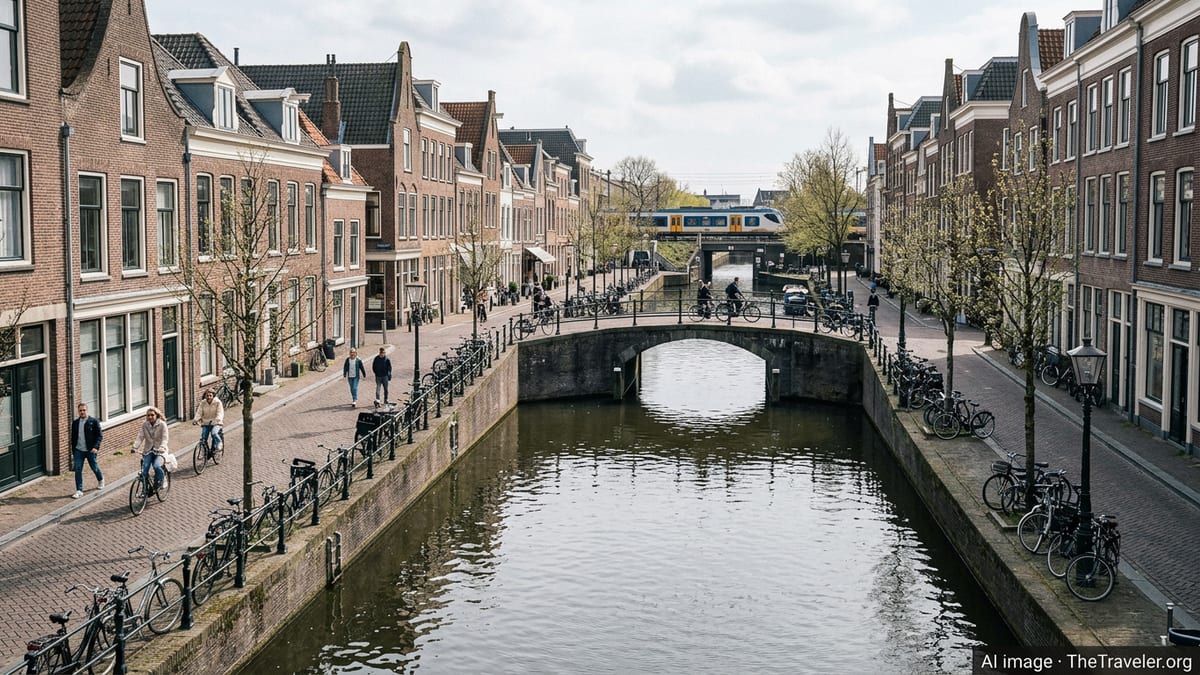
Think carefully about what you want to come home to at night. Larger cities offer nightlife, wider restaurant choices and more accommodation, but also busier streets. Smaller places feel cosy and residential, with quieter evenings and more of a local rhythm. Canal belts, car-light historic centres and waterside terraces are common throughout the country, so you do not need to stay in Amsterdam to get that classic Dutch atmosphere.
Also consider practicalities such as your arrival airport, whether you will rely entirely on public transport, and how far you want to travel for your furthest day trip. Distances in the Netherlands are short by international standards, but multiple changes can still chip away at your time. For most travellers, basing in one or two well-connected mid‑sized cities in the Randstad, the country’s urban heartland, is the sweet spot between convenience and charm.
Utrecht: The Central Hub With Local Soul
Utrecht often tops local recommendations as a base for exploring the country, and it is easy to see why. Almost in the geographic centre of the Netherlands, it sits astride major rail lines linking Amsterdam, Rotterdam, The Hague, Arnhem and beyond. Utrecht Centraal is the busiest railway station in the country, with hundreds of departures a day, making it exceptionally simple to hop on a train in the morning and be wandering a different city by coffee time.
Despite its role as a transport powerhouse, Utrecht feels distinctly liveable rather than touristic. The medieval core is threaded with canals where wharves sit at a lower level than the street, now filled with cafés tucked into old cellars. Pedestrian streets, an active cycling culture and a large student population give the centre an easygoing energy. You get classic Dutch canal scenery on a scale that is walkable in an afternoon, without the crowds that often overwhelm Amsterdam’s most famous districts.
From Utrecht, day trips fan out in every direction. Fast trains reach Amsterdam in around half an hour, Rotterdam and The Hague in roughly a similar time frame, and Arnhem and the forested Veluwe region in under an hour. Smaller historic towns such as Amersfoort and Gouda are even closer, which makes it practical to combine a morning in one place with an afternoon in another. For travellers planning four or five days of exploring, Utrecht is one of the most efficient and pleasant bases in the Netherlands.
Haarlem: Quiet Canals and Easy Access to Amsterdam and the Coast
For visitors who want access to Amsterdam without the intensity of staying there, Haarlem is a compelling alternative. Located just west of the capital, it has its own compact canal-laced centre of gabled houses, church spires and cobbled squares. Haarlem has long been known for its cultural heritage, from its historic almshouses to Teylers Museum, regarded as the oldest museum in the Netherlands, as well as strong connections to Dutch Golden Age painting.
Haarlem’s station sits on the main line between Amsterdam and the North Sea coast. Trains reach Amsterdam Centraal in a short ride, which means you can dip into the capital for specific museums or evenings out, then retreat to a quieter base. In the other direction, the dunes and beaches at Zandvoort or Bloemendaal are within easy reach, either by train or by hiring a bike and following signposted paths through coastal nature reserves.
Using Haarlem as a base, you can comfortably day trip to cities such as Leiden, The Hague and Rotterdam with a transfer, while smaller towns in North Holland and classic cheese markets are also realistic targets. The city’s atmosphere suits travellers who enjoy café culture, independent shops and slower after‑dark streets. It feels more like a well‑heeled regional town than a capital, which makes it attractive for families and couples looking for a relaxed base with excellent rail links.
Leiden: Academic Charm Between The Hague and Amsterdam
Leiden packs a remarkable amount of history and charm into a compact footprint. This long‑established university city is threaded with canals lined by brick warehouses and student houses, crossed by low bridges and overlooked by church towers. It has a substantial student population and an impressive selection of museums for a city of its size, ranging from science and ethnography to natural history, which gives it a lively but intimate feel.
Leiden Centraal sits on the main line connecting Amsterdam, Schiphol Airport, The Hague and Rotterdam. That position makes Leiden a strategic base for travellers flying in and out of the capital but keen to avoid its higher hotel prices and crowds. Trains typically run very frequently along this corridor, so it is easy to reach major cities in South Holland within a short time window. The nearby North Sea coast, including resorts such as Katwijk and Noordwijk, is accessible by bus or bicycle, adding variety to a city‑based itinerary.
From Leiden, day trip options include historic Delft with its canals and pottery heritage, political and cultural institutions in The Hague, and the striking architecture and harbourfront of Rotterdam. In spring, the famous flower fields and gardens in the surrounding region draw visitors from around the world, and staying in Leiden can reduce travel times to these seasonal attractions. The city works well as a base for travellers who enjoy museums, student‑town energy and the ability to pivot between big‑city sights and coastal escapes.
Rotterdam: Modern Architecture and Big‑City Connections
Rotterdam offers a very different flavour of Dutch urban life compared with the canal‑centred old towns elsewhere in the country. Largely rebuilt after the Second World War, it has embraced bold contemporary architecture, a skyline of striking towers and one of the world’s busiest ports. This modern outlook makes it particularly appealing to travellers interested in design, contemporary culture and a more international, industrial ambience.
Rotterdam Centraal is a key node in the national rail network, served by regular intercity trains and high‑speed services that link to Amsterdam, the southern Netherlands and neighbouring countries. Intercity lines connect Rotterdam to cities such as Utrecht, The Hague, Leiden and Dordrecht, often in under an hour. This makes Rotterdam a strong choice for travellers planning longer stays that combine urban exploration with forays into the countryside and smaller historic towns along the rivers.
Using Rotterdam as a base, you can day trip to the classic canal cities of Delft and Gouda, explore windmills and waterways at nearby heritage landscapes, or ride fast trains to other regions. Within the city, waterfront promenades, a dynamic food scene and cultural venues provide plenty to fill evenings after long days out. Rotterdam suits visitors who prefer a larger, more urban environment yet still want quick access to more traditional Dutch scenery by train.
The Hague: City, Government and Sea
The Hague, known locally as Den Haag, is the seat of the Dutch government and home to international courts, embassies and cultural institutions. Despite its formal role, it remains a relaxed coastal city with leafy neighbourhoods, royal palaces and a compact historic centre. Nearby Scheveningen and other coastal districts bring the North Sea right to the edge of the city, with broad sandy beaches, piers and seaside cafés.
Uniquely within the Netherlands, The Hague has two major railway stations that act as hubs: Den Haag Centraal and Den Haag Hollands Spoor. These connect the city to multiple intercity routes running towards Amsterdam, Rotterdam, Utrecht and beyond. Regular trains and trams link central districts with the beachfront, so you can realistically spend a morning in museums and an afternoon with your feet in the sand without changing base.
From The Hague, you can day trip to Leiden, Delft and Rotterdam in very short hops, and reach Amsterdam or Utrecht in roughly an hour depending on the service. Inland, bicycles and regional trains make it straightforward to explore polder landscapes, estates and smaller towns. Travellers who like to combine culture and politics with sea air, and who value fast access to several major cities, often find The Hague an ideal long‑stay base.
Amersfoort and Smaller Bases: Cosy Alternatives With Strong Links
Not every ideal base needs to be a major city. Mid‑sized Amersfoort, east of Utrecht, is a good example of a smaller place that still offers strong rail connections. Its medieval core, with intact city gates, canals and narrow streets, has the atmosphere of a storybook town yet sits on lines that connect quickly to Utrecht and further afield. For travellers who prefer evenings in quieter surroundings but still want to cover ground during the day, cities like Amersfoort can be a satisfying compromise.
Other compact options include historic cheese towns such as Gouda or smaller ports along the rivers around Rotterdam and Dordrecht. Many of these have direct intercity or frequent local trains to larger hubs, so you are rarely more than one change away from a broader network. The trade‑off is fewer restaurants and attractions within walking distance, but the reward is a more local rhythm and potentially better value accommodation, especially outside peak weekends.
When considering a smaller base, look closely at train frequencies in the early morning and late evening, particularly if you plan to attend events or dinners in larger cities. In the Netherlands, services are generally reliable and run late, but smaller stations may see fewer departures per hour. For independent travellers comfortable reading timetables and occasionally making a transfer, though, these quieter bases open up a more intimate side of Dutch life while still keeping the whole country within reach.
Practical Tips for Planning Day Trips in the Netherlands
Whichever base you choose, a little planning will make your Dutch day trips smoother. Trains are the backbone of most itineraries, and it is worth acquainting yourself with how ticketing works before you arrive. Many visitors rely on single or day tickets purchased at machines, while others opt for rechargeable smart cards or international rail passes, depending on the length of stay and how intensively they plan to travel. Buying tickets digitally can save time in busy stations and help you quickly compare routes.
Try to cluster your day trips by region to minimise backtracking. For example, if you are staying in Utrecht, you might devote one day to Amersfoort and nearby countryside, another to Rotterdam combined with Dordrecht, and a third to Arnhem and the edge of the Veluwe. From Haarlem or Leiden, you could plan separate days for Amsterdam, coastal dunes and southern cities. Thanks to short distances, it is often possible to visit two smaller towns in one day, provided you keep an eye on train timings.
Finally, remember that Dutch cities and towns are very walkable and bicycle‑friendly. Many stations offer straightforward bike rental, and dedicated routes lead through farmland, river landscapes and dunes. Building a short cycling trip into your day can show you a quieter, more rural side of the Netherlands without committing to a full multi‑day tour. With a thoughtful choice of base and a flexible mindset about weather and opening hours, you can see a remarkable variety of the country without constantly changing hotels.
The Takeaway
The Netherlands lends itself beautifully to a hub‑and‑spoke style of travel. Thanks to dense rail lines, short distances and compact historic centres, you can base yourself in one well‑chosen city and reach an impressive array of destinations on simple day trips. Moving beyond Amsterdam to cities such as Utrecht, Haarlem, Leiden, Rotterdam, The Hague or smaller alternatives like Amersfoort can mean calmer streets, better value and a closer look at how the country actually lives.
Your ideal base depends on whether you prefer grand museums or beach walks, modern skylines or medieval alleys, lively nightlife or quiet canal views. Utrecht offers unmatched centrality, Haarlem and Leiden mix historic charm with easy access to both Amsterdam and the coast, Rotterdam and The Hague provide big‑city options with strong international links, and smaller towns add intimacy without sacrificing connectivity. Choose the one that fits your travel style, then let the trains do the rest.
FAQ
Q1. What is the best city to stay in for day trips across the Netherlands?
There is no single best choice, but Utrecht is often favoured for its central position and excellent rail connections to almost every major Dutch city.
Q2. Is it better to stay in Amsterdam or a nearby city like Haarlem or Leiden?
Staying in Haarlem or Leiden typically means fewer crowds and lower prices while keeping Amsterdam within a short train ride, which many travellers find more relaxing.
Q3. How many days should I plan in one base city?
Three to five nights in one base works well for most visitors, giving you time for several day trips plus at least one unhurried day to enjoy your host city itself.
Q4. Do I need a car to make day trips in the Netherlands?
For most itineraries you do not need a car. The rail network is dense, frequent and reliable, and many popular destinations are designed around public transport and walking.
Q5. Are smaller cities like Amersfoort or Gouda practical as bases?
Yes, provided you are comfortable with slightly fewer evening options. They usually have good train links and offer quieter, more local atmospheres than larger hubs.
Q6. Which base is best if I want quick access to the beach?
The Hague, Leiden and Haarlem all offer easy public transport connections to North Sea beaches, making them strong choices for combining city breaks with seaside time.
Q7. How early and late do trains typically run for day trips?
On most main routes, trains start early in the morning and run until late evening, but smaller stations may have fewer services, so it is wise to check times in advance.
Q8. Can I visit more than one town in a single day from my base?
Often yes, especially when destinations are close together. It is common to pair two smaller cities or a town and a beach, as long as you watch transfer times.
Q9. Is it easy to use bicycles on day trips?
In many places you can rent bikes near the station and follow signposted routes through towns and countryside, making cycling a simple and rewarding addition to your plans.
Q10. How far in advance should I book accommodation in these base cities?
Booking several months ahead is sensible for peak seasons and popular events, while in quieter periods you may find more flexibility, especially in smaller cities.