

More news on this day
As storms intensify, IT failures ripple across continents and passenger-rights rules tighten, airlines are discovering that the resilience of their business model can matter as much as the weather forecast when disruption drags on for days.
Get the latest news straight to your inbox!
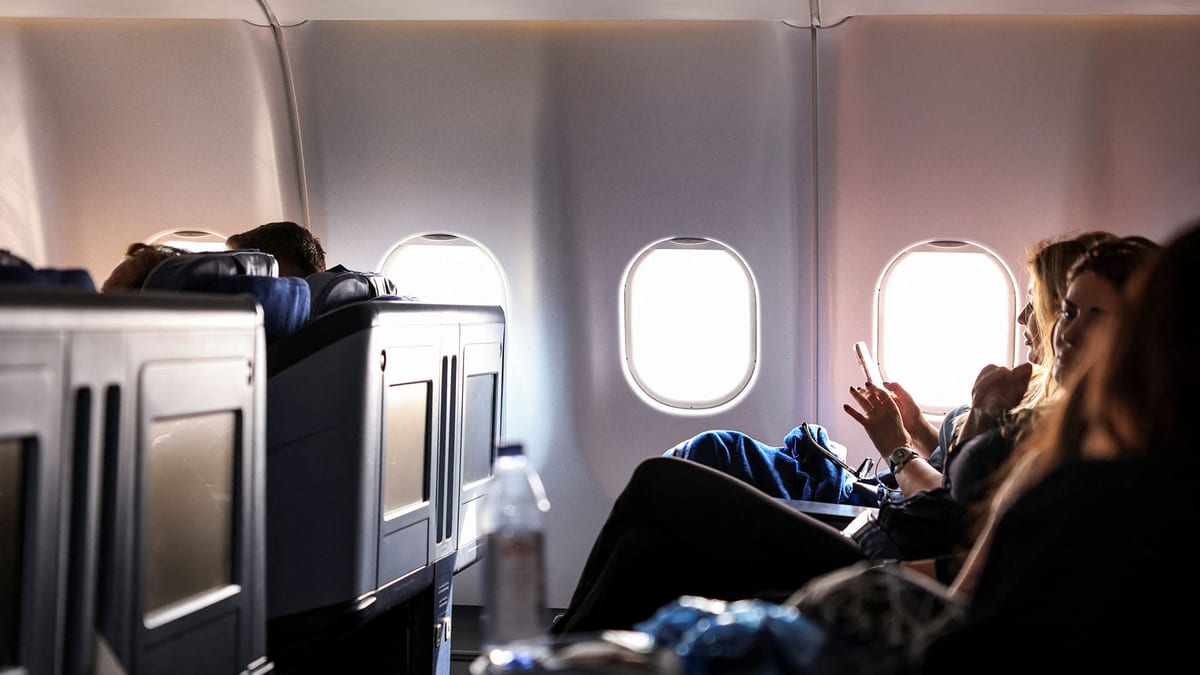
Image by EnterpriseAM
Hub and Spoke vs Point to Point Under Stress
For decades, the global industry has largely revolved around two dominant architectures: hub and spoke networks that concentrate traffic through a small number of major airports, and point to point systems that spread flights more evenly across a wider set of routes. Recent episodes of prolonged disruption have exposed different fault lines in each approach.
Hub and spoke networks can be highly vulnerable when a key hub is hit by a storm or air traffic control constraint, because problems at one airport cascade through the entire schedule. Studies of disruption patterns in the United States describe how intense events focused on a few major hubs can trigger delays and cancellations across the national network, even on routes far from the original problem. At the same time, these networks offer carriers powerful tools to recover: aircraft and crews are concentrated, and passengers can often be re-accommodated through alternative connections within the same hub system.
Point to point operators avoid overreliance on a single airport, but the trade-off is less flexibility when irregular operations last for days. The 2022 Southwest Airlines scheduling crisis, triggered by a winter storm but amplified by outdated crew scheduling systems, showed how a point to point model can struggle to reset once aircraft and staff are scattered across dozens of stations. Public reporting highlighted how the absence of central hubs made it harder to consolidate operations and restart the network at scale.
Analysts now argue that the models that hold up best in prolonged disruption are hybrids: carriers that maintain strong hubs but also operate selective point to point routes, while investing heavily in recovery playbooks that treat the entire network as a system rather than a set of isolated flights.
Technology and IT Redundancy Become Strategic Assets
Technology has emerged as a decisive factor in how different airline models withstand extended shocks. The July 2024 CrowdStrike-related IT outage offered a stark example of how digital dependencies can overwhelm even well-established networks. Delta Air Lines reported more than 7,000 cancellations over five days and valued the financial impact at around 550 million dollars, underscoring how a single software failure can translate into a systemwide crisis for a hub carrier.
The same incident demonstrated that resilience is not simply a function of business model but of IT design. Some airlines reported limited or no direct impact from the outage because key operational systems were insulated from the affected software or relied on separate architectures. Industry analysis following the event framed IT redundancy, segmented systems and manual fallback procedures as core resilience features, comparable in importance to fleet size or route structure.
Weather-driven disruptions tell a similar story. A review of severe winter events in 2025 found that major carriers with integrated data analytics, advanced de-icing planning and real-time aircraft tracking returned to normal operations faster than competitors. In these cases, technology allowed airlines to prioritize aircraft rotations, crew assignments and gate usage in ways that maximized limited capacity, regardless of whether the network was hub and spoke or point to point.
Viewed through this lens, the airline models that hold up best are those that treat IT and data capabilities as a strategic backbone rather than a support function, enabling faster decision-making during multi-day disruptions.
Regulation, Compensation and the Cost of Irregular Operations
Regulatory regimes have become another defining element in the resilience equation, particularly in Europe. The EU261 air passenger rights framework requires airlines to provide compensation and care in many cases of delay and cancellation. European Commission studies and independent analysis estimate that existing compensation rules already cost carriers billions of euros annually, and that proposed reforms could significantly increase that burden.
Industry groups warn that expanded obligations, such as broader rebooking duties or stricter deadlines, could weigh more heavily on smaller regional and low cost carriers that operate on thin margins. Public statements from airline associations argue that some proposals risk squeezing regional airlines and forcing cuts to marginal routes, especially in areas where a single carrier provides essential connectivity.
On the other hand, consumer advocates and passenger-rights organizations point to research suggesting that EU261 has reduced long delays without triggering mass cancellations. One recent report concluded that same-day cancellations are lower in Europe than in the United States despite the compensation framework, indicating that stricter rules can incentivize airlines to protect schedules rather than abandon flights.
In practice, network structure interacts closely with regulation. Large hub carriers with diversified revenue streams and extensive interline options may find it easier to absorb compensation costs and rebook travelers, while ultra-low-cost and regional operators can be more exposed when prolonged disruption affects a high share of their limited fleets. This dynamic is shaping debates over how far new rules should go without undermining the viability of different airline models.
Operational Playbooks and Spare Capacity as Shock Absorbers
Beyond network structure, the carriers that manage multi-day disruptions most effectively tend to share a less visible feature: deliberate spare capacity built into schedules, fleets and crews. Research on the U.S. National Airspace System describes how a small minority of days account for the most severe network-wide disruptions, but also notes that frequency has been rising in the post-pandemic era. In this environment, airlines that operate on very tight utilization can struggle to recover once disruptions push aircraft and crews out of position.
Some full-service and hybrid carriers have responded by adding buffer into turnaround times, keeping reserve aircraft available at key hubs, and placing standby crews in locations that are historically prone to weather or traffic bottlenecks. While these choices reduce short-term efficiency, they can sharply improve recovery times when cascading delays begin to build.
Low cost carriers often rely on high utilization and quick turns to sustain their pricing models, leaving less room for slack. During prolonged disruption, this can translate into more cancellations and slower recovery, particularly when combined with limited overnighting bases and fewer spare aircraft. However, a number of budget airlines have begun publicly highlighting investments in operations control centers, cross-trained staff and standby resources as they seek to reassure passengers and regulators about resilience.
Industry observers note that the most resilient models appear to be those that sacrifice a small amount of day-to-day optimization to maintain a margin of safety for irregular operations, especially as climate-related extremes become more frequent.
Aviation Faces a Future of More Frequent Shocks
Scientific assessments and aviation-focused climate research point to a future where storms, turbulence and other weather-related hazards will continue to intensify, particularly around major hubs in North America and Europe. Combined with growing reliance on digital infrastructure and tighter regulatory expectations, this trend suggests that prolonged disruptions are likely to become a more regular feature of air travel rather than rare anomalies.
In response, airlines are rethinking what constitutes a successful business model. Profitability and network reach remain central, but the capacity to absorb and recover from multi-day shocks is moving up the list of strategic priorities. Carriers that can align network design, technology, regulation compliance and operational slack stand a better chance of keeping passengers moving when the system comes under severe strain.
For travelers, the emerging picture is nuanced. Large hub carriers may offer more options when things go wrong, but they are also exposed to concentrated shocks at key gateways. Point to point and ultra-low-cost airlines can provide direct and inexpensive links, yet may be more vulnerable when disruption stretches across several days. As prolonged disruption becomes a recurring test, the airlines that weather it best are likely to be those that treat resilience as a core feature of their model, not an afterthought.