

More news on this day
Whitbread is preparing to open a 156-room Premier Inn hotel at Limerick’s Opera Square, bringing its fast-growing budget brand into the heart of one of Ireland’s largest urban regeneration projects.
Get the latest news straight to your inbox!
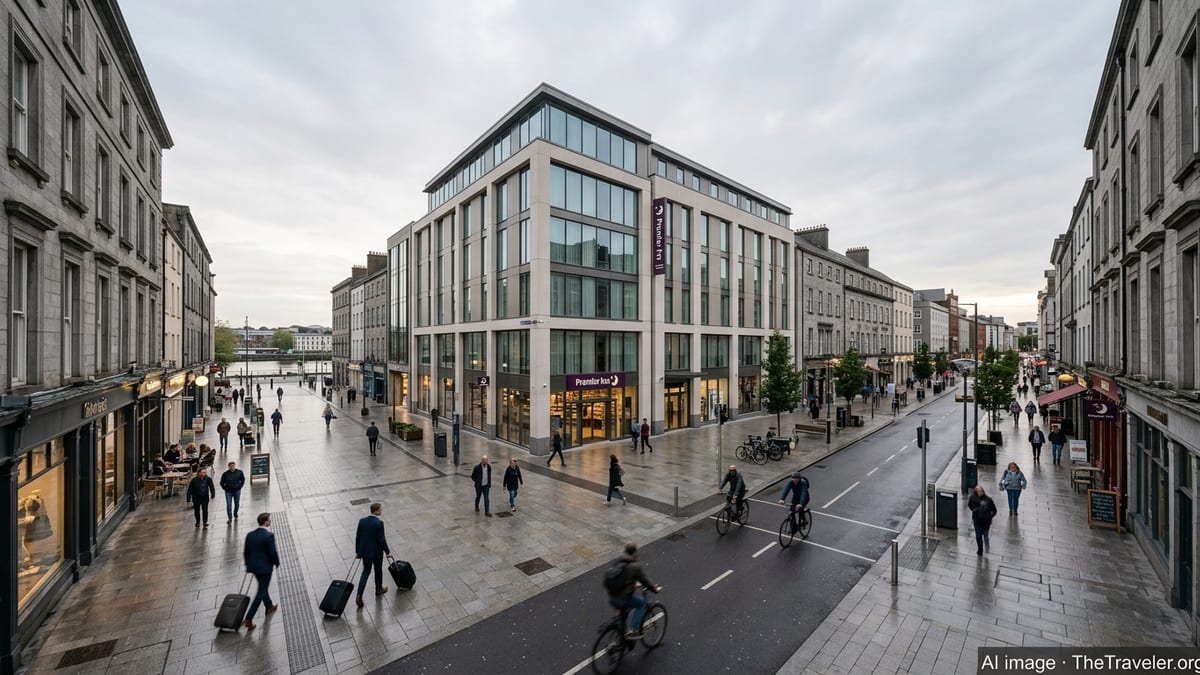
Strategic New Step in Premier Inn’s Irish Expansion
The planned Premier Inn at Opera Square marks a key milestone in Whitbread’s push to build a nationwide network of midscale hotels across Ireland beyond Dublin and Cork. Publicly available development information indicates that the company has been targeting major regional cities such as Limerick as part of a wider growth strategy in the country.
The 156-room property at Opera Square is expected to offer the chain’s standard limited-service model, focused on competitively priced rooms, on-site dining and strong transport connectivity. The size of the planned hotel places it in the mid-range for the brand, large enough to serve tour groups and corporate travel while remaining manageable within a tight city-centre footprint.
Industry coverage of Whitbread’s pipeline has previously highlighted a series of new-build and conversion projects in Ireland, including properties in Dublin’s docklands and a second hotel in Cork. The addition of Limerick positions Premier Inn to capture demand from both business visitors linked to the city’s commercial base and leisure travellers exploring the wider Shannon region.
The Limerick project also underlines Whitbread’s confidence in the long-term prospects of Ireland’s regional hotel market, where new supply remains relatively constrained compared with pre-pandemic development cycles. The choice of Opera Square aligns the brand with a high-profile address that is expected to reshape Limerick’s city core over the coming years.
Opera Square: A Flagship Regeneration Setting
Opera Square is one of the most significant urban regeneration schemes currently under way in Ireland, transforming a four-acre site bounded by some of Limerick’s principal streets into a mixed-use district. Planning documents and local authority updates describe a combination of grade A offices, cultural and civic facilities, retail, hospitality uses and new public spaces.
The project is being delivered in phases, with an emphasis on high-quality design and the reuse of historic buildings where possible. Recent updates from Limerick-focused organisations indicate that works on a landmark 14-storey office building and other parcels within Opera Square are progressing, supported by national government accommodation plans and city investment priorities.
Locating a 156-room Premier Inn within this scheme places the hotel at the centre of a new commercial and civic hub. Guests are expected to be within walking distance of the city’s main shopping streets, riverside areas and cultural venues, as well as frequent public transport links. The clustering of offices, apartments and hospitality at Opera Square is designed to support footfall throughout the day and into the evening, creating a ready-made catchment for hotel food and beverage operations.
The development is viewed locally as a catalyst for broader city-centre renewal, with Opera Square intended to complement existing attractions and help rebalance economic activity towards the core. For a hotel brand, this type of masterplanned environment can offer more predictable trading conditions than a standalone site, particularly as new office tenants and public institutions take up space.
Boost for Limerick’s Hospitality and Business Travel Market
The arrival of a Premier Inn at Opera Square is expected to add meaningful new capacity to Limerick’s supply of branded hotel rooms. While the city already hosts a number of independent and international properties, the midscale, value-focused segment still has scope for growth, particularly for visitors seeking consistent product standards across multiple locations.
Limerick’s visitor economy combines strong corporate and institutional demand with a growing leisure profile. The city is a key base for technology, engineering and financial services companies, and benefits from nearby attractions such as the Wild Atlantic Way, Bunratty Castle and the Shannon estuary. A centrally located 156-room hotel can tap into both short-stay business trips and weekend breaks, especially when packaged with rail or airport access.
Tourism and business coverage in recent years has highlighted how Limerick’s city centre is evolving, with new offices, educational facilities and cultural investments helping to broaden its appeal. A recognised international hotel brand at Opera Square may support this shift by giving travel planners and tour operators an additional option that fits established corporate travel policies.
The project is also likely to have knock-on benefits for nearby restaurants, retail and nightlife as guests use the city centre as a base. By aligning with a regeneration scheme that prioritises public realm improvements and active street frontages, the new hotel is positioned to participate in a more vibrant urban environment than previous generations of edge-of-city developments.
Design, Sustainability and Integration with Opera Square
Although detailed architectural renderings for the Premier Inn at Opera Square have yet to be widely circulated, the hotel is expected to be integrated into the broader design language of the regeneration project. Opera Square planning material emphasises contemporary architecture, high environmental standards and streets that are scaled to pedestrians, cyclists and public transport users.
Whitbread has in recent years placed greater emphasis on energy efficiency and low-carbon construction in new Premier Inn builds, including the use of modern facades, high-performance glazing and efficient building services. It is anticipated that the Limerick property will follow this direction, aligning with the sustainability objectives set out for Opera Square, which include modern energy performance measures across office and civic buildings on the site.
Integration with the surrounding streetscape will be important for the hotel’s ground floor, where active frontages such as entrances, reception, lounge and dining areas can contribute to a lively urban edge. The positioning of the hotel within the masterplan is likely to take advantage of key pedestrian routes running between established city streets and new public squares planned as part of the scheme.
Given the mixed-use nature of Opera Square, the hotel’s operations will need to sit comfortably alongside office workers, residents and visitors using the civic and cultural elements. Careful attention to access, deliveries and late-night activity can help ensure that the property strengthens rather than detracts from the quality of the public realm that the wider project seeks to deliver.
Timelines, Market Outlook and Next Steps
While a precise opening date for the 156-room Premier Inn at Opera Square has not yet been widely reported, indications from Whitbread’s published development pipeline suggest that Irish regional projects are being phased over the mid-term, with construction starts typically following the completion of detailed design and local agreements. The complexity of Opera Square as a multi-parcel regeneration site also means that phasing must be coordinated with other major buildings on the campus.
The broader outlook for Ireland’s hotel sector provides a supportive backdrop. Industry analysis points to resilient demand in major cities, helped by recovering international tourism, strong event calendars and continued foreign direct investment. At the same time, higher construction and financing costs have limited the pace of new hotel development, enabling well-capitalised brands to secure prime sites.
For Limerick, the Opera Square Premier Inn signals renewed confidence in the city’s ability to attract both investment and overnight visitors. As more details emerge on the hotel’s design, operator arrangements and construction timetable, stakeholders across the hospitality and business communities will be watching closely to see how the project integrates with parallel developments on the site.
In the meantime, the planned 156-room property stands out as one of the most notable forthcoming additions to Limerick’s accommodation landscape, tying a globally recognised hotel brand to a flagship Irish regeneration initiative in the city’s historic core.