

More news on this day
A fast‑deepening winter storm transformed Minnesota’s roads into deadly corridors overnight this week, as blinding snow, hurricane‑force gusts and rapidly icing pavement paralyzed travel from the North Shore of Lake Superior to the farm roads of the southwest.
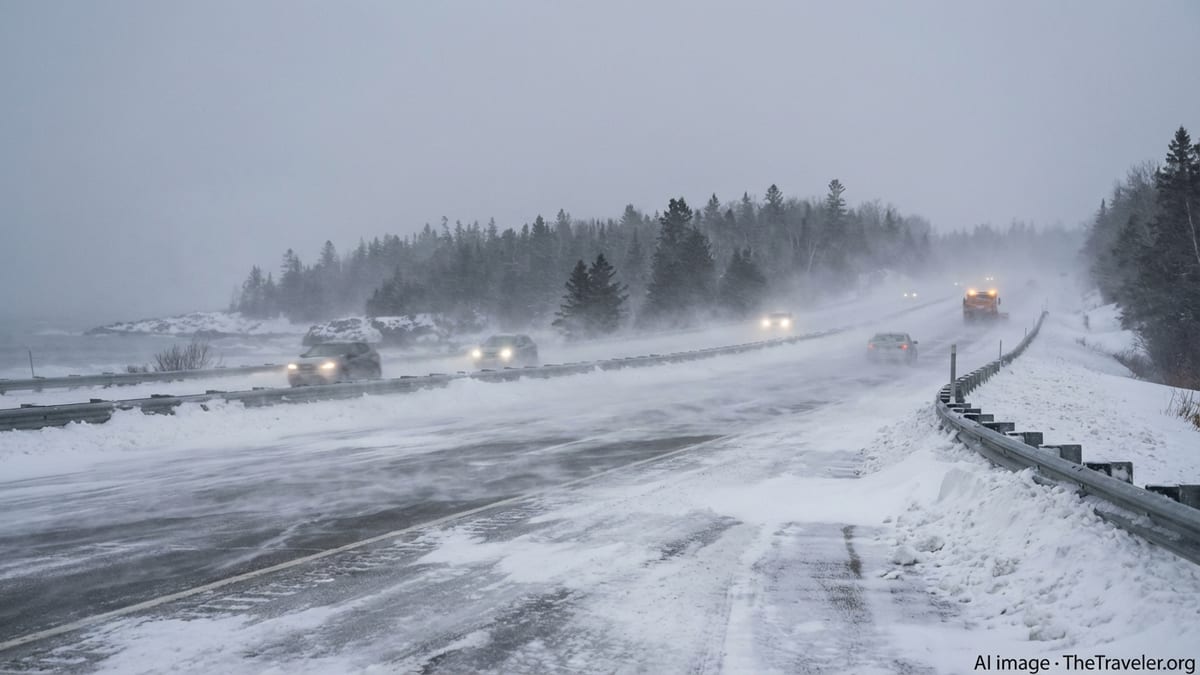
Blizzard Conditions Grip the State From North Shore to Prairie
By early Wednesday, what had begun as a messy mix of rain and slush had evolved into a full‑scale blizzard across wide swaths of Minnesota. Along the North Shore, the National Weather Service warned of true whiteout conditions, with visibility dropping at times to less than a tenth of a mile and snowfall totals projected to reach up to two feet or more in places by Thursday afternoon. Residents in communities from Duluth to Grand Marais awoke to howling winds that rattled windows, heavy, wet snow plastered against homes, and power flickering across entire neighborhoods.
The same storm system curved southwest across the state, where strong winds funneled down river valleys and over open fields, turning loose powder into walls of blowing snow. In south‑central counties, drifting covered rural highways as quickly as plows could clear them. State transportation officials used the same language usually reserved for the fiercest Great Plains blizzards, describing conditions as “life‑threatening” for anyone who became stranded away from shelter.
What set this event apart was the timing and speed of the deterioration. Commuters in major hubs like the Twin Cities and Duluth began their days with wet pavement and marginal visibility, only to find that within hours, gusts were howling over 50 miles per hour and snow bands had intensified, reducing sightlines to a few car lengths and coating lanes in slick, compacted ice.
Highways Shut Down as Whiteout Chaos Escalates
By midmorning, driving conditions along Minnesota’s most iconic routes had crossed from difficult to dangerous. The Minnesota Department of Transportation (MnDOT) first reported scattered spinouts and jackknifed tractor‑trailers on interstates before escalating to outright closures and no‑travel advisories on key corridors. Portions of Highway 61 along the North Shore, which hugs the sweeping shoreline of Lake Superior, were successively restricted and then closed as visibility collapsed and snow drifts piled across the asphalt.
Further inland, stretches of U.S. Highway 212, Highway 71 and state routes serving communities such as Granite Falls, Redwood Falls and New Ulm were flagged as too hazardous to navigate. Plows reported near zero visibility as crosswinds cut perpendicular to the roadway, obscuring lane markings and even burying reflective signs in wind‑packed snow. On overhead traffic cameras in the Twin Cities, long lines of red brake lights crept along interstates, while in rural Minnesota, only the amber flashes of snowplows and the occasional four‑way‑flashing pickup truck pierced the gray.
State transportation officials stressed that no‑travel advisories were not symbolic. They indicated roads where blowing snow and visibility, not just accumulation, had rendered traditional responses like salting or repeated plowing largely ineffective. In these zones, even experienced winter drivers with four‑wheel‑drive vehicles were urged to stay home, as a single misjudged passing maneuver or missed curve could send vehicles into ditches that were quickly filling with snow and water.
Crashes, Spinouts and Jackknifed Semis Turn Roads Deadly
As conditions worsened, the Minnesota State Patrol fielded a torrent of emergency calls. Over the course of the day, troopers logged hundreds of crashes and vehicles off the road statewide. Dozens of collisions were recorded within just a few hours of the storm’s peak, including multiple injury crashes and a growing count of jackknifed semi‑trailers that blocked traffic on critical freight and commuter routes.
On Interstate 94 near Moorhead and again closer to the Twin Cities, long‑haul truckers found themselves fighting crosswinds that pushed empty trailers sideways across lanes. Several rigs were reported jackknifed or overturned, forcing authorities to temporarily close lanes while tow operators worked against stinging wind and blowing snow. Passenger vehicles attempting to brake for these sudden obstacles slid on compacted ice, causing chain‑reaction fender‑benders that further choked the flow of traffic.
The mixture of quickly freezing road surfaces and fast‑falling snow compounded the danger. In parts of western and central Minnesota, an early pulse of rain and drizzle laid down a thin film of water that rapidly glazed as temperatures fell. When heavy snow began to accumulate on top, drivers faced a treacherous double layer: hidden ice below, with rutted snow above. Troopers described scenes where vehicles appeared to drift sideways as if on ball bearings, with motorists insisting they had been driving slowly only to discover they had little control once a slide began.
Officials Plead With Drivers to Stay Home
Recognizing that even seasoned Minnesotans were underestimating the storm’s severity, state and local officials turned to urgent language as they pleaded with residents to stay off the roads. The National Weather Service framed the unfolding blizzard in terms of risk to life and property, emphasizing that travel in the hardest‑hit zones was not simply ill‑advised but potentially deadly when factoring in the risk of being stranded in subfreezing wind chills.
MnDOT urged drivers to reconsider any nonessential trips, reminding the public that “no travel advised” meant first responders might struggle to reach people who ignored the warnings. City officials in Duluth took the rare step of issuing blunt statements calling road conditions “treacherous” and telling residents that if they could avoid traveling during the storm, they should. Those who had no choice but to drive were told to pack winter survival kits including blankets, food, water and fully charged phones.
In press briefings and social media updates, authorities recounted how rapidly conditions had deteriorated in the overnight and early morning hours, particularly along exposed shorelines and open farmland. They pointed to stranded motorists during previous blizzards as a cautionary example, emphasizing that, in true whiteout situations, even emergency vehicles can become stuck or disoriented, compounding the danger for everyone on the road.
Snowplows Battle Drifts, Downed Trees and Power Outages
Behind the scenes, snowplow operators and city public works crews fought a constant and often losing battle against the storm’s intensity. In Duluth, the full city fleet of roughly 40 plow trucks and graders was deployed across more than 500 miles of streets, yet officials acknowledged that wind and snowfall rates meant progress would be slow and uneven. Drivers reported plowing a corridor only to watch it fill back in with drifting snow within minutes as gusts funneled off Lake Superior.
Across northeastern Minnesota, where the blizzard’s heaviest bands lingered, snow crews also had to contend with downed trees and power lines. The heavy, moisture‑laden snow clung to branches, and with winds gusting past 40 or 50 miles per hour, limbs snapped and toppled, blocking neighborhood streets just as they were cleared. Utility workers fanned out to restore power to thousands of customers left in the dark, often driving the same treacherous roads and relying on plows to escort them into the hardest‑hit pockets.
In rural south‑central counties, township plow operators wrestled with deep drifts that spilled out of fields and across gravel roads. Some drift lines rose high enough to partially bury mailboxes and fence posts, forcing graders to make repeated passes to punch through. Local officials cautioned residents that even once main highways were reopened, smaller connecting roads and farm drives could remain impassable well into the following day.
Travelers Stranded, Communities Rally
For travelers who had gambled on beating the storm, the rapid descent into whiteout conditions came as a shock. Long‑distance drivers trying to cross Minnesota on interstates and truck routes found themselves crawling along at walking speeds or pulled off at rest areas and truck stops that quickly filled with vehicles. In some communities, parking lots at gas stations, big‑box stores and community centers became impromptu overnight refuges for motorists unwilling to risk continuing in the near‑zero visibility.
Local officials and volunteers moved quickly to open warming shelters, particularly along the North Shore and in parts of south‑central Minnesota where no‑travel advisories had effectively sealed off certain stretches of highway. Churches, schools and city buildings welcomed stranded travelers, providing cots, hot drinks and updates on forecasts and road conditions as they awaited word on when it would be safe to resume their journeys.
Within neighborhoods, residents with snowmobiles and high‑clearance vehicles checked on elderly neighbors and those living on isolated rural lanes. Social media groups and neighborhood forums filled with offers of help, from rides for medical workers who still needed to reach hospitals, to snowblower loans and emergency childcare for parents stuck at work. Even in the midst of chaos, Minnesotans leaned into the familiar rhythm of winter mutual aid, turning an otherwise grim travel day into a reminder of community resilience.
Why This Storm Turned So Dangerous So Quickly
Meteorologists noted that while Minnesota is no stranger to harsh winter storms, the combination of elements in this event created particularly perilous conditions. A strong low‑pressure system pulling moisture off Lake Superior collided with bitter air sweeping south from Canada, generating intense snowfall rates in narrow but persistent bands along the North Shore. At the same time, a tight pressure gradient across the state produced powerful winds that blasted open farmland and exposed highways.
The sequence of rain to snow also played a significant role. In many areas, including parts of western and central Minnesota, temperatures initially hovered above freezing, allowing rain and drizzle to wet road surfaces. As colder air rushed in behind the storm’s leading edge, that moisture froze into a thin but treacherous glaze of ice. When heavy, wind‑driven snow began piling on top, drivers facing already‑limited visibility also lost crucial traction precisely when they needed it most.
Experts emphasized that whiteout conditions pose unique challenges compared with typical winter driving. In a true whiteout, there may be no visual cues to distinguish road from shoulder, sky from ground. Even reflective lane markers and signs lose contrast against a uniform gray‑white backdrop. Under such circumstances, speed limits become effectively meaningless and even the most advanced vehicle safety systems offer little protection if the driver cannot see where the roadway ends.
Lessons for Future Winter Travelers in Minnesota
As the storm slowly began to wind down and crews turned from triage to cleanup, officials and safety advocates urged Minnesotans and visitors alike to take stock of the lessons learned. First among them was the importance of heeding no‑travel advisories and blizzard warnings, even for those accustomed to winter driving. When agencies stress that roads are becoming impassable and visibility is collapsing, they noted, it is not a challenge to local toughness but a clear signal that conditions have surpassed what individual skill or specialized vehicles can safely handle.
Authorities also encouraged travelers to rethink their preparedness for winter road trips. That means building and maintaining a basic emergency kit in every vehicle with blankets, extra clothing, nonperishable food, water, a shovel and traction aids, as well as keeping fuel tanks at least half full when storms are in the forecast. Planning alternate routes and checking updated road condition maps before departure have become just as critical, particularly in a state where a sudden whiteout can cut off familiar highways within an hour.
For those drawn to Minnesota’s winter landscapes, from the sweeping vistas along Lake Superior to the snow‑covered prairies of the southwest, this week’s blizzard served as a stark reminder: beauty and danger often go hand in hand. Responsible travel in such conditions means balancing the allure of the season with a healthy respect for the power of wind, snow and ice to transform even the most well‑traveled road into a deadly trap overnight.