

More news on this day
A new port electrification project in Whittier, Alaska, is set to expand shore power access for large cruise ships, aligning with Carnival Corporation’s broader decarbonization strategy and signaling a significant step toward lower-emission cruise tourism along Alaska’s popular Gulf routes.
Get the latest news straight to your inbox!
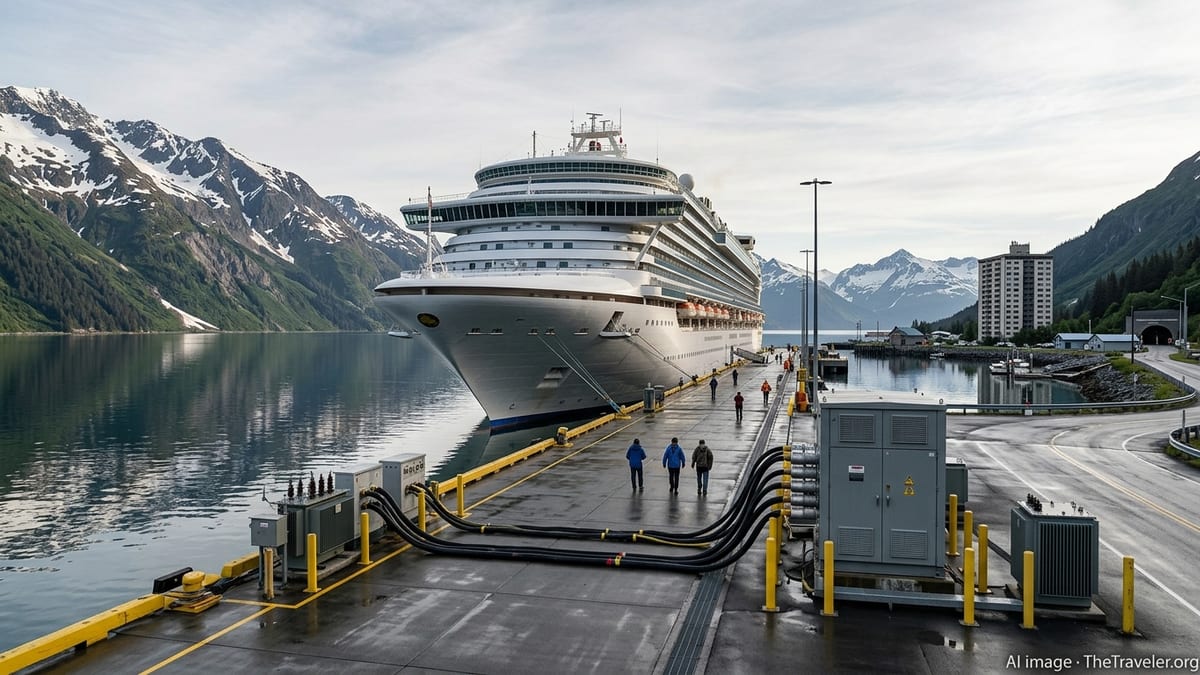
Shore Power Comes to a Growing Alaska Cruise Gateway
Whittier has become one of Alaska’s key cruise gateways, serving one-way Gulf of Alaska itineraries that connect the port with Vancouver and inland rail tours to Anchorage and the interior. Publicly available information shows that the city is now preparing for a major upgrade: electrifying its main cruise dock so visiting ships can plug into the local grid and switch off their engines while alongside.
A project description from the Alaska Energy Authority outlines the Whittier Cruise Ship Terminal Electrification Project as a multi-year initiative that will add the high-voltage infrastructure required to deliver shore power directly to large cruise vessels at berth. The work, scheduled across the latter half of this decade, is designed to allow compatible ships to draw most of their hotel and auxiliary power from land-based electricity instead of marine fuel.
Whittier’s expansion into shore power follows recent investments that added a modern cruise terminal and new berthing capacity, allowing multiple large ships to call during the main summer season. As more cruise lines schedule departures that are marketed as Anchorage but embark in Whittier, the port’s role in Alaska tourism has grown, increasing pressure to manage emissions, noise and air quality during busy turnaround days.
Reports on Alaska’s cruise sector note that port electrification is emerging as a priority across the state, particularly for communities that see high seasonal traffic and are located close to sensitive marine and glacier environments. Bringing shore power to Whittier places the small community within a broader statewide push to modernize cruise infrastructure while supporting visitor growth.
Carnival Corporation’s Expanding Shore Power Footprint
According to recent fact sheets and sustainability reports, Carnival Corporation has made shore power one of the central pillars of its energy-efficiency program. The company highlights that it pioneered early cruise ship shore power connections in Juneau more than two decades ago and continues to increase the share of its fleet that can plug into compatible ports.
Corporate disclosures indicate that dozens of Carnival Corporation ships, across brands such as Princess Cruises and Holland America Line, are now fitted to operate on land-based electricity when available. The company frames this as both a decarbonization tool and a way to cut local pollutants and noise in urban waterfronts and small port communities.
Carnival Corporation’s Alaska overview materials emphasize the scale of its presence in the state, describing a network of cruise operations and land assets that host more guests there than any other cruise operator. As ports such as Whittier add electrification capacity, a growing proportion of those Alaska sailings are expected to be able to make use of shore power, provided the calling vessels are equipped and the grid supply is sufficient.
Published corporate information also notes that Carnival Corporation is working with ports globally to prioritize shore power investments and align the timing of port-side upgrades with fleet retrofits and newbuild deliveries. This cooperation is presented as essential to ensuring that new infrastructure, like the Whittier project, can be fully utilized once it comes online.
Environmental Benefits for a Small Alaskan Community
Whittier’s geography magnifies the potential benefits of electrification. The town sits at the head of Passage Canal, surrounded by steep mountains and glaciers, with much of its activity concentrated along a compact waterfront. On summer turnaround days, large cruise ships dominate the small harbor, and their hoteling loads historically have required running auxiliary engines for many hours at berth.
Studies of shore power in other ports, highlighted in Carnival Corporation’s public materials and in energy-sector analyses, indicate that plugging in can cut a ship’s local air emissions dramatically while docked, including particulate matter, sulfur oxides and nitrogen oxides. For communities like Whittier that experience sharp peaks in seasonal traffic, such reductions can make a noticeable difference in localized air quality.
Noise is another factor. With engines idled, shore-powered ships generally operate more quietly at berth, changing the ambient soundscape around the harbor and nearby residential areas. For a town where most residents live in close proximity to the waterfront, this quieter profile can be an important quality-of-life improvement during peak cruise months.
The project also fits within Alaska’s wider effort to align tourism growth with environmental stewardship. State documents describing port electrification point to reduced greenhouse gas emissions and potential efficiency gains when vessels consume grid power that can incorporate a mix of hydroelectric and other lower-carbon sources, compared with burning marine fuels at the dock.
What Shore Power Means for Cruise Travelers
For passengers boarding Carnival Corporation brands in Whittier, the shift to shore power is unlikely to change logistics but may subtly improve the onboard experience. Travel-planning resources already describe Whittier as a functional embarkation point rather than a long-stay destination, with most guests transferring directly between ships, Anchorage and interior tour lodges.
Onboard, shore power can help stabilize power supply during port calls and reduce visible stack emissions while the ship is tied up, contributing to cleaner air on open decks and in balcony areas. Travelers may also notice reduced vibration and engine noise, particularly when ships remain in port for extended provisioning and turnaround operations.
Industry coverage suggests that sustainability performance is increasingly important to cruise travelers choosing an Alaska itinerary. As awareness grows around electrified ports and lower-emission operations, projects like Whittier’s can become part of how destinations and cruise brands differentiate themselves in a competitive market.
Whittier’s connectivity to Anchorage by highway, tunnel and rail already makes it a strategic point for one-way Alaska cruises. Adding shore power capability supports that role by allowing the port to accommodate high passenger volumes while keeping local environmental impacts more tightly managed.
Alaska’s Cruise Infrastructure Enters a New Phase
The Whittier Cruise Ship Terminal Electrification Project is one element of a broader transformation underway across Alaska’s cruise infrastructure. Recent years have seen new terminals open, expanded berthing options come online and ports explore multiple pathways to cut emissions, including shore power, alternative fuels and vessel-side energy-efficiency upgrades.
Carnival Corporation’s growing shore power-ready fleet positions the company to take advantage of these changes as more electrified berths become available from Southeast Alaska up through Southcentral hubs. When combined with other initiatives, such as waste heat recovery systems and advanced energy management on board, plugging into shore power forms part of a layered approach to reducing the environmental footprint of Alaska cruises.
For Whittier, the upcoming electrification works represent both a technical upgrade and a statement of intent. By investing in the cables, transformers and grid connections needed to power large ships from shore, the port signals its commitment to remaining a central Alaska gateway for major cruise lines while adapting to evolving expectations around sustainability.
As planning and construction progress over the next several years, the project is expected to shift Whittier from a largely conventional cruise pier to one that can support the newest generation of shore power-capable vessels, reinforcing Alaska’s position at the forefront of sustainable cold-climate cruising.