

More news on this day
With record cruise ship deliveries, aggressive early-booking offers and a wave of new Mediterranean itineraries already on sale, industry data suggests 2026 could be the most opportune year in a decade to lock in a cruise around Europe’s most coveted sea.
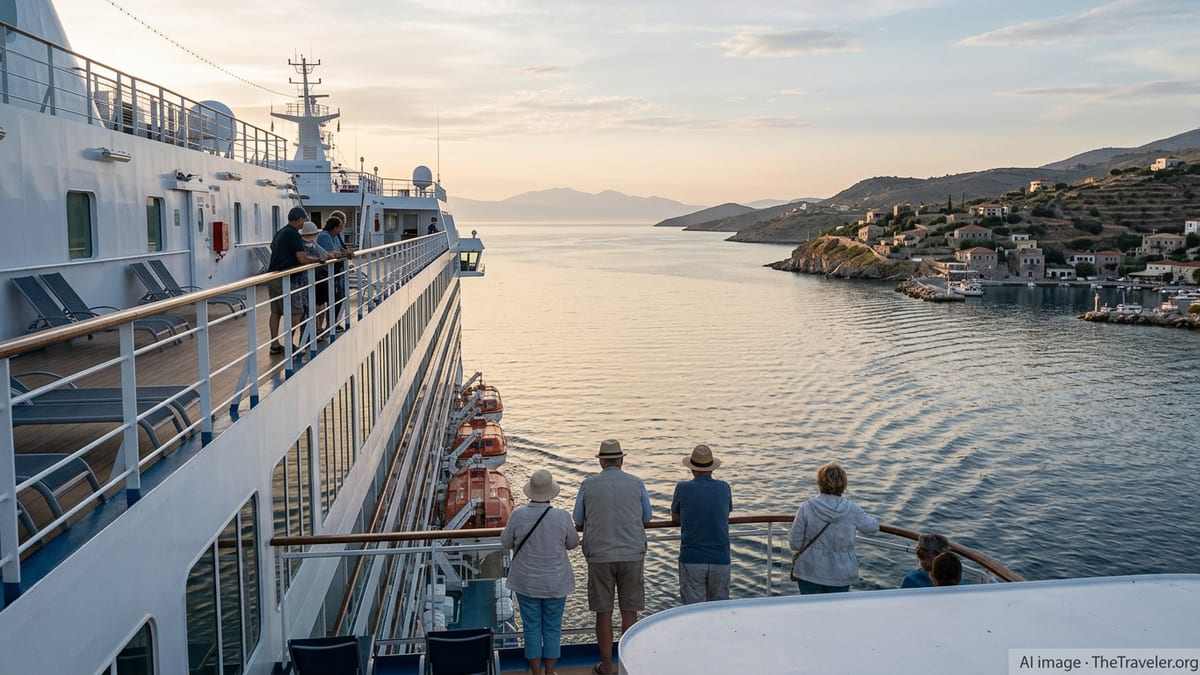
A Wave of New Ships Targeting the Mediterranean
Shipyards across Europe are working at full tilt on a global cruise order book that will bring a surge of new capacity into service by 2026, and a significant share of that hardware is being deployed in the Mediterranean. Trade publications tracking newbuilds report more than a dozen ocean-going vessels due in 2026 alone, adding thousands of berths and intensifying competition for passengers on marquee European routes.
Several of the headline arrivals are scheduled to debut or spend their inaugural seasons in Mediterranean waters. Royal Caribbean is preparing to send another Icon-class giant to the region for spring and summer 2026, positioning one of the industry’s newest and largest ships on weeklong Western Mediterranean loops out of Spanish and Italian gateways. Luxury and yacht-style brands are also looking to the Med for maiden voyages, with the Four Seasons I cruise yacht and the Orient Express Corinthian both slated to launch there in 2026.
Major mass-market players are complementing these debuts by rotating existing megaships back to the region. MSC Cruises has confirmed that MSC Meraviglia will return to Europe for the 2026 summer, while other global lines are quietly shifting capacity from Caribbean homeports back to Mediterranean hubs. For would-be passengers, that translates into a broader menu of ships and styles to choose from, whether they prefer large resort vessels or smaller upscale ships tailored to port-intensive itineraries.
The influx of hardware is also prompting cruise lines to experiment with routing. Newly announced 2026 deployment plans include more sailings that blend Western and Central Mediterranean ports, as well as expanded offerings to the Adriatic, the Greek isles and less-frequented North African and Eastern Mediterranean calls when conditions allow. Booking into 2026 gives travellers first pick of cabins on these fresh itineraries before they sell out.
Early-Booking Deals as Lines Chase 2026 Demand
The supply boom is intersecting with a shift in booking behaviour that is nudging cruise lines to court guests further in advance for 2026 sailings. Industry booking analyses show the average planning window stretching beyond six months, and in some cases well past 200 days, as regular cruisers lock in itineraries earlier while still hunting for value. That has encouraged brands to roll out sales that specifically target 2026 departures, including Mediterranean voyages.
Recent promotions highlighted by cruise trade publications and consumer deal trackers show discounted balcony cabins and added-value packages on select 2026 Mediterranean sailings, especially in shoulder periods such as April, May and October. Analysts say lines appear willing to trade some yield for booking certainty, preferring to fill beds early for a year that will see heightened capacity.
At the same time, there are signs of volatility that savvy travellers can use to their advantage. Data shared by cruise deal aggregators points to pronounced short-term price drops on certain 2026 departures as lines adjust fares to stimulate demand in specific weeks, including late-summer Mediterranean departures. While not universal, these dips suggest that flexible travellers who monitor pricing now, rather than waiting until 2026, may be able to secure premium cabins at mid-range prices.
For those planning once-in-a-decade trips, the current environment also favours locking in air and pre- or post-cruise land stays while capacity is still ample. Mediterranean gateways such as Barcelona, Rome and Athens are forecasting busy 2026 summers, but flights and hotels are generally cheaper and more available when packaged early with cruise bookings, giving planners another financial reason to move now rather than later.
Broader, More Creative Itineraries Across the Region
Cruise lines are leveraging the 2026 build-up to refresh their Mediterranean programming, creating new combinations of classic and emerging ports. Deployment announcements for the 2026 summer season highlight itineraries that go beyond the traditional Barcelona–Rome–Naples triangle, weaving in calls at smaller Adriatic harbours, North African cultural centres where conditions allow, and secondary Spanish and French ports that can ease congestion at marquee stops.
Premium lines are also extending shoulder seasons deeper into spring and autumn, capitalising on strong interest in Europe outside the hottest and busiest summer weeks. Cruise Trade News recently reported that demand for February and March European and Mediterranean sailings is now rivalling that of the Caribbean, a shift that is emboldening lines to program more early- and late-season voyages. For travellers, that means a greater choice of cooler-weather departures with fewer crowds in popular destinations.
Smaller-ship and niche operators are using 2026 to double down on specialist itineraries around the Med. Newly released voyage calendars show expanded small-ship programs along the Adriatic coast, intimate yacht-style sailings between Greek islands and Turkey, and themed cruises tied to food, wine or cultural festivals in coastal cities. Booking now allows travellers to secure limited-berth departures that often sell out months or even years ahead.
Daily private cruise operators, particularly in hotspots such as the Greek islands, are also forecasting strong 2026 demand. Operators report that bookings for private day charters and small-group excursions have risen sharply since 2024, as travellers look to customise time in key ports with smaller crowds and more flexibility. Aligning a 2026 ocean cruise with pre-booked private day sailings can help travellers craft multi-layered Mediterranean itineraries that go far beyond the standard shore excursion menu.
Infrastructure Upgrades and a Focus on Sustainability
The Mediterranean’s cruise rebound is dovetailing with a broader overhaul of port infrastructure and environmental standards that will shape the 2026 season. Construction of new terminals and pier expansions across Spain, Italy, France and the Adriatic is designed to accommodate a new generation of larger yet more efficient ships while dispersing visitor flows more effectively through coastal cities.
European shipyards are meanwhile delivering vessels that reflect tighter environmental regulation, incorporating shore-power connections, advanced catalytic converters and improved fuel efficiency. Recent launches serving the Mediterranean showcase technologies such as low-emission operation in port and systems designed to meet stringent Euro 6-style pollution thresholds. For environmentally conscious travellers weighing whether to cruise, the 2026 fleet promises a noticeably greener profile than pre-pandemic baselines.
As regulations evolve, ports are also investing in cleaner operations ahead of the 2026 peak. Several major Mediterranean hubs are in various stages of installing or expanding shore-power infrastructure, which allows ships to shut down engines while alongside and tap the local grid instead. These initiatives, while often invisible to passengers, are becoming key marketing points for lines pitching the Mediterranean as an increasingly sustainable cruise destination.
The cumulative effect of these upgrades is likely to be most evident from 2026 onward, as both newly built and retrofitted ships arrive in ports that are better prepared to manage emissions and crowd flows. Planning a 2026 cruise today effectively means reserving a front-row seat for the next phase of the region’s cruise evolution, when cleaner technology and improved infrastructure converge with a wave of new itineraries and competitive pricing.