

More news on this day
Flight delay frustration is increasingly playing out on smartphone screens, and major airlines are quietly overhauling their apps to give travelers clearer, faster insight into what is going wrong and when they might actually depart.
Get the latest news straight to your inbox!
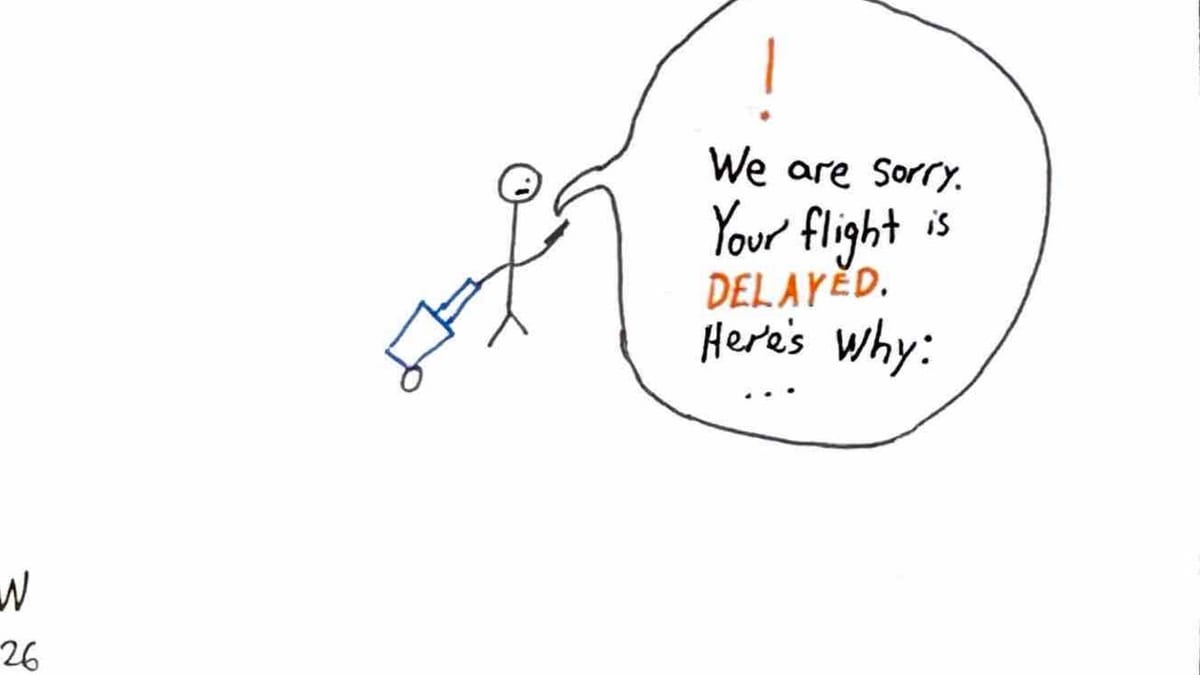
Image by USA Today
Regulatory and reputational pressure are reshaping delay data
Publicly available information shows that regulators in the United States and Europe are tightening expectations around how airlines communicate disruptions. In the U.S., recent rulemaking efforts by the Department of Transportation have focused on compensation and rebooking obligations when delays or cancellations strand passengers, raising the stakes for how clearly those disruptions are presented to travelers in digital channels.
In Europe, long-standing passenger rights rules are increasingly being paired with digital tools. The European Commission promotes a passenger rights smartphone app that explains when travelers are entitled to care, refunds or compensation, and recent communications from EU institutions emphasize timely, accessible information as part of those protections. This environment is encouraging airlines that serve European routes to surface delay causes and rebooking options more prominently in their own apps.
For global carriers, reputational risk is just as powerful a driver as regulation. Operational meltdowns and system outages in recent years generated extensive coverage showing travelers posting screenshots of confusing or conflicting delay messages. Airlines are responding by redesigning app interfaces to explain delay reasons in plain language, distinguishing between weather, air traffic control and crew issues, and by time-stamping status changes so customers can see when the information was last updated.
Industry observers note that these changes are not purely altruistic. Clearer delay transparency in apps helps reduce pressure on call centers and airport staff, since many travelers can make decisions about rebooking, hotel stays or missed connections directly from their phones once they understand the likely length and cause of a disruption.
New data pipelines bring operations closer to travelers’ screens
Behind the cleaner app designs sits a more complex technical shift. Aviation data providers describe how airlines, airports and air navigation authorities increasingly exchange live operational information through platforms that aggregate schedules, gate changes, runway events, air traffic flow programs and weather disruption data. These feeds give airline operations centers a more granular picture of where bottlenecks are forming and how long they are likely to last.
Some of that information is now flowing directly into consumer apps. Flight-tracking tools and airline status pages increasingly reflect real-time inputs such as “awaiting aircraft from prior flight,” “crew rest requirements” or “air traffic control delay,” rather than generic “operational reasons.” Published product descriptions from flight status providers highlight integrations with air traffic management systems that can detect ground stops, flow control measures and runway closures, enabling more precise departure and arrival estimates.
Large carriers are also investing in predictive capabilities that sit on top of these data streams. Publicly available technical overviews from airline and technology partners describe tools that model historic delay patterns by route, season and time of day, then combine them with current congestion and weather conditions. When probability of disruption rises above certain thresholds, the airline app can proactively flag a “risk of delay,” sometimes before official schedules change, and present voluntary rebooking options.
The growing ecosystem of independent flight-tracking and passenger rights apps is helping push transparency further. These third-party tools often ingest similar aviation data and present it in highly granular timelines, showing, for example, when a prior leg departed late or when a flow control program was issued for a busy hub. As travelers grow accustomed to that level of detail, airlines face competitive pressure to match or exceed it in their own branded apps.
Design shifts put clarity and self-service ahead of fine print
The other side of delay transparency is interface design. Recent updates to airline apps, described in product announcements and customer guides, emphasize at-a-glance clarity: prominent banners for delays and cancellations, color-coded timelines and simplified language explaining what is happening next. Instead of burying status updates behind multiple taps, many apps now display the latest departure estimate, gate and boarding time on the home screen for day-of-travel users.
At the same time, airlines are adding more context a single tap away. Some apps now show where the incoming aircraft is coming from and whether that earlier flight departed or arrived late, helping travelers understand whether a minor hold might stretch into a longer wait. Others surface advisories about congested airspace or airport-specific delay programs so travelers can distinguish between airline-driven issues and broader system constraints.
Self-service tools are tightly tied to this push for transparency. When a delay crosses certain time thresholds, many apps automatically unlock options to switch flights, join standby lists or request travel credits, with eligibility rules based on carrier policies or applicable regulations. Consumer-facing explanations of these features stress that combining real-time status with clear choices aims to reduce uncertainty at the gate and during irregular operations.
Not every change is universally welcomed. User discussions on travel forums frequently highlight inconsistencies between different data sources, such as airport displays, airline apps and independent tracking services. These conversations underscore a central challenge for app designers: travelers now expect both speed and accuracy, and they quickly spot when an airline seems to downplay or lag on posting a likely delay.
Passenger rights and transparency tools are converging
Another emerging trend is the convergence between delay tracking and passenger rights information inside apps. In European markets, official passenger rights tools promoted by the European Commission are being complemented by private-sector apps that automatically check whether a delay or cancellation might qualify for compensation under regional regulations. Corporate profiles and product descriptions for these services explain that they cross-reference disruption data with legal frameworks to guide passengers through potential claims.
Some airlines and online travel platforms are experimenting with integrating similar logic directly into their own apps. Public hearing summaries from consumer protection proceedings in North America reference travel companies that support clearer fee and disruption transparency within booking and post-booking interfaces, including mobile channels. While implementations vary, the common thread is that the same data used to inform a delay alert can also trigger information about vouchers, meals, hotel eligibility or refund options.
Academic and policy discussions around air passenger rights suggest that digital tools are likely to play a growing role in making complex rules understandable in real time. As delay alerts become more detailed, it is relatively straightforward for app developers to layer in short, jurisdiction-specific explanations of what travelers can request from airlines when disruptions cross certain thresholds.
This convergence narrows the information gap that historically favored carriers. Instead of needing to research rights after a disruption, many travelers now encounter prompts inside apps that explain next steps while they are still at the airport watching departure times slide.
What improved transparency means for the next disruption-prone season
With peak travel seasons often coinciding with severe weather and strained air traffic capacity, the timing of these app enhancements is significant. Aviation data compiled for recent summers and holiday periods shows clusters of delays and cancellations at major hubs, amplifying traveler scrutiny of how airlines communicate changing schedules. As another busy season approaches, improved app transparency is becoming part of how airlines seek to manage expectations and preserve loyalty when operations go wrong.
Analysts note that better delay data will not, by itself, prevent disruptions that stem from storms, crew availability or air traffic control constraints. However, the growing sophistication of airline apps changes the experience of those disruptions. Instead of relying on occasional loudspeaker announcements or crowded departure boards, many passengers can track events minute by minute on their phones and make earlier decisions about rebooking or overnight stays.
Looking ahead, aviation technology roadmaps published by regulators and industry groups point to even richer data exchanges between air traffic systems, airports and carriers. As those capabilities mature, travelers are likely to see more precise cause codes, narrower delay windows and smarter proactive rerouting suggestions in airline apps. The direction of travel is clear: once delay transparency becomes a competitive differentiator, it is difficult for any major carrier to revert to vague or last-minute status updates without facing backlash.