

More news on this day
For many air travelers, a smooth, barely noticeable touchdown is the gold standard of a “good” landing. Yet aviation guidance and safety literature indicate that the firm arrivals which draw gasps in the cabin are often intentional, calculated and, in many situations, safer than the soft landings passengers expect.
Get the latest news straight to your inbox!
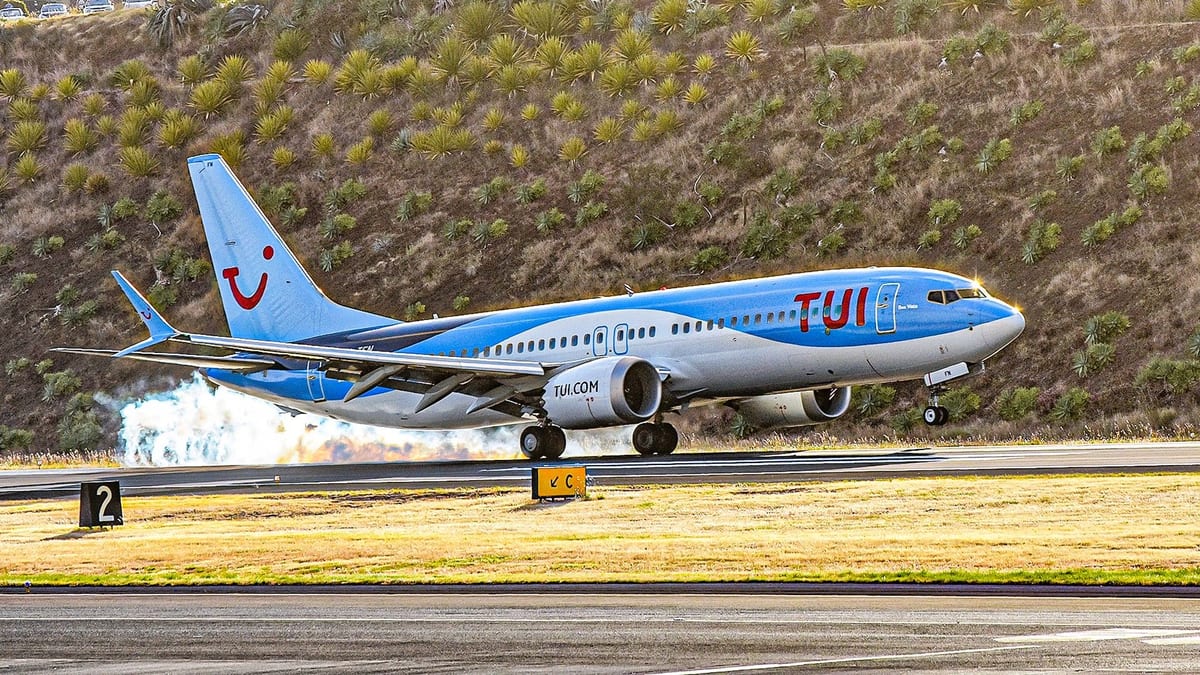
Image by Simple Flying
Firm Landings Are Built Into Safety Procedures
Aviation training materials distinguish between a truly hard landing, which may require an engineering inspection, and a firm landing, which is often recommended in specific conditions. Flight operations manuals for large commercial jets describe target touchdown rates, distances and configurations that prioritize control of the aircraft and effective braking over passenger comfort.
A firm touchdown helps ensure the wheels make positive contact with the runway at the correct aiming point instead of “floating” along the surface while the aircraft bleeds off speed. Safety analyses of approach and landing accidents highlight that arriving too far down the runway, or carrying excess speed in the flare, can contribute to runway overruns and excursions. In this context, a decisive, positive landing at the proper point is treated as a safety tool rather than something to avoid.
Publicly available guidance from industry groups and regulators stresses the idea of a stabilized approach: by a defined height above the ground, the aircraft should be configured for landing, on the correct path and at an appropriate speed. Once that standard is met, pilots are encouraged to continue to touchdown without chasing an ultra-smooth arrival that might compromise where and how firmly the aircraft first meets the runway.
Wet and Contaminated Runways Demand Positive Touchdown
On wet or contaminated runways, a firm landing can directly improve braking performance. Research on runway friction and winter operations shows that standing water, snow or slush reduces tire grip and increases the risk of hydroplaning, where the tires ride on a thin film of moisture instead of the pavement. In these conditions, pressing the wheels firmly onto the surface helps break through the water layer and allows anti-skid systems and brakes to work effectively.
Aviation safety case studies involving wet runways frequently reference the importance of touching down within the prescribed zone and achieving maximum available deceleration early in the landing roll. A prolonged float to achieve a gentle touchdown not only delays that braking but can leave the aircraft closer to the end of the runway with less margin if braking action is poorer than reported.
Industry circulars on contaminated-runway operations also note that pilots may adjust techniques, including aiming for a slightly firmer contact, to ensure reliable activation of ground spoilers and autobrake systems. These devices are designed to deploy when sensors confirm weight on the wheels. A positive touchdown helps trigger them promptly, transferring lift off the wings and putting more weight on the landing gear where brakes can be most effective.
Crosswinds and Turbulence Favor Control Over Comfort
Crosswind landings, where the wind blows at an angle to the runway, present another situation in which a firmer arrival is often the safer choice. Technical descriptions of crosswind techniques explain that pilots must transition from a crabbed or angled approach to having the aircraft aligned with the runway at touchdown. That maneuver, combined with gusty or shifting winds, can produce arrivals that feel abrupt inside the cabin even when they are well within aircraft limits.
Guidance from safety organizations points out that maintaining directional control is critical in strong crosswinds. If the aircraft touches down too lightly, a gust can lift a wing or push the airplane sideways, increasing the risk of skidding or veering off the paved surface. A more assertive touchdown, with appropriate control inputs to keep the upwind wing down and the nose aligned, helps the landing gear grip the runway so the pilot can steer effectively.
Reports on real-world crosswind operations also note that automatic landing systems are often limited by crosswind and turbulence conditions. When winds approach those limits, operators emphasize trained manual techniques that favor stability and runway tracking, accepting that the resulting touchdown may feel solid rather than silky to passengers.
Automation, Data and the Line Between “Firm” and “Hard”
Modern airliners collect detailed data on each landing, including vertical acceleration at touchdown. Airlines and regulators use this information to distinguish between routine firm landings and events that may qualify as hard landings requiring inspection. Internal thresholds are typically set so that normal, procedural firm landings do not trigger maintenance actions, while out-of-limit impacts are flagged for review.
Investigations into hard landing incidents show that when limits are exceeded, it is usually the result of unstable approaches, misjudged flares or unexpected wind changes rather than a deliberate decision to land aggressively. Safety recommendations from these inquiries focus on adherence to stabilized-approach criteria and the willingness to go around and attempt another approach if conditions do not look right.
At the same time, flight data monitoring programs give airlines insight into how often aircraft are landing on the long side of the runway or touching down at higher-than-planned speeds. In response, some operators have reinforced training that encourages pilots to prioritize accurate touchdown points and runway occupancy, even if that means accepting a firmer arrival when conditions warrant it.
Passenger Perception Versus Operational Reality
For passengers, the sensory experience of landing is often their main reference point for judging the flight. A soft, floating arrival can feel reassuring, while a firm touchdown may be interpreted as an error or near miss. Aviation safety publications acknowledge this disconnect, but consistently emphasize that the quality of a landing is measured largely by precision, control and margin, not by how gentle it feels in the cabin.
Public information from pilot training organizations encourages travelers to view landings in context. On a rainy evening, at a short or busy runway, or in gusty crosswinds, a pronounced bump on touchdown may reflect a textbook application of procedure rather than a lapse. From the cockpit perspective, bringing the aircraft firmly onto the runway at the correct point, with full directional control, is a sign that the crew has managed the risks of weather, surface conditions and traffic constraints.
As airport networks grow busier and climate patterns bring more frequent episodes of heavy rain and strong winds, aviation experts continue to study approach and landing performance. Across those efforts, one theme recurs: the safest landing is not always the smoothest one. In many scenarios, the firm touchdown that rattles the cabin is exactly what the flight manual ordered.