

More news on this day
After years of cryptic gate announcements and vague app updates, more airlines are beginning to spell out exactly why flights are late, reflecting new regulatory pressure, better data tools and a growing belief that candor can calm angry travelers.
Get the latest news straight to your inbox!
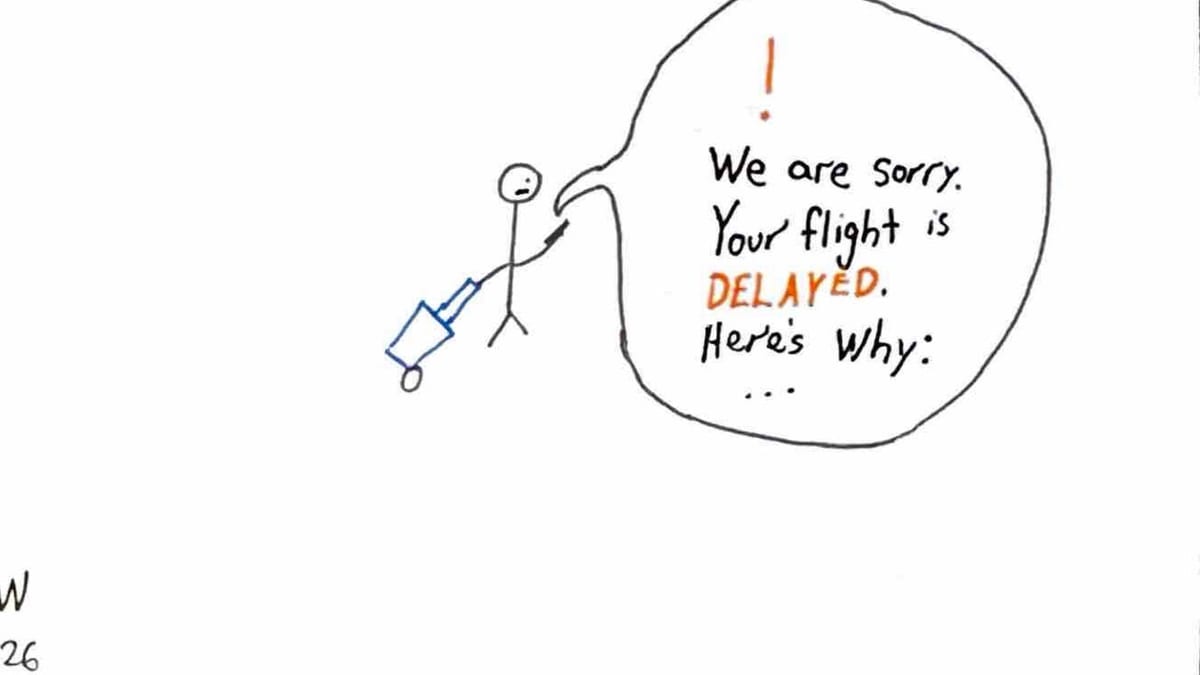
Image by USA Today
From “Operational Issues” to Specific Causes
For many passengers, the standard explanation for a late departure used to be a catch-all phrase such as “operational reasons.” That is now starting to change as airlines adopt more precise language in mobile apps, text alerts and airport displays. Notices increasingly distinguish between crew scheduling problems, inbound aircraft delays, maintenance checks and air traffic control restrictions.
Publicly available information on flight status tools shows that several large U.S. carriers now tag disruptions using categories aligned with federal reporting standards. These include labels such as carrier delay, late-arriving aircraft, national airspace system constraints and security-related checks. The same categories already underpin the statistics airlines must submit to the Bureau of Transportation Statistics, but passengers are only recently seeing those distinctions reflected in consumer-facing channels.
Industry analysts note that this shift follows years of criticism that airlines used weather or generic “ATC” references to avoid compensating passengers for problems within their control, such as crew misallocation or preventable maintenance issues. By mirroring the categories used in government data, airlines are exposing themselves to closer scrutiny when their public explanations do not line up with official performance records.
In parallel, flight-tracking apps and airport dashboards have grown more sophisticated, routinely revealing when an inbound plane is running late or held at another airport. That makes it harder for airlines to maintain vague narratives when passengers can independently see where their aircraft is and how long it has been delayed.
Regulatory Pressure and Data Rules
The move toward clearer delay explanations is closely linked to a series of U.S. Department of Transportation initiatives intended to strengthen passenger protections. In recent years, the department has rolled out an online dashboard comparing what each major airline offers during controllable delays and cancellations, and has pursued enforcement actions after high-profile meltdowns where carriers struggled to manage disruptions.
New reporting directives issued to airlines emphasize accurate categorization of the causes of delays and cancellations, and require detailed on-time performance data submissions. These technical requirements, while largely invisible to the traveling public, have prompted airlines to upgrade internal tracking systems so that the same underlying data can more easily feed both regulatory reports and consumer notifications.
Rulemaking documents and consultation papers describe a regulatory focus on when a delay should be considered within an airline’s control and what kinds of customer service responses are appropriate in those cases. While proposals for mandatory compensation beyond refunds have faced political and industry resistance, there is broad agreement in the public record that passengers should at least receive timely and truthful information about why their plans are disrupted.
Recent guidance related to issues such as aircraft recalls and large-scale technology outages also underlines the importance of accurate labels. When regulators classify certain events as controllable or uncontrollable, airlines must ensure their delay explanations and customer service policies are consistent with those determinations, or risk investigations and financial penalties.
Technology Upgrades Behind the New Candor
Behind the counter and in cockpits, airlines now operate with a far richer stream of real-time data than even a decade ago. Dispatch systems, crew scheduling software, airport gate management tools and weather feeds are increasingly integrated, making it easier to pinpoint the main driver of a delay, whether it is a late inbound aircraft, a crew timing limit, or congestion at a hub airport.
Industry briefings and product descriptions from flight information providers show that carriers can automatically ingest delay codes from internal operations systems and push them directly into mobile apps and text alerts. Some major airlines have introduced features that let customers see where their incoming plane is, while others experiment with sending radar imagery and plain-language explanations during weather events.
This technology shift matters because it reduces the burden on frontline staff, who historically had to translate complex operational problems into hurried gate announcements. With more structured data, the default can be a system-generated explanation that is both accurate and easy to understand. That frees staff to focus on rebooking and assistance instead of fielding repeated questions about what went wrong.
Third-party flight-tracking apps and subscription services are also raising expectations. Travelers who use these tools often know when their aircraft is stuck on the ground elsewhere or when an airport is experiencing ground stops. Airlines risk further erosion of trust if their official channels lag behind or contradict information passengers can see on their own screens.
Why Clearer Explanations Matter for Travelers
Knowing why a flight is delayed can be almost as important as knowing how long the delay will last. Passenger rights in the United States vary depending on whether a disruption is considered controllable by the airline or caused by external factors such as severe weather, security events or air traffic control constraints. That distinction often shapes eligibility for meal vouchers, hotel accommodations or rebooking options.
Consumer advocates argue that more specific delay reasons give travelers a better basis to challenge decisions they believe are unfair, such as being denied support when other flights are departing on time from the same airport. When an airline labels a disruption as a mechanical issue or crew misalignment, passengers can more confidently reference published customer service commitments that apply to controllable events.
Clarity also helps people make practical decisions. A short pushback linked to a gate hold or minor traffic congestion may justify staying near the gate, while a multi-hour ground stop or extensive maintenance check may signal it is time to rebook, seek alternate transport or adjust hotel and connection plans. The more candid the explanation, the easier it is for travelers to assess their options.
There is a reputational dimension as well. Airlines that provide prompt, detailed updates are often perceived as more trustworthy even when delays are lengthy. In contrast, situations where boards still show an on-time departure despite an obviously missing aircraft frequently spark online complaints and negative media coverage, intensifying the fallout from an already difficult operational day.
The Next Phase of Transparency
While the trend is toward greater openness, transparency remains uneven across carriers and routes. Some regional affiliates and low-cost operators still rely heavily on broad categories rather than granular causes. International flights introduce additional complexity, since foreign regulations and airport systems influence how and when information flows to passengers.
Policy analysts following aviation rulemaking expect that continued regulatory scrutiny, along with competitive pressure, will push airlines to refine delay explanations further. As data collection requirements expand and automated refund rules take hold, there is growing interest in standardizing how delay causes are described so that passengers can easily compare experiences across airlines and routes.
At the same time, airlines are likely to remain cautious about language that could expose them to additional liability or compensation claims. Observers anticipate more use of structured categories and plain-language summaries that acknowledge the main cause without delving into every operational detail, especially in complex chain-reaction disruptions involving weather, crew limitations and crowded airspace.
For travelers, the result is a slow but noticeable shift: fewer generic “operational” messages and more candid accounts of what is actually keeping a plane at the gate. It does not eliminate the frustration of a missed connection or a ruined vacation, but it gives passengers clearer information, a stronger footing when seeking remedies and a better sense that airlines are finally prepared to explain what went wrong.