

More news on this day
As aircraft line up on the runway or descend toward landing, a familiar transition quietly unfolds inside the cabin: overhead lights dip or switch off, window shades are nudged open, and the mood shifts from relaxed cruise to focused readiness. The change can feel cosmetic, but aviation guidance and safety practices indicate that dimming the lights during takeoff and landing is a carefully considered part of modern airline operations.
Get the latest news straight to your inbox!
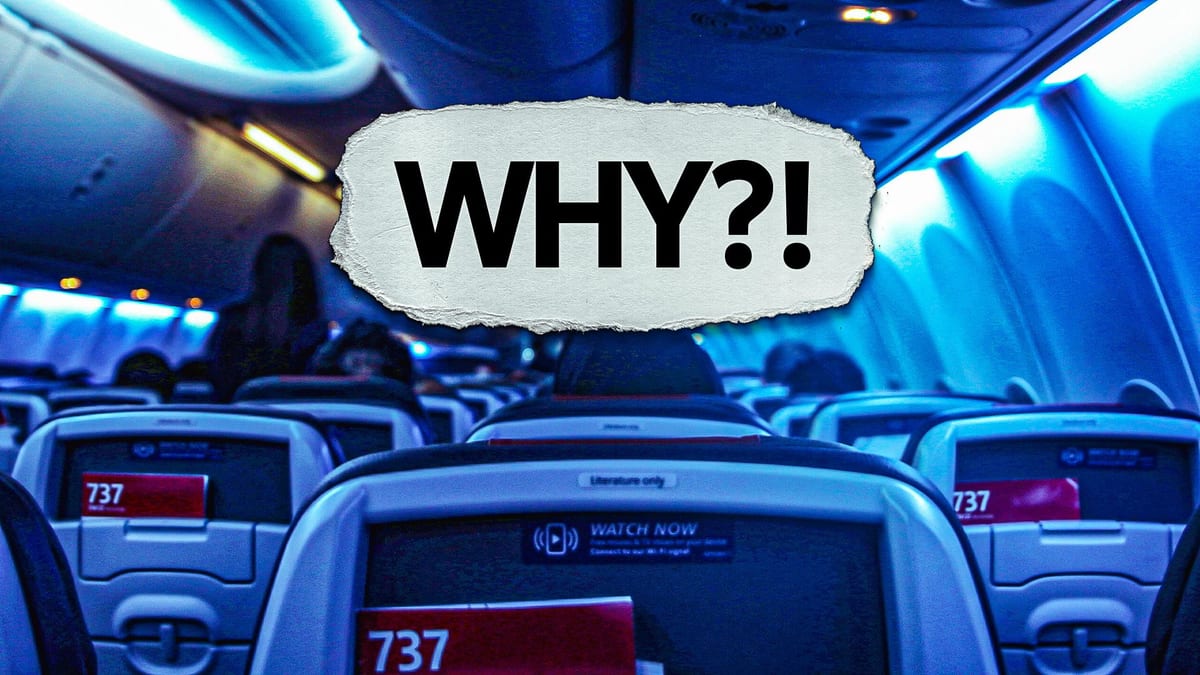
Image by Simple Flying
Preparing Eyes for a Sudden Change in Light
A key reason airlines dim cabin lights at night is to help passengers’ and crew members’ eyes adapt to lower light levels before the moments of highest risk in a flight. Vision science shows that eyes need time to adjust from bright artificial lighting to darkness. If an emergency occurs in low visibility conditions, a cabin already set to a darker level reduces the shock of suddenly moving into a darker environment outside the aircraft.
Reports from aviation and travel publications describe this practice as a way to reduce the contrast between a brightly lit cabin and the darker conditions on the runway, taxiway or surrounding terrain. With less contrast, it becomes easier for passengers to recognize illuminated exit signs, emergency floor path lighting and exterior conditions through the windows. In a time-critical evacuation, seconds saved by better visibility can be important.
The same principle applies in reverse during bright daytime operations. When it is very bright outside, some airlines keep cabin lighting closer to daylight levels so that passengers are not stepping from a relatively dark cabin into intense sunshine. In both cases, the goal is to minimize sudden changes in perceived brightness that could temporarily compromise vision at the worst possible moment.
Supporting Rapid Evacuation Standards
International safety rules require that commercial aircraft be capable of evacuation within a short, fixed period, even with a portion of exits unavailable. Publicly available regulatory material in the United States and Europe describes the requirement that large passenger aircraft demonstrate the ability to evacuate in about a minute and a half, often with only emergency lighting and floor proximity path markers available inside the cabin.
To make those systems as effective as possible, crews are trained to configure the cabin before takeoff and landing as if an evacuation could be needed. Dimming the lights ensures that emergency exit signs, aisle lighting and door markers are clearly visible if power is lost or smoke reduces visibility near the ceiling. Industry safety analyses point out that visibility near the floor often remains better than at head level in a smoke-filled cabin, so floor-level guidance lighting becomes crucial.
Cabin procedures that accompany light dimming, such as securing tray tables, straightening seat backs, stowing baggage and checking seat belts, are all aimed at clearing obstructions and reducing hazards in an evacuation. The lighting change is part of that same preparation, intended to give passengers the best chance to identify exits, follow crew instructions and move quickly along aisles if a rapid deplaning is necessary.
Coordinating With Window Shades and Exterior Lighting
The lighting adjustment inside the aircraft is closely tied to what is happening outside. Many airlines ask that window shades be open during takeoff and landing so that both crew and passengers have a clear view of conditions on the wings, engines and runway environment. Public guidance from safety organizations notes that being able to see outside helps cabin crew quickly assess hazards such as fire, debris or blocked exits before starting an evacuation.
At the same time, flight crews activate bright external lights, including landing lights and anti-collision beacons, during takeoff and landing to make the aircraft more conspicuous and to illuminate the runway environment. When the cabin is dim, reflections on the cabin windows are reduced, which can make it easier to see these external cues, along with airport lighting systems and any unusual activity on the ground.
Passengers sometimes interpret the darkened cabin as an attempt to create a calmer atmosphere or prepare for sleep, particularly on overnight flights. While cabin comfort is a consideration, operational documentation and industry explanations indicate that visibility and situational awareness are the primary reasons the practice is most consistently applied during the short but safety-critical windows of takeoff and landing.
Not a Direct Legal Mandate, but a Standard Practice
Although aviation law in major jurisdictions lays out detailed requirements for emergency lighting, floor path illumination and exit marking, publicly available regulatory texts do not typically specify that cabin lights must be dimmed for every takeoff and landing. Instead, the procedure has evolved into a widely adopted standard, embedded in airline operating manuals and crew training materials around the world.
Safety experts describe this kind of practice as a procedural defense: a routine step that does not depend on real-time judgment about whether a particular flight is at higher risk. Because most accidents occur during takeoff and landing, crews treat these phases as moments when the aircraft and passengers should be configured as if an immediate evacuation might be required, regardless of how routine the flight appears.
Industry reporting suggests that the habit has become so common that many travelers assume it is specifically mandated by law. In reality, it functions as a practical way for airlines to comply with broader evacuation performance standards and lighting requirements, while giving crews a consistent tool for managing the transition from normal operations to a potential emergency.
Balancing Safety, Comfort and Efficiency
In everyday experience, the dimming of cabin lights can feel like a small detail compared with the more visible elements of flying, such as security screening or turbulence. Yet within airline operations, it reflects a broader philosophy in which many minor procedures combine to shape safety outcomes. Adjusting the lighting, checking window shades and preparing the cabin layout all work together to support visibility and movement if something goes wrong.
Airlines also weigh passenger comfort and energy management when setting lighting policies. Reports indicate that some carriers adjust the timing or intensity of dimming to fit the time of day, route, and cabin layout, while still respecting the underlying safety intent. This can be seen on red-eye services, shorter domestic flights and long-haul operations, where the exact sequence and duration of lighting changes may vary but the general pattern remains recognizable.
For travelers, understanding why the lights dim at the most sensitive phases of flight can shift the moment from a minor inconvenience to a visible sign of preparation. As aviation systems continue to evolve, the quiet ritual of lowering the cabin lights at the runway threshold remains a reminder that modern air travel relies as much on practiced routines as on technology in keeping passengers safe.