

More news on this day
Airline overbooking has become a routine feature of modern air travel, with carriers deliberately selling more tickets than seats and passengers increasingly asking why it keeps happening at all.
Get the latest news straight to your inbox!
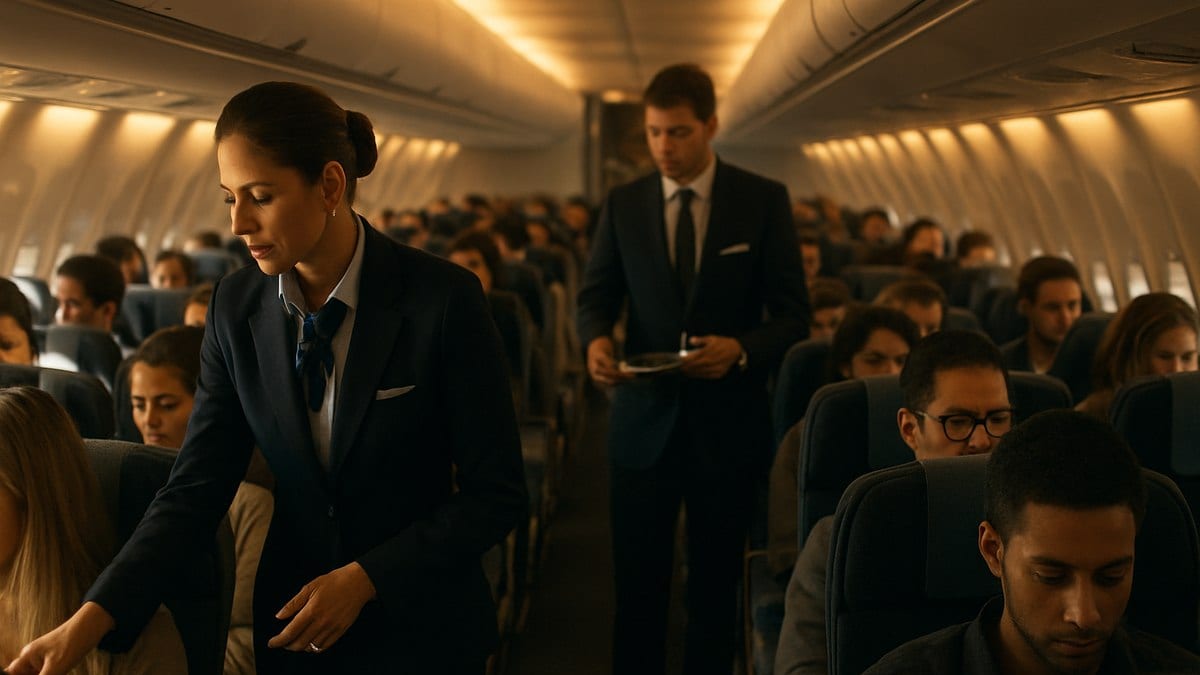
The Business Logic Behind Overselling Seats
Overbooking is rooted in the economics of commercial aviation, where tight profit margins and highly variable demand make it risky for airlines to leave seats empty. Publicly available financial analyses indicate that a significant portion of an airline’s costs, from aircraft leases to crew salaries and airport fees, are fixed for each flight regardless of how many passengers show up. Filling every possible seat is one of the few ways carriers can improve yields on routes that are otherwise expensive to operate.
Historical data on no-show rates show that a predictable share of passengers fail to board each departure, due to missed connections, last-minute changes or flexible tickets that can be rebooked. To offset those expected no-shows, airlines use forecasting models to calculate how many extra tickets they can sell while still having a high probability that everyone who arrives at the gate will fit on the aircraft. Industry reports describe this as a revenue management strategy that aims to balance the risk of flying empty seats against the risk of bumping passengers.
As travel demand rebounded in 2023 and 2024, airlines intensified their reliance on sophisticated algorithms to manage inventories. Carriers feed booking patterns, historical no-show trends and seasonal factors into automated systems that adjust seat availability in real time. The result is a system in which overbooking is not an occasional miscalculation but a planned feature, used to squeeze additional revenue from flights that might otherwise depart with unsold capacity.
What Happens When Too Many Passengers Show Up
When more ticketed passengers arrive than there are seats available, an airline must follow a structured process for resolving the oversale. In the United States, the Department of Transportation’s oversales rules outline how carriers are expected to handle these situations. Public guidance from the agency explains that airlines are first expected to seek volunteers willing to give up their seats in exchange for compensation such as vouchers, cash or alternative travel arrangements.
If there are not enough volunteers, passengers may be denied boarding against their will. The Department of Transportation’s most recent Air Travel Consumer Reports show that this so-called involuntary denied boarding remains relatively rare compared with the total number of travelers, but it still affects thousands of passengers every year on U.S. airlines. For the second quarter of 2024, federal data show a bumping rate of roughly one-third of a passenger per 10,000 travelers on reporting carriers, down from some earlier years but still a visible pain point for those affected.
Similar practices are allowed in many other jurisdictions. A recent study reviewed by the European Parliament noted that overbooking is considered part of airlines’ commercial freedom, and that a very small share of passengers, estimated at around a few hundredths of a percent in recent years, are ultimately denied boarding because flights are oversold. However, that slim percentage translates to a significant number of disrupted trips once scaled across millions of passengers.
Regulation, Compensation and Passenger Rights
Regulators have gradually tightened the rules around how airlines can oversell flights and what they must offer when passengers are bumped. In the United States, transportation regulations specify that travelers who are involuntarily denied boarding on oversold flights are entitled to written information about their rights and, in many cases, to monetary compensation calculated as a percentage of their one-way fare, up to a capped amount.
Recent rulemaking published in the Federal Register shows that U.S. authorities have periodically increased the maximum compensation limits to keep pace with inflation. An update issued in late 2024 raised the ceiling for denied boarding payments to several thousand dollars on certain itineraries, reflecting a broader push to strengthen consumer protections in air travel. Separate regulatory efforts launched in 2023 and 2024 have focused on refunds and ancillary services, signaling that policymakers are paying closer attention to how airlines handle disruptions of all kinds.
In Europe, passengers benefit from longstanding rules that set standard compensation levels for denied boarding, cancellations and long delays on eligible flights. The fact-finding work cited in recent European parliamentary documents shows that, while overbooking remains legal, lawmakers have weighed whether the current financial incentives are sufficient to deter airlines from aggressively overselling popular routes. Consumer groups on both sides of the Atlantic argue that consistent enforcement and clear communication remain as important as the compensation formulas themselves.
Airline Strategies and Emerging Controversies
While classic overbooking is built around statistical no-show models, travelers are increasingly encountering related practices that feel similar at the gate. Travel industry coverage has highlighted cases in which airlines sell seats assuming they can later swap to a smaller aircraft, leaving confirmed passengers downgraded or moved off flights when equipment changes occur. Consumer advocates describe this as a gray area that blurs the line between routine operational decisions and oversales.
Reports from Asia, North America and Europe over the past two years point to a rise in complaints about passengers left stranded or rebooked after flights were reported to be oversold or aircraft were substituted at short notice. Articles in travel trade publications describe accusations that some carriers use overbooking more aggressively on leisure-heavy routes where travelers have fewer alternatives and less frequent service. Airlines respond in their public statements by emphasizing that they comply with regulations and that most affected customers receive compensation or alternative travel options.
The reputational risk is significant when an overbooking incident goes viral, especially if passengers share images of crowded gate areas, emotional confrontations or families separated by last-minute seat changes. Although headline-grabbing episodes are still a small fraction of overall air travel, they have intensified scrutiny of revenue management practices that were once invisible to the flying public.
How Travelers Can Navigate an Overbooked Flight
For travelers, the persistence of overbooking means that preparation and awareness are essential. Public advisories from consumer agencies recommend arriving at the airport early, checking in as soon as possible and monitoring flight status closely, since passengers who check in late may be more vulnerable when airlines decide who will be denied boarding on an oversold flight. Understanding the difference between voluntary and involuntary bumping can also influence how a traveler responds when gate agents ask for volunteers.
Published guidance suggests that passengers willing to give up their seats can often negotiate the value and form of their compensation, whether in cash, vouchers, or additional benefits such as hotel stays and meal vouchers. Those who prefer not to volunteer should know that, in many jurisdictions, they are entitled to fixed levels of compensation if they are involuntarily bumped and experience significant delays in reaching their final destination. Keeping documentation, including boarding passes and written notices, can make it easier to file a complaint if problems arise.
Overbooking is unlikely to disappear as long as airlines continue to rely on forecasting models and tight capacity to manage volatile demand. For now, the practice remains a calculated risk built into the price of almost every ticket, even on flights that ultimately depart with no empty seats in sight.