

More news on this day
Four-engine passenger jets have largely vanished from airport departure boards, overtaken by efficient twin‑engine widebodies. Yet in 2026, a handful of airlines and cargo operators still schedule these aviation heavyweights on some of the world’s longest and busiest routes.
Get the latest news straight to your inbox!
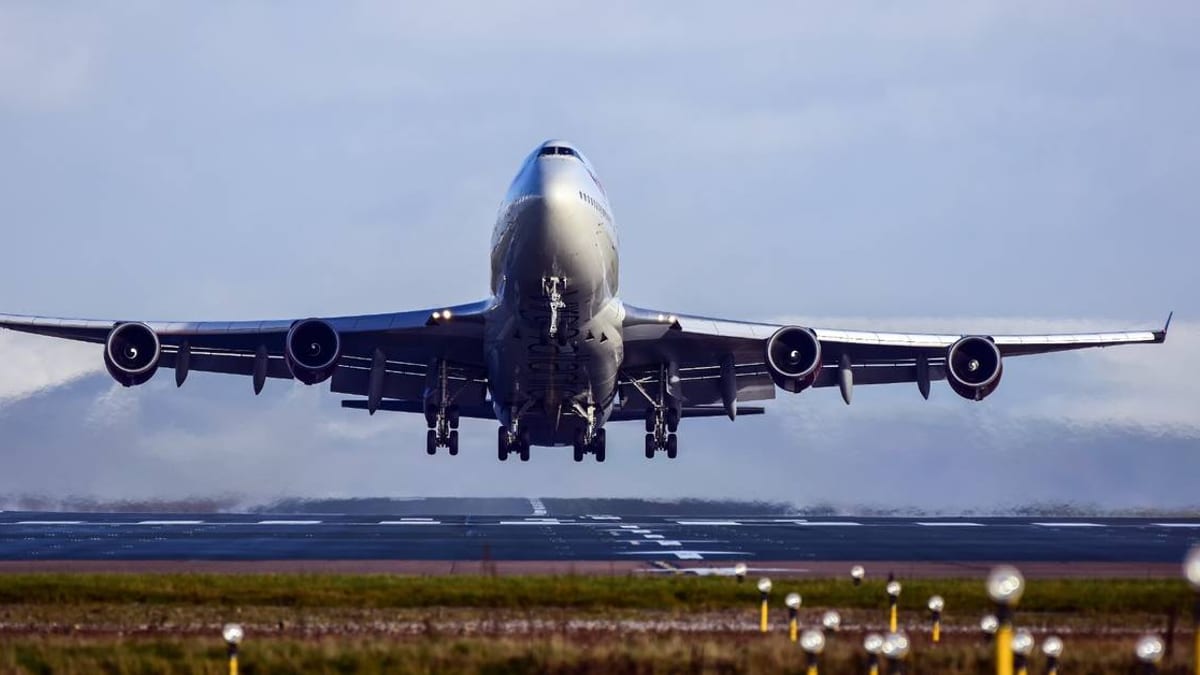
Image by Simple Flying
From Flagship Status to Niche Operator
Four-engine jets such as the Boeing 747 and Airbus A380 were once the ultimate status symbols in long-haul travel, offering unmatched range and capacity at a time when engine technology limited what twin‑engine aircraft could do. As high-bypass turbofans improved and extended twin‑engine operations rules evolved, airlines shifted toward jets like the Boeing 787 and Airbus A350 that offer similar reach with lower fuel burn and simpler maintenance. That shift left many quad‑jets parked or headed to retirement.
Despite that broader trend, recent schedules and fleet data show that quad‑engine aircraft remain on select long-haul corridors. Emirates continues to operate the world’s largest A380 fleet across trunk routes linking Dubai with Europe, Asia and North America, while other operators including British Airways, Qantas, Singapore Airlines, Qatar Airways, Korean Air and Lufthansa deploy smaller A380 subfleets on high-density city pairs. Passenger 747 operations are even rarer, but Lufthansa has retained a sizable fleet of 747-8I and 747-400 jets on intercontinental services.
These airlines increasingly use four‑engine types as niche tools rather than fleet centerpieces. They appear on routes with strong demand for premium cabins, heavy cargo loads or where airport constraints make it more efficient to operate one very large aircraft instead of multiple frequencies with smaller twin‑engine jets.
Capacity, Cargo and Slot Constraints
One of the main reasons four‑engine jets survive is simple: seats. The A380 typically carries 450 to 600 passengers depending on configuration, and some layouts exceed that. On constrained routes where demand routinely fills widebodies, that scale remains attractive. Published coverage of schedules for 2025 and 2026 shows A380s concentrated on hub‑to‑hub routes such as Dubai to London, Sydney to Singapore and London to major North American gateways, where high daily passenger volumes justify the extra capacity.
Airport slot constraints and curfews also work in favor of large quad‑jets. At heavily regulated airports with limited takeoff and landing slots, airlines may prefer to upgauge a flight rather than add another frequency, particularly in early morning and late-night windows. Four‑engine jets allow carriers to move more passengers and cargo within the same number of approved movements, which can be critical at hubs such as London Heathrow and other saturated airports in Europe and Asia.
Belly cargo adds another dimension. The 747-8I in passenger form and the 747 freighter variants can carry substantial freight alongside or instead of passengers. Analysis of freighter fleets in 2024 and 2025 shows operators such as Atlas Air, UPS and Cargolux still relying heavily on 747-400F and 747-8F aircraft on long‑range cargo lanes. For dense or bulky shipments over intercontinental distances, the payload and volume of a four‑engine freighter can still offset its higher fuel consumption compared with newer twin‑engine models.
Ultra-Long-Haul Missions and Operational Flexibility
Another factor keeping some four‑engine jets in service is their suitability for ultra‑long‑haul missions. Airlines use the A380 and 747 on flights that can stretch to 15 to 17 hours, especially on routes that mix strong passenger demand with significant freight. Publicly available route data highlights examples such as Qantas linking Sydney with Dallas Fort Worth using the A380, a mission that ranks among the longest scheduled flights operated by the type.
Historically, twin‑engine aircraft faced strict limits on how far they could operate from diversion airports, particularly over oceans and remote regions. Extended twin‑engine operations standards have since expanded, allowing modern twins to fly long distances away from alternates. Even so, some airlines still view four‑engine jets as offering additional operational margin, especially on polar or very remote routings where diversion options are limited and weather can complicate alternates.
In practice, airlines use these aircraft where their performance characteristics closely match network needs. Four‑engine jets can offer robust takeoff performance in hot-and-high conditions or from airports with challenging runway constraints when configured appropriately. While new twin‑engine widebodies have significantly narrowed that performance gap, quad‑jets remain a proven option on a small set of particularly demanding routes.
Economics, Sunk Costs and the Return of Stored A380s
The business case for keeping four‑engine jets flying often hinges on timing and sunk costs. Many carriers acquired their A380s and late‑model 747s relatively recently in aircraft lifecycle terms. The capital has already been spent, and in several cases cabins have been refurbished with new premium products. Provided demand remains strong and fuel prices manageable, public financial disclosures indicate that some airlines can still make these aircraft work profitably on high‑yield routes.
The pandemic accelerated retirements of older quad‑jets, but it also created a capacity crunch when long‑haul travel rebounded faster than expected. As international demand recovered from 2022 onward, several airlines reversed earlier plans to sideline their A380 fleets permanently. Carriers including Lufthansa, Qantas and others progressively brought more A380s out of storage, citing rising load factors and the need for additional long‑haul capacity in available fleet planning information.
Maintenance and crew training costs remain higher for small subfleets, which is one reason only a few airlines have opted to keep four‑engine types. However, where an operator already has established infrastructure, simulator capacity and experienced crews, extending the life of a limited number of aircraft can be more cost‑effective than accelerating new aircraft deliveries. This calculation is especially evident in cargo, where 747 freighters continue to bridge the gap until new‑generation freighters such as the 777-8F arrive in larger numbers.
Environmental Pressures and the Long-Term Outlook
Regulatory and environmental pressures are steadily shaping the future of four‑engine jets. Governments and industry bodies are tightening emissions targets, and airlines are under increasing scrutiny to reduce both fuel burn and carbon output. Comparative data published by manufacturers and industry analysts consistently show that modern twin‑engine widebodies deliver better fuel efficiency per seat and lower emissions than legacy quad‑engine aircraft.
These trends are pushing airlines to phase out four‑engine jets over the medium term, even on high‑demand routes. Orders for more efficient models such as the Airbus A350 and Boeing 787, along with new freighter variants, point to a gradual replacement of remaining A380s and 747s as they age. Some carriers have already announced target dates for retiring their last quad‑jets, while others signal that their fleets will shrink as heavy maintenance checks make continued operation less economical.
For now, though, four‑engine jets retain a visible, if shrinking, role in global aviation. They continue to appear on certain flagship routes and specialized cargo missions where their combination of capacity, range and operational flexibility still aligns with commercial priorities. As newer aircraft take over more of the long‑haul market, these distinctive airliners are likely to become rarer sightings, but not disappear overnight.