

More news on this day
While the Costa del Sol counts record hotel stays and packed beaches, neighboring Almería is quietly emerging as Spain’s last great desert frontier, luring travelers who value space, silence and raw Mediterranean landscapes over resort skylines.
Get the latest news straight to your inbox!
Beyond the Costa del Sol’s Tourism Boom
Recent data from regional tourism reports indicate that the Costa del Sol welcomed more than 14 million visitors in the last full year, with hotel occupancy regularly hovering in the 80 percent range during peak months and tourism revenue hitting all-time highs. The strip of coastline built around Málaga has become a symbol of Spain’s mass-tourism success, but also of mounting pressure on infrastructure, housing and coastal ecosystems.
At the same time, publicly available statistics from Andalusian surveys show that Almería province accounts for only a small share of the region’s total visitor numbers, roughly 7 percent, even as its hotel overnight stays edge upward. Coverage in regional media notes that tourists who do choose Almería typically stay longer and spend more per day than the Andalusian average, suggesting that the province is attracting a different kind of traveler who is less focused on short, beach-and-nightlife breaks and more interested in landscape, nature and culture.
Travel industry analysis across southern Spain points to a widening contrast. While debates about overcapacity and the spread of tourist apartments dominate discussion along the Costa del Sol, Almería appears in the same conversations as a “relief valve” destination. It offers warm weather, beaches and direct access to nature, but without the wall of high-rise development that has reshaped much of the Mediterranean coast. This imbalance is increasingly positioning Almería as an alternative for visitors seeking the sunshine of southern Spain without the saturation.
Local tourism campaigns, trade fair appearances and niche travel media are now emphasizing this contrast more directly, branding Almería as a frontier province within a region otherwise known for consolidated resort zones. The message aligns with the broader shift in Spain’s national tourism strategy, which encourages dispersing visitors away from the most congested hubs and into lesser-known areas that can support growth under stricter sustainability rules.
Cabo de Gata: Mediterranean Coastline at Its Wildest
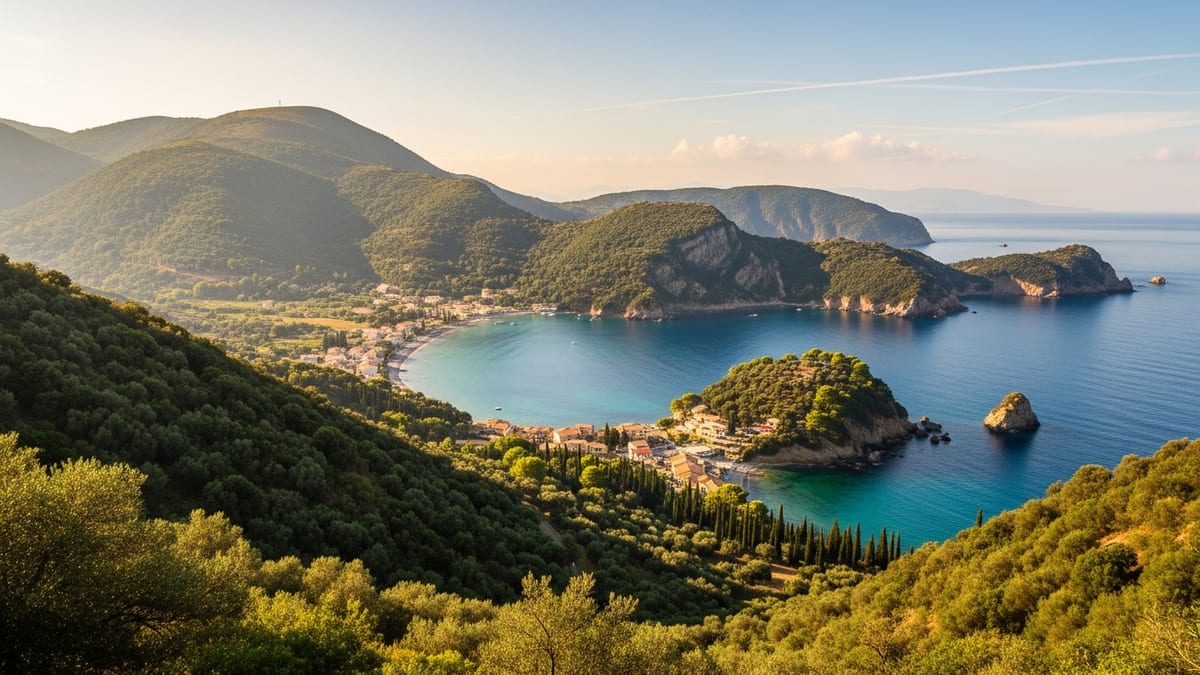
Nowhere is Almería’s difference more visible than in Cabo de Gata Níjar Natural Park, often cited in guidebooks and conservation brochures as Andalusia’s first marine and terrestrial protected area. Within the park, volcanic cliffs plunge into turquoise coves, while small whitewashed fishing villages cling to the shoreline. Development is tightly controlled, so visitors arriving from the built-up Costa del Sol are often struck by the absence of large hotels and the prevalence of gravel tracks leading to empty bays.
Publicly available information from recent summers shows how popular the park has become within its own limits. Regional counts cited in local press recorded more than 18,000 vehicles entering the beaches around San José in a single peak month, prompting authorities to continue limiting private car access and using shuttle services and barriers to regulate arrival at the most fragile stretches of coast. Access fees and caps on visitor numbers at certain times are presented as tools to prevent the kind of crowding that plagues other Mediterranean hotspots.
Environmental projects funded under European conservation schemes highlight Cabo de Gata’s role as a living laboratory for balancing tourism and biodiversity. Management plans emphasize dune stabilisation, seagrass protection and controls on overnight vehicle stays, while visitor-facing materials urge travelers to stick to marked paths, avoid anchoring over seagrass meadows and respect seasonal closures on nesting beaches. For travelers who have watched debates over overtourism elsewhere in Spain, Cabo de Gata’s strict rules are part of the attraction rather than a deterrent.
As a result, the park has gained a reputation among nature-focused visitors as one of the few places on the Mediterranean where it is still possible to walk from a village directly into a near-empty cove, especially outside peak August crowds. The combination of clear water, protected marine life and a low-rise horizon is becoming one of Almería’s strongest calling cards, reinforcing its image as a frontier coastline left behind by the mass-tourism building boom.
Tabernas: Europe’s Only True Desert
Inland from the coast, the landscape turns dramatically arid. The Tabernas Desert, often described in scientific and tourism literature as mainland Europe’s only true desert of its type, stretches across a badlands of ochre gullies, dry riverbeds and eroded hills. Climatic studies classify the area as semi-arid to desert environment, with minimal rainfall and extreme summer temperatures that create a setting more commonly associated with North Africa or the American Southwest than with coastal Spain.
Tabernas first entered the global imagination as a film set for mid twentieth century Spaghetti Westerns and later for international productions that required a desert backdrop without leaving Europe. It continues to host studios, themed attractions and an annual film festival dedicated to Western cinema, giving the area an unusual mix of geological interest and pop culture heritage. Visitors can hike through ravines that appear in classic Westerns one day, then tour filming villages the next.
Despite this cinematic fame, the desert remains relatively under-visited when compared with coastal resorts. Coverage in local and national media suggests that many visitors still discover Tabernas as a day trip from the coast rather than as a destination in its own right, even as tour operators begin to package desert hikes, star-gazing sessions and geology walks alongside beach accommodation. For those prepared to travel beyond the main highway, a network of rural guesthouses and small-town hotels offers access to trails, viewpoints and birdwatching sites with little of the crowding seen in more famous desert regions worldwide.
The desert’s fragile status has led to calls from conservation groups and researchers for careful visitor management, especially around heavily eroded slopes and seasonal watercourses. However, current tourism intensity remains modest, giving planners and local businesses an opportunity to design low-impact experiences from the outset. That combination of scientific value, film history and relative quietness is helping Tabernas anchor Almería’s profile as a desert frontier within Europe.
Slow Tourism, Longer Stays and Higher Spend
Recent survey data from Andalusian tourism bodies indicate that Almería’s visitors tend to stay longer and spend more per person than the regional average. Analysts attribute this to the province’s stronger appeal among independent travelers, hikers, divers and culture seekers, many of whom plan multi-day stays in rural guesthouses or apartments rather than short package breaks. This pattern aligns with national efforts to push Spain’s tourism model toward higher value and lower volume, focusing on average expenditure and seasonality rather than sheer visitor counts.
Industry reports highlight how Almería’s seasonality curve differs from that of the Costa del Sol. While Málaga’s coast peaks sharply in summer, niche markets such as birdwatching, desert trekking and film tourism in Tabernas help to stretch Almería’s visitor numbers deeper into spring and autumn. Desert landscapes remain appealing in shoulder seasons, when temperatures are milder and coastal waters are still relatively warm, giving local businesses a longer operating window.
This slower rhythm is also reflected in infrastructure development. Instead of large-scale resort projects, new accommodation tends to be small hotels, rural houses and converted farmsteads scattered between the coastline and interior valleys. Tourism commentators often point to the absence of skyscrapers and motorways along much of Almería’s shore as a competitive advantage for travelers seeking quieter alternatives to conventional sun-and-sand holidays.
For Spain’s broader tourism narrative, Almería is increasingly held up as an example of how previously marginal regions can move into the spotlight without repeating the mistakes of the mass-build years. The province’s emphasis on landscape, protected areas and cultural identity fits well with international demand for so-called slow or responsible travel, where the aim is to stay longer, move less and engage more deeply with fewer places.
A Frontier Image Shaped by Climate and Culture
Almería’s “last frontier” image is not a marketing invention but a reflection of its history and climate. The province has long been one of Spain’s driest, with agricultural development relying on greenhouses and careful water management. Coastal settlements were historically sparse compared with other Mediterranean regions, and the difficult interior terrain limited large-scale urbanisation. Today, those constraints are being reinterpreted as assets that preserve open space and dark skies.
Cultural programming is reinforcing that frontier narrative. Film festivals in Almería city and in Tabernas, exhibitions that revisit the province’s Western legacy, and new Spanish productions using its landscapes are keeping the desert and coast in the public eye. Travel features in Spanish and international media increasingly frame Almería as a place where Europe ends and the desert begins, a Mediterranean province that feels geographically and psychologically distant from the mass-tourism corridors only a few hours’ drive away.
At the policy level, Spain’s long term tourism strategies give prominence to lesser-known regions and inland areas as a way to reduce pressure on oversaturated destinations. Within that framework, Almería is well placed. It offers distinctive natural assets, an existing base of small-scale tourism businesses and relatively light development along large stretches of coastline, all within reach of major airports in Almería itself, Murcia and Málaga.
As holidaymakers look beyond the familiar resorts of the Costa del Sol, Almería’s mix of volcanic coves, European desert and slow-paced coastal towns is moving from a niche choice to a central example of what a different kind of Mediterranean tourism can look like. For now, the province remains comparatively undiscovered in visitor statistics, but trends in spending patterns, media attention and conservation-focused management suggest that Spain’s desert frontier is stepping into the spotlight on its own terms.