

More news on this day
Fresh tourism figures from Oregon, Michigan, California and other states suggest that Americans increasingly do not need a passport to enjoy world-class travel experiences, as domestic destinations leverage outdoor recreation, regional culture and revamped small cities to compete with global hotspots.
Get the latest news straight to your inbox!
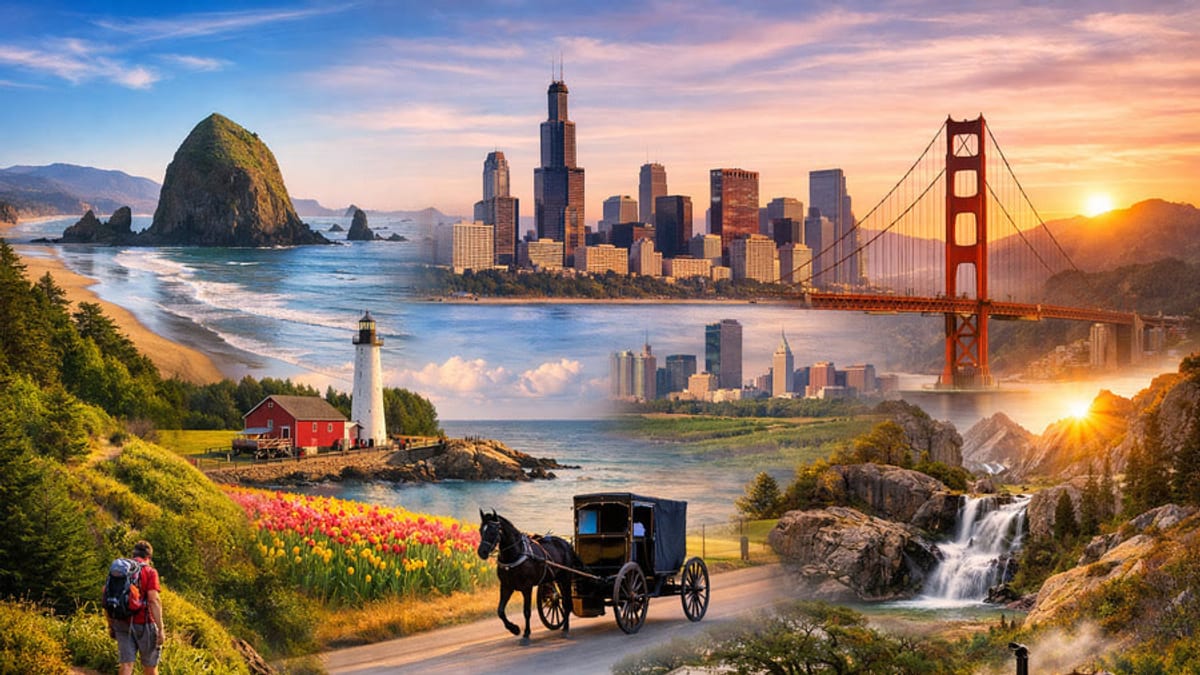
Image by Latest International / Global Travel News, Breaking World Travel News
Oregon’s Outdoors Underscore a National Travel Shift
Oregon is emerging as a lens into how U.S. states are turning natural assets into a sophisticated travel offering. State data for 2024 show direct travel spending in Oregon reached a record 14.3 billion dollars, with early indicators for 2025 pointing to continued growth across leisure and hospitality. Publicly available information indicates that outdoor recreation alone generated about 16 billion dollars in consumer spending and supported close to 192,000 jobs in the state, highlighting how hiking, skiing and river recreation now sit at the heart of its visitor economy.
State park visitation offers another measure of this demand. Oregon Parks and Recreation figures for 2025 report roughly 51.5 million day-use visits to state parks, only slightly below the record-breaking 53.9 million visits in 2024. Analysts observing the numbers note that the modest dip still leaves parks usage well above pre-pandemic patterns, with coastal, valley and high-desert sites all drawing steady interest from residents and out-of-state travelers.
Federal economic data cited in regional coverage recently calculated that outdoor recreation accounted for about 2.7 percent of Oregon’s gross domestic product in 2024, placing the state near the middle of the national pack but confirming that trails, campgrounds and river corridors now function as serious economic infrastructure. Grants from Travel Oregon totaling nearly 6.2 million dollars for the 2024–25 cycle are funding adaptive trails, inclusive outdoor programming and cultural heritage projects, adding new layers of accessibility and storytelling to the scenery that first draws people in.
Industry observers say Oregon’s approach captures a broader domestic trend: pairing headline natural landscapes with investments in accessibility, equity and local culture. From Willamette Valley wine routes and bike-ready trail systems to interpretive efforts in small timber towns, publicly available planning documents show the state positioning itself as an “accessibility-forward” destination while still trading on the waterfalls and forests long associated with Pacific Northwest tourism.
Michigan, Pennsylvania and the Great Lakes Lean Into Freshwater Icons
On the other side of the country, Michigan’s recent tourism results suggest that freshwater shorelines and post-industrial cities now rival coastal resort imagery in the domestic imagination. According to new figures released in mid-2025, Michigan tourism generated about 54.8 billion dollars in total economic impact in 2024. A separate report from the Michigan Economic Development Corporation estimated roughly 130 million visits to the state that year, a 2 percent increase on 2023, reflecting continued momentum for the long-running Pure Michigan campaign.
The Great Lakes state is emphasizing both classic lake escapes and urban reinvention. Destination marketing materials promote beach towns along Lake Michigan, dark-sky areas in the Upper Peninsula and revitalized districts in Detroit and Grand Rapids, where dining, design and music events have become anchors for weekend trips. Tourism advocates point to historic preservation initiatives and awards that highlight sites such as riverfront estates and automotive landmarks, arguing that this blend of heritage and contemporary culture gives Michigan a distinct narrative compared with coastal competitors.
Pennsylvania, while not releasing headline national figures as recently as Michigan, has seen similar energy across its mix of city breaks and countryside travel. Public tourism reports describe steady interest in Philadelphia’s museums and historic district, Pittsburgh’s riverfront neighborhoods and wine and craft beer regions stretching into rural counties. The combination of Revolutionary War sites, industrial heritage and new arts venues allows the state to market both textbook American history and a quieter, small-town experience within a few hours’ drive of major East Coast metros.
Together, these Great Lakes and Mid-Atlantic examples illustrate how inland water, historic infrastructure and emerging food scenes now draw domestic travelers who might previously have focused on European capitals or tropical islands. Analysts tracking national booking patterns say that high international airfares and evolving safety perceptions are nudging some households toward drivable, culture-rich trips across the Midwest and Northeast.
California and the West Prove National Parks Rival Global Icons
California remains one of the strongest arguments that American landscapes can rival almost any long-haul destination. Visit California’s latest economic impact analysis shows travel spending in the state reached about 157 billion dollars in 2024, up roughly 3 percent from the previous year, with domestic visitors accounting for the vast majority of that total. National Park Service data indicate that visitors to California’s national parks generated several billion dollars in spending and supported tens of thousands of jobs, underscoring how iconic public lands function as both environmental and economic assets.
Recent coverage of Yosemite National Park highlights the tension that comes with such popularity. The park recorded about 4.1 million visitors in 2024, up more than 80 percent from 2020, and is adjusting its reservation policies for 2026 amid ongoing debate over traffic, staffing and environmental pressures. The situation illustrates a broader pattern across the U.S. West, where managers are balancing access with conservation as domestic demand for dramatic scenery and outdoor adventure keeps rising.
Beyond the marquee parks, California’s coastlines and wine regions strengthen the case for staying domestic. Tourism plans for the state’s North Coast cite more than 1.3 billion dollars in travel spending in 2023, driven by visitors seeking redwood forests, coastal trails and small towns that feel far removed from urban life. In wine country, initiatives such as multi-use trail systems and car-free routes are being recognized by international organizations for innovation in visitor experience, blurring the line between European-style vineyard touring and California’s particular brand of outdoor leisure.
Neighboring Western states echo these dynamics, often at a smaller scale but with similar appeal. From high-desert national monuments in Oregon to ski towns and lake regions in other Rocky Mountain and Pacific states, planners are marketing road-trip circuits that bundle multiple landscapes into a single journey. For many travelers, that makes the argument that an intermountain loop or coastal drive can deliver as much variety as hopping between countries overseas.
Indiana, Mississippi and North Carolina Elevate Small-City Stories
While coastal and mountain destinations draw much of the attention, recent tourism strategies in states such as Indiana, Mississippi and North Carolina are centered on smaller cities and cultural corridors. Publicly available economic reports show that domestic spending now plays an outsized role in these regions, as festivals, sports events and musical heritage sites entice travelers who are increasingly looking for affordable, experience-driven trips.
In Indiana, state tourism campaigns spotlight college towns, covered bridge routes and resurgent neighborhoods in Indianapolis, where new sports venues and cultural districts are designed to turn short visits into longer stays. Analysts say that investments in walkable downtowns, brewery trails and regional food branding help the state compete for weekend traffic with larger hubs in nearby Illinois and Ohio, particularly among younger travelers who value authenticity and lower costs over traditional resort amenities.
Mississippi is leaning heavily on music and civil rights history to attract visitors. Blues trails, literary festivals and interpretive centers along the Mississippi River are packaged as multi-day itineraries that connect rural communities with cities such as Jackson and Biloxi. Tourism officials have reported incremental increases in visitor spending in recent years, and regional economic development groups frame cultural tourism as a tool to diversify economies that have long relied on agriculture and extractive industries.
North Carolina straddles both mountains and coast, giving it a natural advantage in the domestic travel marketplace. Public tourism dashboards show persistent strength in Asheville’s arts and brewery scene, the Outer Banks’ beach towns and Research Triangle cities where business travel often extends into leisure. With outdoor recreation, food, music and university life all within driving distance, the state has become a test case for how to blend nature, culture and innovation in a single branded offering.
Domestic Demand Reshapes America’s Place on the Travel Map
Nationally, domestic travel is outpacing inbound international tourism, even as global visitor numbers to the United States remain significant. Recent industry compilations of federal and private-sector data note that domestic leisure travel rose again in 2025, with holiday periods such as Independence Day breaking records for the number of Americans on the road. At the same time, some analyses point to a decline in certain foreign markets, as higher park entry fees and elevated costs in major U.S. cities encourage some travelers to look elsewhere.
This divergence is shifting how states think about their competitive set. Instead of focusing solely on drawing overseas visitors, many tourism boards now frame their offerings against international benchmarks when talking to domestic audiences. Oregon’s trail networks are compared with classic European alpine hikes, Michigan’s lakeshore sunsets with Mediterranean seaside views, and California’s coastal roads with other famous scenic drives around the world. The implicit message is that there is no need to leave the country to experience varied landscapes, food cultures and design-forward accommodations.
Economic planners appear to be treating this domestic focus as a long-term structural shift rather than a temporary response to global uncertainty. Strategic documents from states including Oregon and California emphasize investments in sustainability, accessibility and resilience, on the assumption that more Americans will continue to spend vacation time and money close to home. With outdoor recreation now representing a measurable share of state and national GDP, the argument that travel is “nice to have” is increasingly replaced by the view that it is core economic infrastructure.
From Oregon’s mossy forests to Michigan’s freshwater coasts, California’s granite cliffs and the music corridors of Mississippi and North Carolina, the current data suggests a common storyline: the United States is learning to treat its own back yard as a destination on par with the world’s most celebrated regions, giving travelers compelling reasons to keep their passports in the drawer and still feel that they are exploring the globe.