

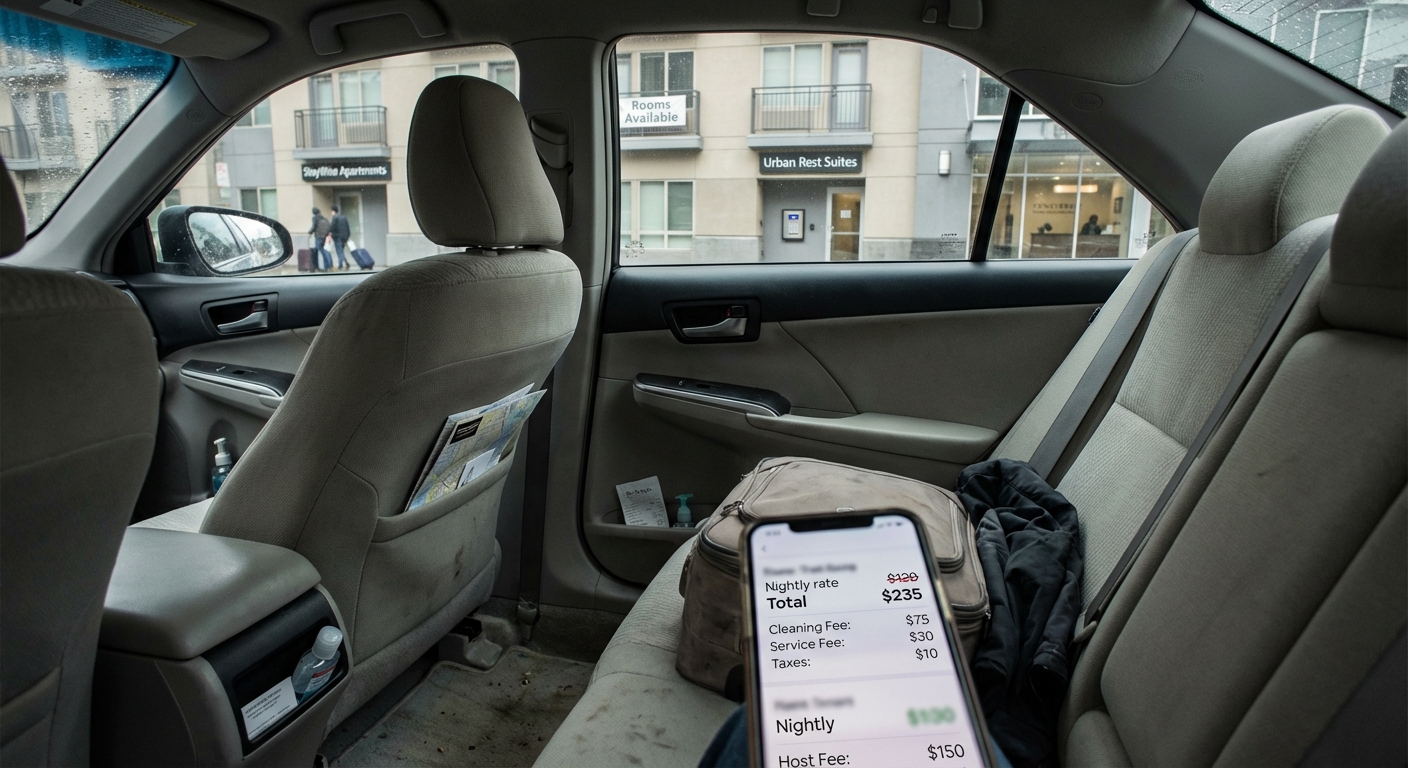
A traveler scrolls through a booking app in the back of a rideshare, eyes fixed on a total that keeps changing. The headline price of the room or apartment looks manageable at first, but with every tap more numbers appear, and the final cost bears little resemblance to what first caught their eye.
By the time the confirmation screen loads, the sense of having found a deal has quietly evaporated.
Moments like this have become a familiar part of planning a trip. Across platforms and property types, the promise of simple, flexible stays has been complicated by layers of fees, shifting policies, and a sense that the ground keeps moving. What once felt like a straightforward choice between a hotel and a home-style rental now feels more like trying to read an ever-changing balance sheet.
In many destinations, travelers describe a growing gap between how comfortable they feel booking a place to stay and how confident they are that they understand what they are paying for. That tension has turned the act of choosing a bed for the night into a small test of trust in the wider travel system, not just in one brand or one host.
At the center of this unease is a pattern that keeps repeating in different forms. A market that was once billed as a peer-to-peer alternative has matured into something closer to an ecosystem of mini-empires, where some of the biggest fortunes in travel now sit behind portfolios of homes, boutique hotels, and branded experiences.
Properties that once felt like spare rooms or side hustles are increasingly controlled by professional operators backed by large pools of capital, often with ambitious expansion plans that treat cities and resort regions as growth charts.
This quiet consolidation matters because it subtly shifts the way power operates in the places travelers pass through. Where a single owner can shape the character of multiple blocks or neighborhoods, the line between hospitality product and urban fabric blurs.
Travelers may not know that a sleek rental, a design-forward micro-hotel, and a cluster of “unique stays” down the road trace back to the same investor, but they often feel the result in standardized decor, similar house rules, and near-identical pricing logic.
At the same time, the industry is living with the long shadow of spectacular collapse. Periodically, a company or concept that once symbolized the future of travel shrinks, restructures, or simply fades from public view. Travelers rarely remember the fine print of these unravelings, but they absorb the message that what looks dominant one day can feel fragile the next.
That sense of fragility hangs over every bold promise of limitless growth, and it shapes how people interpret loyalty offers, long-term memberships, or prepaid credits.
This backdrop gives a particular edge to the ongoing contest between traditional hotels and short-term rentals. In theory, travelers are choosing between two distinct ideas of what a trip should feel like. In practice, they are weighing corporate strategies, local rules, and digital design choices that often make the decision feel narrower than advertised.
Hotels emphasize reliability and familiarity. Rental platforms emphasize flexibility and immersion. Both quietly compete on who can appear more transparent while preserving room to nudge prices upward.
Industry voices tend to frame the situation in reassuring language. They describe “dynamic” pricing rather than volatility, “professionalization” rather than consolidation, “flexibility” rather than precarity.
When fee structures change, the shift is often presented as an improvement in clarity, even if the underlying total barely moves. When new kinds of ownership emerge, they are marketed as visionary rather than as a further step away from the informal roots that once defined the space.
Travelers encounter this language alongside their own lived reality. On the ground, they see base rates that look manageable until a separate cleaning charge, a service fee, and a handful of taxes stack up in the final step of checkout.
Many notice that the most eye-catching nightly prices tend to belong to listings where the fixed fees are high enough to punish shorter stays, effectively steering behavior toward longer bookings without ever saying so outright.
In hotels, the story is different but related. Guests often describe fewer procedural surprises once they arrive at the front desk, yet they remain wary of extra line items that appear under vague labels.
Even as some fees are rolled into more visible totals, others reappear as optional enhancements or loyalty-linked perks. The result is a sense that clarity is improving, but only after a sustained period in which many people felt misled.
For renters who treat platforms as their default option, the experience is even more mixed. One trip might bring a meticulously run apartment with professional cleaning and hotel-grade linens. The next might involve a lengthy list of departure chores, despite a substantial cleaning fee already paid.
Over time, that inconsistency has become a defining feature of the category. The same app icon on a phone can represent either a luxury pied-à-terre or a stressful, rule-laden stay, and it is often impossible to tell which in advance.
Behind the apps, local communities are pushing back in ways travelers can feel but not always decode. In some places, entire districts that once buzzed with short-term stays now show noticeably fewer listings, with more lights on year-round and fewer luggage wheels on sidewalks.
In others, large-scale operators continue to grow, sometimes in tension with neighbors who feel squeezed by rising housing costs or foot traffic. Visitors move through this landscape as temporary guests in a long-running local argument.
All of this plays out at the same time that certain ultra-wealthy figures are quietly acquiring or repositioning assets that shape how and where people stay. When a single investor gains influence over a flagship hotel chain, a network of rental brands, or a cluster of destination clubs, the downstream effect for travelers is subtle but real. Renovations appear. Service models change. Loyalty schemes are tweaked to favor certain kinds of stays.
The narrative presented to guests is one of refinement and renewed vision, but underneath sits the simple reality that the same fortunes fueling space flights and sports teams are also rearranging where everyday travelers sleep.
What catches many travelers off guard is how little of this power shift is visible at the moment of booking. The interface still presents thousands of choices, each with a thumbnail, a star rating, and a handful of reviews.
The abundance feels democratic, even as ownership quietly concentrates. The collapse of one heavily hyped player, or the redemption arc of another, rarely appears in those tiles, yet it colors the broader sense of which promises can be trusted.
In this environment, Airbnb retains a particular edge in cultural imagination. The idea of having a place that feels temporarily one’s own remains powerful, especially for groups, longer stays, or travelers who prize kitchens over lobbies.
At the same time, hotels are regaining ground among people who are simply tired of decoding fee structures, deciphering house manuals, and negotiating with individual hosts about arrival times. The contest is less about loyalty to a brand and more about which set of frictions feels predictable enough to live with.
For travelers, the most striking pattern is not any single rise, fall, or comeback, but the constant sense of recalibration. The same search that once reliably produced a bargain apartment might now surface a better-value hotel, or a professionally run hybrid that blurs both categories under a single corporate owner.
The story behind those results has become more tangled, more financial, and more detached from the everyday language of hospitality, even as the images on the screen remain disarmingly simple.
What emerges is a kind of low-level uncertainty that hums in the background of almost every trip. People keep moving, booking, arriving, and checking out, but fewer feel sure they fully understand the structures that sit behind their reservation numbers.
That uncertainty is not necessarily enough to stop anyone from traveling, yet it quietly shapes how welcome a place feels, how fair a price seems, and how much trust survives from one journey to the next.