

More news on this day
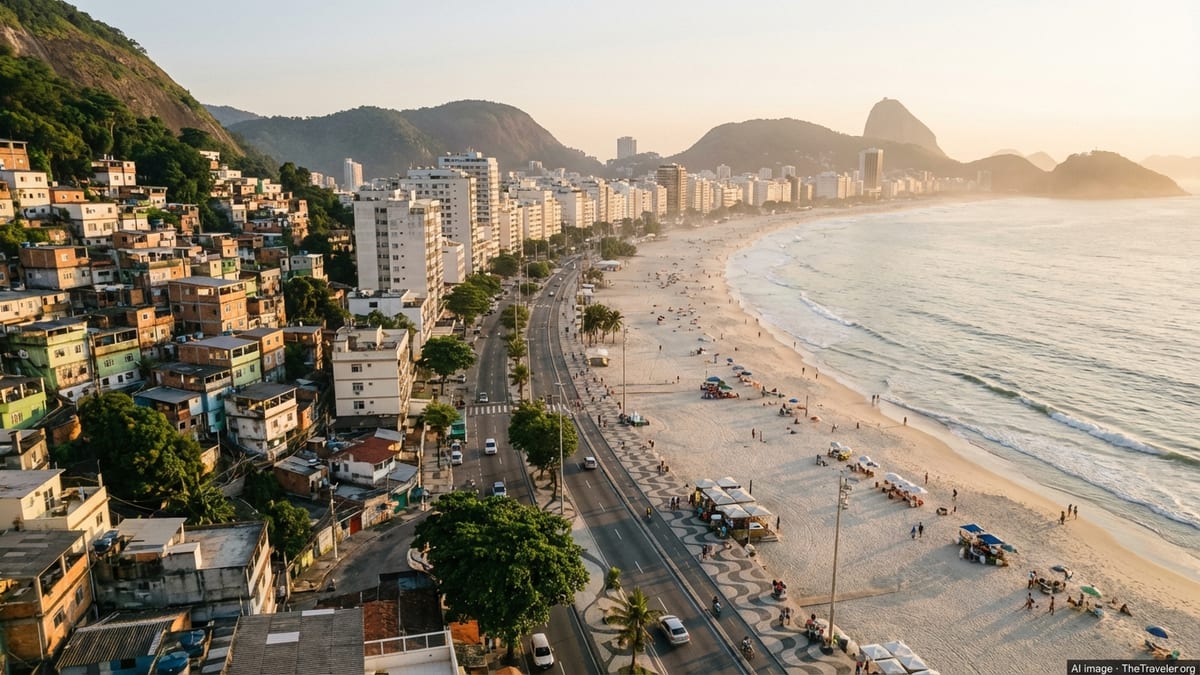
Brazil is rapidly emerging as the breakout destination for global travelers, combining record visitor numbers, favorable currency rates and a renewed focus on safety, sustainability and authentic cultural experiences that are luring tourists away from more traditional hotspots.
Record-Breaking Arrivals Signal a Tourism Shift
Brazil has quietly become one of the fastest-growing major destinations in the world, capping 2025 with just over 9.2 million international arrivals, the highest total in its history. The performance shattered government targets under the National Tourism Plan and cemented the country’s status as South America’s primary tourist magnet. For comparison, Brazil drew 5.9 million foreign visitors in 2023, meaning international arrivals have surged by more than half in just two years.
The momentum has been building since pandemic restrictions eased. Official data from Brazil’s tourism authorities and the OECD show that visitor numbers first rebounded past pre-2019 levels in 2024, when the country passed roughly 6.5 to 6.9 million arrivals depending on the source. Analysts note that few large, long-haul destinations have managed such a rapid recovery while also hitting new records, suggesting travelers are not just returning but actively choosing Brazil over other options.
Equally striking is visitor spending. Foreign tourists injected more than 7 billion US dollars into Brazil’s economy in 2024, a record sum that continued to climb in 2025. Tourism officials argue that this reflects not only higher volumes, but longer stays and a growing appetite for more immersive, higher-value experiences across multiple regions of the country.
Behind the numbers is an aggressive national strategy. Brazil has stepped up its presence at global tourism fairs, launched joint South American branding campaigns and ramped up airline partnerships that expand seat capacity into São Paulo, Rio de Janeiro and key regional gateways. These moves are making it easier for travelers to consider Brazil at the planning stage, often as an alternative to crowded Mediterranean beaches or over-touristed European capitals.
Value for Money as Currencies and Airlift Favor Brazil
One of the most compelling reasons travelers are pivoting to Brazil is simple economics. The Brazilian real has remained relatively weak against the US dollar and euro, giving international visitors significantly more purchasing power. Hotel rates, dining, domestic flights and experiences can often feel markedly cheaper than in North America or Western Europe, especially in secondary cities and beach destinations beyond Rio.
Travel planners say that as prices in classic favorites such as Paris, London and major US cities continue to rise, Brazil offers a rare combination of long-haul adventure and relative affordability. A mid-range travel budget that might stretch to a few days in a European capital can often cover a week or more in Brazil, including internal flights to beaches in Bahia, the dunes of Lençóis Maranhenses or the Iguazu Falls region.
The value equation is being reinforced by a steady expansion in airlift. Brazil’s International Tourism Acceleration Program and federal aviation initiatives have helped secure new and expanded routes from North America and Europe, particularly into São Paulo and Rio. Airlines have added capacity on key corridors, while regional carriers are opening links that connect Brazil more efficiently to neighboring countries, making it easier to combine Brazil with Argentina, Chile or Uruguay in a single itinerary.
There are caveats for some nationalities. From April 2025, citizens of the United States, Canada and Australia are again required to obtain an electronic visa for tourism or business trips, ending several years of visa-free travel. The e-visa is processed online and valid for long periods, but the added cost and paperwork may modestly dampen demand from these markets. So far, however, Brazil’s overall growth in arrivals, particularly from South America and Europe, has more than offset any potential impact, keeping the country strongly competitive against other long-haul destinations that have their own entry hurdles.
New Experiences Beyond the Postcard Brazil
For many visitors, the real draw lies in a changing narrative about what a trip to Brazil can be. While Rio’s Copacabana and Ipanema, the Christ the Redeemer statue and Carnival remain global icons, a growing share of travelers is being lured by lesser-known regions and more nuanced cultural experiences that set Brazil apart from rival destinations.
In Rio de Janeiro, this shift is visible in the rise of community-based tourism in the city’s favelas. Local guides lead small groups through neighborhoods such as Rocinha, offering vantage points over the city, introductions to samba schools and capoeira circles, and home-cooked meals that reveal everyday life beyond the beachfront hotels. City officials say Rio welcomed 12.5 million tourists in 2025, including a sharp rise in international visitors, with tourism spending contributing well over a billion dollars to the local economy.
Elsewhere, travelers are seeking out the Afro-Brazilian heritage of Salvador, the colonial towns of Minas Gerais, the riverine culture of the Amazon and the food capitals of São Paulo and Recife. This diversification of routes mirrors a wider global trend toward “second cities” and under-the-radar regions, but in Brazil’s case it is amplified by the country’s scale and cultural variety. Tour operators report increasing demand for itineraries that balance urban culture with nature, from hiking in the Chapada Diamantina to exploring the Pantanal wetlands for wildlife.
Social media has played a notable role. Viral images of turquoise waters in Alagoas, sandboarders sliding down towering dunes in the northeast and rooftop music sessions in São Paulo’s revitalized downtown have helped reposition Brazil from a one-note beach-and-Carnival destination into a multi-layered cultural powerhouse. In a travel landscape where authenticity and shareable moments are prized, that repositioning gives Brazil an edge over more familiar, heavily marketed locales.
Balancing Safety, Sustainability and Growth
Brazil’s tourism surge comes as travelers show greater concern for safety, environmental impact and crowding at famous sites. The country still battles a reputation for crime, particularly in big cities, but there are signs that perception is slowly shifting. Local governments in major gateways have invested in targeted security measures in tourist districts, improved signage and public transport upgrades that help visitors navigate more confidently.
Industry experts caution that Brazil is not without risk and that conditions can vary significantly between regions. However, they also note that such concerns increasingly apply to many competing destinations, from petty crime in European capitals to overcrowding in Southeast Asian hotspots. As travelers weigh relative risks against perceived rewards, Brazil’s unique mix of culture, landscapes and affordability is tipping the scales in its favor.
Sustainability has become another pillar of Brazil’s pitch to international visitors. The federal government and state authorities have highlighted protected areas in the Amazon and Atlantic Forest, supported community-led ecotourism projects and promoted lesser-known natural parks to spread visitor flows. Tourism bodies emphasize that responsible travel is critical to both conservation and local livelihoods, particularly in regions where tourism revenue funds environmental monitoring and small-scale infrastructure.
At the same time, the rapid growth in arrivals underscores the need for careful planning. Analysts warn that Brazil must avoid replicating the overtourism challenges seen in parts of Europe and Asia, particularly in fragile ecosystems and historic centers. For now, the country’s vast size and relatively modest visitor numbers compared with its peers mean that most destinations remain far from saturation, giving Brazil a window to manage tourism growth more strategically than many of its rivals have done.
What Travelers Need to Know Before Choosing Brazil
For those weighing Brazil against other destinations in 2026 and beyond, several practical factors stand out. First is seasonality. While Brazil is often treated as a year-round destination, the ideal time to visit varies sharply by region, from summer beach seasons in the southeast and northeast to drier months in the Amazon and Pantanal that are better for wildlife viewing. Planning around domestic holidays such as Carnival and New Year, when internal demand and prices spike, can dramatically affect both budgets and crowd levels.
Second is paperwork. Most European and many Latin American travelers continue to enjoy visa-free access, but citizens of the United States, Canada and Australia must now secure an online e-visa before departure, with a processing fee that adds to trip costs. Travel advisers recommend applying well in advance and carefully checking entry rules, which can change with limited notice.
Third is infrastructure. Brazil’s main tourist corridors, including Rio, São Paulo, Foz do Iguaçu and major northeast beach hubs, offer a full range of accommodation, from budget hostels to luxury hotels, along with modern airports and extensive domestic flight networks. More remote regions may require additional time and flexibility, but they also reward travelers with experiences unavailable in more conventional destinations.
Finally, experts stress the importance of traveling with reputable operators and local guides, particularly for favela tours, Amazon expeditions and rural community visits. Done responsibly, these experiences are part of what is drawing visitors away from more familiar destinations and toward Brazil’s evolving tourism landscape. For travelers willing to plan carefully and look beyond the postcard, Brazil is increasingly offering something their old favorites can no longer guarantee: fresh discovery at a price that still feels within reach.