

More news on this day
Canadian air travelers are filing record numbers of complaints about delayed flights, lost bags and denied refunds, only to watch their cases disappear into a growing federal backlog that can outlast the memory of the trip itself.
Get the latest news straight to your inbox!
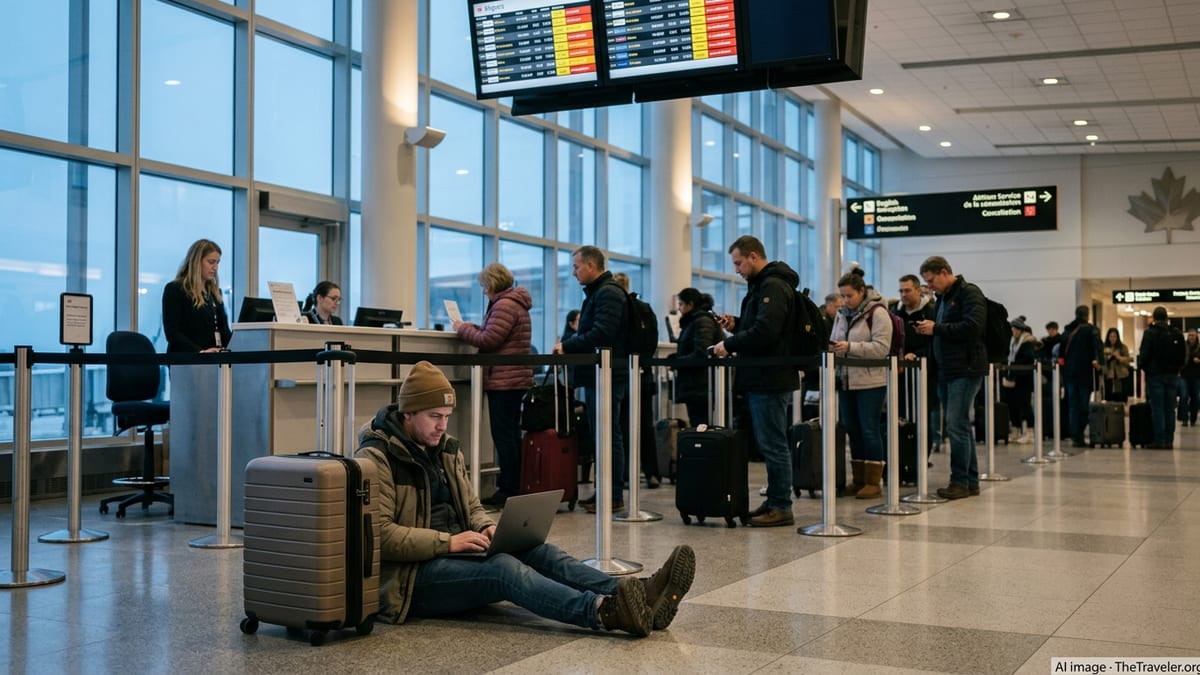
A Record Backlog That Outruns Your Travel Plans
Canada’s air passenger complaint system is facing unprecedented strain, and the numbers tell a stark story. Publicly available information from the Canadian Transportation Agency (CTA) shows that air travel grievances have surged past 40,000 new complaints per year for three consecutive years, creating a backlog of 84,398 unresolved files by the end of the 2024–2025 fiscal year.
Consumer advocates warn that this pileup effectively turns many airline complaints into a long wait with no clear ending. Reports indicate average timelines of 18 months to two years for a decision, and some travelers describe waiting even longer as new complaints continue to outpace the system’s expanded processing capacity.
The problem is not only volume but also complexity. Under Canada’s Air Passenger Protection Regulations, cases often hinge on whether disruptions were “within the airline’s control,” “within airline control but required for safety” or “outside airline control.” Each category determines whether compensation is owed, and disputes over those definitions contribute to lengthy investigations.
For travelers, the practical result is that a complaint about a missed holiday connection or ruined business trip may still be unresolved long after credit card chargeback windows close, travel insurance claims expire and supporting documents are harder to retrieve.
How a Federal System Became a “Black Hole”
The CTA is Canada’s primary federal body for airline passenger complaints, intended to provide an accessible forum for travelers who cannot reach a resolution directly with carriers. Over time, however, the model has shown signs of systemic overload. The agency introduced a streamlined Complaint Resolution Officer process to move simpler cases more quickly, yet public reporting indicates the backlog continues to grow.
Critics describe the complaints pipeline as a kind of federal “black hole,” where travelers upload evidence, exchange a few messages with case officers and then wait months without meaningful updates. Once a decision is issued, there is no internal appeal, and anyone seeking to challenge the outcome must turn to costly judicial review at the Federal Court of Canada.
Parallel legal avenues have emerged in response. Provincial small claims courts, and in British Columbia the online Civil Resolution Tribunal, are increasingly used by passengers who believe they cannot wait years for a federal ruling. Court filings and tribunal decisions show travelers bypassing the CTA entirely, arguing that the regulatory process is too slow or uncertain to provide timely redress.
This fragmentation raises questions about consistency in how passenger rights are applied. While some court decisions have strengthened consumer protections, the lack of a single, predictable path adds another layer of confusion for people already dealing with disrupted trips.
Money Trail: Who Pays for Complaints, and Why That Matters
At the center of the current controversy is a fundamental question about who should pay for handling airline complaints. Internal records and media investigations reported in Canadian outlets indicate that federal officials slowed a plan to make airlines directly fund the cost of processing complaints through a regulatory fee system.
Instead, taxpayers currently shoulder an annual bill estimated at around 30 million dollars to keep the complaint system operating. Industry groups argue that shifting the full cost to airlines could drive up fares and prompt carriers to reduce service on marginal routes, especially in smaller communities where traffic is already thin.
Consumer advocates counter that as long as airlines do not bear the cost of complaints directly, they have weaker incentives to improve customer service and reduce disputes at the source. They point to European models where stronger cost recovery and automatic compensation rules have helped encourage more proactive disruption management.
Debate over Canada’s approach has intensified as policy papers warn that tougher compensation rules, combined with new fees on carriers, might lead to higher prices or fewer flights. Think tank analyses cited in recent coverage predict that regional connectivity could be squeezed if smaller routes become less profitable under stricter passenger protection regimes.
Rule Changes on Paper, Delays in Practice
In response to mounting criticism, the federal government has moved to strengthen the Air Passenger Protection Regulations. Draft amendments published in late 2024 propose simplifying the framework by shifting toward a single, clearer standard in which airlines owe compensation for most delays and cancellations unless they can prove limited “exceptional circumstances” such as severe weather or security threats.
Public consultation on the draft rules extended into early 2025, and stakeholders across the spectrum have weighed in. Airlines caution that overly rigid liability could force them to build more buffer capacity into schedules, increasing operational costs. Passenger advocates argue that a stricter, easier‑to‑understand regime is necessary to prevent carriers from routinely classifying disruptions as outside their control.
Despite these regulatory efforts, the core problem remains timing. Even the strongest rules offer little real relief if enforcement lags. The CTA’s own annual reporting acknowledges that, although it has significantly increased productivity and closed more files than in previous years, new complaints keep flooding in faster than the agency can resolve them.
Forecasts cited in Canadian media suggest that without structural changes, the backlog could exceed 120,000 to 150,000 complaints by 2028. That scenario would effectively lock in multi‑year waits for many travelers and could further erode public confidence in the federal system.
What It Means for Your Next Trip
For anyone booking flights in or out of Canada, the state of the complaint system has very real implications. If a carrier cancels your flight, reroutes you overnight or mishandles your luggage, your odds of a quick, regulator‑backed resolution are slim. Travelers who file complaints today may find that the case will not be seriously examined until a year or more after the disruption.
This delay can undermine the leverage that passenger rights are supposed to provide. Airlines know that many travelers cannot afford to wait years or navigate court processes, especially for claims worth a few hundred dollars. The risk is that compensation rules exist largely on paper while day‑to‑day outcomes depend on how persistent and legally savvy each traveler is.
There are also wider effects on travel planning. Reports from industry analysts show carriers trimming or reshaping capacity on some Canada–United States routes and domestic corridors. When routes shrink or disappear, passengers have fewer alternatives if something goes wrong, and rebooking options become more limited during peak seasons or labor disruptions.
As Ottawa weighs how far to go with new regulations and cost‑recovery measures, the stakes for ordinary travelers are high. A complaint system that remains congested and underfunded risks turning air passenger protections into a promise that cannot be fulfilled in time to matter, leaving disrupted trips to vanish into a federal black hole precisely when travelers need help the most.