

More news on this day
Canadian travel to the United States is sliding sharply in 2026, as new data and sentiment surveys point to a lasting shift in where Canadians choose to spend their vacation dollars and how they feel about crossing the southern border.
Get the latest news straight to your inbox!
Cross-Border Travel Numbers Point to a Steep Decline
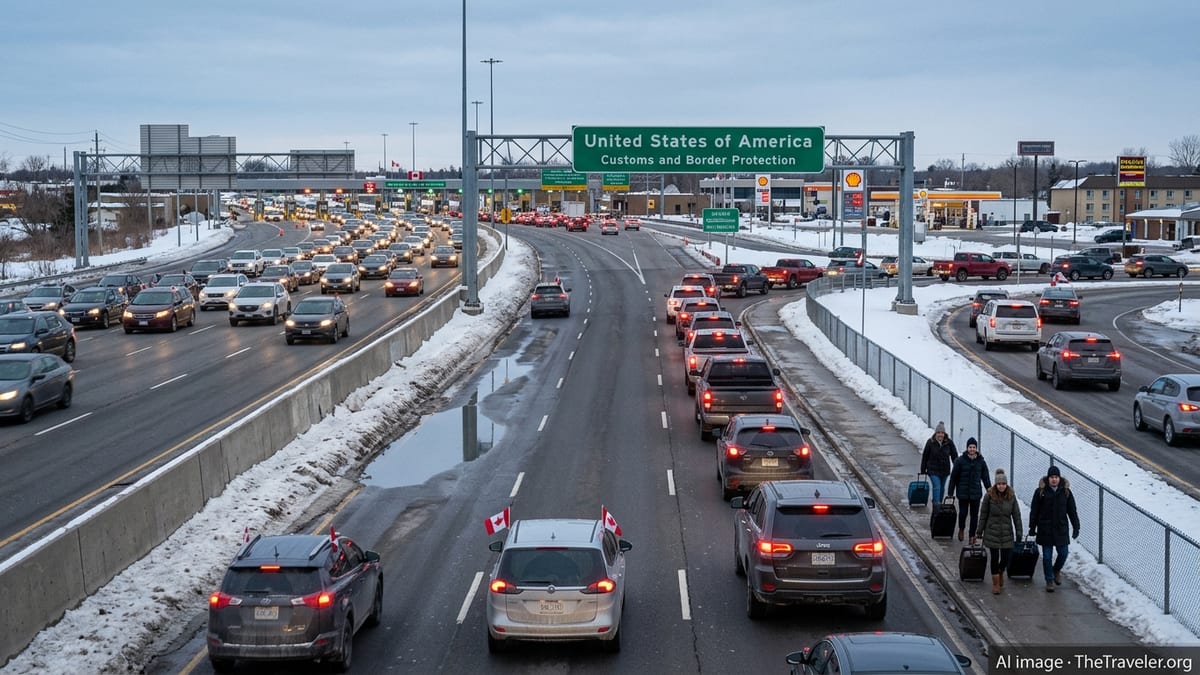
Recent figures from Statistics Canada and U.S. tourism agencies show that Canadian trips to the United States are falling even as Canadians travel more internationally overall. Industry coverage indicates that visits from Canada, once the United States’ largest single source of foreign tourists, have dropped by around one fifth compared with pre‑2025 levels, with some border crossings seeing declines of more than 30 percent year over year.
Airports and border regions are feeling the downturn first. Reports from Canadian airport authorities describe U.S.-bound traffic falling in 2025 and continuing to trend downward into early 2026, while tourism organizations in U.S. border cities from the Great Lakes to the northern Plains describe double‑digit drops in Canadian visitor days and spending. Aviation data firms also highlight weaker advance bookings on Canada–U.S. routes for the 2026 summer season, signalling that the softness is set to continue.
Analysts note that the pullback is not a simple reflection of weaker demand for travel. Published coverage of national statistics shows Canadian outbound trips to other international destinations rising by more than 10 percent, suggesting that travelers are reallocating rather than cancelling vacations. The United States, which long benefited from its proximity and familiarity, is losing share to domestic Canadian destinations and to alternatives in Europe, Mexico and the Caribbean.
Politics, Safety and Border Friction Reshape Sentiment
Behind the numbers is a measurable cooling in how Canadians feel about visiting the United States. Polling by research firms such as YouGov and the Angus Reid Institute in 2025 and late 2025 found that a clear majority of Canadians reported being less likely to travel south of the border because of U.S. politics, policies and the broader cultural climate. One widely cited survey conducted for a major travel retailer indicated that roughly six in ten Canadians planning trips in the next year were actively avoiding the United States.
Concerns about safety and comfort are high on the list. Survey breakdowns reviewed in public reports show that many Canadians who are cutting back on U.S. visits point to worries about crime and gun violence, protests and civil unrest, and inconsistent experiences with immigration and border processing. Revised travel advice for the United States issued by the Government of Canada in 2025 drew additional attention to these issues, reinforcing a perception that visiting the country has become more complicated and less predictable.
Border formalities themselves are another pressure point. Surveys summarized by Canadian and U.S. travel trade groups indicate that more than half of respondents who are avoiding U.S. trips cite frustration with processing times and uncertainty at land crossings and airports. Discussions in policy and industry circles about potential changes to preclearance arrangements at Canadian airports have further underscored for travelers that the once‑routine hop to a U.S. city now carries more administrative friction than before.
Currency, Costs and the Rise of “Buy Canadian” Travel
Economic factors are adding momentum to the shift. A weaker Canadian dollar against the U.S. currency has made everything from hotel rooms to restaurant meals more expensive for Canadians, and survey data show that exchange rates are a significant reason many are cutting back on U.S. visits. Travel industry reports suggest that for some households, the cumulative impact of higher airfares, accommodation costs and cross‑border shopping bills has tipped U.S. vacations from good value to hard to justify.
At the same time, a broader Buy Canadian mood is spilling over from retail spending into tourism choices. Analysis from the Bank of Canada notes that between early 2024 and late 2025, Canadians increased their spending on domestic travel and tourism by around 10 percent, with a corresponding rise in the number of trips taken within Canada. This aligns with polling that finds many of those skipping U.S. travel intend to replace it with trips inside Canada, boosting destinations from Atlantic beach towns and Quebec cities to the Rockies and coastal British Columbia.
Price‑sensitive travelers are also widening their search beyond North America. Travel agencies and tour operators report that Canadians are increasingly looking to Europe, Mexico and the Caribbean, where package deals and favorable local costs can offset long‑haul airfares. For some, these destinations are viewed as offering a more relaxed political atmosphere or clearer safety expectations, narrowing what was once a strong convenience advantage for nearby U.S. hotspots.
Tourism Industries on Both Sides of the Border Feel the Strain
The downturn in Canadian travel is being closely watched by tourism businesses in both countries. U.S. travel industry analyses point out that Canadians typically account for a substantial share of international visitors and spending, particularly in border states and sunbelt destinations popular for winter escapes. Estimates published by tourism economists suggest that even a 10 percent drop in Canadian arrivals can remove several billion dollars in annual revenue for hotels, attractions, restaurants and retail outlets.
In 2024, official U.S. data indicated that Canadian visitors represented nearly one quarter of all foreign travelers to the country and spent more than 20 billion dollars. By late 2025, however, advisory firms were forecasting millions fewer Canadian visits and significant revenue losses concentrated in regions that have long depended on repeat winter and shopping trips from the north. Reports from individual cities along the border describe sharp declines in cross‑border shopping traffic and overnight stays, with some duty‑free stores and outlet malls reporting large year‑over‑year drops in sales.
On the Canadian side, tourism officials are navigating a more nuanced picture. While fewer Americans are travelling north, domestic travel growth and stronger interest from other international markets are helping to offset some of the loss. Joint industry initiatives, including cross‑border associations formed to promote North American tourism, are focusing on restoring confidence and encouraging two‑way travel, but acknowledge that political dynamics and economic pressures lie largely outside the sector’s control.
Looking Ahead: A Potentially Lasting Realignment
As the 2026 peak travel season approaches, there are few signs that Canadian sentiment toward U.S. travel is rebounding quickly. Recent survey waves summarized in travel research briefings show that a majority of Canadians who have reduced their U.S. trips over the past five to ten years expect to maintain or deepen that pattern in the year ahead. Many cite a combination of enduring political unease, ongoing safety concerns and an entrenched habit of choosing alternatives closer to home or across the Atlantic.
For U.S. destinations, the shift presents both risk and an impetus to adapt. Tourism boards and local businesses in affected states are experimenting with campaigns that highlight cultural ties, value offers in Canadian dollars and reassurance on safety and welcome. Analysts caution, however, that marketing alone may not be enough to reverse a trend driven by structural issues such as exchange rates, trade tensions and the broader global image of the United States as a travel destination.
For Canadian travelers, the rethinking of U.S. trips appears to be part of a wider reassessment of what they want from international travel in an era marked by political volatility and rising costs. With domestic getaways and non‑U.S. destinations capturing a greater share of attention, 2026 may mark not just a temporary cooling, but the consolidation of a new normal in Canada–U.S. tourism flows.