

More news on this day
From windswept Atlantic headlands to bustling food halls along the River Lee, Cork is rapidly repositioning itself as Ireland’s capital of immersive travel, with new experience-led strategies inviting visitors to engage more deeply with its culture, coastline and communities.
Get the latest news straight to your inbox!
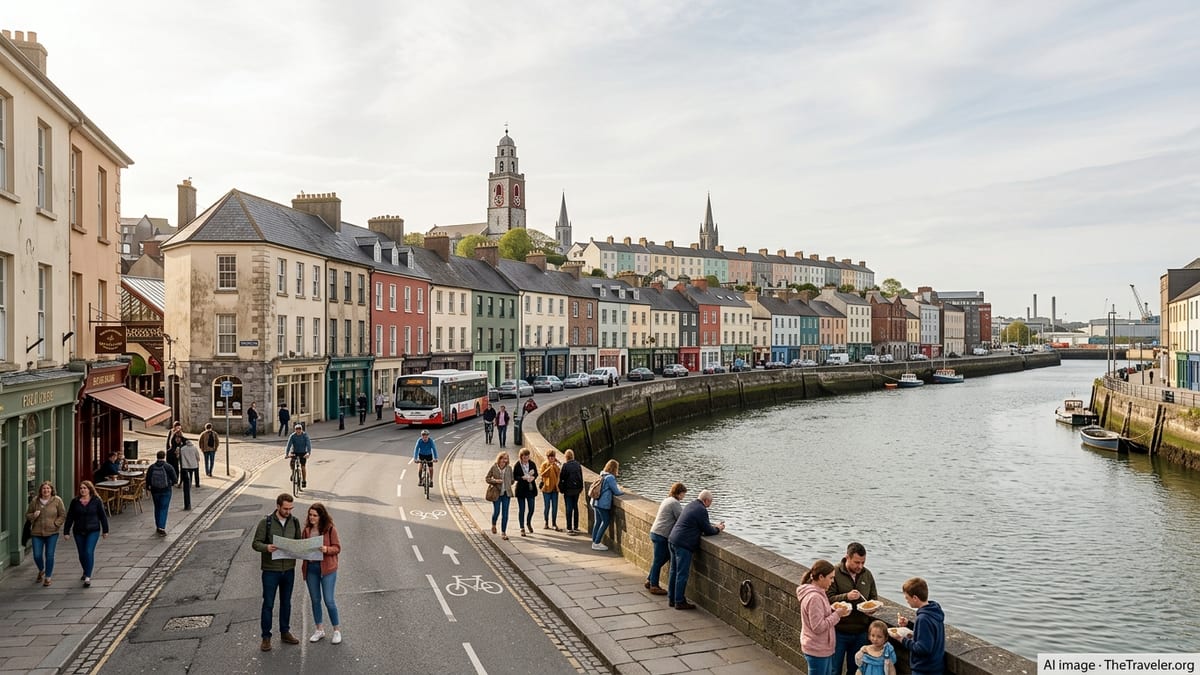
An ‘Experience First’ Strategy Reshapes Cork Tourism
Across Ireland, tourism planners are shifting focus from sightseeing to hands-on, story-driven experiences, and Cork is emerging as a test bed for this approach. Publicly available tourism plans describe an emphasis on “exceptional visitor experiences” and destination development rather than simply increasing bed nights, aligning Cork with international demand for more meaningful, slower travel.
Fáilte Ireland’s regional strategies position every part of the country within experience brands such as the Wild Atlantic Way and Ireland’s Ancient East, and Cork sits at the intersection of both. Industry updates indicate that these brands have become core to how Ireland presents itself, stitching individual attractions into wider narrative journeys that encourage visitors to spend more time in specific regions instead of treating them as brief stopovers.
For County Cork, this has translated into a coordinated effort to highlight immersive offerings along its coastline, islands and historic harbour towns, while also refocusing Cork city as a walkable cultural hub. Recent destination and experience development plans for Cork City, Harbour and East Cork describe ambitions to develop the harbour as a “world class visitor destination,” with a clear emphasis on linking attractions into coherent themed experiences rather than standalone visits.
Tourism barometer data and regional reports for 2024 and 2025 show that Cork is already one of Ireland’s most visited counties, welcoming well over a million international visitors annually. Yet planners and businesses increasingly frame success in qualitative terms, measuring dwell time, repeat visitation and engagement with local culture as key indicators of an “Experience Cork” revolution.
Cork as the Gateway to Two of Ireland’s Iconic Touring Routes
Cork’s geography gives it a unique strategic advantage. To the west, the county anchors the southern end of the Wild Atlantic Way, the 2,500-kilometre coastal route that tourism bodies credit with delivering billions of euro in annual revenue and significant growth in visitor numbers since its launch in 2014. To the east and north, Cork is a core gateway to Ireland’s Ancient East, a brand built around storytelling, heritage sites and layered history.
Reports on the Wild Atlantic Way’s performance indicate that the route has become one of Ireland’s most recognised tourism brands, driving a marked increase in overseas visitor bed nights along the western seaboard. West Cork’s peninsulas, harbour villages and beaches are frequently cited as benefiting from this visibility, with hospitality operators in towns such as Kinsale and Clonakilty noting stronger international awareness of the region.
On the eastern side of the county, Fáilte Ireland documentation outlines a multi-year Destination and Experience Development Plan for Cork City, Harbour and East Cork. The plan seeks to link attractions such as Spike Island, Cobh’s maritime heritage, and Fota Wildlife Park into themed experiences that encourage visitors to explore beyond the city centre. The strategy is framed around storytelling, guided tours and interactive interpretation rather than static displays.
This dual positioning means that many visitors now experience Cork as more than a single stop. It functions as a hinge between two touring routes, encouraging travellers to arrive via Cork Airport, spend time in the city, then branch out to coastal and heritage experiences across the wider county. That pattern reflects a broader pivot toward multi-day, immersive itineraries.
From Food Halls to Harbour Islands: Ground-Level Immersion
On the streets of Cork city, the immersive turn is visible in the way markets, food experiences and festivals are being reimagined. The historic English Market has long been a symbol of Cork’s food culture, but newer venues such as the Marina Market have added a contemporary layer, with street food, events and planned cultural infrastructure making the docklands a focal point for visitors seeking local flavours and live entertainment.
Conceptual development plans published in 2025 for the Marina Market site outline ambitions for an expanded covered food market, events centre, art gallery and hotel. While still at proposal stage, the project illustrates how Cork is looking to blend gastronomy, culture and year-round programming in a single waterfront setting that can anchor longer stays and repeat visits.
Beyond the city, Cork’s harbour and islands are central to the immersive offer. Publicly available planning documents highlight ongoing development of Spike Island as a heritage and tourism draw, combining guided storytelling, night-time events and interactive exhibits in the former fortress and prison. In West Cork and the Gaeltacht islands, investment has targeted experiences that foreground language, folklore and seafaring history, including upgrades to interpretive centres that rely on multimedia and hands-on engagement.
Visitor data from key sites underlines the impact of this approach. Heritage statistics released in 2024 and 2025 show strong numbers at sites such as Charles Fort in Kinsale and sustained popularity for Fota Wildlife Park, which has previously been recognised for its visitor experience. These attractions increasingly market themselves as day-long experiences rather than short stops, reflecting the wider “Experience Cork” positioning.
Connectivity, Sustainability and the Rise of Slow Travel
The shift toward immersive travel in Cork is also rooted in practical changes to how visitors reach and move around the region. Industry bulletins note that Cork Airport has seen robust passenger recovery and growth, with more than three million passengers recorded in 2024 and a rise in direct connections from continental Europe. That connectivity allows visitors to bypass Dublin and arrive directly into the south, starting their trips in Cork rather than treating it as an add-on.
Once in the city, local policy is pushing visitors toward slower, more sustainable exploration. Travel features on Cork highlight initiatives such as the Open Streets events planned for summer 2026, which will see sections of the city centre closed to cars on selected days, prioritising walking, cycling and public transport. Public information on Cork’s Climate Action Plan and wider zero-carbon infrastructure projects signals that tourism growth is expected to align with environmental goals.
These measures dovetail with a global trend toward slow travel, in which visitors spend more time in one place, use local transport, and seek out neighbourhood-level experiences. For Cork, that can mean lingering in riverside districts, joining guided food walks or music trails, and then linking by rail or bus to coastal towns for longer stays.
Tourism industry barometers for 2024 note that, while some operators report flat or challenging trading conditions, there has been a noticeable pick-up in cruise traffic into Cork’s harbours and a steady flow of overseas visitors even during off-peak months. That pattern suggests that experience-led, year-round offerings may help to smooth out seasonal peaks and troughs, which has long been a concern for coastal and rural destinations.
Why ‘Experience Cork’ Resonates With Today’s Travellers
The “Experience Cork” idea is less a formal campaign slogan than a shorthand for how the county is aligning itself with contemporary travel tastes. Surveys and sentiment tracking released in 2024 for Ireland’s main markets indicate strong demand for nature, culture and authentic local encounters, particularly among long-haul visitors from North America and Europe who are willing to spend more time in one region.
Cork appears well placed to meet that demand. Its combination of compact, walkable city neighbourhoods, access to both the Wild Atlantic Way and Ireland’s Ancient East, and a growing calendar of culture and food events allows visitors to build varied itineraries without long transfers. The county’s wide range of small-scale, community-based experiences, from island heritage centres to farm visits and craft producers, aligns with the growing preference for human-scale tourism.
At the same time, planners and businesses are grappling with familiar challenges, including infrastructure pressures, uneven visitor distribution and concerns from some operators about softer demand during certain seasons. Public reports show active debate over how Cork can translate its assets into clearer branding and more distinctive hooks, particularly in comparison with long-established destinations like Dublin or Galway.
Yet the trajectory is clear. Data on visitor numbers, airport traffic and regional tourism revenue point to a county whose profile is rising, supported by long-term investment in experience-led attractions and connectivity. For travellers seeking immersive, story-rich journeys that combine city life with Atlantic seascapes and layered history, Cork is positioning itself not as a detour, but as the ultimate Irish destination in its own right.