

More news on this day
Once a quiet speck in Northern Palawan, Coron is rapidly moving from insider favorite to global headline, with its glass-clear lagoons and limestone peaks increasingly compared to, and in some corners favored over, the Maldives.
Get the latest news straight to your inbox!
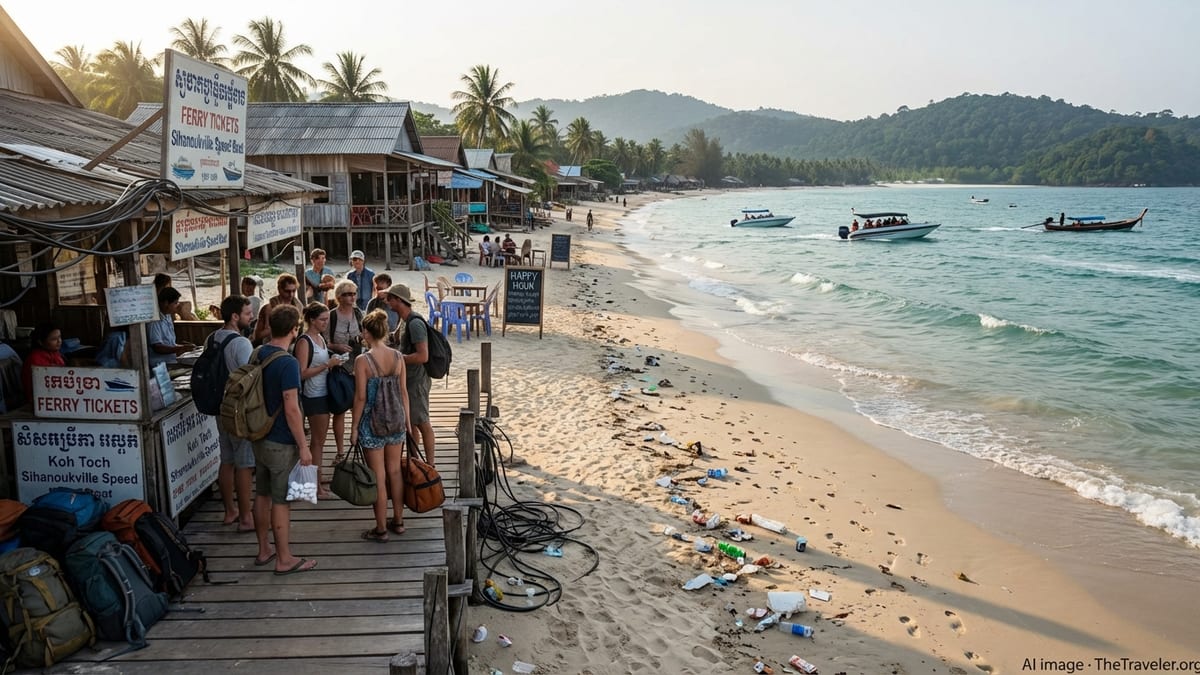
A Surge in Visitors Signals Coron’s Breakout Moment
Recent tourism data and industry coverage indicate that Coron is no longer a niche destination. Provincial and national reports show visitor arrivals climbing into the hundreds of thousands annually, placing the municipality among the country’s top ten tourism hubs and one of the fastest rising names in Palawan. Travel and Tour World reporting on 2025 figures notes that Palawan as a whole has passed the two million visitor mark, with Coron contributing a significant share as interest spreads beyond long-established hotspots.
This growth has unfolded even as the Philippines wrestles with a more modest international tourism rebound compared with some Southeast Asian neighbors. Publicly available statistics on tourism in the Philippines list Coron with well over 300,000 combined domestic and foreign arrivals in 2025, a sharp increase from pre-pandemic baselines and earlier half-year counts in 2023. The trajectory points to a destination that is gaining momentum, rather than one living off past accolades.
Regional agencies describe Coron, alongside Boracay and Cebu, as part of a small group of destinations that are doing the heavy lifting for the country’s tourism recovery. Industry analyses characterize the province’s strategy as shifting toward “quality and experience-led tourism,” and Coron is frequently cited as a model for that approach, thanks to its mix of small-scale resorts, protected landscapes, and highly curated day tours.
For travelers, this surge translates into a more polished experience than just a few years ago. Tour operators have expanded their offerings, from beginner-friendly snorkeling circuits to full-day expeditions that visit far-flung sandbars and reefs. Yet Coron still registers far fewer annual visitors than the Maldives’ busiest atolls or the Philippines’ own Boracay, giving it an appeal for those seeking spectacular scenery without the feeling of a mega-resort corridor.
Natural Drama That Rivals, and Often Outshines, the Maldives
What is driving comparisons with the Maldives is not just Coron’s color-of-paint-chart turquoise water, but the way sea, stone, and forest collide within a relatively compact area. Iconic sites such as Kayangan Lake and Twin Lagoon are enclosed by near-vertical limestone cliffs and fed by a mix of freshwater and seawater, creating visibility and clarity that many divers and snorkelers rank among the best in Asia. Geological surveys and visitor studies describe these lakes as some of the cleanest in the Philippines, with visibility often exceeding that of typical lagoon environments.
Coron Bay adds an entirely different layer of appeal. Historical records detail how multiple World War II shipwrecks now rest at recreational diving depths in the bay, from shallow gunboats accessible to snorkelers to deeper freighters that draw advanced divers. The combination of clear water, coral-encrusted steel, and schools of fish turning wrecks into reefs provides a multi-dimensional experience not usually associated with Indian Ocean overwater bungalow resorts.
Above the surface, the scenery shifts quickly from karst spires to mangrove channels, white-sand coves, and hot springs tucked into the hills. Travel features frequently highlight Maquinit Hot Spring, one of the few known saltwater hot springs in the country, where visitors soak in mineral-rich pools after a day of island hopping. This variety in such a small radius is a key reason many regional travel magazines single out Coron as a place where travelers can combine adventure, soft wellness, and easy beach time in a single itinerary.
Compared with the Maldives, which often requires travelers to remain within a single resort island during their stay, Coron’s experience is built around movement. Day boats weave between lagoons and reef systems, afternoon hikes lead to panoramic viewpoints over Coron Town and the bay, and locals commonly promote multi-day expeditions between Coron and El Nido that explore seldom-visited islands. For visitors who want postcard water plus a sense of exploration, that mobility is a major draw.
Airports, Cruises, and Easier Access for International Travelers
The gateway to Coron, Busuanga Airport, is undergoing a notable transformation that analysts say could be pivotal to the area’s next phase of growth. Reports from aviation and business outlets in 2025 describe active plans to widen the runway to accommodate larger aircraft such as Airbus A320 jets. The Civil Aviation Authority is working with private-sector partners that are proposing multi-billion peso investments, positioning Busuanga as a more capable regional hub.
Philippine Airlines has already expanded services on the Clark to Busuanga route, adding capacity to meet rising demand for Northern Palawan. Coverage in Philippine business media notes that these additional flights are explicitly framed as support for tourism and economic development in Coron and surrounding municipalities. With more seats from major gateways such as Manila and Clark, travel planners say it is becoming easier to combine Coron with other Philippine destinations in a single trip.
Infrastructure improvements are not limited to air travel. National port authority documents and business reports show ongoing investment in cruise-capable facilities in Coron, with several hundred million pesos allocated to upgrade berthing and passenger areas. The initiative forms part of a broader push to position the Philippines as a more attractive cruise destination, and Coron is frequently mentioned among the priority stops for future itineraries connecting Manila with island provinces.
These developments are arriving as Palawan continues to collect global accolades. International travel media have repeatedly ranked the province among the world’s best islands, and a United States based outlet recently named Palawan the top island destination for 2025. Coron is often used as the visual shorthand in those stories, with aerial images of its lagoons and cliffs illustrating coverage about the province’s rise.
A Rising Star in Sustainable, Experience-Led Island Tourism
As visitor numbers increase, local and national stakeholders are facing the same question confronting the Maldives and other headline islands: how to scale tourism without eroding the very landscapes that attract visitors. Government information releases and regional tourism briefings emphasize sustainability and community participation in Palawan’s strategy, citing Coron as one of the places where regulations on marine protected areas and visitor management are being strengthened.
Publicly accessible policy documents and environmental news roundups describe efforts to manage boat traffic to popular lagoons, enforce no-anchor zones over coral reefs, and introduce carrying capacity guidelines for key sites. Observers note that while implementation is still a work in progress, these measures differentiate Coron from destinations that grew around loosely regulated resort development on fragile sandbanks.
The shift toward “experience-led” tourism is also visible in the way new products are being developed. Travel features and regional tourism campaigns point to wellness-focused retreats using secluded island resorts, slow-travel expeditions between Coron and El Nido, and community-based tours that incorporate local food, handicrafts, and traditional fishing practices. Industry analysts argue that this diversification could help Coron avoid becoming a one-note party island and instead position it as a destination for thoughtful, higher-value travel.
For travelers deciding between a Maldivian resort stay and a multi-day Coron itinerary, the contrast is increasingly clear. The Maldives still excels at ultra-luxury seclusion, but Coron is gaining ground with a style of travel built on movement, variety, and engagement with local landscapes and communities. With visitor numbers climbing, infrastructure improving, and global recognition mounting, many in the regional tourism sector now see Coron, Palawan as the Philippines’ next big thing, and a serious rival to the world’s most famous tropical archipelagos.