

More news on this day
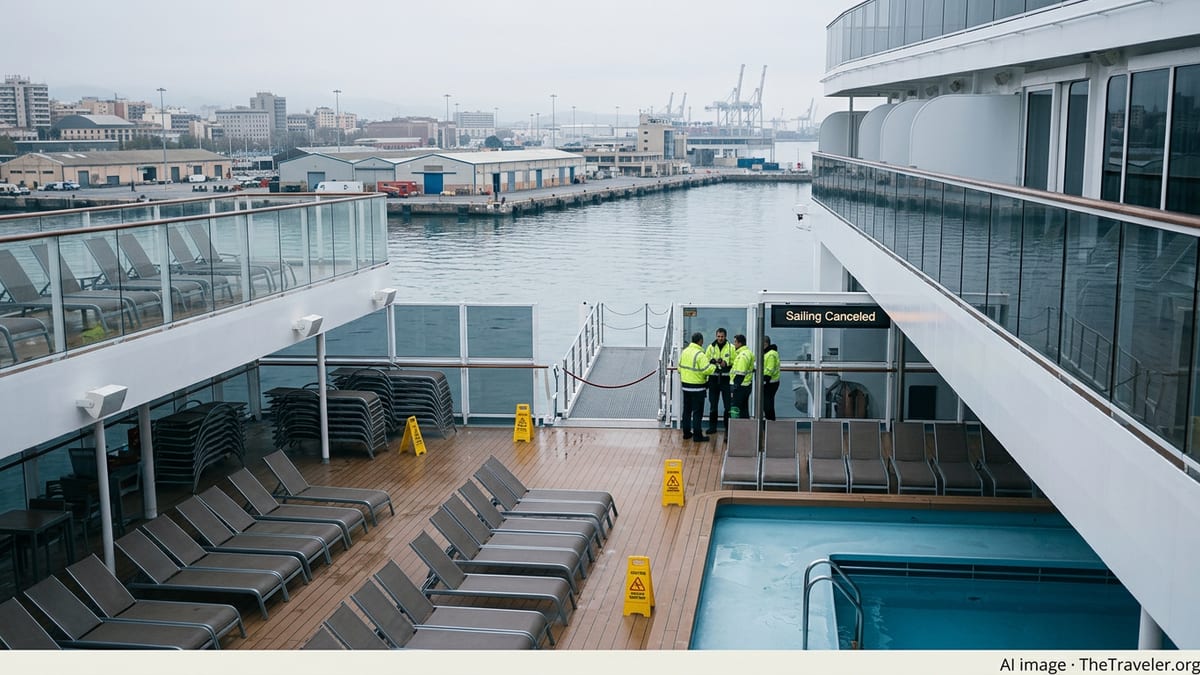
Passengers booking sailings for 2026 are increasingly discovering that confirmed cruises are being pulled from schedules, as cruise lines juggle security risks, maintenance delays and shifting demand across key regions.
Get the latest news straight to your inbox!
Geopolitical Flashpoints Force Rerouting and Red Sea Retreat
Security concerns remain one of the most visible drivers of cruise cancellations heading into 2026, particularly on routes touching the Middle East and Red Sea. After repeated attacks on commercial shipping and a stop‑start pattern of ceasefires, major brands have scaled back or entirely withdrawn planned itineraries in the region, preferring to reroute ships to safer waters rather than risk transiting volatile chokepoints.
Lines that had scheduled winter 2025–2026 and early 2026 deployments in the United Arab Emirates and wider Gulf have announced the cancellation of those programs, replacing them with alternative routes in the Mediterranean, Canary Islands and Caribbean. Cruise executives say the persistent unpredictability of Red Sea and Gulf security makes long‑term planning nearly impossible, and insurance and fuel costs for detours around Africa have further undermined the economics of those sailings.
Individual ships operating Arabian Gulf seasons have also seen their programs cut short after regional tensions escalated in early 2026, with March cruises scrapped and passengers offered refunds or future cruise credits. Industry analysts note that, while affected sailings represent a relatively small slice of global capacity, they illustrate how quickly geopolitical events can ripple through the cruise calendar, triggering not just isolated cancellations but cascading redeployments across multiple fleets.
Privately, some itinerary planners acknowledge that until security conditions stabilize along key trade and cruise corridors, Middle East programs will remain among the most vulnerable to last‑minute cancellation, regardless of how well they initially sell.
Dry Docks, Delays and the Strain of an Aging Fleet
Behind the headlines on geopolitical risk lies a quieter but equally disruptive factor: ship maintenance. Cruise vessels must regularly enter dry dock for safety checks, mechanical work and refurbishments, and when those overhauls run long or are rescheduled, entire blocks of cruises can disappear from the calendar.
In 2025 and 2026, several major brands, including Carnival and Princess, have canceled multiple voyages after shifting or extending dry dock periods for popular ships. Sailings in early and mid‑2026 have been wiped from booking systems so yards can complete structural upgrades, hotel refurbishments and environmental retrofits, from new fuel systems to updated emissions technology.
Operators stress that these cancellations are rooted in safety and regulatory compliance. Pushing back critical work risks mechanical failures at sea, something no line can afford after the high‑profile incidents of the past decade. However, guests often receive notice months or even years after they booked, leaving them scrambling to rearrange vacations around revised maintenance windows.
Analysts also point out that the industry’s rapid newbuild program, combined with the need to modernize older tonnage, is putting pressure on a limited number of specialized shipyards. That congestion increases the likelihood of schedule slippage, particularly when unexpected technical issues emerge mid‑project. For travelers, the result is a higher chance that early‑ or late‑season cruises framed around a ship’s upgrade may be altered or canceled altogether in 2026.
Fleet Redeployment and Shifting Demand Patterns
Strategic redeployment has emerged as another major reason for 2026 cancellations, as cruise lines react to post‑pandemic booking trends and aim to place ships in the most profitable markets. Norwegian Cruise Line, for example, has confirmed that it will cancel dozens of 2026–2027 winter sailings across several ships as part of a sweeping schedule overhaul, reassigning vessels to routes where it sees stronger demand and better yields.
Other brands, including Princess and MSC, have similarly pulled 2026 itineraries from ports such as Galveston and Rio de Janeiro, sometimes months after opening them for sale. In many cases, the voyages are not being replaced one‑for‑one with comparable alternatives, but folded into broader deployment changes that shift capacity between North America, Europe and South America.
Executives argue that such moves are essential to keep fleets flexible in the face of economic uncertainty, fluctuating airfares and evolving traveler preferences. Longer repositioning voyages and niche itineraries have proven particularly vulnerable when bookings lag, with sailings quietly disappearing as lines favor shorter, high‑occupancy cruises from marquee homeports.
The result is a patchwork of cancellations that can be hard for consumers to interpret. A sailing pulled from one region may signal not a problem with the ship itself, but a recalibration of the company’s global network, with hardware reassigned to another market where demand is stronger or port partnerships are more favorable.
Weather, Ice and the Growing Impact of Climate Volatility
Operational safety remains non‑negotiable, and in 2026 that is translating into more conservative decisions around severe weather and changing ice conditions. North American winter storms have already led lines to cut short or significantly modify itineraries, skipping final ports and, in some cases, canceling sailings outright rather than risk delays or rough transits.
In Alaska, cruise planners are adjusting deployments for 2026 and beyond as authorities implement caps on daily passenger numbers at popular ports and as operators confront increasingly unpredictable ice and fog. At least one major line has cited unusual ice conditions as a factor in the cancellation of an early‑season Alaska cruise in 2026, underscoring how climate‑driven anomalies can push itineraries beyond acceptable risk thresholds.
These decisions can frustrate travelers who see blue skies at home while their sailing is altered or canceled, but meteorologists and port officials say the data are clear: storms are intensifying, and climate patterns are shifting. For cruise lines bound by strict safety protocols and port slot timings, pre‑emptive cancellations are sometimes the only way to avoid more chaotic disruptions once a voyage is underway.
Insurers and financial regulators are also watching how companies respond to climate‑related risks. That scrutiny is encouraging more proactive choices, particularly on shoulder‑season voyages at higher latitudes, where the margin for error is shrinking as weather becomes less predictable.
What Passengers Can Expect When 2026 Sailings Disappear
For travelers, the spike in 2026 cancellations translates into a more fluid booking landscape, even for cruises reserved years in advance. While policies vary by line, most operators are offering full refunds, future cruise credits or rebooking on similar itineraries when voyages are canceled due to dry dock changes, redeployment or security issues.
Consumer advocates recommend that passengers read cancellation and compensation terms closely, especially for sailings involving sensitive regions or newly refurbished ships. Some credits come with expiration dates or restrictions on cabin categories and destinations, and ancillary costs such as independent air or hotel bookings may not be covered.
Industry observers say the pattern of 2026 cancellations does not point to a fundamental downturn in cruising, but rather to a sector still learning how to navigate a more volatile world. With geopolitical flashpoints, climate disruptions and tight shipyard capacity all in play, cruise lines are prioritizing flexibility, sometimes at the expense of long‑promised itineraries.
For those planning to sail in 2026, the prevailing advice is to stay informed, consider travel insurance that covers schedule changes, and remain prepared for adjustments. In an era when a single regional crisis or technical delay can reverberate across global fleets, even a confirmed cruise is no longer entirely guaranteed.