

More news on this day
Estonia is rapidly moving from under-the-radar Baltic escape to breakout European destination, with new data and on-the-ground developments pointing to a particularly strong appeal for solo female travelers seeking safety, independence and adventure.
Get the latest news straight to your inbox!
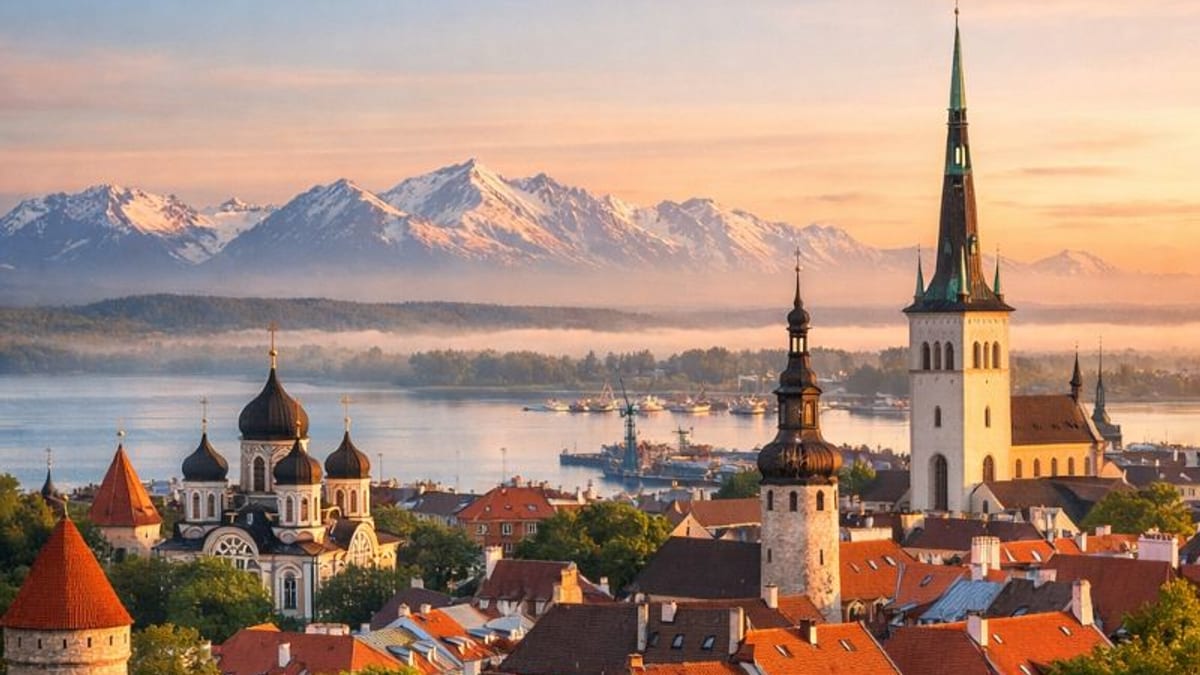
Image by Latest International / Global Travel News, Breaking World Travel News
Rising Visitor Numbers Signal a Destination on the Upswing
Recent tourism data indicates that Estonia is no longer a niche choice. Statistics Estonia reported that accommodation establishments hosted 3.6 million tourists in 2024, a 5 percent rise on the previous year, underscoring a steady recovery and renewed interest in the country after the pandemic downturn.
International arrivals are driving much of this momentum. Figures compiled from central bank and tourism authorities show that foreign visitor numbers have surpassed four million annually when day visitors and cruise passengers are included, with spending in the country exceeding one billion euros in both 2023 and 2024. This places Estonia firmly on the map as a serious player in the European travel market rather than a regional curiosity.
Tallinn, the capital, has become the main gateway for this growth. City reports for 2024 note that international visits to Tallinn reached well over three million, with overnight stays climbing and source markets diversifying beyond neighboring Finland and Latvia to include Germany, the United Kingdom and North America. For solo travelers, that expanding mix of visitors often translates into stronger tourism infrastructure, more English-language services and a wider choice of female-focused tours and experiences.
Analysts point out that, although Estonia still welcomes fewer total visitors than large European hubs, its tourism curve is rising faster than many peers. Industry forecasts from organizations tracking European travel trends suggest that Estonia’s sector is set for continued expansion through the end of the decade, backed by targeted national marketing and investment in sustainable tourism.
Safety Rankings and Social Climate Favour Women Traveling Alone
Safety remains the first filter for many solo female travelers, and publicly available indicators consistently place Estonia among Europe’s more secure destinations. International crime and safety databases show low levels of violent crime relative to regional averages, particularly in urban centers most frequented by visitors such as Tallinn and Tartu.
Broader governance and social metrics reinforce this picture. Estonia ranks highly in global indices that measure rule of law, political stability and low corruption, factors that contribute to predictable public services and reliable emergency support. For women, the environment is further shaped by the country’s performance in gender equality measures. A 2024 assessment by a major international financial institution on women, business and the law gave Estonia strong scores on workplace protections, mobility and entrepreneurship, highlighting a legal framework that supports women’s autonomy.
Digital transparency also plays a role. Estonia’s widely cited status as a leading digital society means that many public services, from transport information to healthcare contacts, are accessible online in multiple languages. For solo travelers, this reduces dependence on intermediaries and helps women plan safe routes, check schedules in real time and verify accommodation details directly.
Travel forums and peer-to-peer review platforms reflect these structural advantages. While individual experiences vary, recent discussions among solo female travelers consistently describe Estonia as calm, walkable and predictable, with particular praise for the sense of security in city centers and on well-marked hiking trails. Such perceptions, shared widely on social channels, are increasingly influential in shaping where women choose to book their next trip.
Digital-Nomad Visas and E-Services Empower Long-Stay Explorers
Estonia’s pioneering digital policies are another reason it is gaining traction with solo female travelers, especially those working remotely. The country was among the first in Europe to introduce a dedicated digital nomad visa, allowing eligible remote workers to live in Estonia for extended periods while employed by foreign companies or running their own online businesses.
Visa guides and official documentation outline clear income thresholds and application procedures, which observers say compare favorably with more complex schemes elsewhere in the region. For women who earn their income online, this provides a legal pathway to base themselves in a relatively affordable, safe and well-connected European Union country without needing to secure local employment.
Beyond visas, Estonia’s e-government ecosystem offers practical advantages. Banking, company registration and many bureaucratic processes can be handled digitally, and the well-known e-residency program enables location-independent entrepreneurs to establish and manage an EU-registered business fully online. While e-residency itself does not confer the right to live in Estonia, it complements the nomad visa and similar permits by simplifying the way solo professionals can structure their work.
Industry reports focused on flexible work trends note that Tallinn is climbing in rankings of business-friendly mid-sized cities in Europe, thanks to its digital infrastructure and growing community of start-ups and co-working spaces. For solo women who combine travel with freelance or remote work, that ecosystem can offer both economic stability and a built-in network.
Nature, Culture and Compact Cities Suit Independent Itineraries
Estonia’s geography also favors solo exploration. The country is compact, with efficient bus and rail links between key cities and regions, making it easier for travelers to design multi-stop itineraries without long transfers. Tallinn’s medieval old town, the university city of Tartu and seaside hubs such as Pärnu can typically be reached within a few hours of one another.
For many women, the appeal lies in the balance between urban culture and quiet nature. Estonia is heavily forested, and national parks such as Lahemaa, Soomaa and Lahemaa’s coastal villages offer well-marked trails, bog boardwalks and coastal routes that day-trippers can tackle without specialized gear. Local tourism boards and park services provide detailed route maps and safety guidelines online, helping solo hikers assess difficulty levels in advance.
Culturally, Estonia leans toward a reserved but pragmatic social style, which some solo travelers interpret as low-pressure and respectful of personal space. Cafés, libraries and creative hubs in Tallinn and Tartu offer spaces where visitors can blend in with local students and professionals, while a strong calendar of festivals and design events gives structure to longer stays.
The relative affordability of public transport and mid-range accommodation compared with Western European capitals further enhances Estonia’s appeal. Budget analyses from travel research firms show that nightly rates, transit passes and dining costs in Tallinn and regional towns remain moderate, allowing solo travelers to prioritize experiences such as museum visits, spa treatments and guided excursions without quickly exhausting their budgets.
Grassroots Communities and Practical Resources Build Confidence
Finally, Estonia is benefiting from a wider ecosystem of resources that make it easier for women to choose the country with confidence. Dedicated online communities for solo female travel frequently share recent trip reports from Estonia and neighboring Latvia and Lithuania, pointing to the region as a practical first step for women new to independent travel in Europe.
Specialist travel companies and local operators have begun to respond to this interest with small-group departures and tailor-made experiences that incorporate Estonia into multi-country Baltic itineraries. These often emphasize slow travel themes such as forest bathing, sauna culture, cycling routes and coastal village stays, products that resonate with women looking for restorative rather than high-adrenaline trips.
At the same time, mainstream travel media have increased their coverage of Estonia’s tourism revival, highlighting the country’s mix of digital innovation and preserved heritage. Reports on conference tourism, city-break trends and EU-wide tourism statistics all underscore that Estonia is attracting visitors who stay longer and spend more, reinforcing its reputation as an emerging, sustainable destination.
For solo female travelers, these overlapping trends add up to a compelling proposition: a country that is small enough to feel manageable, modern enough to function smoothly and sufficiently on the rise to offer fresh experiences before mass tourism fully catches up.