

More news on this day
From the Alps to the Baltic, a new generation of long-distance rail tunnels is reshaping how Europeans cross borders, and growing numbers of frequent flyers are quietly trading short-haul flights for high-speed trains deep beneath the mountains and sea.
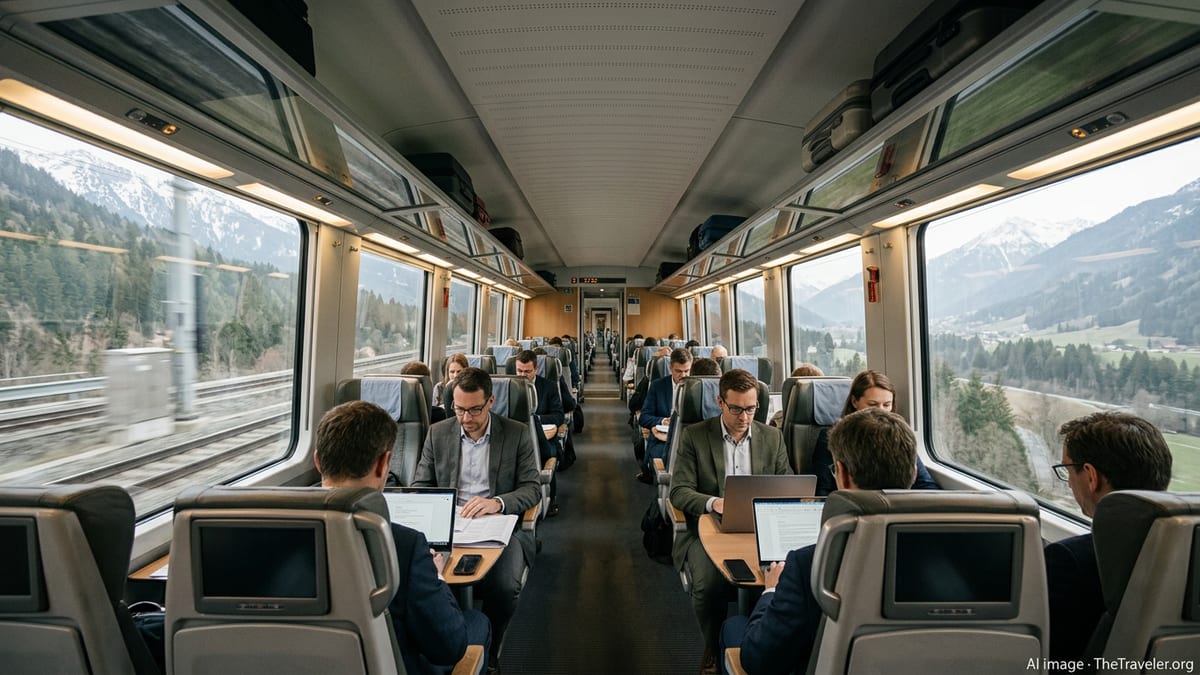
Alpine Mega-Projects Redraw the Map of Fast Travel
Across the Alps, multi-decade engineering projects are nearing critical milestones that will slash journey times between major cities and make rail far more competitive with regional air routes. The Brenner Base Tunnel between Austria and Italy, stretching 64 kilometers beneath the Brenner Pass, has seen its exploratory tunnel completed and the two main tubes reported close to full excavation, with system fit-out now accelerating. When passenger services eventually start in the early 2030s, trains between Innsbruck and Fortezza are expected to bypass steep gradients and winding mountain tracks, allowing faster, more frequent links between southern Germany, Austria and northern Italy.
Further west, the 57.5 kilometer Mont Cenis base tunnel under the Alps is the centerpiece of the new Lyon–Turin rail link, one of the European Union’s flagship cross-border corridors. Construction reports from the project promoter TELT indicate that more than a quarter of the overall tunnel complex has now been excavated, with multiple tunnel boring machines driving from both the French and Italian sides and contracts worth billions of euros in progress. The base tunnel is designed to carry both high-speed passenger trains and heavy freight, directly targeting the same travel markets currently served by dense short-haul flight schedules between France and Italy.
In parallel, Austria’s Semmering Base Tunnel, intended to relieve a historic but capacity-constrained mountain route between Vienna and Graz, is advancing through its later construction phases. Together, these tunnels form a continuous spine of low-gradient, high-capacity rail routes through the Alps, reducing journey times by up to several hours on key itineraries. For time-sensitive travelers who once defaulted to regional flights over the mountains, that new reliability and speed is becoming hard to ignore.
Railway planners say these projects are not simply about prestige engineering, but about unlocking timetables that can rival air door to door on journeys of up to 800 kilometers. When the new base tunnels are combined with upgraded approach lines, they pave the way for dense high-speed services linking cities such as Munich, Vienna, Milan, Turin and Lyon with predictable, all-weather travel times.
Short-Haul Flights Lose Ground on Time, Comfort and Reliability
For frequent flyers, the appeal of Europe’s long-distance tunnels is not just their scale but their impact on the everyday travel experience. Business travelers making regular hops between regional capitals increasingly compare an hour in the air with the cumulative hours lost to airport transfers, security queues and boarding delays. As rail links through new tunnels shave time off journeys and increase frequencies, the headline flight time matters less than the overall door-to-door equation.
The Channel Tunnel, operational for three decades, has long provided evidence of this shift. High-speed services between London, Paris and Brussels established a template for city-center to city-center journeys that can be competitive with flying once airport processes are taken into account. Recent regulatory moves clearing new operators to run through the tunnel and the launch of additional Amsterdam and seasonal routes are reinforcing the perception that rail offers more options, not fewer, even as aviation faces capacity and environmental constraints.
Frequent travelers also note that modern tunnel-based routes tend to be more resilient to weather and airspace disruptions that routinely plague short-haul flights. While rare incidents such as power faults in the Channel Tunnel can cause headline-grabbing disruption, operators argue that overall punctuality remains strong, and that delays are easier to manage when passengers are not stranded at distant airports. On-board connectivity, the ability to work continuously and the absence of strict baggage rules are further tilting the balance in favor of rail for professionals who value productive time as much as raw speed.
As new base tunnels such as Brenner and Mont Cenis move closer to opening, national railways and new entrants are already sketching out service patterns that would convert today’s multi-leg, connection-heavy itineraries into direct, high-speed links. For many habitual flyers, the promise of walking onto a train in a city center and stepping off hours later in another, without changing terminals or passing through security again, is a powerful incentive to change habits.
Climate Pressure and Policy Incentives Push Travelers to Rails
Environmental considerations are a central reason why governments and infrastructure agencies are investing heavily in rail mega-tunnels, and why frequent flyers are reassessing their routines. Short-haul flights within Europe are under mounting scrutiny as countries seek to meet climate targets and curb emissions from transport, one of the continent’s most polluting sectors. Policymakers have identified medium-distance domestic and cross-border routes, where rail can compete effectively, as prime candidates for modal shift.
France’s move to restrict certain short internal flights where a rail alternative of under two and a half hours exists signaled a precedent that other governments are studying. While the rules are narrow in scope, the political message aligns with increased funding for cross-border rail links and tunnel projects that explicitly promise to remove traffic from both skies and roads. The European Union has earmarked significant cohesion and transport funds for corridors such as the Mediterranean route via Lyon and Turin and the Scandinavian–Mediterranean axis served by the Brenner Base Tunnel.
Corporate travel policies are amplifying these signals. Large multinationals and public institutions are embedding carbon budgets into their travel rules, encouraging or mandating rail for trips under certain distances when practical. Frequent business travelers who once valued airline status above all are now weighing the reputational and regulatory benefits of choosing lower-emission options. As rail networks improve, the sacrifice in convenience is shrinking, making the environmental choice easier to justify to clients and colleagues.
At the same time, aviation faces rising costs related to carbon pricing and sustainable fuel mandates, which are expected to bite hardest on short routes where fuel burn per kilometer is highest. Airlines are already trimming some marginal point-to-point flights, particularly in markets where rail provides a credible alternative. The result is a quiet rebalancing in which tunnels, once symbols of engineering ambition, become everyday tools for meeting Europe’s climate ambitions while still keeping its economies connected.
New Sea and Land Links Expand Rail’s Reach Beyond the Alps
The tunnel boom is not limited to the mountains. Under the Baltic Sea, construction continues on the Fehmarnbelt fixed link between Germany and Denmark, a combined road and rail immersed tunnel that will cut the rail journey between Hamburg and Copenhagen by around two hours once complete. Designed to carry high-speed passenger trains and freight, it will form part of a faster north-south axis through Scandinavia and central Europe, aligning with the same policy push to shift traffic from air to rail.
In combination with established infrastructure like the Channel Tunnel and ongoing upgrades to cross-border links in Central and Eastern Europe, these projects knit together a more continuous high-speed rail grid. For travelers who previously saw rail as fragmented and slow once they left a core high-speed corridor, the new tunnels promise fewer bottlenecks and more seamless itineraries. It becomes more realistic to imagine a single rail journey from London to northern Italy or from Copenhagen to northern Italy via upcoming tunnels and upgraded lines.
Operators and tourism boards hope that as mega-tunnels enter service, they will stimulate new patterns of demand that go beyond simply substituting for flights. Overnight trains using the new low-gradient routes could revive sleeper services across the Alps, offering a direct alternative to evening flights and early-morning departures. Leisure travelers, including many who fly frequently for work, are already experimenting with this model on existing routes, combining business trips with longer, lower-carbon rail journeys.
Industry analysts say that while aviation will remain essential for long-haul and many intercontinental connections, the psychological map of Europe is shifting as each new tunnel opens. Distances that once felt like an automatic flight are starting to look like plausible rail rides, especially when tunnels remove the historic geographical barriers that made cross-border rail slow and indirect.
From Status Miles to Track Miles: A Cultural Shift Among Frequent Travelers
The impact of Europe’s rail mega-tunnels is not only technical but cultural. Frequent travelers accustomed to collecting airline loyalty points are increasingly sharing itineraries that stitch together high-speed trains beneath the Alps or the Channel, comparing comfort, quiet and productivity on social media and in corporate forums. Travel managers report a gradual but noticeable rise in rail bookings on corridors where major tunnel projects already support fast services, such as London to Paris and Brussels or longer trips across Austria and Switzerland that take advantage of base tunnels completed in the last decade.
Rail operators, aware of this shift, are tailoring products to appeal directly to former frequent flyers. Business-class style seating, flexible tickets, reliable Wi-Fi and lounge access at major stations are now standard on many international routes and will be central to services using the Brenner and Lyon–Turin tunnels. The pitch to travelers is clear: similar comfort and status recognition, but with lower emissions and less time lost in transit to airports.
For many frequent flyers, the decisive factor is predictability. As tunnel-based routes remove steep gradients, weather-sensitive passes and congested bottlenecks, they also reduce the likelihood of cascading delays that once made long-distance rail a risky choice. With travel calendars packed and meetings often scheduled back to back across borders, the ability to board a train that departs and arrives from the heart of the city at roughly the advertised time may matter more than shaving a few minutes off pure journey time.
The coming decade will test how far this cultural realignment can go. As mega-tunnels under mountains and seas transition from construction sites to everyday infrastructure, Europe’s habitual flyers are being presented with an alternative vision of fast travel: one measured not in flight segments, but in track miles run quietly and swiftly beneath the continent’s natural barriers.