

More news on this day
As British travellers weigh up whether to stay local or chase spring sunshine abroad, the cathedral city of Exeter is emerging as a compelling Easter 2026 staycation choice, combining major cultural programming, family-friendly attractions and improved transport links across Devon.
Get the latest news straight to your inbox!
Staycation Demand Holds Up in Devon’s Capital
Recent visitor economy data indicates that Exeter is outperforming many UK destinations in domestic tourism, with city stays helping to offset wider softness in national staycation spending. A regional report on Devon’s visitor economy for the third quarter of 2025 highlights Exeter as registering one of the strongest rises in visitor numbers in the county, with growth outpacing several coastal competitors and larger urban centres. While some coastal resorts are seeing reduced discretionary spend, the figures suggest that visitors are still willing to pay for short breaks that combine culture, food and easy access, a mix Exeter offers in compact form.
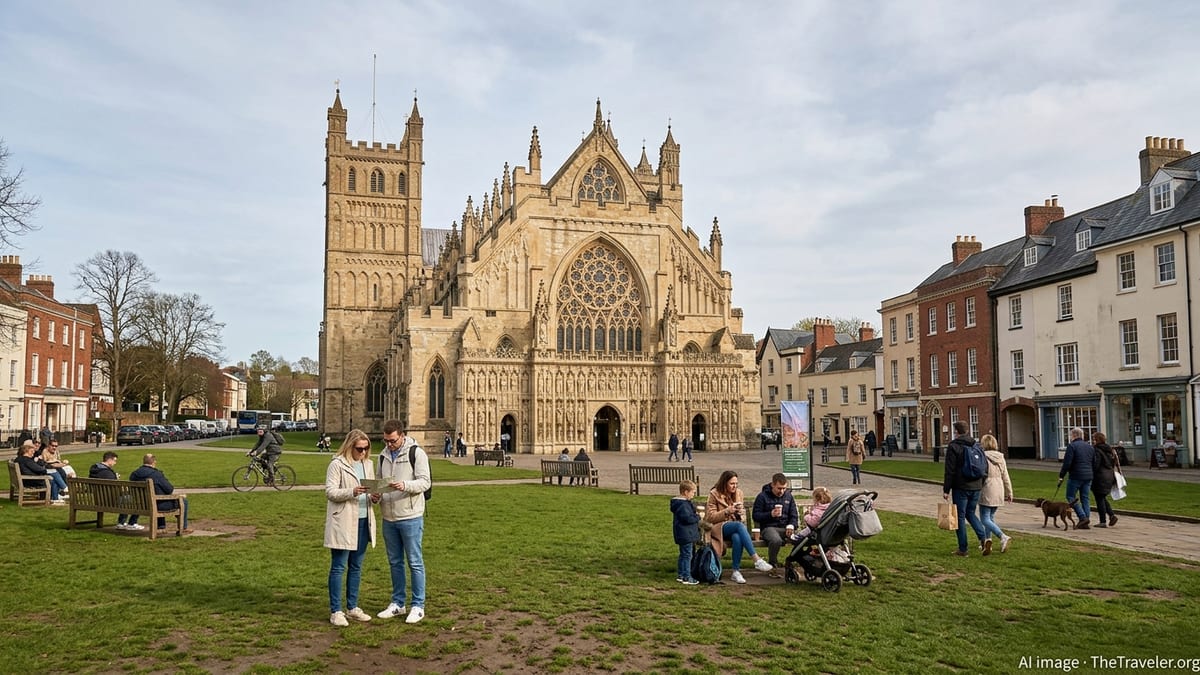
The city’s positioning as a regional hub is also supporting demand. Exeter serves a large rural hinterland and parts of the West Country that are less well connected by rail or road, concentrating services, events and retail in a walkable centre around the historic High Street and Cathedral Green. Tourism planners note that this concentration is attractive to cost-conscious families and couples seeking a car-light break, since many of the city’s main sights, shops and eateries sit within a short stroll of one another.
At the same time, broader staycation trends are shifting. Reports on domestic tourism in 2024 and 2025 describe a more selective market, in which travellers opt for fewer trips but expect richer experiences when they do go away. Exeter’s blend of historic architecture, independent food and drink, and quick access to countryside and coast places it well to capture those Easter 2026 visitors who want a varied itinerary without booking a week-long resort stay.
Easter at Exeter Cathedral and Across the City
For many visitors, Easter in Exeter is defined by the presence of Exeter Cathedral, whose Gothic interior has long been described in national coverage as a form of “architecture as theatre.” The cathedral’s published Holy Week and Easter programme sets out a full sequence of services, from Palm Sunday through to Easter Day, including early-morning vigils, family-friendly worship and choral music performed by the cathedral choir. In recent years, the building has also hosted candlelit concerts and seasonal trails, signalling to visitors that it is both a place of worship and a major cultural venue.
Lent and Holy Week programming elsewhere in the city is already under way in 2026, with local media reporting strong attendances at Ash Wednesday services and parish events across central Exeter. Church newsletters and parish bulletins for March 2026 detail collaborative services and community gatherings that run through to Easter Sunday, indicating a busy calendar of activity in and around the city centre. For visitors, this means that an Easter stay is likely to coincide with well-attended events, open churches and additional opportunities for reflection and music.
Beyond religious services, Exeter’s spring cultural diary is broadening. Listings for March 2026 compiled by regional outlets include theatre productions, charity walks and concerts, with major venues such as Exeter Cathedral and the city’s theatres using early spring to debut new programmes. The result is that Easter visitors arriving in late March or early April are likely to find an established run of events already in progress, rather than a solitary holiday weekend.
Family-Friendly Attractions and County-Day Out Potential
Exeter’s appeal as an Easter staycation base also rests on the ease with which visitors can mix city time with day trips into wider Devon. The city lies a short drive or train ride from coastal resorts on both the Exe Estuary and the South Devon coast, as well as from Dartmoor National Park and historic country estates such as Powderham Castle. Event round-ups for South Devon in recent Easter holiday periods highlight family attractions ranging from inflatable theme parks at regional showgrounds to themed trails and raves for children at Exeter Racecourse, underscoring the breadth of choice for families staying in the city.
Within Exeter itself, the historic Quayside remains a focal point for visitors seeking outdoor activity without leaving town. Public information on Exeter Quay points to a regular calendar of events along the waterfront, including dragon boat races, canoe shows and street food markets during the warmer months. While these do not always coincide precisely with Easter weekend, they demonstrate how quickly the riverside comes to life as temperatures rise, offering scope for boat hire, cycling along the Exe Valley paths and relaxed pub or café stops beside the water.
Many families also use Exeter as a practical base for exploring wider attractions across the county by car or public transport. The presence of regional leisure centres, climbing walls and the Exeter Arena athletics facility add further options for visitors seeking structured activity days. For those with teenagers or adult groups, the city’s live music venues, brewery taprooms and independent cinemas provide evening entertainment that coastal resorts of a similar size may struggle to match outside high summer.
Improved Transport Links and Low-Fuss Access
A significant factor in Exeter’s staycation appeal for Easter 2026 is the relative ease of getting there from other parts of the UK. Rail services connect the city directly with London, the Midlands and the North of England, while regional lines link Exeter with North Devon, the Exe Valley and neighbouring market towns. Rail industry coverage in 2025 reported successful engineering work on routes serving Exeter and surrounding communities such as Okehampton and Barnstaple, with services resuming after upgrades designed to improve reliability on key regional lines. For Easter travellers, this translates into more resilient options for car-free access.
On the roads, Exeter sits at the meeting point of the M5 and the A30, making it the primary gateway into much of Devon and Cornwall. While peak holiday congestion remains an issue across the South West, Easter breaks often benefit from slightly lighter traffic than the height of summer, and many visitors choose to stay in the city precisely to avoid the longer onward drives required to reach more remote resorts. Publicly available transport planning documents from Devon authorities also highlight ongoing work to improve local bus connectivity and park-and-ride options around Exeter, which may further ease visitor movements into the city centre.
Exeter Airport, meanwhile, continues to offer a mix of domestic and short-haul European routes, giving international visitors a potential entry point and allowing some UK travellers to consider rail or air combinations when planning an extended West Country itinerary. Although Easter 2026 capacity remains subject to airline scheduling decisions, the presence of an airport within a short taxi ride of the city centre reinforces Exeter’s image as a connected yet manageable base for a long weekend.
Balanced City Break Experience at a Sensitive Price Point
Price remains a key consideration for Easter 2026 staycationers, especially after several years of inflationary pressure on accommodation, fuel and dining. Industry analysis of the UK’s domestic tourism market over the past two years notes that some households are scaling back on longer or more expensive trips, even when weather conditions are favourable. At the same time, reports suggest they are still prepared to book shorter, high-value breaks that deliver variety without the costs associated with international travel.
Exeter’s accommodation stock seems well suited to this climate. The city offers branded hotels near the station, independent guesthouses in residential streets and serviced apartments around the quayside and historic centre, giving visitors scope to match budgets to needs. Regional media coverage of Devon’s tourism sector highlights continued investment in upgraded facilities across the county, from holiday parks on the coast to improved city-centre accommodation, indicating that providers are competing on quality as much as price.
Dining and leisure options also contribute to value perception. Exeter’s compact core concentrates independent cafés, restaurants and pubs within a few blocks, allowing visitors to eat out without relying on taxis or long walks, while local markets and street food events provide lower-cost alternatives. Combined with mostly free-to-enter green spaces, riverside walks and self-guided heritage trails, this creates a staycation experience that can be tailored to a range of budgets.
With Easter Sunday in 2026 falling in early April, many travellers will be looking for a destination that delivers spring atmosphere even if the weather is changeable. Publicly available event listings, visitor data and transport updates together suggest that Exeter is positioned to offer exactly that mix: a historic but lively city break with easy onward access to countryside and coast, at a time when many UK households are seeking maximum value from a precious long weekend.