

Thailand is experiencing a pronounced surge in interest from foreign residents, ranging from corporate assignees and investors to remote workers and lifestyle-driven relocators. While precise expatriate headcounts are difficult to verify in real time, multiple indicators point to record or near-record levels of long-stay foreigners: expanding foreign investment, new long-stay visa channels, higher volumes of long-duration arrivals, and a policy pivot toward positioning Thailand as a regional base for global talent. This briefing examines the structural factors behind this renewed momentum and why, in the current cycle, more expats and mobile professionals are choosing Thailand as a primary or secondary base.
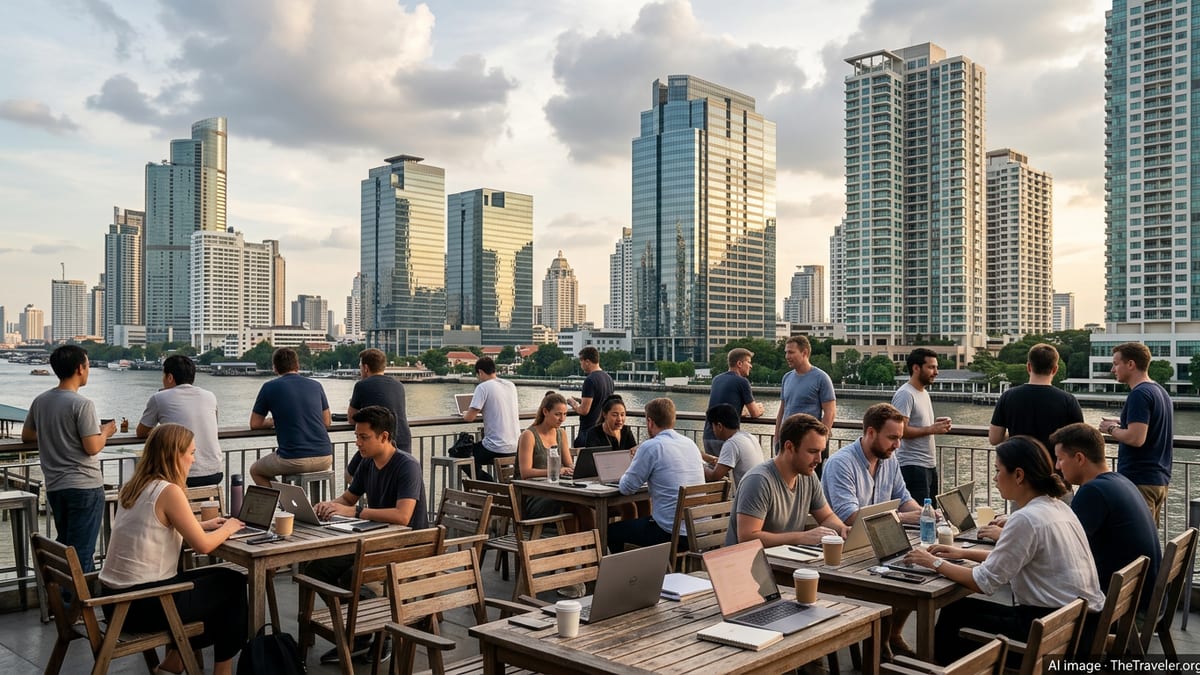
Structural Shift: From Short-Term Visitors to Long-Stay Foreign Residents
Thailand has historically attracted large numbers of tourists, but recent policy and market developments are recalibrating the country toward long-stay foreigners who stay for several months or years rather than a few weeks. Government economic planning documents and investment promotion strategies emphasize foreign direct investment, high-value tourism, and international talent as key growth drivers. Rising applications for investment promotion and foreign-owned enterprises indicate that more foreign professionals are anchoring themselves in Thailand in corporate roles, entrepreneurial ventures, and regional headquarters functions.
Tourism recovery since 2023 has created a large pipeline of visitors who then convert to longer-stay categories, whether through education, work, retirement, or remote work visa options. Authorities have extended standard visa-free or tourist stay periods for many nationalities from 30 to 60 days and have relaxed rules on extensions, increasing the proportion of foreigners who cross the threshold from “visitor” to de facto resident. While many still arrive as tourists, policy tools increasingly encourage those with stable income and skills to formalize longer-term stays.
At the same time, Thailand’s demographic profile is aging and domestic population growth is stagnant or slightly negative. Policymakers see foreign human capital and spending as a partial counterweight to these trends. This has driven a shift from viewing foreigners mainly as tourists toward integrating them as contributors to domestic demand, investment, and workforce capacity. As these frameworks mature, more expats see Thailand as structurally more welcoming and predictable for multi‑year residence than in prior cycles.
For relocation decision makers, this structural shift matters because it signals that Thailand’s current expat growth is not merely cyclical or post‑pandemic rebound, but part of a deliberate reorientation of the economy toward sustained foreign presence.
Policy Reforms Explicitly Targeting Global Talent and Remote Workers
One of the most important reasons expats are moving to Thailand in greater numbers is the country’s explicit policy pivot toward attracting international talent and location-independent professionals. Authorities have launched and then progressively relaxed eligibility criteria for a suite of long‑term stay categories. These include ten‑year style long-term resident options for selected professionals, investors and retirees, and new medium-term categories explicitly branded around “workcation” and digital nomad lifestyles. Recent cabinet decisions have further eased requirements and broadened eligible occupational groups, signaling that attracting foreign professionals is a strategic priority rather than a peripheral initiative.
In parallel, Thailand has simplified elements of its work permit regime for foreign workers in targeted sectors. There is a clear direction of travel toward consolidating procedures, reducing processing times, and enabling certain categories of highly skilled professionals to work more flexibly, sometimes through one-stop service centers in major metropolitan areas and economic zones. These steps are intended to reduce the friction that has historically pushed some foreigners into informal or semi-compliant arrangements and to make Thailand more competitive against alternative hubs in the region.
The country has also moved to approve longer stays for foreign students and postgraduates, with pathways that make it easier to remain in Thailand to seek employment after graduation. This is gradually building a pipeline of foreign-educated professionals already embedded in Thai society and business networks. For employers, the ability to recruit from this pool is an added incentive to locate or expand operations in Thailand, which in turn increases demand for foreign specialists, managers, and support staff.
For globally mobile individuals who can choose between several destinations, the cumulative effect of these changes is significant. Thailand is transitioning from a system where foreign professionals had to work around rigid rules to one where the legal framework is increasingly tailored to their mobility patterns and work models.
Record Interest from Digital Nomads and Location-Independent Professionals
A notable component of the current surge is the worldwide growth of digital nomads and fully remote professionals, many of whom are selecting Thailand as a long-stay base. Estimates for American digital nomads alone now exceed 18 million, more than double pre‑2019 figures, and similar growth patterns are reported in other major markets. As this global cohort expands, Thailand scores high on their key decision factors: reliable connectivity in urban centers, a mature coworking ecosystem, frequent international flights, and an established community of remote workers and entrepreneurs.
Thailand’s authorities have moved from an ambiguous stance on remote work toward designing specific channels for this population. Newly introduced multi‑month workcation or “Destination” style visas explicitly target people who earn income outside Thailand but wish to stay in the country for extended periods while working online. These instruments typically combine longer authorized stays, multiple entries, and clearer compliance boundaries, which are attractive to remote professionals seeking legal certainty rather than relying on repeated short-term entries.
In addition, immigration policy changes have expanded the number of countries eligible for visa exemption or e‑visa conveniences and increased permitted lengths of stay for many of them. Some nationalities have seen visa‑free durations doubled relative to pre‑reform periods. For remote workers, this reduces administrative overhead and enables more flexible testing of Thailand as a base before committing to more structured long‑term visas or residency planning.
Although remote work taxation rules remain complex and evolving, the combination of clear remote‑work visa categories, extended stay durations, and a maturing ecosystem of legal and relocation advisors has made Thailand feel more accessible and less risky to digital professionals than in the past. This is a core reason why, in the current cycle, record numbers of remote workers are treating Thailand as a semi-permanent base rather than a short stop on a regional itinerary.
Economic Momentum and Foreign Investment as Pull Factors
Beyond lifestyle perceptions, macroeconomic and investment trends help explain why more expats are anchoring themselves in Thailand at this point in time. The country maintains one of the larger economies in Asia by GDP, with diversified manufacturing, services, and tourism sectors. Recent years have seen an uptick in foreign direct investment applications, particularly in high‑tech, data, and advanced manufacturing. Investment promotion agencies report double‑digit percentage increases in foreign investment project applications compared with earlier years, with some periods showing growth in applications well above 50 percent year on year.
Official statistics and international assessments indicate that, after a volatile 2023, Thailand has regained traction in attracting foreign direct investment inflows, with strong interest in infrastructure, logistics, renewable energy, and digital industries. Policy frameworks such as the “Thailand 4.0” strategy and the development of the Eastern Economic Corridor are anchored on attracting advanced manufacturing and innovation-driven firms. The resulting project pipeline creates demand for foreign engineers, project managers, executives, and technical specialists.
These investments are often structured as regional operations that serve Southeast Asia or wider Asia-Pacific, which encourages the relocation of expatriate managers and their families for multi‑year assignments. International companies may colocate shared service centers, R&D hubs, or regional headquarters, all of which require foreign leadership and specialist input during build‑up phases. As new projects are approved and implemented, waves of corporate expats enter the country for durations ranging from two to five years or more.
For individual professionals evaluating relocation, Thailand’s investment momentum signals a pipeline of career opportunities across multiple sectors. This stands in contrast to smaller markets where options for skilled foreigners may be limited to a narrow set of industries or short-lived projects.
Regional Competitiveness and Comparative Advantages in Asia
Another reason for heightened expat interest is Thailand’s relative positioning versus competitor destinations in the wider region. Several neighboring or comparable countries have tightened entry and long-stay rules, increased formal income thresholds, or introduced more restrictive approaches to remote workers. In contrast, Thailand’s recent policy trajectory has combined tighter enforcement against abuse with more welcoming channels for clearly defined groups such as investors, skilled professionals, and compliant remote workers.
From a regional connectivity perspective, Thailand is well positioned as an aviation and logistics hub, particularly through Bangkok. Frequent connections to major Asian, Middle Eastern, and European cities allow expats to maintain regional or global work responsibilities without excessive travel time. For companies coordinating operations across ASEAN, stationing managers in Thailand often provides a pragmatic balance between accessibility, operating cost, and quality of local infrastructure.
Thailand also offers a relatively deep ecosystem of international schools, bilingual universities, and professional service providers experienced in serving foreign clients. While this briefing does not focus on education or personal services, the presence of these ecosystems lowers the risk profile for expats relocating with families or with complex corporate compliance needs. Over time, these comparative advantages accumulate, creating a self-reinforcing reputation that draws further waves of foreign residents.
As a result, when global companies or individual professionals compare options across Asia, Thailand increasingly appears on shortlists not only for short-term assignments but as a plausible long-term base, especially for those prioritizing regional reach and established expat infrastructure.
Demographic, Labor Market, and Population Dynamics
Thailand’s internal demographic and labor market conditions are another driver behind policies that effectively invite higher numbers of expats. The national population has plateaued at around 66 million and is gradually declining, with birth rates below replacement level and a rising share of older residents. This places pressure on the working-age population and increases interest in attracting foreign workers, investors, and retirees who can contribute economically without adding significantly to public service burdens.
Government and independent economic analyses highlight the need to upgrade workforce skills and productivity to remain competitive in advanced industries. To bridge capability gaps, Thailand is actively courting foreign experts in fields such as electronics, electric vehicles, biotechnology, logistics, and digital services. Long‑term visa categories for “high‑potential” or “highly skilled” professionals, and streamlined work permit rules within specific investment zones, are designed to address these shortages.
At the same time, Thailand receives significant numbers of lower‑skilled migrant workers from neighboring countries, but the current policy conversation is increasingly focused on balancing this with higher‑skilled international talent. This dual-track migration environment creates more room for mid to senior level foreign professionals, project-based consultants, and international managers, many of whom relocate with families or establish medium‑term bases in Thailand.
For prospective expats, these dynamics suggest that the current period is favorable for those who can demonstrate specialized skills or international experience aligned with Thailand’s economic upgrading agenda. Demand for such profiles is unlikely to diminish in the medium term as demographic pressures intensify.
The Takeaway
The current rise in expats choosing Thailand reflects a confluence of structural policy shifts, economic momentum, and global mobility trends rather than a temporary spike. Authorities are intentionally retooling immigration, work permit, and investment regimes to attract international talent, long‑stay visitors, and remote workers. At the same time, foreign direct investment and regional corporate activity are generating sustained demand for foreign professionals across multiple sectors.
Global growth in digital nomadism and location‑independent work has intersected with Thailand’s extended stay policies and remote‑work‑oriented visa channels, making the country a leading hub for mobile professionals. Comparative advantages in regional connectivity, established expat infrastructure, and a deepening ecosystem of services for foreigners further reinforce Thailand’s attractiveness relative to other Asian destinations.
For individuals and organizations evaluating relocation, the practical implication is that Thailand currently sits in a favorable phase of its migration and investment policy cycle. The environment for compliant long‑stay residence is more structured and opportunity-rich than in previous decades, with clearer pathways for investors, skilled professionals, and remote workers. While due diligence is still required on legal, tax, and sector-specific conditions, the underlying trend is one of Thailand consolidating its position as a primary choice for expats seeking a sustainable base in Asia.
FAQ
Q1. Are expats really moving to Thailand in record numbers right now?
Recent policy changes, higher volumes of long-stay arrivals, and rising foreign investment projects all indicate that Thailand is experiencing a modern peak in expat and long‑stay foreign resident interest, even though precise counts vary by category and reporting source.
Q2. What type of expats are driving the current surge into Thailand?
The main growth segments are remote workers and digital nomads, corporate assignees linked to new investment projects, highly skilled professionals in targeted industries, and long-stay lifestyle relocators who can support themselves from foreign income or assets.
Q3. How important are recent visa and immigration reforms in attracting more expats?
They are central. Extended stay durations, new long-term and workcation style visas, and more flexible work permit rules for selected groups have significantly reduced barriers for foreigners who want to base themselves in Thailand for many months or years.
Q4. Is the growth in expats mainly about lifestyle, or are there economic drivers too?
Both. While quality-of-life factors are important, the current wave is strongly linked to economic drivers such as increased foreign direct investment, growth in regional operations located in Thailand, and global trends toward remote work.
Q5. Why is Thailand so attractive for digital nomads and remote workers specifically?
Extended visa-free or e-visa stays, emerging remote-work visa categories, strong connectivity, and an established ecosystem of coworking spaces and professional services make Thailand a practical base for long-term remote work.
Q6. Are companies relocating staff to Thailand, or is it mostly individual movers?
Both streams are active. International firms are sending more staff to Thailand for project implementation, regional management, and shared services, while a large cohort of independent professionals and entrepreneurs is relocating on a personal basis.
Q7. How do Thailand’s policies compare with other regional destinations competing for expats?
Relative to several peers, Thailand currently offers a more expansive mix of long-stay options, clearer pathways for remote workers, and robust expat infrastructure, which enhances its competitive position in Asia.
Q8. Is Thailand’s aging population influencing the push to attract more expats?
Yes. An aging and slowly declining population increases pressure on the labor force and domestic demand, which is one reason policymakers are turning to foreign residents, skilled workers, investors, and retirees as part of their economic strategy.
Q9. Are these expat-friendly policies likely to be temporary or long-term?
Most indicators suggest a long-term orientation. The reforms are embedded in multi‑year economic strategies aimed at upgrading industry, attracting investment, and positioning Thailand as a regional hub, which implies ongoing support for foreign talent.
Q10. What should potential expats focus on when assessing whether Thailand’s current trend benefits them personally?
They should assess how their skills or income model align with Thailand’s targeted sectors and visa categories, the sustainability of their preferred stay type, and the extent to which Thailand’s regional connectivity and expat infrastructure support their professional and personal objectives.