

More news on this day
Flight attendants from major carriers in the UK, United States, and Australia are renewing calls for passengers to keep their shoes on during flights, warning that the increasingly common habit of going barefoot in the cabin is not just inconsiderate but a genuine hygiene and safety concern.
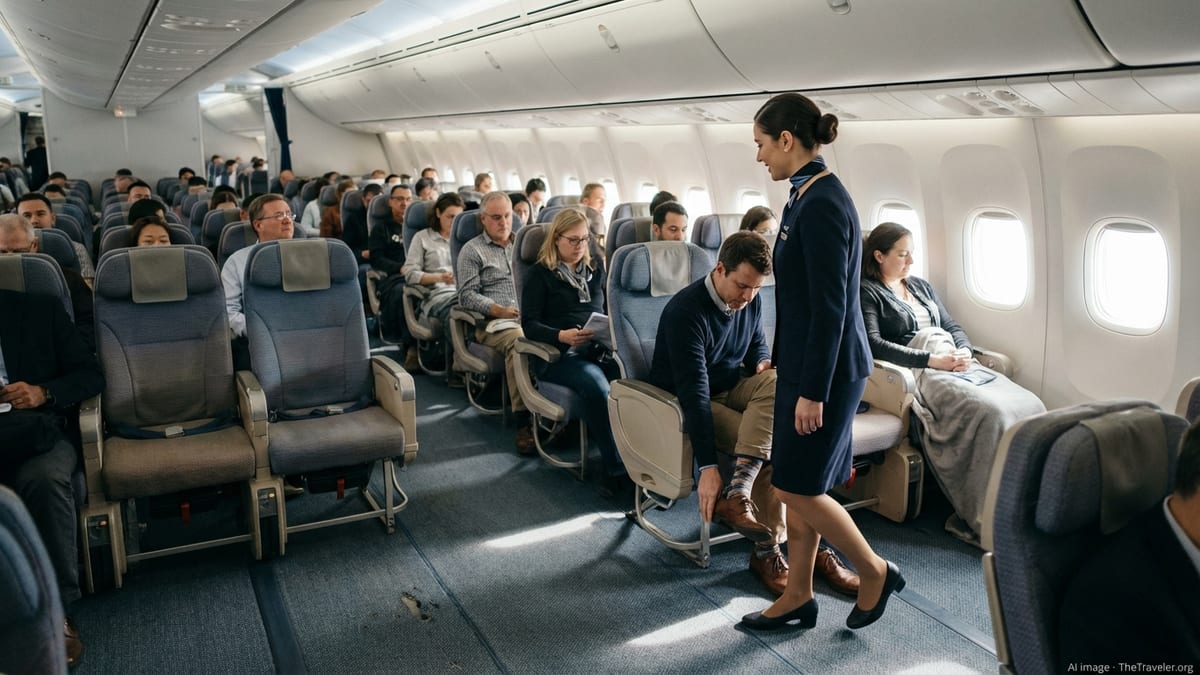
Cabin Crew Sound the Alarm on Barefoot Flyers
From short hops across the Channel to long haul journeys over the Pacific, flight attendants say they have seen a sharp rise in passengers slipping off shoes and padding around aircraft cabins in socks or bare feet. Cabin crew unions and individual attendants speaking to lifestyle and travel outlets in the UK, US, and Australia describe the trend as one of the most persistent etiquette battles on board modern flights.
While many passengers view removing shoes as a harmless comfort measure, flight attendants insist it poses multiple problems. Aside from the obvious discomfort it can cause fellow travelers seated nearby, crew stress that the aircraft environment is far from the clean, carpeted living room many passengers seem to imagine. Floors, seat bases, and lavatory areas are high-traffic zones that are only partially cleaned between tight turnarounds.
Some carriers have begun to address dress and footwear more explicitly in their conditions of carriage, particularly in the United States where several airlines state they can deny boarding to passengers who are barefoot or not properly clothed. Industry insiders say those policies reflect both hygiene expectations and the operational need to ensure passengers are prepared for emergencies from the moment they step on board.
Hidden Hygiene Risks on Cabin Floors and Lavatories
Behind the polite language of safety briefings lies a blunt reality: aircraft floors can be among the dirtiest surfaces a traveler encounters. Flight attendants across all three countries report that carpets and hard flooring often harbor spilled drinks, food remnants, and biological fluids that routine turn-around cleaning may not fully remove. Spot cleans are standard between flights, but deep cleans of cabins are scheduled far less frequently than many passengers assume.
Lavatories are a particular flashpoint. Turbulence and tight spaces can lead to spills around toilets and sinks, and fluids may spread beyond the immediate area. Cabin crew say they are regularly called to deal with accidents, from children missing the toilet to passengers becoming airsick. Even when attendants respond quickly, they acknowledge that disinfecting an entire lavatory floor in mid-flight is rarely possible.
In interviews with travel media, flight attendants have recounted disturbing examples, from toenail clippings left on carpets to passengers stepping in unknown wet patches with bare feet. Such anecdotes, repeated in crew forums and podcasts, have helped fuel a growing social media backlash against so-called “barefoot flyers,” as photos of feet on armrests, bulkheads, and tray tables circulate widely.
Health experts point out that, while the risk of serious infection from a brief walk down the aisle is generally low for healthy travelers, broken skin, fungal infections, or existing conditions can increase vulnerability. Combined with dry cabin air that can chap skin and create micro-cracks on heels and toes, the advice from both medical professionals and crew is consistent: a barrier between your feet and the floor is a sensible minimum.
Emergency Evacuations: Why Proper Footwear Matters
Beyond hygiene, the most urgent concern for flight attendants is what happens if a routine flight suddenly turns into an emergency. Safety trainers in the UK, US, and Australia emphasize that in an evacuation, passengers may need to move quickly over broken plastic, twisted metal, spilled hot liquids, and debris both inside the cabin and on the tarmac. In those conditions, bare feet or flimsy footwear can slow evacuations and leave passengers with serious cuts or burns.
Cabin crew say this is one of the reasons they quietly scan passengers’ footwear during boarding and note passengers who appear unprepared. While regulations focus on seatbelts and carry-on baggage, experienced attendants argue that appropriate shoes are just as critical to survival in a rare but high-stakes emergency. Several have publicly urged travelers to wear closed-toe, secure shoes during take-off and landing, when most incidents occur.
Travel and safety experts also warn about the friction burns that can occur on inflatable evacuation slides. Exposed skin on feet and legs is particularly vulnerable during high-speed descents from the aircraft door to the ground. Wearing socks alone provides little protection; long trousers and sturdy shoes with secure backs are recommended to reduce abrasions and give passengers better grip when moving away from the aircraft.
Although airlines do not currently require specific footwear, the consistent message from crew across regions is that passengers should think of their shoes as part of their personal safety equipment, just like seatbelts and life vests. Removing that protection for comfort, they say, trades away resilience at precisely the moment when travelers have the least control over their surroundings.
Dress Codes and Barefoot Rules Vary but Warnings Align
In the United States, several major carriers spell out in their contracts that passengers who are barefoot can be refused boarding, placing footwear squarely in the category of acceptable attire. While enforcement usually focuses on boarding rather than in-flight behavior, flight attendants note that the underlying principle is simple: passengers should be properly dressed in a way that does not create discomfort or risk for others.
European and UK-based airlines tend to rely more on general decency and conduct clauses rather than detailed dress codes, but crew members have confirmed that they can and do intervene when passengers’ clothing or lack of footwear is likely to cause offense or operational issues. Cabin staff say they often start with a discreet request, asking passengers to put shoes back on, and escalate only if the situation becomes confrontational.
In Australia, where long-haul flights to and from the country are routine, flight attendants have echoed their counterparts abroad, advising against flying barefoot and urging travelers to consider practical footwear when crossing continents. Australian cabin crew unions have highlighted that disruptions over dress and behavior, including bare feet on walls or armrests, are becoming a frequent source of complaints on packed leisure routes.
Despite regional differences in policy wording, the professional guidance is strikingly consistent. Regardless of whether a specific airline lists “bare feet” in its rulebook, crew are empowered to take action when passenger behavior is unsanitary, disruptive, or unsafe. For frequent flyers, understanding that cabin crew have a safety mandate, not just a service role, can help explain why a request to put shoes back on is treated as more than a simple etiquette issue.
Comfort Culture Meets Social Media Shaming
The debate over shoes on planes has been amplified by a broader shift in travel culture. As premium cabins have added lie-flat beds, in-flight loungewear, and slippers, a casual, “at-home” mindset has trickled down the cabin. Passengers in economy cabins, facing tighter seating and longer travel days, often seek any small comfort, including taking off shoes shortly after take-off.
At the same time, social media has made questionable in-flight behavior instantly visible. Viral posts of bare feet poking through seat gaps, resting on armrests, or pressing against window shades regularly spark outrage. Flight attendants say such images reflect only a fraction of what they see on a daily basis, but they have helped crystallize public debate around what is acceptable in a shared, confined space.
Cabin crew in the UK, US, and Australia report that they now field more questions during pre-flight briefings and on travel podcasts about what passengers should and should not wear. Many respond by focusing on basic courtesy and planning: arrive in clean, comfortable clothing, keep shoes on during key phases of flight, and avoid subjecting others to strong odors or invasive personal habits.
Some attendants acknowledge that aircraft design does not always make it easy to stay comfortable while following best practices. Limited legroom, hard seat materials, and warm cabins can encourage travelers to loosen laces or slip off shoes. However, they suggest compromises such as wearing breathable, soft-soled sneakers, using compression socks under shoes, and packing lightweight slippers to wear at the seat while keeping sturdier footwear within arm’s reach for any unexpected situation.
Health Professionals Back Crew Concerns
Medical experts tend to support flight attendants’ concerns, albeit with nuanced explanations. Infectious disease specialists note that the risk of picking up serious pathogens through the feet alone is relatively low for most people, but they confirm that aircraft floors can host bacteria, fungi, and bodily fluids that are best avoided, especially by travelers with cuts, diabetes, or compromised immune systems.
Doctors also point out that feet can swell at altitude, which is why comfortable, roomy shoes are recommended. Rather than removing shoes entirely, health professionals often suggest choosing footwear that accommodates mild swelling, such as lace-up trainers or soft leather shoes, paired with moisture-wicking socks. This approach supports circulation without exposing skin directly to cabin surfaces.
On the safety side, emergency medicine specialists emphasize how quickly minor foot injuries can become significant impediments in an evacuation. Cuts, burns, or even stubbed toes can slow movement, especially for older passengers or those carrying children. In a scenario where every second counts, the cumulative effect of dozens of barefoot passengers trying to navigate debris could materially affect outcomes.
Psychologists studying passenger behavior have also weighed in on the etiquette aspect. They suggest that going barefoot blurs social norms in a confined public space, potentially encouraging other boundary-pushing behavior. By contrast, simple rules such as keeping shoes on, wearing appropriate clothing, and staying seated when instructed help maintain a cooperative environment that benefits both crew and travelers.
What Flight Attendants Recommend Passengers Wear
Across interviews and public advice columns, a clear consensus has emerged on what flight attendants in the UK, US, and Australia would like passengers to wear on board. The ideal outfit, they say, balances comfort, modesty, and readiness for emergencies. Closed-toe shoes with secure backs, breathable socks, and full-length trousers or jeans top the list, along with layers that can be easily added or removed to adapt to changing cabin temperatures.
Industry experts consistently advise against flying in bare feet, flip-flops, or delicate sandals that can slip off or offer little protection. Extremely tight clothing and synthetic fabrics that may melt in a fire scenario are also discouraged. Natural fibers such as cotton or wool, combined with relaxed but not baggy fits, are recommended both for comfort and safety.
For travelers determined to remove their shoes at some point, flight attendants suggest limiting it to the seat area, using clean socks, and avoiding placing feet on walls, bulkheads, or armrests. Keeping shoes within reach, rather than stowed in the overhead bin, allows passengers to quickly put them back on during turbulence, unexpected diversions, or any situation where crew need everyone prepared to move.
Ultimately, cabin crew stress that their guidance is not about policing personal style but about managing risks in an environment where hundreds of strangers share a small space at 35,000 feet. In their view, keeping shoes on is a small concession in exchange for better hygiene, smoother operations, and a safer cabin for everyone.