

More news on this day
Flight delays have become a routine part of global air travel, but the reasons printed on departure boards often hide a complex mix of weather, infrastructure and airline decision making that directly shapes what passengers are owed and how quickly they can get moving again.
Get the latest news straight to your inbox!
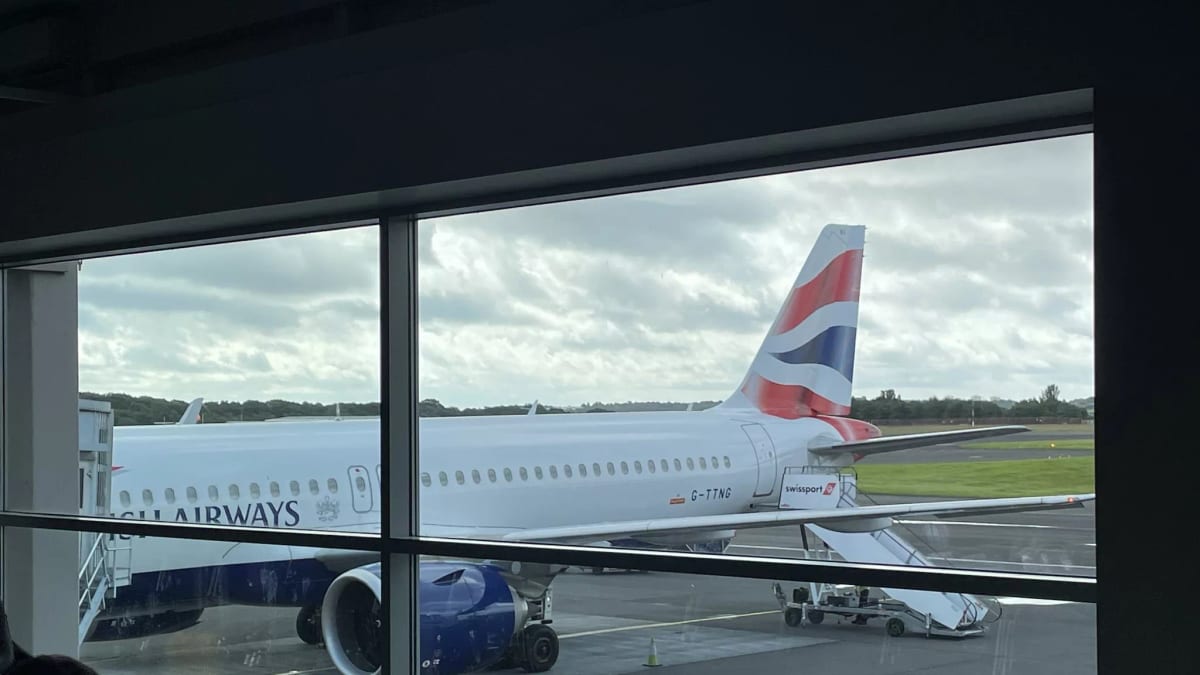
Image by Getaway Magazine
How common are delays and what is driving them
Recent data from the United States and Europe suggests that roughly one in five scheduled flights arrives late, with millions of passengers affected each year. Figures compiled from U.S. Bureau of Transportation Statistics reports show more than 1.5 million delayed domestic flights in 2024, representing just over 20 percent of all operations. Similar monitoring by Eurocontrol finds persistent pressure on punctuality across major European hubs, particularly in peak summer months.
Publicly available statistics group delay causes into broad buckets: weather, airline-controlled issues such as maintenance or crew, late-arriving aircraft from previous flights, and national aviation system constraints that include airport congestion and air traffic control measures. In the United States, Federal Aviation Administration summaries for 2024 indicate that weather accounted for roughly six in ten minutes of delay, followed by traffic volume and runway capacity. In practice, however, those categories often overlap, and a thunderstorm-related ground stop can quickly turn into a crew or aircraft-rotation problem hours later.
Researchers examining on-time performance over the past decade point to a growing role for “reactionary” delays, where one late flight triggers a cascade of knock-on disruptions. Some industry analyses estimate that late-arriving aircraft now account for close to half of all delays once the full chain of rotated planes and crews is taken into account. For travelers, that means the real cause of a delay may be several steps removed from what they see on the departure board.
Weather, air traffic control and the national airspace system
Weather remains the most visible and frequently cited reason for schedule disruptions. Thunderstorms in particular are highlighted in recent data as the leading weather-related cause of delays in the United States, followed by low visibility, strong winds and extreme heat. When convective weather builds over key corridors, controllers reduce the rate at which aircraft can land and depart, creating bottlenecks that ripple far beyond the storm cells themselves.
Reports from Eurocontrol and the FAA describe how en-route air traffic management delays have increased in busy summer periods as traffic rebounds, with flight-planning systems issuing reroute advisories to steer aircraft around saturated sectors. When capacity is reduced, airlines may be assigned later departure slots or placed under flow restrictions, which then appear to passengers as generic “air traffic control” or “airspace flow program” delays.
Although public debate in several countries has focused on staffing at control centers and weather forecasting offices, published government reviews emphasize that controller shortages typically show up as reduced capacity rather than direct “staffing” codes on delay statistics. For travelers, this distinction matters less than the practical effect: longer taxi queues, gate holds and ground stops when the system cannot process its scheduled volume during peak periods or severe weather.
Airline operations, maintenance and late-arriving aircraft
Behind many delay codes are decisions and trade-offs made inside airline operations centers. Industry data compiled in 2025 and 2026 shows that airline-controlled factors, including maintenance checks, crew scheduling, baggage loading and boarding, represent a substantial share of disruptions. Some summaries attribute around 15 to 20 percent of airline-controllable delays to mechanical issues alone, with additional minutes tied to ramp handling and passenger processing.
The single most persistent problem, however, is the late-arriving aircraft. Analyses of U.S. delay statistics describe this as the dominant category, responsible for roughly a third to nearly half of all delays depending on the methodology. When an inbound aircraft lands late because of weather or congestion at a previous airport, it may still need to be cleaned, refueled and crewed before operating the next leg. Tight turn times leave little buffer, so even modest disruptions early in the day can snowball by evening.
Academic studies of airline networks characterize this as a propagation effect, where a small number of highly connected flights exert outsized influence on the schedule. For passengers, that means a “late incoming aircraft” message is often shorthand for a chain of earlier issues. It also tends to signal that the airline may struggle to find a spare plane, making significant delays or even cancellations more likely if the disruption is widespread.
Technology failures, cyber incidents and systemic outages
In addition to routine causes, recent years have highlighted the growing role of technology in large-scale disruptions. In July 2024, a faulty software update distributed by cybersecurity firm CrowdStrike to Windows systems triggered a global IT outage, grounding flights and disrupting operations at multiple carriers. Public reporting and court filings indicate that one major U.S. airline ultimately canceled more than 7,000 flights over several days as it worked to restore scheduling and crew systems.
Separate coverage has documented how failures at airline data centers and glitches in legacy crew-tracking platforms have forced temporary groundings at individual carriers. An outage of a passenger service system can halt check-in and boarding across dozens of airports simultaneously, even when aircraft and crews are ready to operate. In Europe, reports last year described delays at major hubs after a cyber-related disruption struck a company providing shared check-in and boarding software to multiple airlines.
These events remain rare compared with everyday weather and congestion, but their impact is disproportionate when they occur. Passengers may see cause codes such as “operational reasons,” “IT outage” or “technical issue,” often with limited detail. Because such failures typically fall well within airline or vendor control, consumer advocates argue that they should trigger compensation or at least robust rebooking and care obligations where local regulations provide them.
What delay reasons mean for passenger rights and next steps
For travelers, the wording attached to a delay can influence not only expectations but also access to assistance. In the United States, there is no general requirement for airlines to compensate passengers for delays, but carriers publish customer service commitments describing when they will provide meal vouchers, hotel rooms or rebooking. According to recent summaries of those policies, airlines are more likely to offer support when a delay is within their control, such as a maintenance issue or crew scheduling problem, and more limited when the cause is weather or air traffic control.
In Europe and other regions with stronger passenger-rights rules, the formal classification of a delay can determine whether financial compensation is available. Published guidance linked to European regulations distinguishes between “extraordinary circumstances,” such as severe weather or external security events, and operational or technical faults within airline control. Travelers are often encouraged by consumer groups to document the stated reason for a disruption, since this record can be important when pursuing claims after returning home.
Across markets, regulators and policymakers have signaled greater interest in transparency. Recent government reports stress the need for clearer delay codes and more consistent reporting between airlines so that travelers, insurers and researchers can understand how disruptions evolve. For now, passengers watching departure boards may still see a simple label such as “weather” or “late inbound aircraft,” but behind those few words lies a detailed breakdown that shapes what airlines are expected to do and how long it may take to get travelers where they are going.