

More news on this day
From the caldera cliffs of Santorini to the alleyways of Rhodes, cruise ships are lining up for Greece in 2025, with industry data pointing to yet another record year for arrivals and passenger numbers across the country’s island ports.
Get the latest news straight to your inbox!
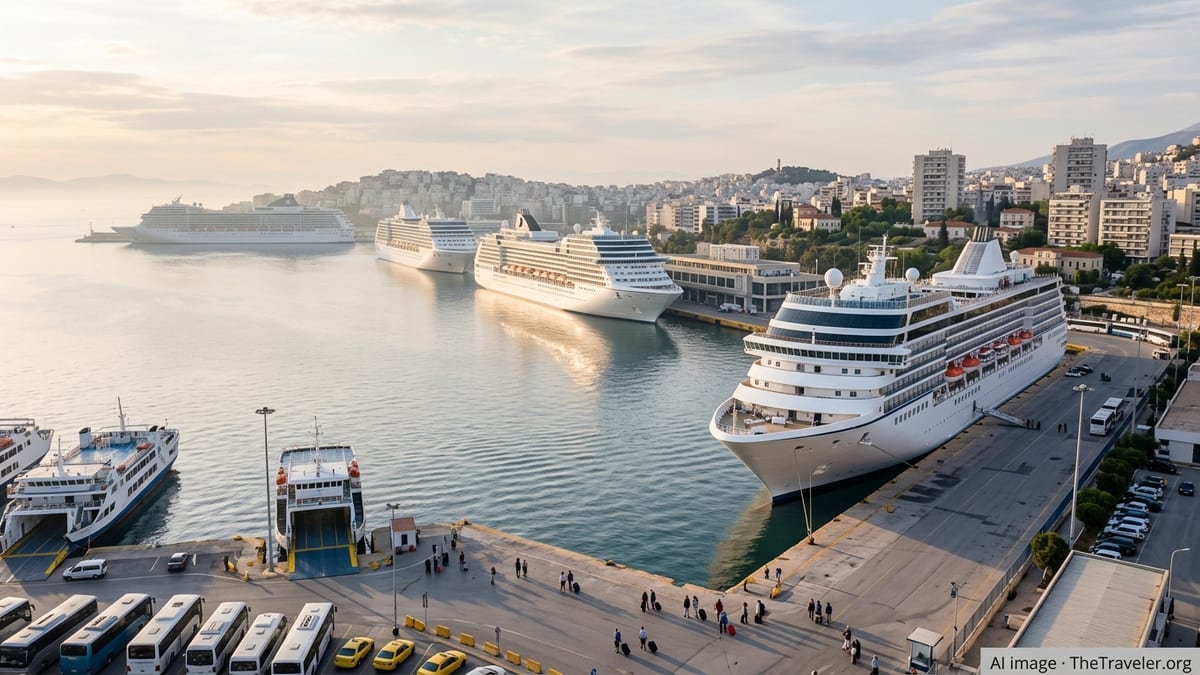
Record Numbers After Consecutive Years of Growth
Greece’s cruise sector enters 2025 on the back of two consecutive record seasons, and forecasts indicate the upward curve is far from over. Data compiled by the Hellenic Ports Association for 2024 showed 5,490 cruise ship calls and nearly 7.93 million cruise passenger visits across 48 Greek ports, a new milestone that surpassed the country’s previous high in 2023.
Projections for 2025 suggest that even these figures will be overtaken. The Hellenic Ports Association has signaled a rise of more than 10 percent in cruise ship and passenger arrivals this year, meaning Greece could edge toward or exceed 9 million cruise passenger visits if current schedules hold. That trajectory places the country firmly among Europe’s top cruise destinations by volume, behind only Italy and Spain in total port calls.
At the center of this surge is Piraeus, the main gateway to Athens and a strategic hub for Eastern Mediterranean itineraries. The port welcomed around 1.7 million cruise passengers in 2024, up from roughly 1.5 million in 2023, and provisional figures for 2025 indicate another increase as more ships use Piraeus as a homeport. Other ports, including Mykonos, Santorini, Corfu, Heraklion and Chania, are also reporting year on year growth in calls and passengers.
Industry analyses of the wider Greek tourism economy point to cruise travel as one of the fastest growing segments by revenue. Research drawing on Bank of Greece data estimates that cruise tourism generated around 1.1 billion euros in receipts in 2024, with further gains expected in 2025 as ship capacity expands and itineraries add more Greek ports.
Fleet Expansion and New Mediterranean Itineraries
One of the main forces behind the boom is the expansion of global cruise capacity, much of which is being deployed in the Mediterranean. New vessels such as the latest large ships introduced by major lines since 2023 have added thousands of lower berths to the market, and Greece sits at the intersection of popular east and west Mediterranean routes.
Sailing schedules for 2025 show a denser network of calls at Greek ports, particularly Piraeus, Mykonos and Santorini, but also at emerging destinations like Chania on Crete and smaller ports in the Dodecanese and Ionian islands. Cruise lines have been programming longer seasons, with more shoulder month sailings in April, May, October and November to take advantage of milder weather and strong demand outside peak summer.
Year round or nearly year round deployment in Greece is also increasing. Operators with strong Mediterranean portfolios are basing ships in Piraeus for extended periods, using it as both a turnaround port and a key stop on itineraries linking the Adriatic, the Aegean and the Eastern Mediterranean. This strategy translates into higher passenger throughput without necessarily requiring more individual ships.
The country’s appeal as a multi stop cruise destination remains central. In a single week, a ship can combine marquee names such as Athens, Mykonos, Santorini and Rhodes with lesser known islands, offering a mix of heritage sites, beaches and village life within short sailing distances. For cruise planners, this density of attractive ports allows flexible itinerary design and efficient fuel and time management.
Pent Up Demand and Greece’s Post Pandemic Tourism Momentum
The cruise surge is unfolding against a broader tourism backdrop in which Greece has repeatedly broken overall visitor and revenue records. Sector studies show that 2024 arrivals and travel receipts surpassed pre pandemic highs, with 2025 tracking even higher based on early booking data and airline capacity.
Analysts point to several demand side drivers. Greece’s image as a safe, sunny and relatively accessible destination for European and North American travelers has been reinforced over recent years. Stable connections through major hubs, competitive airfares in the shoulder seasons and heavy marketing of the Greek islands have all helped to sustain interest.
Pent up demand from travelers who postponed Mediterranean cruises during the pandemic is still working through the system, particularly among older source markets in Western Europe, the United States and Canada. Many of these travelers are opting for itineraries that bundle several iconic stops into a single trip, making Greece’s clustered island geography especially attractive.
At the same time, cruise packages can be perceived as offering clearer price visibility in an era of higher hotel and restaurant costs onshore. Prepaid cabins, meals and entertainment allow travelers to cap a large portion of their spending ahead of time, while still accessing marquee Greek destinations on day visits. That combination is proving persuasive for cost conscious tourists who might find a week on a popular island ashore considerably more expensive.
Infrastructure Strains, Sustainability Fees and Overtourism Concerns
The rapid expansion in cruise traffic is also testing the capacity of Greek ports and island communities, and this is shaping the way 2025’s record numbers unfold. In hotspots like Santorini and Mykonos, local infrastructure has struggled with the daily arrival of several large ships, occasionally doubling a small island’s resident population within hours.
Publicly available information shows that Greek authorities have begun to respond with management tools aimed at both raising revenue and smoothing visitor flows. A new sustainability oriented cruise disembarkation fee, introduced in mid 2025, applies to passengers calling at Greek ports, with higher charges at heavily visited islands and lower fees during the winter months. The measure is framed as a way to fund local infrastructure and environmental projects while nudging more traffic into the off season.
The impact of these fees on demand so far appears limited. Industry commentary and initial booking trends suggest that a charge in the low double digits per passenger is unlikely to deter travelers who have already spent thousands on a cruise. Some cruise lines have adjusted itineraries slightly, substituting alternative ports on certain days or reducing the frequency of calls at the most congested islands, but overall berth reservations for 2025 remain high.
Debate over carrying capacity and overtourism is nevertheless intensifying, particularly on smaller islands where cruise visitors arrive in concentrated waves. Local authorities and port operators are examining measures such as daily caps on the number of cruise passengers allowed ashore, time slot allocations for tenders and improved crowd management in heritage sites and narrow town centers.
What Record 2025 Numbers Mean for Travelers
For travelers booked on Greek cruises in 2025, record breaking numbers will be most visible in busier terminals, fuller excursion buses and crowded viewpoints in headline destinations. Popular vantage points in Santorini, alleyways in Mykonos Town and the medieval streets of Rhodes are likely to be at their busiest during peak midday hours when multiple ships are in port.
At the same time, the growing scale of cruise operations is encouraging diversification. As lines seek to spread traffic and differentiate their products, more itineraries are adding lesser known islands and mainland ports, from the Peloponnese to northern Greece. This creates opportunities for passengers to experience quieter towns and archaeological sites beyond the standard postcard stops.
Travel planners note that those looking to avoid the heaviest crowds can focus on shoulder season departures, itineraries that call at marquee islands early in the morning or later in the evening, or cruises that emphasize smaller ships. The ongoing expansion of Greece’s cruise sector means such options are likely to increase even as total passenger numbers climb.
As 2025 unfolds, Greece appears set to remain one of the Mediterranean’s defining cruise destinations, balancing booming demand with the pressures that come when so many visitors choose to arrive by sea.