

More news on this day
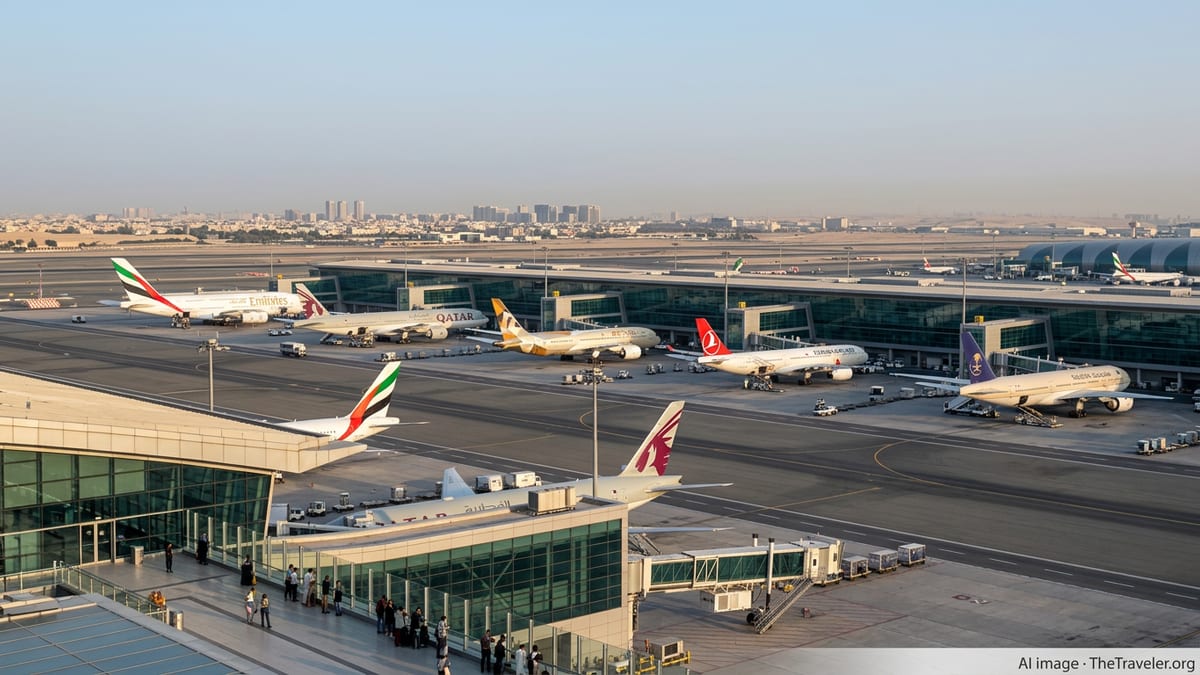
As missile strikes, airspace closures and evacuation flights dominate headlines across the Middle East, leading carriers including Emirates, Qatar Airways, Etihad Airways, Turkish Airlines and Saudia are racing to prove one point to nervous travelers: even in a war-shadowed sky, safety still comes first and commercial flying remains one of the most tightly controlled activities on earth.
Airspace Closures Upend Schedules, Not Safety Standards
The latest escalation in the US, Israel and Iran conflict has triggered sweeping airspace closures across much of the Middle East, forcing airlines to ground or reroute hundreds of flights in recent days. Authorities in Iran, Iraq, Israel, Jordan, Qatar, Bahrain, Kuwait and the United Arab Emirates have all imposed full or partial restrictions, instantly reshaping some of the world’s busiest long-haul corridors.
Flag carriers at the heart of the region’s hub-and-spoke model have been hit hardest. Etihad Airways temporarily halted scheduled services to and from Abu Dhabi after strikes on the UAE, while Qatar Airways suspended regular operations at Doha as Qatari airspace closed. Emirates, based in Dubai, cut or rerouted services as flows through its main hub slowed to a crawl.
Industry analysts stress, however, that these disruptions are the product of rigid safety protocols, not a sign that airlines are taking more risks. When regulators and military authorities close a flight information region, carriers must comply immediately. Timetables may suffer and passengers may be stranded, but the same rules that are causing chaos on departure boards are designed to keep civil aircraft away from potential conflict zones.
For travelers, the short-term impact is visible in longer routings over the Caucasus or Africa, extended flight times and packed rebooking queues. Less visible is the layer of coordination between airlines, civil aviation authorities and air traffic control centers that underpins every decision to divert, delay or cancel a flight rather than operate it on a compromised route.
How Gulf and Regional Airlines Decide Where It Is Safe to Fly
Emirates, Qatar Airways, Etihad Airways, Turkish Airlines and Saudia all emphasize that their operations teams work around the clock with national regulators and international bodies to monitor airspace risk. Flight paths are adjusted in real time based on official notices to airmen, radar intelligence and military assessments, often long before passengers see an update in their booking app.
The process typically starts with the home regulator: for carriers based in the United Arab Emirates, Qatar or Saudi Arabia, the national civil aviation authorities set the baseline on which areas are off limits. These decisions are then layered with requirements from destination countries and guidance from global bodies responsible for aviation safety, creating a patchwork of approved routes that can change hour by hour.
Route planners at major airlines rely on sophisticated software to test multiple long-haul options, weighing extra fuel burn and flight time against the need to keep a wide buffer from conflict areas. Since Russian and Ukrainian airspace became largely unavailable after 2022, Gulf carriers have already developed contingency paths that skirt sensitive regions. The latest Middle East crisis has intensified that pattern, but it has not fundamentally altered the conservative risk culture that has guided this planning for years.
Executives repeatedly underline that commercial pressure to keep hubs open does not override safety triggers. When airspace closures around Abu Dhabi and Doha reached a critical point, Etihad and Qatar Airways opted to suspend most regular services and run only tightly controlled relief flights. For the airlines, the reputational cost of a safety incident far outweighs the financial hit of several days of cancellations.
What Passengers Can Expect at Key Hubs Right Now
For passengers booked on Emirates, Qatar Airways, Etihad Airways, Turkish Airlines or Saudia in early March, the most immediate reality is operational uncertainty rather than heightened danger in the air. Airline call centers and digital channels are flooded with rebooking requests as travelers try to work around grounded hubs and extended routings.
Etihad is gradually moving from a complete pause in regular departures from Abu Dhabi to a limited schedule on select routes, following joint assessments with Emirati authorities. The carrier has published broad rebooking windows allowing customers to shift travel into April and May without change fees if they prefer to avoid the coming weeks.
Qatar Airways has begun operating a small number of relief and repositioning flights from its Doha base after several days of near-total shutdown. Saudia and Turkish Airlines, whose home airspace remains open, continue to operate many flights but with reroutes and longer flight times where necessary, particularly on services bridging Europe and Asia.
At Dubai International, Emirates passengers are contending with rolling changes as the airline threads aircraft through corridors that remain open and avoids those that do not. Travelers transiting through Istanbul or Jeddah report longer queues and occasional last-minute gate changes, but also a notable emphasis from staff on explaining the rationale behind schedule changes and offering hotel stays or alternative routings where possible.
Why Aviation Experts Still Call Flying the Safest Way to Travel
Despite dramatic footage of missile launches and closed terminals, aviation safety specialists continue to point out that commercial flying is statistically far safer than driving or many other everyday activities. The global system is built on layers of redundancy, from aircraft design and maintenance to crew training and navigation technology.
Modern long-haul aircraft used by Emirates, Qatar Airways, Etihad Airways, Turkish Airlines and Saudia are equipped for high-altitude cruising far above most battlefield trajectories, and they are prohibited from entering active conflict airspace. Since the downing of Malaysian Airlines flight MH17 over eastern Ukraine in 2014, regulators and airlines alike have adopted a more cautious approach to any region where there is even a remote risk of misidentification.
Carriers have also dramatically improved crisis playbooks, drawing lessons from previous regional flare-ups and from the pandemic. Scenario planning for sudden airspace closures, mass rebookings and evacuation flights is now a core part of airline operations. When tensions rose in June 2025 and again in late February 2026, Gulf carriers activated these plans within hours, coordinating with foreign ministries and airport operators to move stranded passengers to safety.
For travelers, this means the experience on the ground may be frustrating and unpredictable, but the risk calculus guiding decisions in the cockpit remains deliberately conservative. Flights that are not considered safe do not operate. Those that do have been vetted through multiple independent safety filters that leave limited room for individual discretion.
How Travelers Can Protect Their Plans Without Panicking
Travel advisers across Europe, Asia and North America report a spike in calls from clients wondering whether to avoid connections through the Middle East entirely. The consensus response is that concern is understandable, but panic-driven cancellations may not be necessary if travelers approach upcoming trips with flexibility and information.
Passengers are being urged to monitor airline apps and email notifications closely, as carriers are pushing real-time updates and alternative options there first. Many flexible rebooking policies introduced at the start of the latest crisis allow date or routing changes without penalties for tickets issued before the escalation, giving travelers room to shift plans if they are uncomfortable flying immediately.
Experts also suggest building longer layovers into itineraries that still pass through Dubai, Doha, Abu Dhabi, Istanbul or Jeddah over the next few weeks, in case of rolling delays or airspace-related detours. Purchasing travel insurance that explicitly covers conflict-related disruption, rather than only medical emergencies, can offer added financial protection if plans unravel.
Underlying all this advice is a consistent message from regulators and airlines alike: while today’s Middle East skies are more complex to navigate than at any time in recent years, the core safety architecture of commercial aviation remains firmly in place. For Emirates, Qatar Airways, Etihad Airways, Turkish Airlines and Saudia, convincing anxious passengers of that fact may prove as important in the months ahead as restoring their once-clockwork schedules.