

More news on this day
Hungary’s passport has quietly become one of Europe’s most powerful travel documents in 2026, with a visa-free score of 184 that places it alongside the world’s top-tier nations and cements Budapest’s role as a fast-growing hub for travel between Western Europe and Turkey.
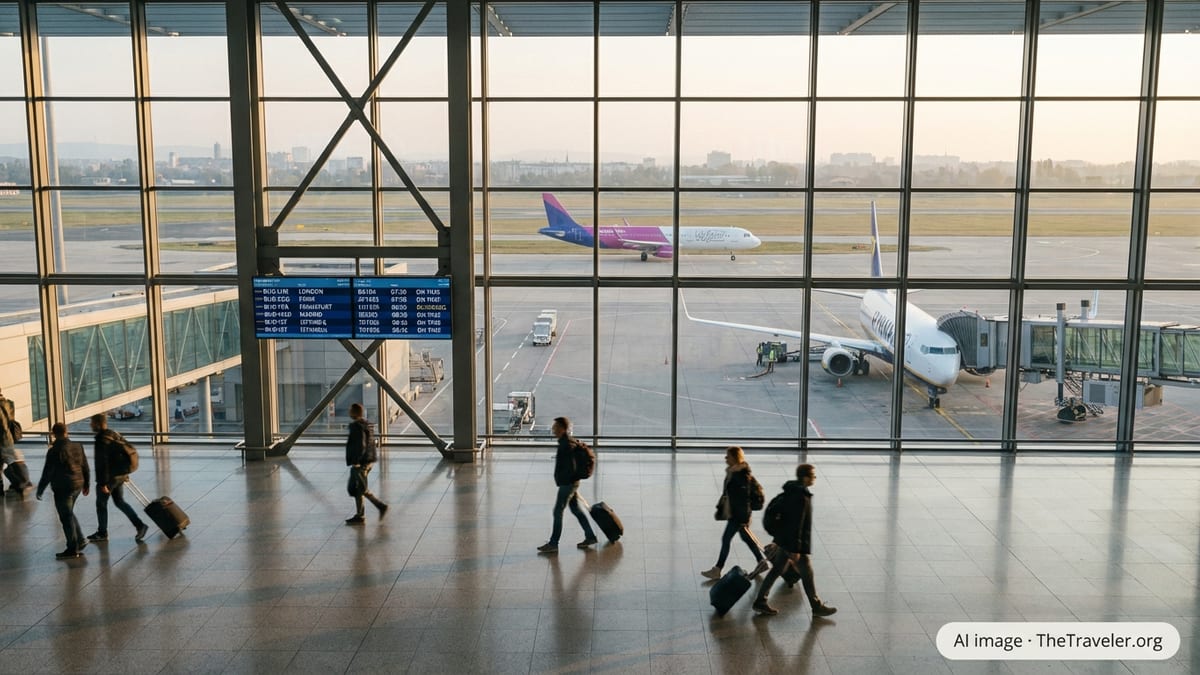
What the 2026 Henley Passport Index Reveals About Hungary
The 2026 Henley Passport Index confirms that Hungary now sits in the top echelon of global mobility, grouped in fifth place worldwide with visa-free or visa-on-arrival access to 184 destinations. This puts the country shoulder to shoulder with Portugal, Slovakia, Slovenia and the United Arab Emirates, all of which have come to symbolize efficient diplomacy and stable economic ties. For a mid-sized Central European state that joined the European Union just over two decades ago, the ascent underscores how deeply it has integrated into global travel and trade networks.
While Asian countries such as Singapore, Japan and South Korea continue to dominate the very top of the rankings, a cluster of European states, including Hungary, has consolidated its position just behind them. Spain, France and Germany sit higher with access to 186 or 185 destinations, yet the gap in practical travel freedom is narrowing. For most leisure and business travelers, a Hungarian passport now delivers nearly the same real-world mobility as long-established Western European powers.
The Henley Passport Index draws on data from the International Air Transport Association and government sources to track how many destinations a passport holder can enter without needing a visa in advance. Hungary’s improved score reflects not just its EU and Schengen membership, but also a steady accumulation of bilateral agreements and visa waivers over the past decade. The result is a passport that offers access deep into Asia, the Americas and Africa, providing a platform for airlines and investors looking for a centrally located base.
Although the index itself ranks passports rather than airports, Hungary’s performance is strongly linked to the growth of Budapest Ferenc Liszt International Airport as a regional hub. The rise in visa-free access feeds directly into higher demand for point-to-point and connecting flights, which in turn justifies more capacity and new connections across Europe and beyond.
Budapest’s Strategic Role Between Western Europe and Turkey
Geography has always been Hungary’s quiet advantage, and in 2026 it is more valuable than ever. Budapest sits almost equidistant between major Western European cities like London, Paris and Frankfurt and the fast-growing megacity of Istanbul. For airlines designing efficient route maps, the Hungarian capital offers an ideal stopover point, enabling single-connection journeys between the British Isles, the big four economies of Western Europe and Turkey’s vast outbound and inbound market.
Carriers based in Hungary, as well as European low-cost and network airlines, have been steadily building more direct services linking Budapest with airports in the United Kingdom, France, Germany and Spain. This expansion has been helped by Hungary’s strong passport, which reassures partners that cross-border travel will remain smooth for both business and leisure passengers. It also simplifies crew operations and regulatory coordination for airlines that base aircraft or staff in Budapest.
Turkey’s own role as a bridge between Europe, the Middle East and Central Asia adds another layer to this connectivity story. Istanbul’s major airports already serve as global super-hubs, and increased flight frequencies between Turkish cities and Budapest are creating more two-way flows of tourists, students and investors. For Hungarian citizens, visa-free access to a wide range of destinations makes it easier to tap into these connections, while travelers from Turkey and beyond find Budapest an attractive, well-connected entry point into the European Union.
For regional planners and aviation analysts, this emerging pattern places Hungary in a similar strategic conversation as Vienna and Warsaw: mid-sized capitals leveraging powerful passports, competitive airports and central geography to punch above their weight in Europe’s aviation hierarchy.
Deepening Links With the United Kingdom
The United Kingdom, which itself sits in the seventh tier of the 2026 Henley Passport Index with access to 182 destinations, remains one of Hungary’s most important aviation partners. Despite the regulatory complexities that followed Brexit, air traffic between Hungary and the UK has largely rebounded, driven by both migrant communities and tourists seeking affordable city breaks. The availability of frequent flights connecting Budapest with London, Manchester and other UK airports highlights how passport strength and open skies policies continue to underpin practical connectivity.
Low-cost airlines are at the heart of this relationship. Their business model relies on rapid turnarounds, simple visa procedures and predictable passenger flows. Hungary’s high visa-free score helps keep friction low for outbound travelers, while established EU-UK travel frameworks support inbound traffic from British residents. The result is a dense web of short-haul routes that make weekend trips and business day-trips between the two countries increasingly routine.
Beyond holiday traffic, the improving mobility environment is also significant for Hungary’s growing technology, automotive and services sectors. British investors and companies can reach Budapest quickly, while Hungarian professionals enjoy broad access to conferences, training and partnerships in the UK. As both nations recalibrate their roles in Europe, strong passports and competitive airports provide the infrastructure for a durable, mutually beneficial connection.
France, Germany and Spain: Core European Connectors
France, Germany and Spain occupy some of the most powerful positions in the 2026 Henley Passport Index, with visa-free scores of 185 or 186 and long traditions as global aviation leaders. For Hungary, strong bilateral ties with these three countries translate directly into busy air corridors and joint commercial ventures. Their major hubs in Paris, Frankfurt, Munich, Berlin, Madrid and Barcelona serve as primary gateways for Hungarian travelers heading to the Americas, Africa and parts of Asia.
Frequent flights between Budapest and these Western European hubs have turned the Hungarian capital into a feeder market of growing importance. Passengers originating in Hungarian regional cities can connect via Budapest and onward to France, Germany or Spain, and from there to long-haul destinations worldwide. This multi-layered network is supported by the fact that citizens of all four countries enjoy extensive visa-free access, minimizing red tape for complex itineraries and codeshare operations.
Tourism flows also run strongly in both directions. Visitors from France, Germany and Spain are drawn to Budapest’s thermal baths, architecture and relatively affordable prices, while Hungarians continue to favor classic Western European city breaks and coastal holidays in Spain. Powerful passports and harmonized EU travel rules underpin this two-way exchange, supporting airlines, hotels and local economies across the continent.
From a policy standpoint, Hungary’s alignment with these core EU economies reinforces its status as a reliable partner inside Schengen. Shared mobility standards and coordinated border policies help protect the advantages of visa-free movement while responding to wider debates on migration, security and external border control.
Turkey’s Expanding Influence in European Air Travel
Turkey may sit outside the European Union, but it has become one of the key players shaping Europe’s aviation map. Istanbul’s mammoth new airport has quickly grown into one of the busiest hubs globally, while airlines based in Turkey have expanded aggressively into Central and Eastern Europe. Hungary’s strong passport, combined with its central geography, positions Budapest as a preferred node in this expanding network.
For Turkish travelers, Hungary offers a convenient and culturally rich introduction to the EU. Budapest’s architecture, café culture and historic ties to the Ottoman era make it an appealing city-break destination. At the same time, Hungary’s visa-free access to many parts of the world makes it easier for Turkish-based airlines and tour operators to package multi-country itineraries that route passengers through Budapest to the wider Schengen area.
On the Hungarian side, Turkey’s role as a connector to the Caucasus, the Middle East and Central Asia opens new horizons for business and tourism. Direct links between Budapest and Istanbul or other Turkish cities shorten travel times for Hungarian entrepreneurs seeking opportunities in energy, logistics and construction. The interplay of strong passports and competitive hubs effectively lowers the psychological and administrative barriers to exploring markets beyond Europe.
In the longer term, analysts expect Turkey’s aviation growth to continue reshaping the competitive balance among European hubs. Hungary’s current passport strength and airport expansion put it in a favorable position to benefit from these shifts, provided it can maintain investor confidence and operational reliability at Budapest Ferenc Liszt International Airport.
How Passport Power Translates Into Airport Growth
The relationship between a country’s passport ranking and the performance of its main airports is indirect but increasingly evident. A high visa-free score signals to airlines, investors and travelers that a country is open, predictable and well-integrated into global regulatory frameworks. For Hungary, sitting among the top group of passports in 2026 sends a clear message that it is a safe bet for expanding routes, basing aircraft and developing tourism infrastructure.
Every new destination that becomes visa-free or visa-on-arrival for Hungarian citizens has the potential to stimulate air demand. Business travelers can respond more quickly to meetings and market opportunities, while leisure travelers gain confidence to book trips on short notice. As volumes grow, airports like Budapest can justify new terminals, upgraded runways and enhanced ground services, which in turn attract more airlines and routes in a virtuous cycle.
Equally important is inbound mobility. While the Henley Passport Index focuses on what Hungarian nationals can do abroad, the same diplomatic and regulatory environment often results in reciprocal easing of entry for foreign citizens. Travelers from the UK, France, Germany, Spain and Turkey encounter clear, standardized procedures when flying into Hungary, making it easier for tour operators and conference organizers to choose Budapest over competing cities.
This combination of outbound and inbound openness helps explain why Hungary is increasingly discussed alongside more established European hubs. Its progress in the passport rankings is not a cosmetic achievement but a structural advantage that underpins capacity decisions and long-term planning by the aviation industry.
Implications for Travelers, Airlines and Policy Makers
For individual travelers, the practical impact of Hungary’s position in the 2026 Henley Passport Index is straightforward: less paperwork, more choice and greater flexibility. Hungarian citizens can plan multi-country trips spanning the United Kingdom, France, Germany, Spain and Turkey with fewer visa concerns, using Budapest as a central jumping-off point. This sense of freedom matters particularly for younger travelers, students and freelancers, for whom short-notice travel has become an integral part of work and lifestyle.
Airlines, meanwhile, view passport power as one of several indicators when choosing where to allocate capacity. A country whose citizens enjoy broad visa-free access is more likely to generate reliable demand for new routes and frequencies. Hungary’s rising profile helps carriers justify basing aircraft at Budapest and experimenting with new destinations, knowing that regulatory barriers for passengers are relatively low compared with markets lower down the index.
For policy makers in Budapest and in partner capitals, the passport rankings serve as both a scorecard and a planning tool. Maintaining or improving Hungary’s visa-free score requires ongoing diplomatic engagement, careful border management and consistent alignment with European Union standards. Any major disruption to Schengen rules or bilateral agreements could quickly erode the advantages now enjoyed by Hungarian travelers and the country’s aviation sector.
With competition intensifying among European hubs, the stakes are high. Countries that combine strong passports, efficient airports and stable regulatory environments are best placed to capture the next wave of growth in travel and tourism. In 2026, Hungary appears determined to be among them, leveraging its powerful passport to strengthen connections across the United Kingdom, France, Germany, Spain, Turkey and far beyond.