

More news on this day
After years of steady recovery from the pandemic, the United States is confronting an abrupt slowdown in foreign visitors, raising alarms across the travel industry about a potential "Great American travel collapse" just as other global destinations pull decisively ahead.
Get the latest news straight to your inbox!
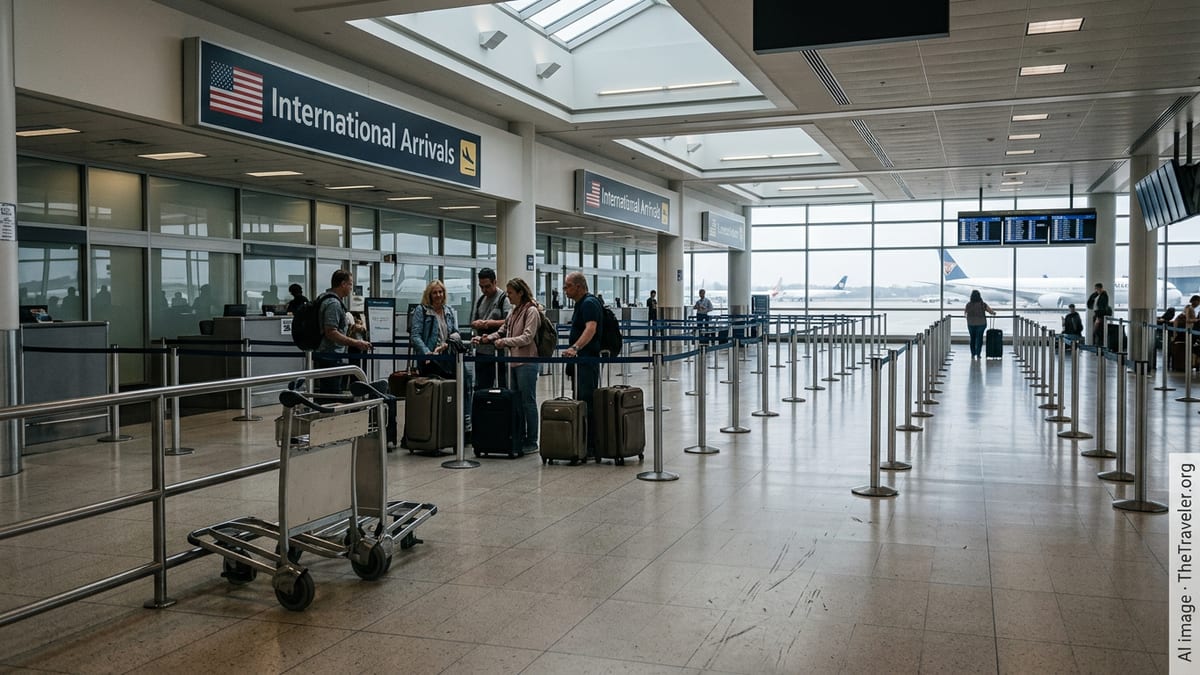
Arrivals Plateau as the Recovery Suddenly Stalls
Official counts show that international travel to the United States largely clawed back from pandemic lows by 2024, with around 72 million visitors that year. Industry summaries describe 2024 as a recovery milestone, but also note that total arrivals still trailed the 2019 peak by a significant margin, especially for long-haul overseas markets rather than short trips from Canada and Mexico.
Instead of building on that rebound, 2025 marked a sharp change of direction. Analyses of federal data indicate that inbound travel slipped in the first half of 2025 compared with the same period a year earlier, and full-year estimates point to several million fewer international visitors than in 2024. Monthly snapshots from the National Travel and Tourism Office highlight declines in overseas arrivals of roughly 7 to 10 percent compared with 2024 levels in late 2025, interrupting what had been a steady climb back toward 2019 volumes.
Research groups tracking the sector now project that a complete recovery of international arrivals will not occur until close to the end of this decade. One widely cited forecast released in 2025 suggests that the United States could face a multi-year drag on inbound tourism, with a full return to pre-pandemic volumes pushed back to around 2029. For a country that has long ranked among the world’s most-visited destinations, the prospect of years of underperformance is prompting urgent questions about what is driving travelers elsewhere.
At the same time, other destinations have moved faster. Data compiled by global tourism bodies show several regions, including parts of Europe and the Middle East, already surpassing 2019 international arrival levels in 2023 and 2024. In contrast, the United States is now struggling not only to catch up, but to prevent hard-won gains from slipping away.
High Costs, Strong Dollar and Airfare Sticker Shock
One of the most immediate deterrents is cost. Airfare to the United States has remained stubbornly expensive compared with pre-pandemic norms, as carriers keep capacity tight on some long-haul routes and fuel, labor and operational expenses feed into ticket prices. Aviation analytics and consumer price data show that international fares remain well above 2019 levels, especially on transatlantic and transpacific routes that bring in high-spending visitors from Europe and Asia.
Layered on top of this is the strength of the US dollar. Currency data for 2024 and 2025 show the dollar trading near multi-year highs against many major currencies, making hotels, dining, entertainment and shopping in the United States comparatively more expensive than in competing destinations. Travel economists note that when exchange rates move this far in favor of the dollar, travelers from Europe, Canada and parts of Latin America often redirect trips to locations where their money stretches further.
Accommodation prices have also surged. Hotel performance databases point to elevated average daily room rates across major US cities in 2024 and 2025, with many destinations posting double-digit percentage increases from pre-pandemic benchmarks. While some markets have softened from their peak, international visitors planning multi-city itineraries report higher overall trip budgets, prompting some to shorten stays or to choose a different country altogether.
Travel insurance and booking platform data underscore the impact on spending. Recent analyses show that even where international visitor numbers have approached or exceeded 2019 levels in some segments, overall spending by those visitors still lags earlier peaks by tens of billions of dollars a year. That combination of high prices and weaker spending power has become a central feature of what industry observers describe as a demand “air pocket” for US-bound travel.
Visa Bottlenecks and Border Friction
Beyond cost, access is another pressure point. Reports from consular services and travel industry groups describe extensive visa appointment backlogs for key source markets, with some travelers facing wait times measured in many months for first-time US visitor visas. In some countries, applicants reportedly confront interview delays that stretch well into 2026, making it difficult to plan holidays or business trips with confidence.
These delays are coinciding with a global competition for visitors in which other destinations are moving in the opposite direction. Several tourism rivals have introduced streamlined electronic travel authorizations, short online forms or expanded visa-on-arrival programs for many nationalities since 2022. Travel advisors note that when one country can be booked with a simple digital authorization while another requires a lengthy and uncertain visa process, travelers often opt for the path of least resistance.
Border experiences are another factor. Publicly available travel forums and survey-based research point to concerns about long lines, secondary screenings and the overall tone of interaction at some US ports of entry. While immigration controls have tightened worldwide, the United States is frequently cited in traveler sentiment studies as a destination where the arrival process feels stressful or unpredictable, particularly for visitors from regions facing heightened security scrutiny.
Compounding this, policy debates around migration and border security have been highly visible internationally. News coverage highlighting detention facilities, enforcement surges and changes in asylum or visa rules contributes to a perception that the US border environment is becoming more restrictive. Travel analysts argue that, even for short-term tourists, this atmosphere can be enough to push a discretionary leisure trip toward another, more welcoming-feeling destination.
Safety Concerns and Shifting Global Perceptions
Perceptions of safety have also shifted in ways that weigh on US tourism. Survey work published over the last two years indicates that potential visitors in key markets increasingly cite worries about violent crime and gun violence when asked about barriers to visiting the United States. In one widely discussed study of Chinese travelers conducted during the recovery period, more than nine in ten respondents who were otherwise interested in visiting the US said that concerns about violent crime could lead them to avoid a trip.
These perceptions are shaped by the global visibility of US news. International audiences see frequent coverage of mass shootings, political unrest and social tensions, even as overall crime patterns vary widely by city and region. Travel commentators note that such coverage can overshadow traditional images of iconic attractions, national parks and cultural institutions, creating a narrative of risk that is difficult for tourism marketers to counter.
The mood is also affected by politics and foreign policy. Research from economic consultancies and tourism analysts points to a deterioration in sentiment toward the United States in parts of Western Europe, Asia and the Global South linked to trade disputes, tariffs and foreign policy disagreements. Some recent forecasts explicitly connect weakening inbound projections to polarized US domestic politics and to international criticism of specific policy decisions, which can make the country feel less appealing as a holiday destination even for travelers who previously visited often.
In parallel, several other major destinations have invested heavily in branding themselves as safe, relaxed and hassle-free. Marketing campaigns from countries in Europe, Asia and the Middle East emphasize pedestrian-friendly historic centers, low street crime and efficient public transport. Against that backdrop, the perception gap between the United States and its competitors has become more pronounced, especially among first-time long-haul travelers choosing where to go.
Competition Heats Up as Rivals Court Long-Haul Visitors
The downturn in US-bound travel is not occurring in a vacuum. Global tourism is expanding, but growth is being captured disproportionately by other regions. United Nations-linked tourism statistics show that several destinations have already exceeded their pre-pandemic arrival counts, with some Middle Eastern hubs posting record-breaking numbers in 2023 and 2024. European countries have also staged strong comebacks, aided by coordinated marketing, easier entry rules and dense low-cost air networks.
Chinese outbound tourism illustrates the competitive challenge. While China’s overall overseas travel has recovered more slowly than anticipated, many of the trips that have resumed are flowing first to nearby Asian markets that have restored air links more quickly and introduced traveler-friendly entry schemes. Analysts tracking airline schedules note that capacity between China and the United States has lagged behind routes to Southeast Asia and parts of Europe, limiting the pace at which high-spending Chinese tourists can return to US destinations.
Even in North America, the United States is facing headwinds from close neighbors. Canadian tourism data for 2025 highlight a wave of public debate about cross-border travel to the US, including calls for consumer boycotts over political and policy disputes. While actual Canadian travel volumes have not collapsed, survey findings indicate that a significant share of Canadians are reconsidering or delaying US trips, signaling potential future softness if alternatives in Europe or domestic travel remain attractive.
Tourism boards abroad are seizing the moment. Countries from Portugal to Thailand have launched campaigns targeting US-alternative city breaks, nature escapes and cultural tours, often spotlighting lower prices, flexible visa rules and safety. As these destinations win repeat visitors and word-of-mouth recommendations, the United States risks losing not just one trip, but years of future loyalty from would-be travelers who choose elsewhere during this period of turbulence.
Economic Stakes and the Battle to Reverse the Slide
The stakes of the emerging downturn are significant. International visitors are a crucial source of export revenue for the United States, with federal and industry figures putting inbound traveler spending in 2024 at well over 200 billion dollars, still short of the roughly 210 billion dollars recorded in 2019. A sustained shortfall in arrivals and spending could mean tens of billions of dollars in lost revenue annually for airlines, hotels, attractions, retailers and local governments that depend heavily on tourism-generated taxes.
Employment is directly in the firing line. Destination marketing organizations estimate that millions of US jobs are tied to travel and tourism, many of them in sectors where alternative employment opportunities are limited. Even modest percentage declines in overseas arrivals can translate into shuttered tour operators, reduced service hours at museums and restaurants, and delayed investments in new attractions, especially in gateway cities and flagship national parks.
Policy responses are starting to take shape, from proposals to increase funding for the national tourism marketing agency to calls for streamlined visa processing and targeted incentives for airlines to restore long-haul capacity. Analysts caution, however, that rebuilding lost trust and enthusiasm among international travelers will take time. In a crowded global marketplace where many destinations now match the United States on infrastructure and attractions, reversing the perception of the country as expensive, difficult to enter and potentially unsafe will require sustained effort.
For now, the data point to a clear inflection: after a brief, fragile rebound, international visitors are again pulling back from the United States. Whether this moment becomes a temporary setback or hardens into a lasting “Great American travel collapse” will depend on how quickly the country can address the intertwined challenges of cost, access, safety perceptions and global goodwill that are reshaping where the world chooses to travel.