

More news on this day
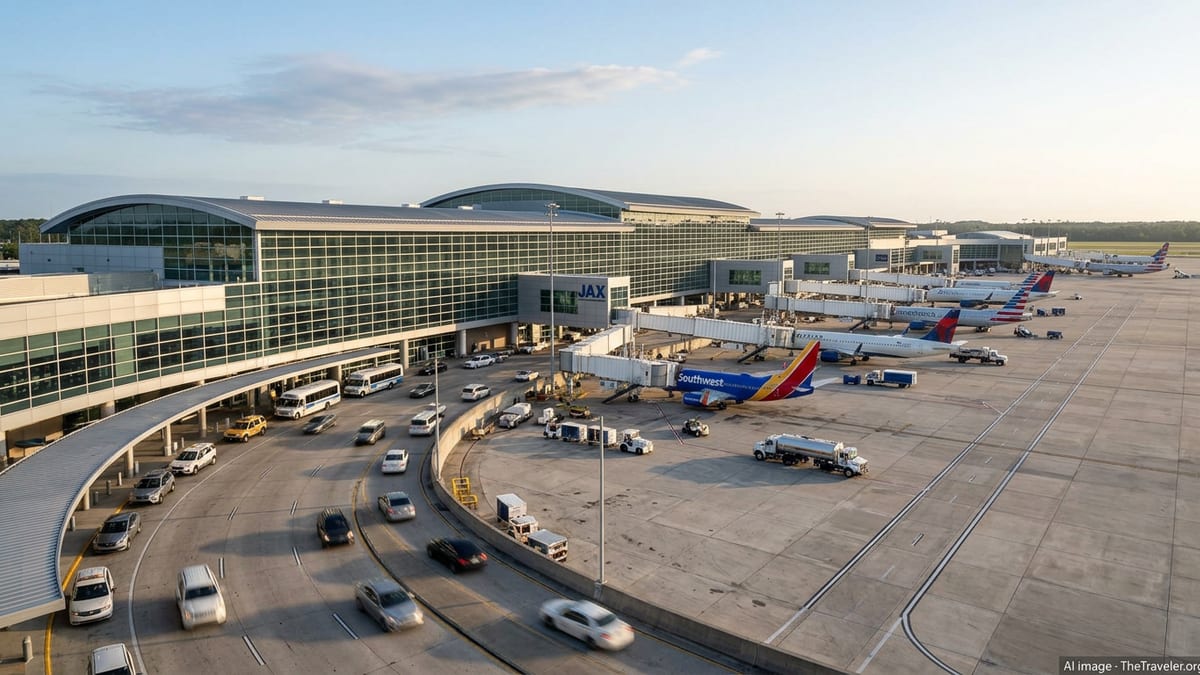
Jacksonville International Airport is rapidly emerging as one of the most dynamic travel gateways in the United States, powered by record passenger growth, aggressive air service expansion and a citywide tourism boom that is reshaping Northeast Florida’s position on the national tourism map.
Get the latest news straight to your inbox!
Record Passenger Highs Put JAX on the National Radar
Jacksonville International Airport closed the 2024 fiscal year with its highest passenger count on record, handling more than 7.6 million travelers between October 2023 and September 2024. Publicly available airport data indicates that traffic rose about 4.7 percent year over year, outpacing many mid sized competitors and underscoring Jacksonville’s growing appeal as both a leisure and business destination.
The surge in passenger volumes reflects broader shifts in how travelers are rediscovering secondary hubs that offer easier navigation, shorter wait times and competitive fares compared with the country’s largest airports. Analysts note that Jacksonville’s blend of manageable size and increasingly national reach is helping it capture passengers who might once have flown through Atlanta, Orlando or Miami.
The growth has been steady rather than speculative, aligning closely with Jacksonville’s rising population, expanding corporate base and tourism gains. That underlying demand is viewed by industry observers as a key reason Jacksonville International Airport is being watched as a sustainable growth story rather than a temporary post pandemic spike.
With passenger numbers reaching new highs and additional capacity on the way, Jacksonville International is transitioning from a convenient regional facility into a true tourism engine for Northeast Florida and the broader Southeast.
New Routes and Carriers Expand Jacksonville’s Reach
One of the clearest indicators of Jacksonville International Airport’s new clout is the pace of route expansion. In recent seasons, low cost and hybrid carriers have steadily added nonstop flights that connect Jacksonville to more of the country’s population centers, particularly in the Northeast and on the West Coast.
Published air service updates show that airlines such as Breeze Airways and Avelo Airlines have introduced and expanded point to point service from Jacksonville to destinations including Ak ron Canton, Wilmington in the Philadelphia Delaware Valley region and select West Coast markets. These additions sit alongside existing service from legacy carriers that link Jacksonville to major hubs like Atlanta, Charlotte, Dallas and Washington, widening one stop access to hundreds of global destinations.
The strategy is positioning Jacksonville as a flexible alternative to Florida’s busier gateways. For leisure travelers, more nonstop flights mean shorter travel days to the region’s beaches, golf resorts and events calendar. For the tourism industry, every new route lowers the barrier for first time visitors deciding between Florida destinations.
As airlines continue to chase strong demand to Florida while diversifying beyond saturated hubs, Jacksonville’s combination of available capacity, favorable operating environment and robust local market is helping it emerge as a preferred growth platform.
Major Terminal Expansion Signals Long Term Ambition
Jacksonville International Airport’s physical footprint is now racing to catch up with its passenger growth. A multiyear terminal expansion is underway, anchored by the construction of a new Concourse B that marks the most significant growth of the terminal complex in more than a decade.
Local development reports place the concourse project within a broader terminal expansion valued at roughly 440 million dollars, with the new Concourse B estimated at about 300 million dollars on its own. The three level facility is designed to open initially with six gates and the ability to expand to ten, creating substantial room for new domestic and potential future international services.
Construction milestones in late 2025, including structural topping out, highlighted how rapidly the project is advancing after breaking ground in the spring of 2024. Planning documents indicate target completion around the end of 2026, a timeline that aligns additional gate capacity with projected continued passenger growth through the decade.
Alongside the new concourse, Jacksonville is investing in a federal inspection facility and related infrastructure that could support expanded international traffic over time. Together, these projects signal an ambition to move the airport beyond its historical role as a primarily domestic, regional gateway into a more globally connected tourism hub.
Tourism Boom Pushes Jacksonville Into the Big Leagues
The airport’s ascent mirrors a broader tourism upswing across Jacksonville and Duval County. According to research commissioned by Visit Jacksonville and summarized in recent public reports, the destination welcomed more than 8 million visitors in the most recent study period, generating an estimated 7.4 billion dollars in economic impact.
Those figures place tourism among the city’s most powerful economic drivers, supporting tens of thousands of jobs and billions in wages across hotels, restaurants, attractions and transportation. Hotel performance metrics have improved in tandem, with local media coverage noting occupancy levels approaching 70 percent and steady growth in room demand compared with pre pandemic years.
New and refreshed attractions are helping sustain that momentum. Reinvestment in riverfront icons such as Friendship Fountain, expansion projects at the Jacksonville Zoo and Gardens and planned upgrades to museums and cultural venues are all part of a wave of development designed to make Jacksonville more competitive with larger Florida cities.
Large scale sports and entertainment investments, including stadium modernization and new event spaces, are expected to deepen the city’s event calendar and attract more out of town visitors. For most of those travelers, Jacksonville International Airport is the primary gateway, tying the airport’s fortunes directly to the region’s tourism strategy.
Ease, Experience and Location Give JAX a Competitive Edge
Beyond statistics, Jacksonville International Airport is gaining favor with travelers for qualities that are harder to quantify but central to tourism competitiveness. Visitor feedback highlighted in regional coverage often cites short security lines, straightforward terminal layout and a generally relaxed atmosphere compared with busier Florida hubs.
The airport’s location about 13 miles north of downtown places it within easy reach of the urban core, the beaches and other regional attractions via major highway connections. For leisure travelers, that means less time in transit after landing and more time on the water, on the golf course or exploring the city’s neighborhoods.
Inside the terminal, incremental improvements to concessions, seating and customer amenities are helping Jacksonville maintain a modern feel even as construction continues. The expansion of food and beverage options that emphasize local flavors mirrors a broader trend in airport design, turning terminals into soft introductions to the destinations they serve.
Combined with competitive fares driven by growing carrier diversity, these factors have positioned Jacksonville International Airport as a compelling entry point for travelers who want Florida’s sun and coastline without the congestion associated with the state’s largest gateways. As new gates open and route maps thicken, industry observers increasingly view Jacksonville as one of America’s most promising tourism powerhouses in the making.