

More news on this day
As cabins grow more crowded and tempers shorter, regulators in India, the United States and other major markets are quietly moving to crack down on a new in-flight nuisance: passengers blasting movies, music or viral videos without headphones, behavior that is increasingly being treated not as a minor annoyance but as a form of unruly conduct that can trigger hefty fines, flight bans or even arrest.
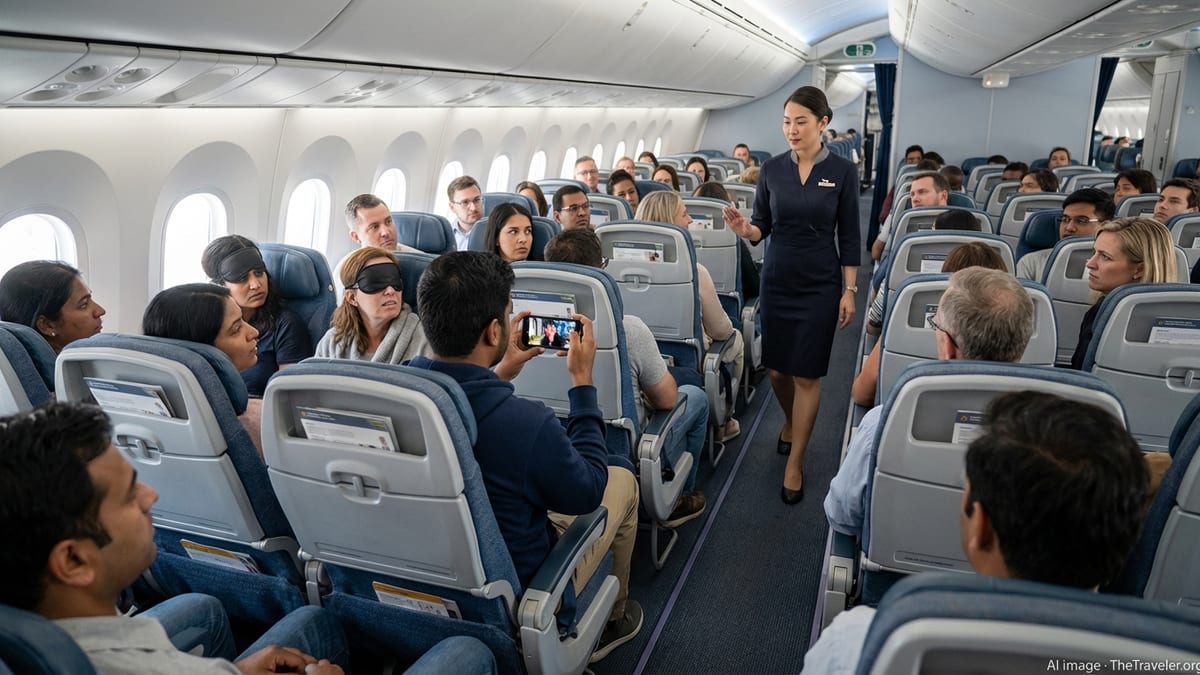
New Indian Rules Put Loud Onboard Media Under Unruly Flyer Spotlight
India is at the forefront of a global push to rein in disruptive passengers, with draft rules published this week that spell out a zero-tolerance approach to behavior that threatens safety or order in the cabin. While the regulations focus on a range of misconduct, from smoking in lavatories to tampering with emergency exits, they also make clear that any refusal to follow crew instructions falls squarely under the definition of unruly behavior.
In practice, that means passengers who insist on playing music or videos on speakers after being told to stop could soon find themselves in the same regulatory category as those who kick seats or interfere with safety equipment. Under the Directorate General of Civil Aviation’s framework, unruly flyers can be placed on a national no-fly list, facing bans that run from months to a lifetime for the most serious offenses.
Indian officials have repeatedly stressed that aircraft are not venues for protests, parties or personal entertainment that spills into other people’s space. In Parliament, the civil aviation minister has previously clarified that blaring music on board can invite legal consequences when it crosses into disruptive or defiant conduct. The latest draft rules, now open for stakeholder feedback, are seen as signaling that airlines and regulators intend to use that discretion more aggressively.
Industry observers say the move reflects a sharp rise in passenger complaints about cabin noise, especially on busy domestic sectors where many travelers now carry powerful smartphones and portable speakers. Airlines in India already report disruptive audio use as part of unruly passenger statistics; the new guidance is expected to standardize how such incidents are classified and penalized.
How US and Global Aviation Rules Treat Loud Devices as a Safety Issue
Across the Atlantic, the United States Federal Aviation Administration does not list loud music or video playback as a standalone offense. Instead, it folds such behavior into broader rules on portable electronic devices and interference with crew duties. US regulations allow airlines to restrict or prohibit the use of personal devices if they might affect aircraft systems or disrupt safety procedures, and airlines routinely extend that authority to cover disruptive sound in the cabin.
The FAA’s enforcement focus in recent years has been on a surge of unruly passenger cases, from mask disputes to assaults on crew. Under a zero-tolerance enforcement policy, passengers who intimidate or interfere with flight attendants can face civil penalties of up to tens of thousands of dollars per violation, on top of potential criminal charges. Loud, defiant use of personal devices can become part of those cases when it escalates into refusal to comply with instructions or disorderly conduct.
International bodies take a similar view. Guidance from the International Air Transport Association and safety organizations classifies “annoying behavior,” refusal to heed safety instructions and actions that disturb good order and discipline as forms of unruly conduct. Examples range from screaming and banging on seat backs to ignoring directions to switch off or quieten electronic devices during briefings, takeoff or landing. What begins as inconsiderate entertainment can quickly turn into a regulatory issue once a crew member has clearly instructed a passenger to stop.
Other jurisdictions, including Australia and parts of Europe, have clarified that playing music out loud on an aircraft is generally prohibited and can be treated as unruly behavior. Cabin crews are empowered to order passengers to mute their devices, confiscate them temporarily in severe cases, or request police to meet the flight if non-compliance continues. As more regulators adopt or enforce similar language, travelers can expect less tolerance worldwide for noisy personal media in the air.
From Earphones to No-Fly Lists: What Penalties Travelers Really Face
For most travelers, a quiet reminder from a flight attendant is where the story ends. Many first-time or infrequent flyers may not be aware that an airplane cabin is legally different from a bus or metro carriage, with crew members carrying specific authority under aviation law. Once instructed to lower the volume, switch to headphones or stop playing a video altogether, passengers are under a legal duty to obey.
If they do not, the consequences escalate rapidly. Under India’s no-fly list framework, a passenger found engaging in disruptive in-flight behavior can be barred from boarding domestic flights for a defined period. Ban durations depend on the severity of the incident, but even a shorter listing can wreak havoc on personal and business travel plans, especially on routes where rail or road alternatives are limited.
In the United States, passengers who interfere with crew duties can be referred to federal authorities on landing. While relatively few noise-only cases reach that threshold, the legal tools available are severe: civil penalties that can run into tens of thousands of dollars, and in extreme cases criminal prosecution. Airlines may also pursue their own bans, preventing a passenger from flying with the carrier again regardless of government action.
Globally, a passenger’s behavior can trigger multiple layers of penalty at once. Local police at the arrival airport might file charges under public order or security laws. Airport authorities can also impose fines for disruptive behavior in gate or boarding areas, where loud or offensive media sometimes first comes to light. Taken together, these overlapping regimes illustrate a changing reality for travelers: what once earned a sharp look from a neighbor can now leave a trace in law enforcement databases and airline risk systems.
Why Headphone Etiquette Is Becoming a Matter of Law, Not Just Manners
The regulatory turn against loud onboard media is rooted partly in safety and partly in social tension. Cabin crews argue that a noisy environment can make it harder for passengers to hear safety announcements or instructions in an emergency, a particular concern during taxi, takeoff and landing or when turbulence hits unexpectedly. Modern cabins are also filled with competing sound sources, from engines and air systems to in-flight announcements and crying infants.
But the issue is also cultural. The widespread use of short-form video apps and streaming platforms has normalized watching content in almost every spare moment, from boarding queues to the final approach. Travelers are more likely to carry compact Bluetooth speakers or to set their phones on full volume for a clip they assume will be brief. What feels trivial to one person can become deeply intrusive to a neighbor trying to sleep, work or soothe a child.
Transport authorities in India and elsewhere have already confronted the problem on the ground, with metro and bus networks reporting tens of thousands of cases of passengers playing audio out loud or watching videos without earphones. Awareness campaigns have followed, reminding commuters that shared space requires quiet consideration. Aviation stakeholders say cabins are simply the next frontier, and that soft etiquette is hardening into enforceable rules.
Airlines, meanwhile, are under pressure to prevent annoyance from spiraling into conflict. Viral videos of mid-air arguments and scuffles over noise and seat use have damaged brand reputations and shaken passenger confidence. Carriers increasingly prefer to back crew decisions early, de-escalating situations by insisting that devices go silent or be stowed before frayed tempers tip into something more serious.
How Airlines Actually Handle Loud Passengers Onboard
Despite the intimidating language of regulations, cabin crews typically follow a step-by-step approach when dealing with loud devices. The first response is almost always a polite, low-key request: a quiet word reminding the passenger of airline policy, asking them to plug in earphones or reduce the volume. Many airlines train their staff to approach from a crouched position at eye level, speaking softly to avoid embarrassing the passenger in front of surrounding rows.
If the behavior continues, the tone becomes firmer. Crews may cite specific rules, explain that other passengers have complained, or warn that failure to comply could be reported to the captain. At this point, some carriers make a formal note in the flight log, ensuring there is a record if enforcement is needed later. On longer sectors, a senior cabin crew member or purser will often step in to reinforce the message.
Only when a passenger remains openly defiant or combines loud media with other problematic behavior, such as drinking to excess or arguing with neighbors, do crews typically consider stronger measures. These can include relocating other passengers away from the disturbance, restricting alcohol service, or alerting ground staff at the arrival airport to meet the aircraft. In extreme situations, where safety or order is clearly at risk, a captain may divert a flight or request law enforcement to board on landing, decisions that carry substantial cost and scrutiny.
Airline insiders emphasize that most crew members would prefer never to reach that stage. Dealing with disruptive audio is just one of many challenges in a tightly timed workday that includes safety checks, service rounds and medical contingencies. Passengers who respond promptly and courteously to a first reminder help ensure that noise issues stay in the realm of etiquette instead of escalating into reportable incidents.
Practical Steps for Travelers to Stay on the Right Side of the Rules
For travelers crossing regions with different legal frameworks, the simplest strategy is to assume that cabin noise rules are stricter than what is printed on the ticket. That starts with packing and using reliable wired or wireless headphones, ideally with good sound isolation so that lower volumes are sufficient. Passengers should avoid relying on small portable speakers altogether once they pass security, since many airlines and airports now treat them as potential sources of nuisance.
Once on board, timing matters. Even where airlines permit personal devices in flight mode, they may require them to be switched off or stowed during safety briefings and the critical phases of flight. If a crew member asks that a device be paused or put away temporarily, it is usually because of a standardized safety protocol, not arbitrary preference. Complying promptly not only reduces the risk of penalty, it also helps the entire cabin absorb instructions more quickly in the event of an emergency.
Travelers can also protect themselves by staying aware of their surroundings. Volume levels that feel normal in a living room may be disruptive in a tightly packed cabin, especially on overnight or early-morning services. Checking whether nearby passengers are sleeping, working or traveling with small children is a simple way to calibrate behavior. When in doubt, lowering the brightness of screens and keeping volume just high enough to be heard over engine noise are small adjustments that can avert complaints.
If another passenger’s device becomes intrusive, most airlines and regulators advise against direct confrontation. Instead, travelers are encouraged to use the call bell and quietly explain the problem to cabin crew, who are trained to intervene calmly and who carry the formal authority to enforce the rules. This approach reduces the risk that a noise dispute turns into an altercation in which more than one party could face sanctions.
What This Means for the Future of In-Flight Tech and Etiquette
The crackdown on loud onboard media comes at a time when aviation is leaning further into connected technology, from fast in-flight Wi-Fi to seatback screens with streaming capabilities. Airlines are betting that better-quality entertainment, delivered through headphones and integrated systems, can coexist with stricter discipline around noise. Some carriers already provide complimentary earbuds on longer flights and encourage passengers to use airline-provided content rather than personal speakers.
Regulators, for their part, are watching how travelers adapt. If new rules and awareness campaigns succeed in reducing complaints and unruly passenger reports, authorities may feel less pressure to introduce more explicit bans on certain devices. Conversely, a continued rise in noise-related incidents could push agencies in India, the United States and elsewhere to codify specific penalties for playing personal media out loud, rather than relying solely on broader unruly conduct provisions.
For now, the direction of travel is clear: blasting a favorite playlist or video into a confined cabin is no longer merely bad manners, it is emerging as a test case for how seriously passengers take the shared nature of modern air travel. Those who respond by bringing headphones, respecting quiet hours and following crew instructions are likely to find their journeys smoother, even as the legal landscape hardens around them.
As the latest Indian proposals move toward implementation and other regulators reiterate their zero-tolerance stance on disruptive behavior, travelers can expect airline policies and pre-flight announcements to become more explicit about device use and cabin noise. Paying attention to those messages, and treating headphones as essential as a passport, may be the simplest way to avoid turning a flight into an expensive lesson in in-flight law.