

More news on this day
As Europe’s tourism heavyweights celebrate yet another year of record-breaking arrivals, a much smaller Adriatic nation is quietly stealing the spotlight: Montenegro, a compact country whose mix of dramatic coastlines, wild mountains and relatively uncrowded historic towns is turning it into the continent’s most talked-about hidden gem for 2026.
Get the latest news straight to your inbox!
A Record-Breaking Rise Behind a Small Destination
Publicly available statistics show that Montenegro has moved from niche stopover to serious European contender in just a few seasons. Official data from the national statistical office Monstat reported around 2.6 million tourist arrivals and more than 15.5 million overnight stays in 2024, a figure several times larger than the country’s population and a clear sign that its tourism profile is accelerating.
Industry analyses tracking 2025 performance point to continued growth. From January to July 2025, Montenegro recorded more than 1.5 million tourist arrivals, edging above the same period a year earlier. Sector commentary highlights that even as overnight stays have fluctuated, spending and revenue growth have remained strong, supported by higher-value visitors and a gradual move away from pure mass-market beach tourism.
Comparative reports from Eurostat and other European platforms underline how extraordinary this trajectory looks in a regional context. While large destinations such as Spain, France and Italy anchor the continent’s totals, Montenegro stands out for the pace rather than the absolute size of its gains, with some analyses citing tourism revenue growth of more than 20 percent year on year. For a country of barely 600,000 residents, that level of expansion is reshaping both its economy and its international image.
Crucially, this growth is unfolding just as concerns over overtourism dominate headlines from Barcelona to Venice. As major hubs face protests, new visitor caps and tighter regulations on short-term rentals, Montenegro’s smaller scale and less-saturated hotspots are being framed in travel coverage as a refreshing counterpoint within Europe’s tourism map.
Beating Spain and France on Perception, Not Volume
By raw numbers, Montenegro does not challenge Spain and France, which together host close to 200 million international arrivals a year according to recent tourism barometers. However, in terms of traveler sentiment and emerging-destination appeal, recent surveys and travel-industry rankings increasingly place Montenegro ahead of better-known Mediterranean rivals.
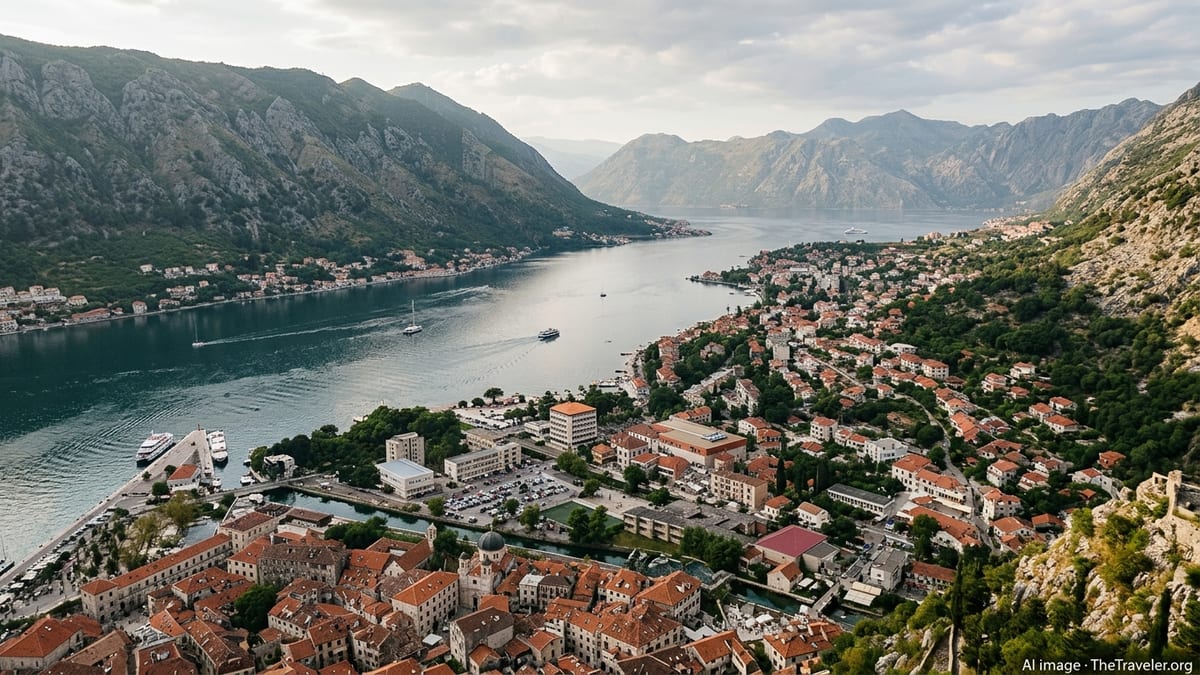
European consumer research published in 2025 and early 2026 highlights a clear shift toward “second-tier” coastal destinations that promise fewer crowds, lower prices and greater contact with local culture. Montenegro frequently appears on shortlists alongside countries such as Albania and Slovenia, but often scores higher on perceived scenic variety, from the UNESCO-listed Bay of Kotor to the Durmitor and Prokletije mountain ranges.
Travel editors and tour operators point to several reasons why Montenegro is outperforming Spain and France in perceived tourism appeal this year. Price sensitivity is one factor: accommodation, dining and activities often come in below equivalent offers on the Costa del Sol or Côte d’Azur, particularly in shoulder seasons. Another is novelty. Many European travelers have already visited Barcelona, Paris or the French Riviera, and are now looking for destinations that feel less familiar but still easily accessible.
At the same time, Montenegro benefits from being inside Europe’s well-developed transport network while remaining outside the Schengen Area, a combination that some commentators note can make it attractive for travelers planning multi-country itineraries. As airlines and regional carriers expand seasonal routes to Tivat and Podgorica, Montenegro is increasingly positioned as the “new Adriatic” in contrast to long-established Spanish and French coastal circuits.
Nature, Culture and Compact Scale Drive Its ‘Hidden Gem’ Status
Montenegro’s physical geography is central to its growing reputation. In a country that can be driven from north to south in a matter of hours, visitors encounter a succession of landscapes that, in larger states, would typically be spread across multiple regions. The steep fjord-like Bay of Kotor, dense beech and pine forests of Biogradska Gora, and high plateaus of the north all contribute to a sense of variety that belies the country’s size.
Travel features in European and US media increasingly showcase this compact diversity as a core selling point. Reports emphasize that travelers can spend the morning on the Adriatic coast and the afternoon hiking in cooler mountain air, an appealing proposition as southern Europe experiences hotter and longer summers. This ease of contrast is helping Montenegro stand out even when compared with multifaceted destinations such as Spain or France.
Cultural heritage further bolsters the narrative. Old town centers in Kotor, Budva and Ulcinj, shaped by Venetian, Ottoman and Balkan influences, provide the historic backdrops that many visitors expect from a European city break, but on a smaller and more navigable scale. Coverage of recent boutique hotel and gastronomy projects describes a rapid rise in quality without the sense of over-commercialization that has affected some more mature markets.
The country’s relatively low level of urban sprawl along key sections of the coast also contributes to its hidden-gem appeal. While development pressures are visible, especially around major resort zones, large stretches of shoreline and hinterland remain comparatively undeveloped. For travelers fatigued by densely built-up resort strips in parts of Spain and France, Montenegro’s mix of small-scale fishing villages, pebble coves and inland lakes offers a different tempo.
Investment, Strategy and a Pivot Toward Sustainability
Montenegro’s tourism ascent is not occurring in a vacuum. Policy documents such as the Strategy for the Development of Tourism in Montenegro 2022–2025, reviewed in international reports, outline a deliberate attempt to shift from volume to higher-yield, year-round tourism. The plan emphasizes better integration of tourism with other sectors, improved standards and a stronger focus on the country’s northern regions, traditionally less visited than the coast.
Recent assessments by economic and tourism observers point to increased investment in infrastructure, including road upgrades, marinas and airport improvements, along with incentives for higher-category hotels. These measures are designed to attract travelers who stay longer and spend more, positioning Montenegro to benefit as global tourism fully normalizes and competition for quality visitors intensifies.
At the same time, national and local debates increasingly revolve around the risks of rapid, poorly managed growth. Commentaries by business associations and analysts warn of uneven development along the coast, insufficient planning controls and pressures on the environment. Calls for more transparent tourism revenue data underscore concern that headline arrival figures may not capture the full economic and social impact.
The pivot toward sustainability is therefore becoming a central part of how Montenegro markets itself abroad. Campaigns now highlight hiking, cycling and national parks alongside beaches, and winter tourism in the north is repeatedly identified as a key growth opportunity. By broadening its offer beyond peak-summer coastal stays, Montenegro aims to avoid some of the seasonal and spatial imbalances that have contributed to overtourism tensions in parts of Spain and France.
What Montenegro’s Surge Signals for European Travel in 2026
Montenegro’s rise this year fits into a wider European pattern in which travelers seek lesser-known destinations that promise authenticity, value and environmental responsibility. According to recent analyses from European tourism bodies, 2024 and 2025 marked record years for nights spent in tourist accommodation across the European Union, but much of the incremental growth has flowed into smaller or once-overlooked markets.
In this context, Montenegro functions as a bellwether. Its success suggests that travelers are increasingly willing to trade big-name prestige for a sense of discovery, particularly when core attributes such as safety, infrastructure and air connectivity meet modern expectations. Tour operators report growing interest in combining Montenegro with neighboring Croatia, Bosnia and Herzegovina or Albania, creating new cross-border itineraries that disperse visitor flows more evenly around the Adriatic.
The contrast with Spain and France is striking. Both remain global leaders in arrivals and revenue, supported by sophisticated tourism industries that continue to post record numbers. Yet they also feature prominently in coverage about overcrowding, housing pressures and resident pushback. Montenegro, by comparison, currently enjoys the advantages of an emerging destination where expectations are still being shaped and long-term models can be adjusted more easily.
How the country manages this moment will help determine whether it can maintain its status as Europe’s standout hidden gem beyond 2026. For now, the combination of rapid growth, relatively uncrowded attractions and a conscious shift toward more sustainable, diversified tourism is giving Montenegro a rare edge in the continent’s increasingly competitive travel landscape.